A $200 Billion Ambition Meets the Electricity Bill
India is preparing a dedicated data centre policy as the government pursues a sector it views as a $200 billion opportunity while seeking to protect ordinary electricity consumers from higher bills. Minister of State for Electronics and Information Technology Jitin Prasada announced the plan in New Delhi on October 14, 2026, amid protests over projects planned by Amazon near Mumbai and Google in Visakhapatnam.
Contents
- A $200 Billion Ambition Meets the Electricity Bill
- What Rules Apply Today?
- Who Pays for the Extra Power Infrastructure?
- Green Electricity Is Part of the Investment Contest
- Mumbai and Visakhapatnam Bring Local Concerns Into Focus
- AI Is Both a Power Consumer and a Planning Tool
- Chips Are Another Part of the Capacity Challenge
- Key Points
Prasada spoke at the Central Electricity Authority's event on Making Indian Power Sector AI Enabled. His message joined two priorities that must work together: attracting large computing facilities and supplying the electricity they need without putting extra pressure on households.
Data centres are buildings filled with computers that store information and run digital services. Artificial intelligence adds to demand for computing capacity because developing and using AI systems requires computers to perform large amounts of calculation. Those computers need electricity, while cooling equipment helps keep them operating at suitable temperatures.
Prasada described India as a promising location for the largest facilities, often called hyperscale data centres. These serve computing needs on an enormous scale, including those of major technology companies.
The minister set out the government's ambition in these words:
"We are rolling out a policy for data centers because we think India is a very fertile ground for hyperscaler data centers," Prasada said.
Prasada did not disclose the proposed policy's scope or a date for its release. The announcement therefore leaves developers, electricity suppliers and residents waiting for the rules that will connect the investment ambition to decisions about resources, infrastructure and consumer costs.
What Rules Apply Today?
India currently has no dedicated national policy for data centres. Projects follow existing environmental and building rules, while some states provide their own incentives. The planned policy would enter a sector where approvals and support already come through several routes.
Environmental and building requirements address whether and how facilities can be developed. State incentives seek to attract investment. A dedicated national policy could provide a common framework for the sector, although the government has yet to explain how its proposal would work alongside those existing arrangements.
Prime Minister Narendra Modi has made data centres part of India's investment pitch. He has invited the world's data to be housed in the country, and his government sees the sector as a $200 billion opportunity.
That ambition makes electricity a central economic issue. A data centre needs a dependable supply to serve its customers. Households and other businesses also depend on the same wider power system. Expanding computing capacity therefore requires attention to both the facilities themselves and the electricity network supporting them.
Who Pays for the Extra Power Infrastructure?
Prasada's concern was direct: expansion should not leave ordinary consumers paying more for electricity. He described situations in other countries where data centre demand had put pressure on power previously used by consumers.
The minister explained the outcome he wanted India to avoid:
"In some countries, the data centers are taking away the power used by consumers. So what happens there, the consumers have to pay more for the power. So we don't want to get into that," he said.
Electricity costs involve more than generating power. Power must also travel through transmission lines, substations and local networks. A large new consumer can create a need for additional infrastructure, making the allocation of those costs part of the debate.
A useful distinction is between improvements that serve the wider electricity system and assets needed mainly for a particular project. Costs for infrastructure with broad benefits can be shared across users. Where a project creates most of the need, recovering more of the cost from that project would place the expense closer to the demand that caused it.
For a household, the practical issue is whether its bill includes a share of infrastructure built mainly to supply a large commercial facility. For a developer, the issue is how much it must pay to connect to a dependable network. Prasada's promise to protect consumers brings both sides of that calculation into the policy discussion.
Green Electricity Is Part of the Investment Contest
Prasada also warned that electricity generation, especially green power, was not growing as quickly as the needs emerging from AI and related technologies. His remarks connected India's data centre plans to the pace of investment in electricity supply.
The minister described the gap between technological growth and future power requirements:
"The technology is moving faster, but power generation, especially green power, is not moving as fast as the requirements that are going to come in the future," he said.
Green electricity generally refers to power from sources such as solar and wind that produce electricity without burning fossil fuels. For data centre expansion, the task is to build enough supply and ensure that the power system can deliver electricity reliably when facilities need it.
Prasada said countries with green generation would have an advantage in attracting investment in these technologies. That places electricity supply alongside the availability of land, computing equipment and other resources in India's effort to attract large technology projects.
His comments linked that competitive advantage to India's own plans:
"Whichever country has green power generation, that country will have the edge over these technologies," he said.
Prasada also expressed confidence that India would increase production. His remarks set a direction for expansion, while his warning about the pace of generation showed why energy planning is becoming part of the technology investment agenda.
Mumbai and Visakhapatnam Bring Local Concerns Into Focus
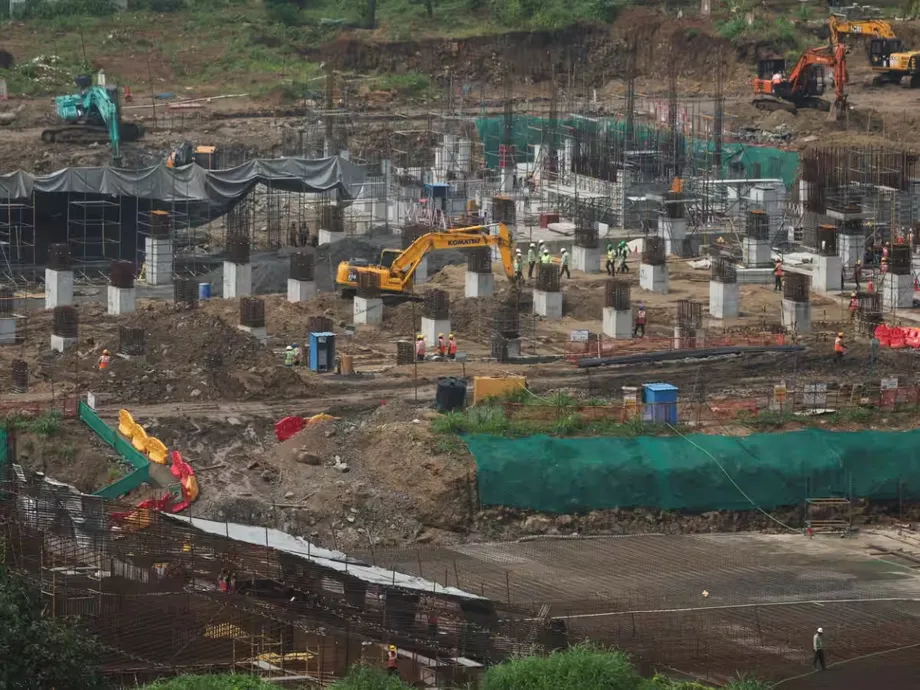
Residents near Amazon's planned site outside Mumbai have protested over possible strain on electricity and water supplies, as well as noise. Their objections bring the national investment debate down to the services and living conditions around a particular development.
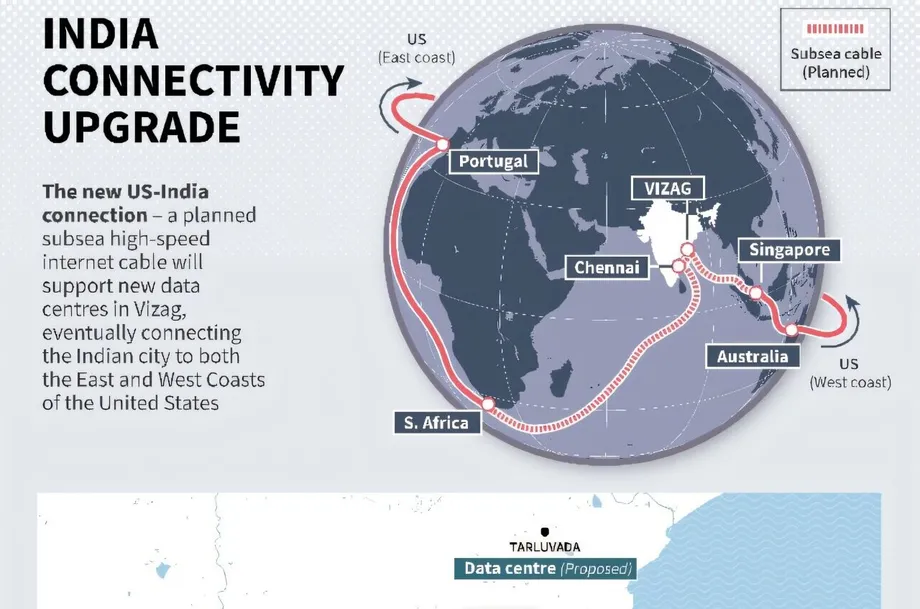
Visakhapatnam faces another set of concerns around Google's planned $15 billion project. Environmentalists say the development threatens wildlife and improperly uses temple land. Those claims concern the project's location and land use as well as the resources needed to operate it.
Three petitions challenging the project's environmental clearances have been filed before the National Green Tribunal, alleging inadequate assessments of environmental and water-related risks. Some villagers in Tarluvada have also alleged that land was taken without adequate notice. The Andhra Pradesh government disputes claims of forcible acquisition and says eligible residents received compensation.
Google and Amazon have denied wrongdoing. Both companies say the concerns are unfounded and cite advanced technologies designed to minimise resource use.
Alexander Smith, Google's head of infrastructure and energy for Asia-Pacific, said the company assessed the local watershed and chose air cooling rather than water-based systems after identifying pressure on local water resources. Google also says it will fund required power infrastructure upgrades and invest in additional clean-energy projects in Visakhapatnam.
The disputes show the range of decisions facing authorities. National electricity planning addresses supply and prices, while local scrutiny involves water, noise, wildlife and land. Residents experience those issues together, even when they fall under different approval processes.
Resource efficiency is part of the companies' response. For communities, the practical concern is how a facility's demand fits with existing local supplies and whether its operation changes conditions nearby. Those interests will remain relevant as India develops rules for a larger data centre sector.
AI Is Both a Power Consumer and a Planning Tool
The Central Electricity Authority's conference places data centre growth within a wider transformation of the power sector. FICCI's official conference description lists the spread of data centres alongside renewable energy, the electrification of transport and industry, and efforts to reduce carbon emissions as drivers of change.
The description also identifies ways AI can help operate the electricity system: forecasting demand as conditions change, predicting when equipment may need maintenance, and deciding how available generation should be used. In simple terms, software can help electricity operators anticipate needs and coordinate supply.
The event's schedule puts Prasada's announcement within a discussion extending across two days:
- October 14, 2026: Prasada announced that India was preparing a data centre policy and warned about electricity costs and the pace of green power generation.
- October 14 to 15, 2026: The CEA conference in New Delhi was scheduled to discuss AI integration in power sector planning and operations.
FICCI's description says the gathering brings together policymakers, regulators, industry leaders, investors, researchers and technology providers to discuss a practical plan for using AI across the power sector. The agenda includes applications, investment and policy.
AI consequently sits on both sides of the electricity challenge. Computing facilities increase demand, while AI tools can help operators manage the system serving that demand. Planning must account for the electricity consumed by digital infrastructure as well as the operational benefits technology may bring.
Chips Are Another Part of the Capacity Challenge
Prasada also called for stronger domestic semiconductor capabilities while continuing cooperation with other countries. Semiconductors are the chips that carry out calculations and control functions in computers and many other products.
The minister cited chip shortages during the COVID-19 pandemic that affected automobile production. The example showed how a shortage of a small component could disrupt a much larger manufacturing operation.
For India's technology ambitions, his remarks connect two physical requirements: computers need chips to process information and electricity to operate. Building domestic capabilities addresses dependence on overseas suppliers, while expanding power generation addresses the resources needed to use computing equipment.
The policy announcement now brings those ambitions into a discussion with immediate consequences for consumers and communities. India's stated aim is to attract major data centre investment while keeping household electricity affordable. The choices about power supply, infrastructure costs and local resource use will shape how that expansion proceeds.
Key Points
- Jitin Prasada announced preparations for a dedicated data centre policy on October 14, 2026, in New Delhi.
- India currently relies on existing environmental and building rules, with some states providing incentives.
- The government views data centres as a $200 billion opportunity.
- Prasada said expansion should not increase ordinary consumers' electricity costs and warned that green generation was lagging future technology demand.
- Residents near Amazon's planned site outside Mumbai have raised power, water and noise concerns.
- Environmentalists have challenged Google's $15 billion Visakhapatnam project over wildlife and temple land; Google and Amazon deny wrongdoing.
- Google says it chose air cooling after assessing local water pressure and will fund power infrastructure upgrades and additional clean-energy projects in Visakhapatnam.
- The CEA conference also focused on using AI to improve electricity planning and operations.