Cyclone damage exposes a growing financial risk
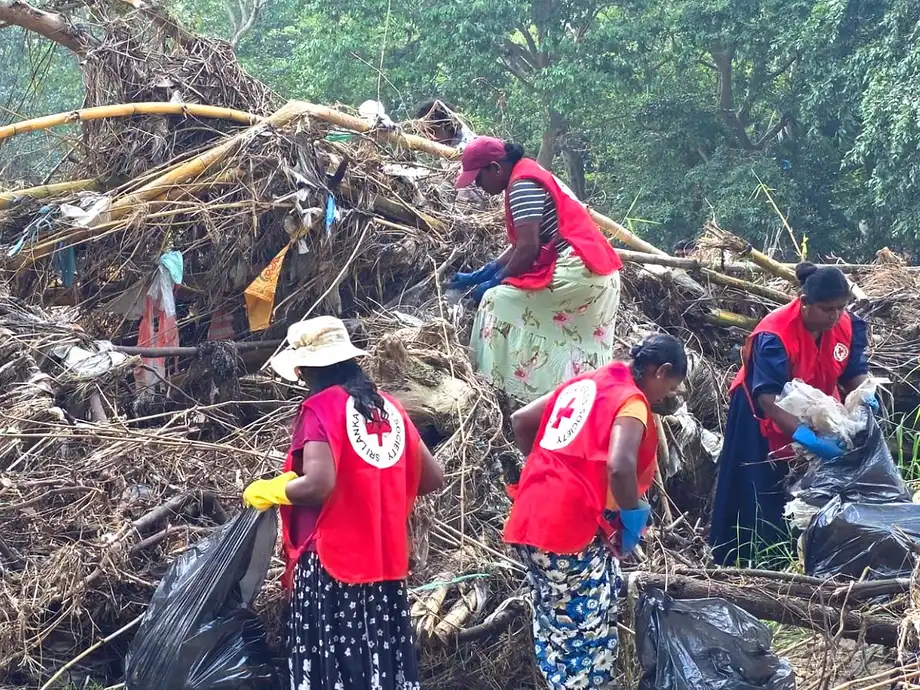
Cyclone Ditwah caused an estimated USD 4.1 billion in direct physical damage across all 25 districts of Sri Lanka in November 2025, a sum equivalent to about 4% of the country's gross domestic product. The Central Bank of Sri Lanka now warns that the financial consequences could extend beyond destroyed buildings, infrastructure and agricultural assets to weaker loan repayments, falling collateral values and mounting insurance pressures.
Contents
- Cyclone damage exposes a growing financial risk
- What the USD 4.1 billion estimate leaves out
- How the cyclone and policy response unfolded
- Why rising Stage 2 loans deserve attention
- Borrower relief can delay the visibility of losses
- Fast credit growth increases exposure to weaker collateral
- Insurance pressure extends beyond the cost of claims
- Financial buffers remain adequate, but are narrowing
- A positive outlook depends on recovery and prudent policy
- Key Points
Its Financial Stability Review for 2026 nevertheless describes the financial system as stable during the first half of the year. Economic recovery, improved public finances and adequate capital and liquidity buffers helped banks and finance companies withstand several shocks.
Those findings describe two different aspects of the same situation: institutions retained financial cushions, while signs of borrower stress were building. Stage 2 loans, which indicate increased credit risk before a loan becomes impaired, rose during the second quarter of 2026. Finance companies experienced a sharp increase, partly linked to the cyclone and the Middle East conflict.
The warning is therefore about risks developing within a system that remained resilient, rather than a declaration that a financial crisis has begun. Climate damage can weaken both the income used to repay a loan and the property securing it, leaving lenders exposed through more than one channel.
What the USD 4.1 billion estimate leaves out
The cyclone damage figure comes from the World Bank's Global Rapid Post-Disaster Damage Estimation assessment, known as GRADE. It measures direct physical destruction to infrastructure, housing and agricultural assets. It does not include wider economic losses from reduced production, lost income or a prolonged recovery.
That distinction matters for understanding the Central Bank's warning. A damaged productive asset creates an immediate repair or replacement cost. Disrupted activity can also reduce the owner's earnings, making existing debts harder to repay even while reconstruction is under way.
The estimate of about 4% of GDP provides a measure of scale, not a finding that annual economic output fell by 4%. Damage to physical assets and losses of economic production are different measures. The USD 4.1 billion figure also cannot be treated as an estimate of losses borne by banks or insurers.
The Central Bank identifies agriculture, fisheries and infrastructure as particularly exposed to climate disruptions. Affected households, small and medium businesses, and larger companies in vulnerable sectors may face repayment difficulties as productive assets and incomes weaken. The total wider economic loss and the eventual financial sector loss are not established by the physical damage estimate.
How the cyclone and policy response unfolded
The review generally covers data through the end of June 2026. Its assessment therefore captures the months following Cyclone Ditwah, including changes in lending, borrower risk and financial buffers during the first half of the year.
The Central Bank's Sinhala release notice records publication on October 12, 2026. The annual review was issued under Section 70(1) of the Central Bank of Sri Lanka Act, No. 16 of 2023, which provides the statutory basis for this assessment of financial stability and associated risks.
- November 2025: Cyclone Ditwah struck Sri Lanka, affecting all 25 districts and causing estimated direct physical damage of USD 4.1 billion.
- Following the cyclone: The Central Bank issued circulars requiring banks and finance companies to provide relief to affected individuals and businesses.
- May 2026: The Central Bank increased the overnight policy interest rate amid concerns about emerging economic and financial vulnerabilities.
- Second quarter of 2026: Stage 2 loans increased in the banking sector, while finance companies also recorded a sharp rise in these exposures.
- End of June 2026: The general data cutoff for the annual review.
- October 12, 2026: The Central Bank released the 2026 review.
The interval between the data cutoff and publication is relevant. The review establishes conditions during its reference period, rather than providing a complete account of loan quality or insurance exposures as of October.
Why rising Stage 2 loans deserve attention
Loan classifications help distinguish between a borrower whose risk has increased and one whose loan is already impaired. Stage 2 generally means credit risk has risen substantially since the loan was first recorded. Stage 3 covers loans that are credit impaired, including loans classified as nonperforming.
In banks, the Stage 3 loan ratio declined and the Stage 3 impairment coverage ratio improved during the review period. Coverage indicates the extent to which recognised impaired loans are backed by provisions for expected losses. These developments supported the Central Bank's assessment of resilience.
At the same time, Stage 2 loans increased during the second quarter. An improvement in the share of loans already impaired can coexist with a growing pool of borrowers at greater risk of future repayment problems. The two indicators should not be read as contradictory.
The climate warning concerns possible further movement into Stage 2 and Stage 3 as repayment capacity weakens. It does not establish that all cyclone relief loans will become impaired, or that climate damage caused every increase in Stage 2 lending.
Finance companies face a more difficult combination. Their Stage 3 loan ratio improved, but Stage 2 loans rose sharply and impairment coverage declined. The Central Bank partly attributes increased borrower risk in this sector to Cyclone Ditwah and the Middle East conflict. Lower coverage indicates a weakening cushion against recognised credit losses.
Borrower relief can delay the visibility of losses
Authorities responded to cyclone disruption with debt moratoria and concessional repayment arrangements. A moratorium temporarily postpones payments, while revised repayment terms can reduce the immediate burden on a borrower whose income or business activity has been disrupted.
The Central Bank required both banks and finance companies to provide relief to affected individuals and businesses. Such measures can give borrowers time to recover rather than face immediate repayment demands while their earning capacity is damaged.
The bank also warns that relief can obscure the financial sector's true exposure by masking impaired loans and delaying recognition of nonperforming loans. A deferred payment does not, by itself, establish that the borrower has regained the ability to meet the debt.
The distinction is between temporary payment assistance and lasting recovery in repayment capacity. Regulators need to follow the quality of these loans alongside the pace and composition of new lending. The eventual effect on asset quality will depend on how affected borrowers recover, not simply on whether repayment schedules have been changed.
Fast credit growth increases exposure to weaker collateral
Climate shocks are arriving during rapid lending growth. Bank credit expanded across consumption, trade, financial services, construction and offshore lending. Finance company expansion was driven by strong demand for vehicle financing and lending secured by gold.
The Central Bank identifies rising household indebtedness, greater reliance on collateral, changing collateral values and increasing real estate prices as emerging vulnerabilities. It also reports a widening private sector Credit Gap, an indicator used to assess whether credit is moving above its longer term relationship with the economy.
Collateral is an asset pledged to secure a loan. If a borrower cannot repay, it provides a potential source of recovery for the lender. Cyclone damage can reduce the value of that security at the same time that disrupted income weakens repayment capacity.
These risks should not be conflated. The review identifies rapid vehicle and gold lending as areas requiring tighter safeguards, but it does not say those assets suffered the same physical damage as housing, infrastructure or agricultural assets. The common concern is dependence on collateral whose value may change under stress.
The Central Bank tightened and simplified maximum loan to value limits for motor vehicle financing, introduced maximum limits for lending secured by gold, and tightened the applicable risk weights for gold lending. Loan to value limits restrict how much can be borrowed against an asset's assessed value. Risk weights affect the capital lenders must hold against an exposure.
Insurance pressure extends beyond the cost of claims
The insurance sector remained adequately capitalised during the review period, although profitability moderated. Significant claims arising from Cyclone Ditwah increased reinsurance receivables and heightened underwriting, liquidity and counterparty risks.
Reinsurance allows insurers to transfer part of their exposure to another insurer. A reinsurance receivable is money expected from that provider. An increase in receivables is therefore not the same as an increase in cash already available to pay claims.
This creates several distinct pressures. Underwriting risk concerns whether premiums and reserves are sufficient for the claims arising from insured risks. Liquidity risk concerns the ability to make payments when due. Counterparty risk concerns whether the reinsurer meets its obligations.
The broader climate warning also points to rising claims for property damage, crop losses and business disruption, which could strain insurers' solvency and push premiums higher. These are identified risks, not findings that insurers are already insolvent or that premiums have risen by a specified amount. The review does not give a nationwide cyclone claims total in its release summary.
Financial buffers remain adequate, but are narrowing
Banks retained capital and liquidity ratios well above regulatory thresholds. Their profitability continued to improve, although growth slowed compared with the first half of 2025. Capital also continued to accumulate, but assets adjusted for their risk grew faster, reducing capital adequacy ratios.
Bank liquidity ratios fell as institutions shifted from readily saleable assets, particularly government securities, toward private sector lending. The review also identifies wider mismatches between the timing of assets and liabilities, increasing potential refinancing and liquidity risks during unexpected stress.
Finance companies likewise maintained liquidity above regulatory requirements, but their liquidity ratios and capital buffers declined as lending expanded. Borrowings grew faster than deposits, increasing connections between finance companies and banks.
Profits at finance companies continued to rise, supported by net interest income, but profit growth moderated in the first quarter of the 2026/27 financial year. These findings show why stronger earnings alone do not settle the stability question: lending and risk exposure can grow faster than the resources available to absorb losses.
A positive outlook depends on recovery and prudent policy
The Central Bank's outlook remains broadly positive, conditional on continued economic recovery, progress in fiscal consolidation and prudent policy implementation. It calls for strong capital and liquidity buffers, better management of climate and cyber risks, and stronger arrangements for recovery and crisis preparedness.
Climate disruption is one pressure among several. Prolonged geopolitical tensions and higher energy prices could weaken external balances, increase inflation and reduce borrowers' repayment capacity. During the review period, Middle East tensions contributed to foreign exchange pressure and rupee depreciation, although market conditions later improved with policy action and inflows from remittances, tourism and exports.
Borrower indicators also present a mixed picture. Household credit scores remained broadly stable during the first half of 2026, while listed companies outside the financial sector recorded stronger revenue growth but weaker aggregate profitability because of higher sales and operating costs. Higher revenue did not necessarily translate into greater capacity to service debt.
The review does not quantify the eventual climate related increase in impaired loans, the full wider economic cost of Ditwah or future insurance premium changes. Its release gives no dated schedule for a further climate risk assessment. The immediate task identified by the Central Bank is continued monitoring and timely intervention as borrower conditions and institutional buffers change.
The central warning is that extreme weather has become a structural financial risk affecting production, prices and repayment capacity. Sri Lanka's institutions entered this assessment with adequate cushions, but rising Stage 2 exposures and narrowing financial ratios show where further shocks could put those cushions to the test.
Key Points
- Cyclone Ditwah affected all 25 districts in November 2025, causing estimated direct physical damage of USD 4.1 billion, about 4% of GDP.
- The damage estimate excludes lost production, lost income and the wider costs of prolonged recovery.
- The financial system remained stable in the first half of 2026, with adequate capital and liquidity buffers.
- Stage 2 loans increased, even as Stage 3 loan ratios improved in banks and finance companies.
- Borrower relief can postpone the recognition of impaired loans without resolving underlying repayment difficulties.
- Cyclone insurance claims increased reinsurance receivables and underwriting, liquidity and counterparty risks.
- The outlook remains broadly positive, conditional on sustained recovery, fiscal consolidation and prudent policy.