Growth ambitions meet a tighter budget
Kazakhstan plans to sustain average annual economic growth of 5.4% while cutting its national budget deficit from 2.3% of gross domestic product in 2027 to 0.4% in 2029. The proposed budget combines substantial spending on people and infrastructure with a gradual reduction in reliance on oil income, setting a demanding course for the next three years.
Contents
- Growth ambitions meet a tighter budget
- What the growth forecast assumes
- Factories, construction and transport carry the forecast
- Revenue totals need careful reading
- A smaller deficit does not end oil dependence
- Social spending faces an inflation test
- Lawmakers demand answers on spending quality
- Productive capacity is the central economic test
- What happens next
- Key Points
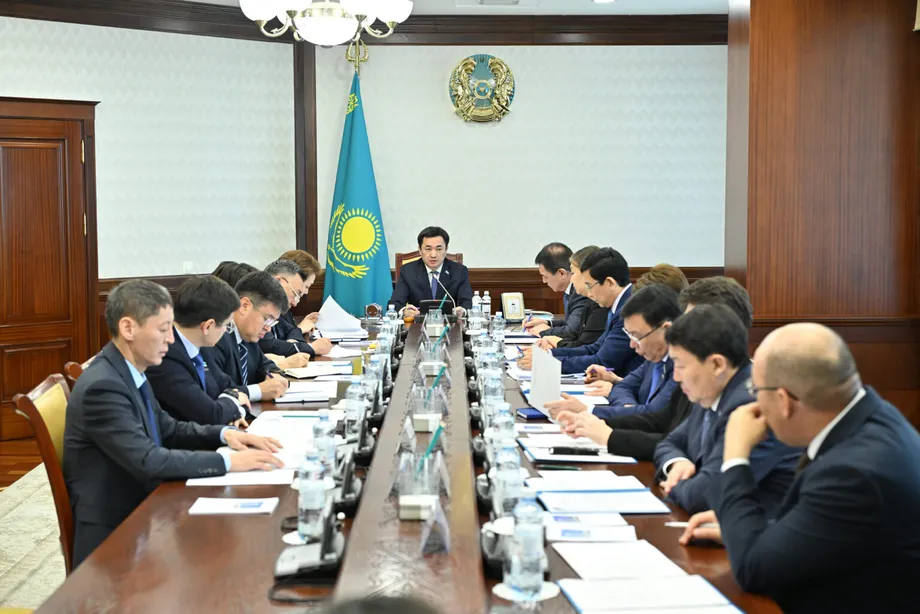
The Kurultai is due to consider the 2027–2029 republican budget bill in its first reading. Its Bureau set the agenda on October 9 at a meeting chaired by Speaker Aibek Dadebay. Government approval and committee discussions have already taken place, but the proposal has not yet completed the legislative process.
The figures show the scale of the task. Spending is planned at 30.2 trillion tenge in 2027, including 10.5 trillion tenge for human capital and 3.8 trillion tenge for the real economy. By 2029, revenue excluding transfers is expected to reach 23.4 trillion tenge, while the deficit is projected to fall to about 1 trillion tenge.
Prime Minister Olzhas Bektenov chaired the government session that approved the forecast and draft budget. The government statement identifies economic stability, social commitments and accelerated construction of infrastructure and social facilities as the main priorities.
Two distinctions matter when reading the plan. Economic growth forecasts describe increases in production, not simply higher prices. Budget revenue figures also differ depending on whether transfers are included. Those differences help explain some headline numbers, although the published figures do not fully reconcile every part of the budget.
What the growth forecast assumes
The baseline projects real GDP growth of 5.3% in 2027, 5.5% in 2028 and 5.4% in 2029. Their arithmetic average is 5.4%, giving more precision to the government's official statement that average annual growth will exceed 5%.
Nominal GDP, which measures output at current prices, is projected to increase from 199.3 trillion tenge in 2027 to 245 trillion tenge in 2029. That is a rise of 45.7 trillion tenge, or about 22.9%. It should not be read as an equivalent increase in production because nominal GDP also reflects price changes.
The immediate starting point is more modest. The government says the economy expanded by 4.1% from January through July and sets a goal of at least 5% growth for the full year. A separate account gives the same 4.1% figure for the first half of 2026, so the reported periods differ.
That account also describes an 8.4% decline in oil production during the first half, alongside growth of more than 5% in the economy outside oil. Manufacturing, construction, trade and transport reportedly contributed more than 80% of economic growth, with manufacturing output increasing by 9.8%.
The proposed trajectory is stronger than the assessment attributed to S&P Global Ratings, which expects average growth of 4% to 4.5% in 2027–2029. The government's 5.4% average is therefore 0.9 to 1.4 percentage points higher. This is a meaningful difference in assumptions, not evidence that either outcome is guaranteed.
Factories, construction and transport carry the forecast
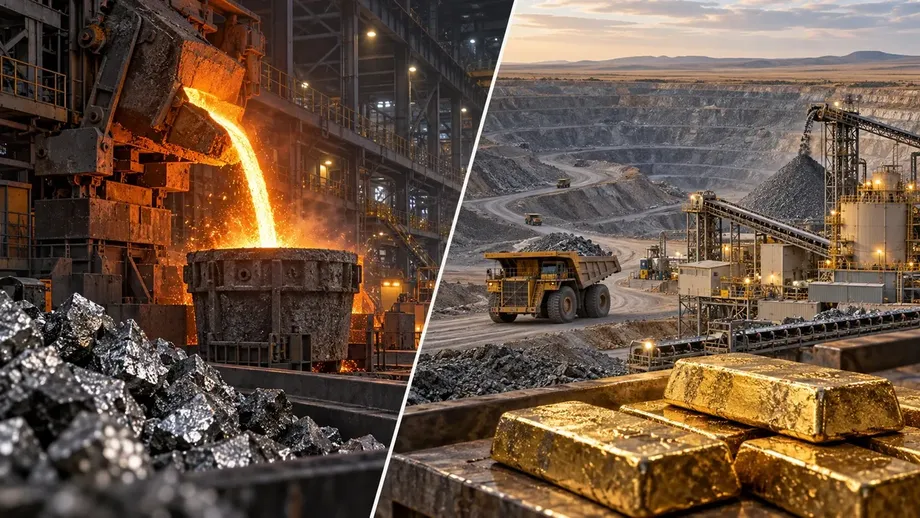
Manufacturing is expected to grow by an average of 5.9% annually, compared with 2% for mining. The forecast identifies metallurgy, machinery, construction materials, chemicals and food production as major contributors. Agriculture is expected to expand by at least 5% each year.
Construction has much faster projected growth: 16% in 2027 and 17.3% in 2029. Deputy Prime Minister and Minister of National Economy Serik Zhumangarin connected that expansion to transport and logistics, energy and water projects, alongside improvements to housing, utilities and social infrastructure.
Services are another large part of the growth plan. Average annual expansion is forecast at 5.7% for trade, 9.2% for information and communications, and 10.4% for transport and warehousing. These assumptions mean the budget's growth case extends beyond factory output and public construction.
The transport forecast follows a substantial increase in traffic along the Trans Caspian International Transport Route, also known as the Middle Corridor. Annual freight volumes through Kazakhstan have risen from 0.8 million to 4.5 million tons over seven years, more than five times the earlier volume. Reported delivery times have fallen from roughly 28–32 days to 13–17 days.
The corridor nevertheless carries substantially less cargo than established northern routes, and participating countries are still addressing constraints. Its past expansion provides context for the transport forecast, but does not establish that growth of 10.4% can be maintained throughout the budget period.
Revenue totals need careful reading
Finance Vice Minister Abzal Beisenbekuly presented the bill to lawmakers with projected 2027 revenue of 25.4 trillion tenge, including 19.9 trillion tenge excluding transfers. The difference, 5.5 trillion tenge, shows how much the headline revenue total depends on counting transfers alongside other income.
Revenue excluding transfers is projected to rise from 19.9 trillion tenge in 2027 to 23.4 trillion tenge in 2029. That is an increase of 3.5 trillion tenge, or about 17.6%. Spending is planned at 30.2 trillion tenge in 2027, 29.4 trillion in 2028 and 29.6 trillion in 2029.
On those figures, spending in 2029 would be 600 billion tenge below its 2027 level in nominal terms, a reduction of about 2%. The intended fiscal adjustment therefore combines rising revenue with restrained expenditure, rather than relying solely on faster economic growth.
Some published totals still require clarification. Subtracting the stated 25.4 trillion tenge in 2027 revenue from 30.2 trillion tenge in spending produces a gap of 4.8 trillion tenge. The reported deficit, however, is 4.6 trillion tenge, or 2.3% of GDP. A detailed accounting breakdown is needed to reconcile the 200 billion tenge difference; the headline figures alone do not explain it.
A smaller deficit does not end oil dependence
The headline deficit is projected to decline by 1.9 percentage points of GDP between 2027 and 2029, from 2.3% to 0.4%. At the projected 2029 nominal GDP of 245 trillion tenge, 0.4% equals 980 billion tenge, consistent with the rounded target of 1 trillion tenge.
The deficit excluding oil income is expected to fall from 5.3% to 2.5% of GDP over the same period. This measure shows the fiscal shortfall when oil revenue is excluded. Its continued size indicates that a nearly balanced headline budget would not mean Kazakhstan had removed its dependence on hydrocarbon income.
National Fund withdrawals are planned at 4.4 trillion tenge in 2027. Of that amount, 2.4 trillion tenge would support the general budget and 2 trillion would finance critical infrastructure. The infrastructure portion accounts for about 45.5% of the planned withdrawals that year.
First Vice Minister of National Economy Azamat Amrin said targeted transfers for major social and infrastructure projects would total 2 trillion tenge in 2027 and 1.5 trillion tenge annually in 2028 and 2029. Across the three years, that amounts to 5 trillion tenge.
Despite those withdrawals, the National Fund's foreign currency assets are forecast to grow from $65.2 billion in 2027 to $70.6 billion in 2029, an increase of $5.4 billion, or about 8.3%. The projection anticipates a larger asset balance alongside continued use of the fund, but the reported figures do not provide a full account of the inflows and investment returns needed to achieve it.
Social spending faces an inflation test
The 10.5 trillion tenge allocation for human capital represents about 34.8% of planned 2027 expenditure, matching the stated share of 35%. Beisenbekuly said the spending is directed toward social protection, health, education and opportunities for development, with the largest portions going to social security and healthcare.
The budget briefing also addressed a planned pension increase of 8.5% and an unchanged minimum wage. The effect on purchasing power will depend on actual inflation. An 8.5% pension increase falls within the projected 2027 inflation range of 7.5% to 9.5%, so it could either exceed or trail price growth.
Reports differ in how they describe the final inflation objective. The account of the planned first reading says inflation should fall to 6% by the end of 2029. The broader forecast descriptions give a range of 6% to 8% for both 2028 and 2029. The 6% figure is the lower end of that range, rather than an identical formulation of the forecast.
The latest comparison supplied for the plan is September 2026, when annual inflation reportedly eased to 9.3% from 9.8% in August. Figures attributed to the Bureau of National Statistics show food prices rising by 8.5%, nonfood goods by 11% and paid services by 8.9% over the year.
Lower inflation would mean prices rising more slowly, not returning to earlier levels. Even if the government reaches 6%, households would still face increasing costs. That distinction matters when assessing whether pension adjustments, wages and social spending keep pace with living expenses.
Lawmakers demand answers on spending quality
Kurultai Deputy Chair Daniya Yespayeva described the proposal as the newly formed legislature's first budget period and called for careful expenditure planning and a gradual reduction in dependence on oil revenue. She also pointed to the broader financial information submitted under the new Budget Code, intended to support scrutiny beyond individual revenue and expenditure lines.
Finance and Budget Committee Chair Olga Perepechina said lawmakers would closely monitor spending execution. She called for transparent, targeted use of resources and said proposals to increase expenditure should be matched by reductions elsewhere.
The committee discussion covered the difference between government growth forecasts and outside assessments, the planned deficit reduction, and the selection and budget approval procedures for projects financed through the National Fund.
Lawmakers also examined agricultural financing, the expected results of increasing the capital of the Agrarian Credit Corporation, and the use and commercialization of scientific research. Questions at the subsequent briefing covered rural infrastructure, reductions in ineffective budget programs and comments from the Supreme Audit Chamber. The accounts do not set out the audit body's detailed findings or all the government's responses.
Bektenov, speaking as prime minister at the government approval session, described the balance the draft seeks to achieve:
The draft law on the republican budget was formed taking into account the need to maintain macroeconomic stability while simultaneously addressing the tasks of social security for the population and stimulating economic growth,
He also directed budget administrators to improve the return on each tenge spent and strengthen financial discipline. That instruction connects the growth targets to execution: allocations alone do not establish whether projects will deliver their intended results.
Productive capacity is the central economic test
Financial analyst Rassul Rysmambetov considers growth in the range of 4.5% to 5.5% achievable, provided Kazakhstan expands its productive capacity. He identified electricity generation, factories and processing as practical requirements:
This would require somewhat greater electricity generation, more factories and better processing. These are the key factors: productive capacity.
Productive capacity means how much an economy can reliably produce with its workers, equipment, energy and infrastructure. Construction can raise GDP while a project is being built. Its lasting value depends on whether the completed asset allows businesses and households to work more efficiently or produce more.
The trade forecast adds another constraint. Goods exports are projected to rise from $82.8 billion in 2027 to $88.5 billion in 2029, while imports increase from $80.5 billion to $88.4 billion. Based on those rounded figures, the merchandise trade surplus would shrink from $2.3 billion to about $100 million.
That is a forecast for trade in goods, not the country's entire external financial position. Still, it shows imports growing faster than exports even as the government expects manufacturing and transport to expand. Delivering more domestic production while meeting demand for imported goods will be one measure of whether investment is strengthening the economy beyond the construction phase.
What happens next
The proposal now moves through legislative examination, with further budget discussions led by lawmaker Tatyana Savelyeva. The government assigned coordination of the bill's submission to Zhumangarin, working with the finance and economy ministries and the Prime Minister's Office.
The sequence of reported developments and targets is:
- September 2026: Annual inflation slows to 9.3%, from 9.8% in August.
- October 9: The Kurultai Bureau sets the agenda for the forthcoming sitting, including the budget's first reading.
- 2027: The plan targets 5.3% real GDP growth, inflation of 7.5% to 9.5% and a deficit of 2.3% of GDP.
- 2028: Real GDP growth is forecast at 5.5%, with spending of 29.4 trillion tenge.
- 2029: Real GDP growth is forecast at 5.4%, revenue excluding transfers reaches 23.4 trillion tenge and the deficit falls to 0.4% of GDP.
No exact date for the first reading, final vote or enactment is specified in the accounts. The spending allocations and economic assumptions therefore remain proposals. Legislative scrutiny will need to resolve the accounting questions, examine project selection and test whether the planned revenue growth can support social commitments while the deficit falls.
Key Points
- Kazakhstan's proposed 2027–2029 budget assumes average annual real GDP growth of 5.4%.
- The headline deficit is projected to fall from 2.3% to 0.4% of GDP, while the deficit excluding oil income remains larger.
- Planned 2027 spending totals 30.2 trillion tenge, including 10.5 trillion for human capital.
- Targeted National Fund transfers for major projects total 5 trillion tenge across the three years.
- Reports describe the 2029 inflation objective as either 6% or a range of 6% to 8%.
- The bill awaits further legislative consideration, with spending efficiency and productive capacity central to achieving its targets.