A $5.2 billion dispute divides Kashagan partners
ExxonMobil has reportedly blocked a proposed settlement of Kazakhstan's 2.356 trillion tenge environmental fine against the operator of the Kashagan oil field, with TotalEnergies joining its opposition. The reported breakdown comes after authorities resumed compulsory collection on September 29, 2026, leaving the consortium facing a penalty worth roughly $5.2 billion while separate international arbitrations continue.
Contents
- A $5.2 billion dispute divides Kashagan partners
- Who opposed the settlement, and who may pay?
- The sulfur figures behind the fine
- How a reversed penalty returned to enforcement
- Collection could reach beyond the operator
- International orders and domestic enforcement collide
- The disputed $80 billion expansion
- The much larger fight over oil revenue
- What remains unresolved
- The Bottom Line
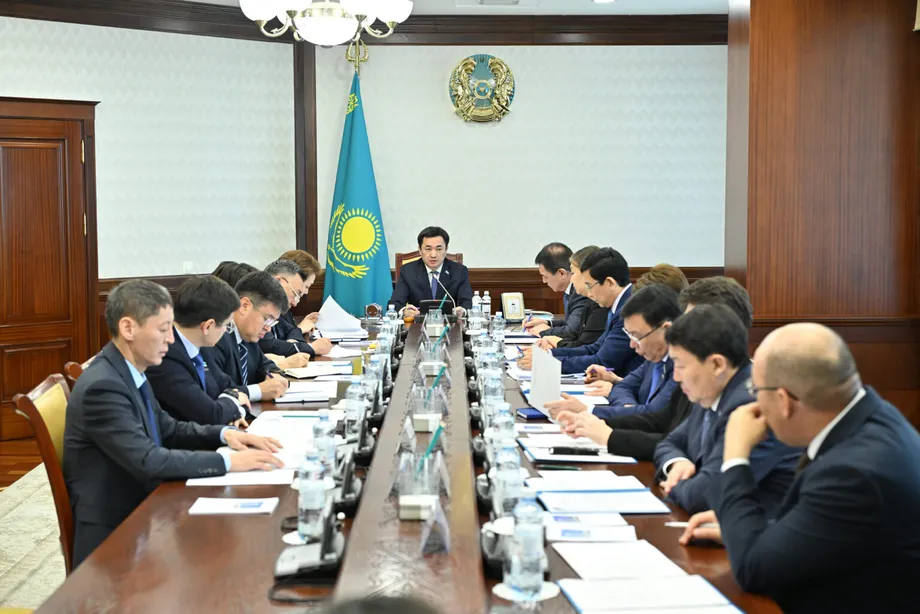
The October 9 account, based on unnamed people familiar with the negotiations, says Exxon persuaded TotalEnergies, previously neutral, to reject the latest proposal. Their combined opposition was enough to prevent the partners from proceeding. Neither the settlement terms nor the companies' reasons for opposing them have been disclosed.
The dispute concerns sulfur storage at the Bolashak processing complex in Kazakhstan's Atyrau Region. It also overlaps with discussions about future investment at Kashagan, including a reported $80 billion western development that Kazakhstan's state oil company, KazMunayGas, has disputed. That proposal is not an approved project.
Two distinctions are central to understanding the stakes. The sulfur penalty is separate from Kazakhstan's much larger claims over the project's contractual and financial arrangements. The reported western development is also separate from published plans to expand existing Kashagan operations. Neither an investment agreement nor a comprehensive legal settlement has been announced.
Who opposed the settlement, and who may pay?
ExxonMobil, TotalEnergies, Shell and Eni each hold 16.81% of Kashagan. KazMunayGas owns 16.88%, CNPC holds 8.33% and Japan's Inpex holds 7.56%. North Caspian Operating Company, or NCOC, operates the field for the consortium.
Exxon and TotalEnergies together hold 33.62%. The report that they could stop the settlement therefore points to the importance of partner consent, rather than a simple majority of ownership. The precise decision rules used for this proposal have not been disclosed.
KazMunayGas has reportedly decided to pay its share of the fine. Whether any payment has actually been made is not established. A decision by the state company to pay would not, by itself, show that the other partners accepted the penalty or that NCOC's legal challenges had ended.
ExxonMobil, TotalEnergies, KazMunayGas, Shell and Inpex declined to comment on the reported negotiations. Eni, CNPC and NCOC did not respond to requests for comment. Without a published proposal or statements explaining the partners' positions, the reported disagreement cannot be treated as evidence of a broader split over every aspect of Kashagan's development.
The sulfur figures behind the fine
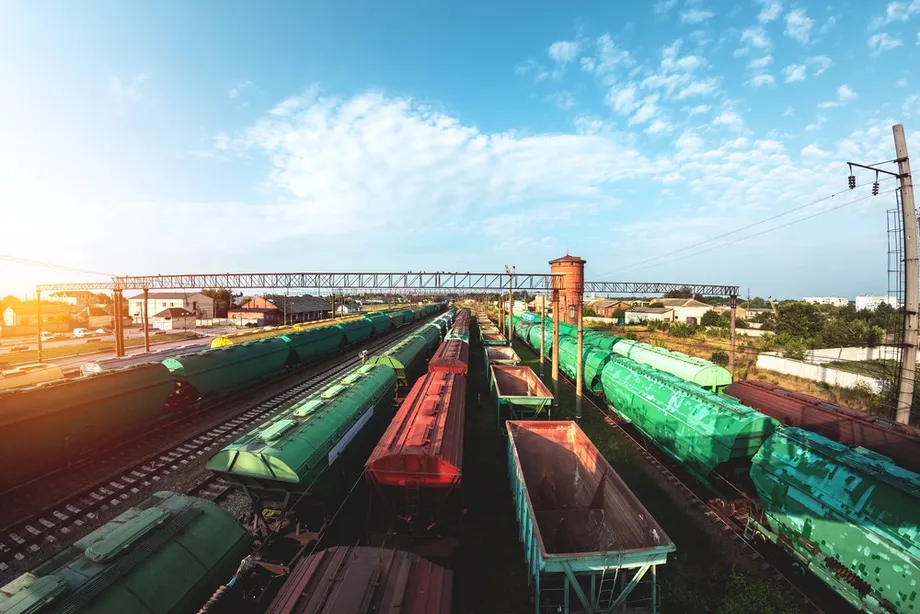
The penalty followed a 2022 environmental inspection that identified about ten alleged violations at Kashagan's onshore facilities. Inspectors said more than 1.7 million metric tons of sulfur had accumulated at Bolashak, against a permitted storage limit of 730,000 tons. NCOC denies the alleged violations and maintains that its sulfur management complied with Kazakh law and project permits.
Kashagan's oil and gas contain high levels of hydrogen sulfide, a toxic gas that complicates extraction and processing. Removing it produces sulfur that must be managed, stored or sold. The legal dispute concerns the amount accumulated in storage and the rules governing that storage, not simply how much sulfur the project produces each year.
NCOC's 2024 sustainability figures put sulfur in block storage at 1.775 million tons at the end of 2022 and 613,000 tons at the end of 2024. That represents a reduction of 1.162 million tons, or about 65%. The later figure was 117,000 tons below the cited permit ceiling.
The same figures show annual sulfur production of 1.42 million tons in 2024. Production is a flow over a year; a stockpile is the amount remaining at a particular date. Comparing them as though they measure the same thing would misstate the dispute. Reducing the stockpile also does not decide whether earlier storage breached the permit.
Storage concerns predated the inspection. An Eni presentation from early 2017 warned that, without sulfur removal, permitted capacity could be exceeded by 1.4 million tons by the end of 2018. A 2021 directive described an urgent need to export accumulated sulfur. Those warnings establish that capacity was a longstanding concern, but they do not resolve NCOC's legal defense.
How a reversed penalty returned to enforcement
The fine has survived several rounds of litigation, including a reversal in 2025. A Caspian Policy Center analysis records an August 4, 2025 decision by an Astana appeals court in NCOC's favor, following a July Supreme Court decision returning the case to a newly constituted appellate court.
Later accounts describe the original penalty order as having been overturned because of procedural defects, followed by a reissued order. The Atyrau Regional Court upheld the fine on June 19, 2026. The earlier reversal therefore should not be read as a final resolution of the current enforcement dispute.
The main steps show how the case moved from an inspection to active collection:
- 2022: Inspectors challenged sulfur storage at the Bolashak processing complex.
- January 2025: An international tribunal issued an interim ruling addressing enforcement of the fine.
- August 4, 2025: An Astana appeals court ruled in NCOC's favor; authorities subsequently reissued the penalty.
- February 27, 2026: ICSID registered the foreign shareholders' investment treaty case.
- June 19, 2026: The Atyrau Regional Court upheld the fine.
- July 2026: NCOC missed the payment deadline, triggering compulsory collection.
- August 12, 2026: The ICSID tribunal was constituted.
- September 7, 2026: Collection paused during NCOC's challenge to an enforcement officer's actions.
- September 29, 2026: Collection resumed after the challenge was rejected.
Dollar descriptions of the penalty vary with exchange rates and rounding. The policy analysis described approximately 2.3 trillion tenge as $5.1 billion at 2022 rates and $4.2 billion at the time of its publication. Later accounts value the more precise 2.356 trillion tenge amount at roughly $5.2 billion. Those conversions do not necessarily indicate changes to the underlying penalty.
Collection could reach beyond the operator
After the July payment deadline passed, authorities froze NCOC property and vehicles. Its managing director was warned of possible administrative and criminal liability for failure to comply with the court ruling. These are enforcement measures, not a finding that the director has committed an offense.
Kazakhstan's Justice Ministry has also said it is considering direct collection from the international partners, potentially through foreclosure on their property and funds. Some Kashagan shareholders have interests in other major Kazakh oil projects, including Tengiz and Karachaganak, making the possible reach of enforcement a concern beyond NCOC itself.
The ministry has said bailiffs can seek suspension of NCOC's license and have requested permit information from authorized bodies. There is no confirmed license suspension in the reported developments. Likewise, consideration of collection from shareholders should not be confused with a completed seizure of their assets.
The September pause was procedural. The Specialized Interdistrict Administrative Court of Atyrau Region requested enforcement case materials while considering NCOC's challenge, temporarily interrupting collection. The court's rejection of that challenge was reported on September 28, and enforcement returned to active status the following day.
International orders and domestic enforcement collide
The six foreign shareholders are pursuing an investment treaty case at the International Centre for Settlement of Investment Disputes, known as ICSID. Registered on February 27, 2026, with its tribunal constituted on August 12, the case remains pending. Investment treaty proceedings consider whether a state's treatment of foreign investors breached protections agreed in international treaties.
A separate commercial arbitration operates under the rules of the United Nations Commission on International Trade Law, or UNCITRAL. NCOC says that tribunal issued interim measures preventing Kazakhstan from enforcing the fine while proceedings continue. Interim measures are temporary directions intended to protect the parties' position before a final decision; they do not settle the underlying dispute.
A January 2025 interim ruling reportedly directed Kazakhstan to prevent enforcement of the approximately $5 billion sulfur fine and urged both sides not to aggravate the dispute. Kazakhstan's Justice Ministry rejects NCOC's interpretation of the order's effect, arguing that a commercial tribunal cannot prevent enforcement of environmental law and a final domestic court judgment.
NCOC set out its position in a July 23 statement, speaking for itself and the international companies contesting the penalty:
consider the sulphur fine to be without any basis and are contesting it by all available means
The disagreement is therefore about both liability and whether collection may proceed before international proceedings conclude. No final arbitration award resolving the sulfur dispute has been identified, and the pending ICSID case should not be confused with the earlier commercial arbitration.
The disputed $80 billion expansion
A reported proposal from August would pair ExxonMobil and KazMunayGas in a venture with equal ownership to develop western Kashagan. The proposed investment was put at $80 billion, with potential production of up to 600,000 barrels a day. Its reported conditions included resolution of the sulfur fine and Kazakhstan's separate claims of around $150 billion.
KazMunayGas chairman Askhat Khassenov rejected the account as inaccurate and said the company had not confirmed plans for that venture. Neither the investment amount nor the proposed production capacity has been independently confirmed. Treating those numbers as committed spending or an agreed production target would overstate the project's status.
KazMunayGas has published different expansion plans for existing operations. Phase 2A and Phase 2B could raise total oil and condensate production to roughly 710,000 barrels a day, subject to technical work, gas processing capacity and investment decisions. How any western development would fit alongside those phases is unresolved. The two capacity figures should not be added together as a confirmed future output total.
Kashagan produced approximately 18.2 million metric tons of oil in 2025, according to KazMunayGas, and recoverable reserves are estimated at 9 billion to 13 billion barrels. The resource is substantial, but the shallow northern Caspian location, high reservoir pressures and hydrogen sulfide content make expansion technically demanding. Resolving a legal dispute would not remove those engineering requirements.
The much larger fight over oil revenue
The sulfur fine sits alongside a broader commercial arbitration over Kashagan's finances and contractual obligations. Reports give different values for Kazakhstan's wider claims: around $150 billion in accounts of the expansion talks, $160 billion in accounts of the broader arbitration, and $166 billion in another account linking the cases. The figures are not reconciled, and they should not be presented as a single settled amount.
The arbitration also has differing reported start dates. One account describes proceedings launched in 2023; the Caspian Policy Center analysis describes a claim filed in 2024. The case is registered with the Permanent Court of Arbitration and is being heard by a tribunal in Geneva, with proceedings expected to continue until at least 2028.
At issue is a production sharing agreement signed in 1997 and amended in 2008. Such agreements allow investors to finance development and recover eligible costs from production before sharing the remaining proceeds with the host state. The Kashagan agreement has never been published, limiting public scrutiny of its detailed financial terms.
A reported interim ruling records Kazakhstan's allegation that NCOC receives 98% of oil revenue after priority payments. That is a claim about a particular revenue category, not proof that Kazakhstan receives only 2% of every dollar generated by Kashagan.
Energy Insight & Analytics estimated that Kazakhstan received $1.1 billion through profit sharing between 2016 and 2023, and $5.4 billion through all Kashagan payments, including taxes, royalties and other receipts. The firm estimated oil sales of $55 billion during that period and development and operating costs of $86 billion. These estimates help explain why large sales can coexist with limited profit distributions, but they do not establish whether every disputed cost was contractually valid.
What remains unresolved
The latest failed settlement is not the first attempted compromise. The Caspian Policy Center analysis describes a 2024 proposal involving $110 million in additional social investments and supplemental payments tied to liquefied petroleum gas supply, described as reimbursable under the production sharing agreement. No official government response was recorded. There is no basis to assume those terms match the undisclosed proposal Exxon reportedly rejected.
The wider relationship also remains mixed. In February, Shell chief executive Wael Sawan said new investment would pause pending clarity over legal cases involving Kashagan and Karachaganak. Shell nevertheless signed an exploration agreement in Kazakhstan's Aktobe Region in March. That agreement shows that legal disputes have not stopped every form of engagement, although it does not resolve the investment constraints at Kashagan.
A separate Swiss civil complaint filed in March 2025 by Kazakhstan's PSA body concerned alleged schemes involving Kashagan and Karachaganak. Neither Eni nor NCOC was named as a defendant. Those allegations should remain distinct from the sulfur permit case and from any established finding of wrongdoing.
For now, collection is active, the shareholders' treaty case is pending, and the commercial arbitration has no announced final resolution. No new settlement deadline or hearing date is identified. Whether KazMunayGas has paid, whether authorities will pursue shareholder assets, and whether a revised investment proposal will emerge are all unresolved. The commercial proceedings' expected duration until at least 2028 offers a longer horizon, not a deadline for settling the fine.
The Bottom Line
- ExxonMobil reportedly blocked the latest settlement proposal, with TotalEnergies joining its opposition.
- The disputed fine totals 2.356 trillion tenge, currently described as roughly $5.2 billion.
- Collection resumed on September 29, 2026, after a court rejected NCOC's enforcement challenge.
- NCOC reduced reported sulfur block storage by about 65% between the end of 2022 and the end of 2024, without resolving the earlier permit dispute.
- International proceedings continue, with Kazakhstan and NCOC disagreeing over the effect of interim measures on collection.
- KazMunayGas disputes the reported $80 billion western Kashagan venture; separate Phase 2A and Phase 2B expansion plans remain conditional.
- The failed settlement's terms, any KazMunayGas payment and the next steps toward a negotiated resolution remain undisclosed.