New campuses anchor Malaysia's next digital expansion
Google plans to invest US$15 billion (about RM61.1 billion) in Malaysia during 2027 and 2028, expanding its data centre infrastructure in Selangor and Negeri Sembilan while funding clean energy, water security and training programmes for 800,000 Malaysians by 2031.
Contents
- New campuses anchor Malaysia's next digital expansion
- What will the computing infrastructure do?
- Where the jobs and economic gains would come from
- More than 80 Malaysian suppliers are involved
- Four programmes aim to reach 800,000 people
- Who will pay for the electricity?
- Cooling efficiency comes with water commitments
- The timetable and decisions still to come
- Key Points
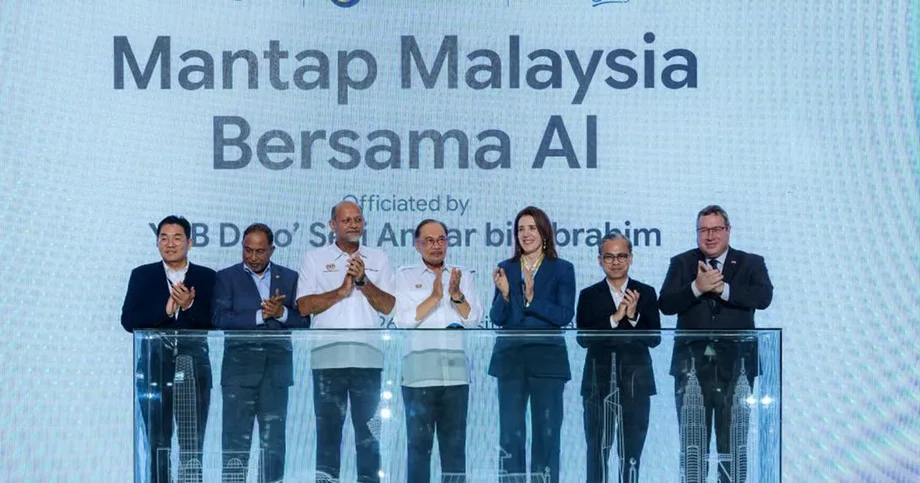
Alphabet and Google president and chief investment officer Ruth Porat announced the investment at the Mantap Malaysia Bersama AI programme at Universiti Malaya in Kuala Lumpur on November 4, 2026. Google projects that construction will support more than 37,000 local jobs each year and contribute an annual average of US$1.1 billion (RM4.48 billion) to Malaysia's gross domestic product.
The package builds on Google's US$2 billion infrastructure commitment announced in 2024. The new commitment is 7.5 times that earlier amount, showing how much the company's ambitions have grown as demand rises for artificial intelligence and cloud computing services.
Google's first Malaysian data centre campus at Elmina Business Park in Selangor is already operating. The expansion includes that campus and new campuses in industrial zones in Selangor and Negeri Sembilan, alongside plans to add more than one gigawatt of clean energy capacity to the national grid.
Porat described the investment as a commitment to Malaysia's workforce and digital development:
Google's announcement reflects our confidence in the strength of Malaysia's leadership, its skilled workforce, and enthusiasm for digital transformation.
Prime Minister Anwar Ibrahim welcomed the investment as a step towards making Malaysia a leading digital centre in Southeast Asia. He said its value should also be measured through stronger domestic industries, better skills and responsible management of electricity and water.
What will the computing infrastructure do?
Google says its Malaysian facilities will provide computing capacity for locally developed digital and AI applications, while supporting services including Search, Maps and Chrome for people and organisations across Malaysia and the Asia Pacific region.
A data centre houses computers and the electrical, cooling and security systems needed to keep them running. Cloud computing allows businesses and public agencies to use that computing power through a network instead of buying and maintaining all the equipment themselves.
Google describes the expanded Selangor infrastructure as supporting its upcoming Google Cloud region in Malaysia. Some accounts describe both the first campus and cloud region as already operating; Google's detailed expansion description identifies the campus as operational and the cloud region as upcoming.
Organisations identified as potential users of Google's cloud capabilities include AirAsia, AEON360, Bank Muamalat Malaysia, Gamuda, Hong Leong Bank, Maxis, the Digital Ministry and the Higher Education Ministry. The intended benefits include faster digital services and AI tools adapted to particular business or public service needs.
In Negeri Sembilan, Google's plans include a site in Port Dickson, where it bought 389 acres in May 2025. Engineering and infrastructure work is being handled by Gamuda Engineering. The site's reported capacity is between 500 megawatts and one gigawatt, although Google has not published confirmed capacity figures for the new campuses.
Where the jobs and economic gains would come from
Google estimates that the construction phase will generate average annual labour income of US$378 million (RM1.54 billion). About 6,000 of the more than 37,000 jobs supported annually are expected to be in construction, with the wider total extending through suppliers and businesses connected to the projects.
The projected annual GDP contribution of RM4.48 billion measures economic activity generated in Malaysia. Investment spending is a different measure: it covers the money committed to developing the infrastructure and associated initiatives.
Across the two construction years, the stated annual averages imply about RM8.96 billion in GDP contributions and RM3.08 billion in labour income. These calculations apply Google's annual estimates to 2027 and 2028.
Once the facilities operate, Google projects more than 9,000 ongoing local jobs, with average wages 45% above the national median. The median is the middle wage when workers are ranked by earnings. Google has not provided a ringgit salary figure for that comparison.
The operational employment estimate includes specialist positions at the campuses, contractor roles and jobs in businesses serving employees and their families. Roles include data centre technicians, mechanical and electrical engineers, logistics operations managers and physical security managers.
Google says it has established a full local team at Elmina Business Park and is recruiting technical and facilities management staff for other planned campuses. For workers, the opportunities therefore range from building the facilities to maintaining the systems that keep them operating.
More than 80 Malaysian suppliers are involved
Google is working with more than 80 Malaysian companies and organisations across construction, civil engineering, network infrastructure, power and cooling systems, logistics and support services. Those services include legal work, catering and waste management.
Google says these relationships will continue through decades of campus operations. Suppliers can gain recurring maintenance and service contracts as well as experience delivering equipment and work to the standards required by a global technology company.
Anwar linked the investment to the Madani Economy framework and the New Industrial Master Plan 2030. He said foreign investment should strengthen Malaysian industrial capabilities and human capital alongside bringing in money and physical infrastructure.
Digital Minister Gobind Singh Deo also linked the expansion to the Malaysia Digital 2030 Action Plan. He identified opportunities both for companies supplying AI computing facilities and for developers using that capacity to create products and services.
Four programmes aim to reach 800,000 people
Google's training commitment runs from 2027 to 2031 and initially focuses on communities in states hosting its campuses. The four programmes cover school education, small businesses, local government and vocational employment.
Experience AI Malaysia, developed with the Education Ministry, Penang Science Cluster and Raspberry Pi Foundation, will certify educators to teach students aged 11 to 14. Lessons will use practical activities to help students direct AI tools, solve problems and assess the answers those tools produce.
Jelajah AI MSME, developed with Pepper Labs, will help microentrepreneurs create searchable business profiles and digital storefronts. A pilot in Selangor and Negeri Sembilan will precede expansion across Malaysia, helping small traders reach customers beyond their immediate neighbourhoods.
Anjakan Kemahiran AI Demi Rakyat, known as AKAD Rakyat, will work with Arus Academy to provide AI literacy and productivity tools to local council officers and constituency members. It will target 19 councils in Selangor and Negeri Sembilan, with designated AI champions helping staff improve workflows and automate routine paperwork.
Data Centre Institutes are scheduled to begin at selected polytechnics in the two states from 2027. A course lasting 10 weeks will prepare technical and vocational education and training jobseekers for deployment and operations roles, including practical sessions using a physical data centre simulator supplied by Google.
Anwar said the skills effort should benefit rural communities, people on low incomes, the Orang Asli community, civil servants and small traders. Google has also announced work with SOLS Foundation on Solar and Energy Labs in public schools and training for young people from lower income and Indigenous communities.
Who will pay for the electricity?
Google says it will pay for all electricity consumed by its Malaysian campuses and the direct infrastructure costs of connecting them to the national grid. Anwar said the company would meet its electricity needs without public subsidies.
The company plans to work with Tenaga Nasional Berhad to add more than one gigawatt, or 1,000 megawatts, of clean energy capacity. The collaboration will support new generation under Malaysia's Corporate Renewable Energy Supply Scheme and explore projects capable of providing clean electricity around the clock.
Google also plans to expand renewable energy partnerships involving consortiums led by Shizen Energy-Solarvest and TotalEnergies. Porat described the approach as "BYOP", meaning "bring your own power".
Solar generation varies with daylight and weather, while data centres need reliable power continuously. The planned work on supply around the clock addresses that operational need alongside the commitment to add generation capacity.
Malaysia recently approved a 30% renewable energy minimum for data centres, with the Energy Commission developing the implementation framework. Government figures for August 2026 showed operators had contracted for 2,346 megawatts but were drawing 1,374 megawatts, highlighting the importance of planning for both reserved capacity and actual use.
The government has also introduced charges for reserved power and requirements for investors to cover necessary transmission upgrades. Google's commitments sit within that wider effort to keep the costs of expanding digital infrastructure with the operators using it.
Cooling efficiency comes with water commitments
Google projects a power usage effectiveness ratio, or PUE, of 1.12 to 1.14 for its Malaysian campuses, compared with an industry average of 1.54 cited in its announcement.
PUE compares all electricity used by a data centre with the electricity used by its computing equipment. At 1.12, every unit used by the computers requires another 0.12 units for cooling and other supporting systems. At 1.54, that supporting requirement is 0.54 units. A lower ratio means less electricity goes to those additional systems.
Google says water cooling can reduce data centre energy use by about 10%. Its assessments with environmental scientists, hydrologists and water sustainability specialists found that watersheds serving the planned Selangor and Negeri Sembilan campuses were not at high risk of scarcity or depletion.
The company says it considers water cooling only where local resources are healthy and resilient. Anwar said Google had accepted environmental conditions imposed by the government and committed to replenishing more freshwater than its operations consume.
On November 2, 2026, Google announced US$160 million for shared water infrastructure in Negeri Sembilan. The planned reservoir, located away from the main river channel, and treatment plant would supply up to 65 million litres of drinking water daily for communities and the planned Port Dickson campus.
Anwar said the facilities would help manage monsoon flood risks and secure reserves during dry periods. Ownership is to pass to the state government after completion, creating a permanent public asset.
In Selangor, Google is supporting river basin stewardship at Sungai Buloh and Sungai Selangor with the Global Environment Centre. Water resilience work at four schools includes tanks holding 20,000 litres each, intended to provide emergency supplies for up to two weeks for as many as 2,000 people at each school.
The timetable and decisions still to come
Google's expansion connects an operating campus with construction planned for 2027 and 2028 and training targets extending to 2031. The main milestones are:
- 2024: Google announced a US$2 billion Malaysian infrastructure commitment and broke ground at Elmina Business Park in October.
- November 2, 2026: Google announced US$160 million for shared water infrastructure in Negeri Sembilan.
- November 4, 2026: Porat announced the additional US$15 billion investment at Universiti Malaya.
- 2027: Planned Data Centre Institutes begin at selected polytechnics.
- 2027 and 2028: Construction of the new campuses is scheduled.
- 2031: Google aims to have reached 800,000 Malaysians through the four skills programmes.
Google has not published a breakdown of the US$15 billion by year, campus or spending category, opening dates for the new campuses, or whether the US$160 million water commitment is included in the total. Those details will determine how the headline investment translates into individual projects and delivery schedules.
Gobind has invited Google to participate in Malaysia's AI Cities initiative, which would bring public agencies, universities, researchers and technology companies together to test applications for traffic, floods, energy efficiency and public services. His proposal connects the new computing infrastructure with services that communities could use directly.
Key Points
- Google plans to invest US$15 billion in Malaysia during 2027 and 2028, expanding infrastructure in Selangor and Negeri Sembilan.
- Construction is projected to support more than 37,000 local jobs annually and contribute RM4.48 billion a year to GDP.
- Operating facilities are projected to support more than 9,000 local jobs, including supplier and community employment.
- Four skills programmes aim to reach 800,000 Malaysians by 2031.
- Google plans more than one gigawatt of additional clean energy capacity and says it will cover campus electricity and direct grid connection costs.
- A planned Negeri Sembilan reservoir and treatment plant would supply up to 65 million litres of drinking water daily before transfer to state ownership.