A new police chief, but no clear reason for the change
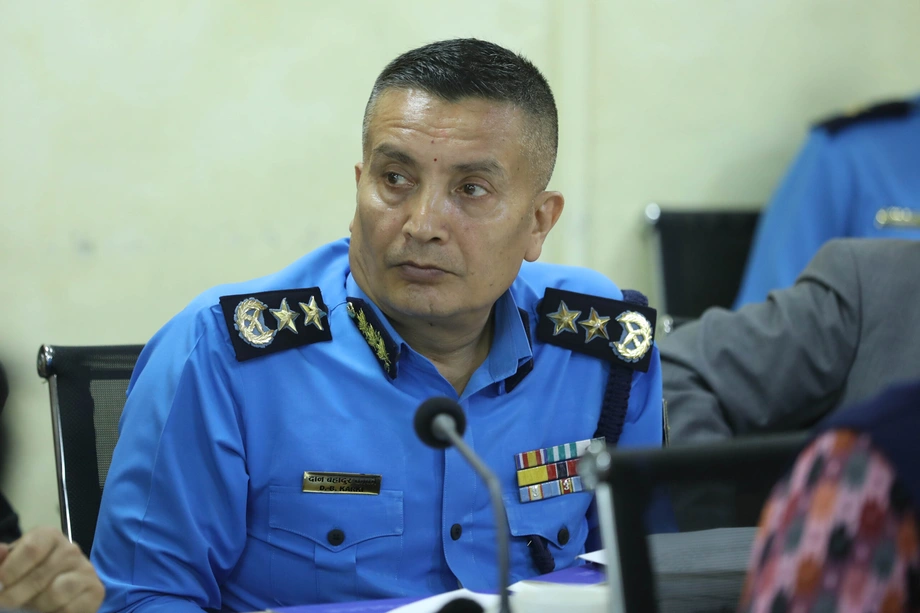
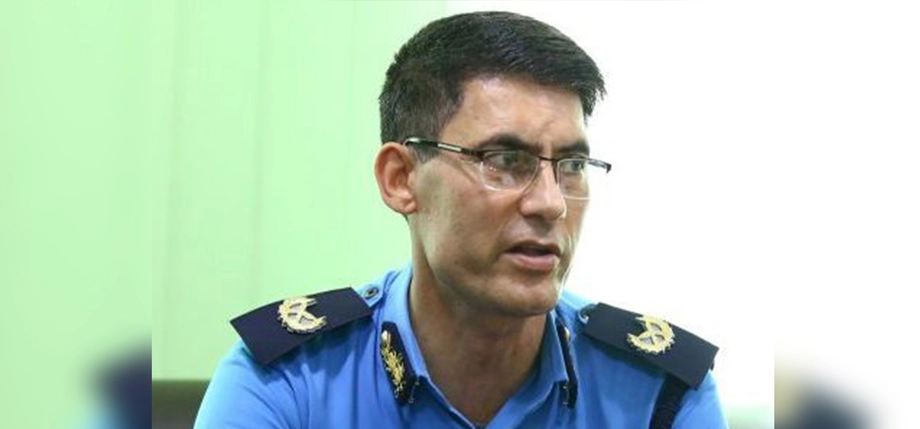
Nepal's Cabinet appointed Manoj Kumar KC as the country's 34th police chief on November 4, 2026, replacing Dan Bahadur Karki before his expected retirement and moving him into a newly created position as special security adviser to Prime Minister Balendra Shah.
Contents
- A new police chief, but no clear reason for the change
- What the Cabinet changed
- The government and ruling party give conflicting explanations
- Disagreement reached the prime minister and party leader
- Disputes over arrests came before the latest scandal
- Sapkota's phones brought the prime minister's office into scrutiny
- Transfers and uniform purchases added pressure
- KC brings a record of investigations involving powerful figures
- A familiar legal dispute returns
- Key Points
The decision took effect immediately, on Kartik 18, 2083, in Nepal's calendar. Government spokesperson Sasmit Pokharel cited Rule 41 of the Police Rules, 2071, for KC's promotion. He also announced the creation of an adviser position at the rank of inspector general in the Office of the Prime Minister and Council of Ministers.
Pokharel did not give a specific reason why Karki could no longer lead Nepal Police. Instead, the education and sports minister described the decision as a reassignment rather than punishment.
Pokharel explained the government's position after the Cabinet meeting:
He should not be viewed as having been punished. It is merely a change in responsibilities. He has been appointed security advisor. Now that a new IGP has taken charge, he will carry out the necessary work.
Karki's move comes amid disputes over arrests, police transfers, election uniform purchases and the handling of phones seized in a money laundering investigation. The government has not identified which of these issues, if any, formed the basis for replacing him.
The practical change is substantial. KC now leads the organisation responsible for criminal investigations and domestic security. Karki retains a senior security role, but loses command of the police force. His expected service retirement date was Chaitra 27, 2084, leaving roughly 17 months when the Cabinet changed the leadership.
What the Cabinet changed
The Cabinet's stated purpose for creating Karki's new position was to provide the prime minister with security advice and consultation to strengthen peace and security under current circumstances. The position carries the rank of inspector general, the same rank as the head of Nepal Police.
Pokharel's account of the decision described two connected steps: assigning Karki to the new advisory position, then promoting Additional Inspector General KC into the police leadership vacancy. KC had been heading the Crime Investigation Department at police headquarters.
Rule 41 was cited for KC's promotion. The government did not publicly explain the specific legal authority and assessment used to move Karki out of command before his expected retirement. Accounts of the decision describe the advisory appointment as a way to avoid legal complications associated with outright dismissal.
Home Minister Sudhan Gurung placed KC's new rank insignia on him at the Home Ministry on Wednesday. The ceremony had been scheduled for the day of his appointment. Previously, the home secretary had generally performed that task.
The government and ruling party give conflicting explanations
Pokharel said the ruling Rastriya Swatantra Party, or RSP, had also instructed the government to take action on sensitive issues in changing circumstances. He connected that instruction to the decision to change Karki's responsibilities, while repeatedly describing the new advisory assignment as a sensitive role.
RSP spokesperson Jagdish Kharel rejected the suggestion that the party had instructed the government to appoint or remove a particular person. He said the party supported the prime minister in governing but did not intervene in individual appointments.
Kharel said a party secretariat meeting on Saturday had called for an investigation and action over police arrests of journalists at media offices. That instruction covered those who made the arrests and those who ordered them, he said. It did not direct the government to remove Karki.
The two explanations leave a concrete accountability gap. The government calls the move a reassignment linked to a party instruction; the party says its instruction concerned responsibility for journalist arrests, and the government has not described Karki's transfer as action over those arrests.
Disagreement reached the prime minister and party leader
Prime Minister Shah proceeded with the change despite reported opposition from RSP chair Rabi Lamichhane. A leader close to Lamichhane said the party chair had argued that removing a serving police chief required adequate reasons that could be explained and defended publicly.
Shah and Lamichhane reportedly discussed the issue at length during their latest meeting. Lamichhane's position, as described by that leader, focused on the justification for removing Karki before his service ended.
Opposition leader KP Sharma Oli, a former prime minister and chair of the Communist Party of Nepal (Unified Marxist-Leninist), suggested the government had chosen someone it expected to carry out its instructions. His response added a political attack to a decision already exposing disagreement within the governing party.
Police operations against journalists are another part of the dispute. Accounts of those operations describe pressure from people in the prime minister's secretariat, including instructions to Karki concerning arrests whose legality was challenged. Responsibility for issuing and carrying out those orders remains part of the scrutiny surrounding the leadership change.
Disputes over arrests came before the latest scandal
Karki's difficulties with the Shah government began before the investigation into Inam Sapkota, the money laundering suspect whose contacts later brought senior officials under scrutiny. Earlier disagreements concerned how quickly police should act on political instructions and what legal groundwork was needed first.
One dispute involved the arrests of former prime minister Oli and former home minister Ramesh Lekhak following the government's decision to implement a commission report on events during the Gen Z protests. Political leaders wanted immediate arrests. Karki reportedly sought an assessment of the commission's findings, the evidence and the legal grounds for taking the two men into custody.
Karki requested written instructions before the arrests. Gurung subsequently provided instructions through the Home Ministry, and police detained Oli and Lekhak. Both were later released following a Supreme Court order. The disagreement concerned the timing and process of arrest, with Karki seeking legal and documentary support before proceeding.
Another confrontation concerned former chief justice Cholendra Shumsher Rana. Police took him from his Bansbari residence in Kathmandu to Teku on the night of Asoj 11. He returned home the following day.
Police said Rana had been brought in for security reasons rather than formally arrested; another account described the detention as connected to suspected interference in court cases. Alleged conversations in which Karki questioned the legal basis of the instruction have not been independently confirmed.
Sapkota's phones brought the prime minister's office into scrutiny
Police arrested Inam Sapkota at Tribhuvan International Airport on Asoj 14 during a money laundering investigation. Messages and contact details said to have been recovered from his phone subsequently drew attention to relationships involving politicians, judges and senior security officials.
Karki was among those said to have communicated with Sapkota on WhatsApp. People close to Karki acknowledged contact but maintained that he had provided no improper assistance. As the controversy grew, accounts emerged that the prime minister's secretariat was pressing him to resign. Police headquarters denied those accounts.
A more detailed allegation concerned two phones seized from Sapkota. Senior police sources said the devices spent two days at the Jwagal, Lalitpur, home of Kumar Ben, the prime minister's chief adviser, before digital forensic examination. They said location checks placed both phones at the house.
Those sources said a subsequent forensic examination found activity involving WhatsApp and Facebook, screenshots and deleted messages. Some deleted exchanges allegedly involved Sapkota and Ben. The sources also described regular contact between the two over several months, including a message recommending Anantaraj Ghimire as an RSP election candidate in Dang constituency No. 2.
Digital forensics is the examination of electronic devices to recover and analyse information. Investigators normally document who holds a seized device and what happens to it, creating a record often called the chain of custody. If a phone changes hands or is used before examination, investigators must account for that access when reconstructing its contents.
The allegations about Ben's custody of the phones were made public on Kartik 17, the day before the Cabinet replaced Karki. No public explanation has been given of who authorised the alleged handover, what access occurred during those two days or how responsibility will be assessed.
Transfers and uniform purchases added pressure
Routine police transfers had also become a source of tension. Proposals affecting officers from inspector to superintendent had reportedly stalled since Bhadra because political approval had not arrived. One account put the number of officers affected at about 800 and said Gurung had held up the proposals.
Police regulations give the inspector general authority over transfers at certain ranks. In practice, the stalled proposals show how decisions within that formal authority can still depend on agreement with the ministry and political leadership. Officers who had spent more than a year in the same assignments were among those awaiting changes.
An earlier disagreement involved police personnel assigned to the Commission for the Investigation of Abuse of Authority. Political pressure reportedly favoured recalling a large number at once. Police leaders preferred phased transfers to protect ongoing investigations. Some officers were eventually moved through the regular process rather than through a wholesale withdrawal.
Karki also faced scrutiny over uniforms purchased for 133,980 temporary election police recruited for the House of Representatives election on Falgun 21, 2082. The recruits received pay, rations and clothing for 40 days of election duty. Those figures show why even a procurement issue involving temporary personnel could involve substantial public spending.
RSP lawmaker Khagendra Sunar raised allegations of irregularities at Parliament's Public Accounts Committee, where he and Karki clashed. The committee formed a subcommittee led by lawmaker Manish Jha to investigate. The anti corruption commission was also investigating the uniform purchases. The parliamentary inquiry had not completed its work when Karki was replaced.
Karki convened the police Policy Coordination Committee on Kartik 12, inviting provincial police chiefs. He told the meeting that he had not been asked to resign. Accounts of the discussion describe both calls for the organisation to confront its problems collectively and arguments that individuals should answer allegations concerning their own conduct.
KC brings a record of investigations involving powerful figures
Manoj Kumar KC rose to public prominence through the investigation of a scheme that allegedly cheated Nepali citizens by promising to send them to the United States as Bhutanese refugees. He took charge of the Kathmandu Valley Crime Investigation Office in Poush 2079 and organised a small team to pursue complaints that had made little progress.
On Chaitra 12, 2079, his team arrested Keshav Dulal, Tanka Gurung and Sanu Bhandari. KC's initial written assessment recommended extending the investigation into the home administration. The case later reached former home secretary Tek Narayan Pandey, former home minister Bal Krishna Khand and former deputy prime minister Top Bahadur Rayamajhi.
KC led the team that arrested Khand at his residence on Baisakh 27, 2080. Senior officer Shyam Lal Gyawali also played an active role in advancing the investigation. Karki handled the case processing side of the same scandal, giving the outgoing and incoming chiefs different roles in a major investigation.
KC subsequently experienced changes in assignment during politically sensitive investigations. He was removed from his crime investigation role in Bhadra 2080. In Shrawan 2081, he was transferred from the Special Bureau after about two months there. Claims linked that later transfer to assistance in arresting refugee case suspect Bechan Jha, although the government did not confirm that explanation.
KC became Central Investigation Bureau chief on Asoj 5, 2082, and headed the Crime Investigation Department from Asar 22, 2083. His investigative responsibilities included alleged fraudulent tourist rescues, Smart Telecom transactions, securities and insurance fraud, cryptocurrency offences and misuse of government land.
KC and Karki entered police service in the same intake in Chaitra 2054. Accounts give KC's exact entry date as either Chaitra 18 or Chaitra 28. KC ranked third when promoted to additional inspector general, behind Karki and Rajan Adhikari; the government also passed over Adhikari in selecting him as chief.
KC holds a doctorate in conflict transformation from Cambodia's Paññāsāstra University and has postgraduate qualifications in sociology, anthropology and public administration. He helped establish the police staff college and develop a postgraduate police science curriculum. His international experience includes United Nations missions in Kosovo and Haiti.
A familiar legal dispute returns
Nepal has previously moved serving police chiefs into other senior positions. On Chaitra 22, 2053, the government transferred Achyut Krishna Kharel to the National Investigation Department and appointed Dhruva Bahadur Pradhan as police chief.
Kharel challenged the transfer in the Supreme Court and won reinstatement. The case is remembered for the principle that a government cannot remove an eligible serving officer simply to create room to promote someone else. Accounts place Kharel's reinstatement in Mangsir 2054, while another gives Asar 19, 2055, as the date of the special bench ruling associated with the dispute.
Pradhan later became a special security adviser to the prime minister. Ramesh Chand Thakuri was also moved into a security advisory role when controversy arose over the Sudan procurement scandal, with Rabindra Pratap Shah replacing him as police chief.
Karki could seek judicial review and reinstatement, accept the advisory assignment or resign. No decision by him to challenge the Cabinet action has been announced. A legal challenge would bring attention to the government's reasons, the authority used for the reassignment and how the newly created post relates to his existing service.
The main events leading to the latest change follow this sequence. Dates below use Nepal's calendar, with the appointment date also shown in the Gregorian calendar:
- Kartik 24, 2082: The government led by Sushila Karki appointed Dan Bahadur Karki police chief.
- Asoj 11, 2083: Police took former chief justice Rana from his home to Teku.
- Asoj 14: Police arrested Sapkota at Tribhuvan International Airport.
- Kartik 12: Karki convened the Policy Coordination Committee with provincial police chiefs.
- Kartik 17: Allegations emerged that Sapkota's seized phones had been held at adviser Ben's home.
- Kartik 18, November 4, 2026: The Cabinet appointed KC police chief and reassigned Karki as the prime minister's special security adviser.
Key Points
- Manoj Kumar KC became Nepal's 34th police chief on November 4, replacing Karki before his expected retirement.
- Karki was assigned to a newly created adviser position carrying the rank of inspector general.
- The government described the change as a reassignment without giving a specific reason for removing him from command.
- The government and ruling party gave conflicting explanations about whether party instructions prompted the decision.
- Unfinished procurement inquiries, disputed arrests and allegations about seized phones form the backdrop to the change.
- KC brings experience investigating the fake Bhutanese refugee scheme and major financial crime cases.