A deadline to put a dormant law into practice
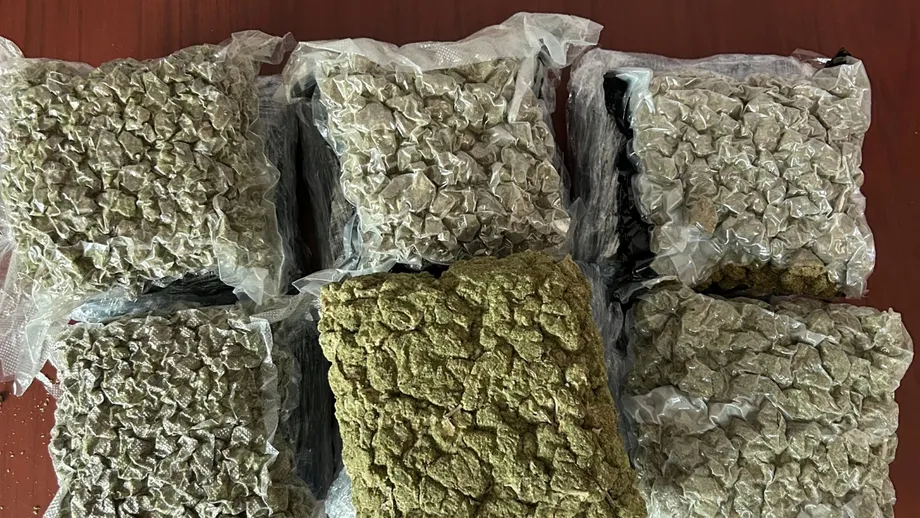
Nepal's Supreme Court has ordered the government to create rules for controlled cannabis cultivation and production, setting a deadline of three months to establish a licensing system for medical, scientific, agricultural, horticultural and industrial purposes. Recreational use remains prohibited.
Contents
- A deadline to put a dormant law into practice
- When does the three month clock begin?
- Why the court said the government must act
- What the 1976 act already allows
- Licences must cover the whole production chain
- How international law fits the ruling
- Traditional uses and products shaped the case
- Foreign examples, but rules suited to Nepal
- Recreational use remains a matter for Parliament
- Key Points
Justices Nahakul Subedi and Til Prasad Shrestha issued the ruling on May 18, 2025, equivalent to Jestha 4, 2082 in Nepal's calendar. Its full text became public much later, after a fire at the Supreme Court during the September 9, 2025 protests led by young people left the case file temporarily untraceable.
The decision addresses a gap that the court said had persisted for nearly five decades: the Narcotic Drugs Control Act, 1976 contains provisions allowing certain controlled uses of cannabis, yet the government had failed to make the rules needed to carry them out.
Lawyer Saroj Adhikari, from Kaski, and Rhigendra Giri, representing the Nepal Farm Entrepreneurs Association, brought the petition against the Office of the Prime Minister and Council of Ministers and other government bodies. Their broader request included removing criminal restrictions on cannabis, but the court granted a narrower remedy focused on implementing existing law.
The order requires more than permission to grow a crop. It calls for rules covering cultivation, production, processing, storage, use, sale, distribution, imports and exports, alongside strict monitoring to prevent illegal activities. For farmers, researchers and businesses, the practical change depends on the government building that system and issuing permissions under it.
When does the three month clock begin?
The operative order, as reproduced in accounts quoting the judgment, gives the government three months from receiving the order to make the necessary legal arrangements. The initial description of the decision instead places the starting point at publication of the full text. The date of government receipt is not specified, so an exact calendar deadline cannot be calculated.
The distinction matters because the court delivered its decision well before publication of the detailed judgment. The three months are tied to the later procedural step described in the order, rather than automatically running from May 18, 2025.
The main dates help explain why a ruling delivered in 2025 is drawing attention after a delay:
- 1976: Nepal enacted the Narcotic Drugs Control Act, including provisions for specified controlled uses.
- June 29, 1987: Nepal became a party to the 1961 Single Convention on Narcotic Drugs, with a reservation discussed in the judgment.
- 2020: The United Nations Commission on Narcotic Drugs removed cannabis from Schedule IV of the convention.
- May 18, 2025: The Supreme Court issued its decision on the cannabis petition.
- September 9, 2025: A fire during protests affected Supreme Court records, delaying publication of the full text.
- Receipt of the order: The operative wording starts the government's three month period for making the required arrangements.
Why the court said the government must act
The Supreme Court issued a mandamus, a binding order requiring a public authority to perform a legal duty. Its central finding was that the government had left parts of the 1976 act inactive by failing to exercise its power to make rules.
Section 4 contains prohibitions alongside exceptions that the government can put into operation through regulations. The judges examined whether wording allowing the government to make rules gave it unlimited freedom to leave those provisions unused.
The bench of Justices Subedi and Shrestha explained its reading of that duty in the judgment. In translation, it stated:
The use of the word 'may' in the law does not give the government the freedom to refrain from making rules indefinitely.
The court's reasoning connects the wording of an old statute to a present obligation. Parliament had created a route for controlled activities. The executive, meaning the government responsible for administering the law, had to supply the procedures that would make that route usable.
The judgment also invoked Article 133(2) and (3) of Nepal's Constitution as the basis for directing the authorities to act. The remedy is therefore an instruction to implement statutory provisions, with a deadline attached.
What the 1976 act already allows
Sections 4, 5 and 6 of the Narcotic Drugs Control Act were central to the court's analysis. Together, they show how the legislation combines restrictions with exceptions for specified purposes and forms of supervision.
Section 4 includes a provision concerning cannabis that grows naturally in Nepal's western hills. Under rules and permissions, the government can allow specified activities involving charas, the resin collected from cannabis, including production, collection and trade. The court treated this as evidence that the legislature had envisaged regulated activity.
Sections 5 and 5A address medical exceptions, including access on the recommendation of an approved doctor. The government's written response described a route through which a patient could purchase the prescribed quantity from a licensed shop and use it for treatment.
Section 6 provides a basis for institutions to undertake activities involving controlled drugs for medicine or scientific research under government direction and control. The judgment drew on that provision when ordering a framework for cultivation and production.
The court also discussed Section 19, which permits a person holding a small quantity for personal use to be released after making a written undertaking rather than being prosecuted on a first occasion. That limited discretion exists within a law that continues to regulate possession and use.
Licences must cover the whole production chain
The government must design permissions for a sequence of activities, from growing cannabis to processing it into an authorised product and moving that product through storage and trade. Agricultural and horticultural purposes are included alongside medicine, research and industrial raw materials. Horticulture means cultivating plants for specified growing purposes.
A farmer, a research institution and a processor would therefore be undertaking different activities within the same regulated system. The order calls for licences or permits for the relevant stages, rather than leaving commercial production open to anyone.
Strict regulation and monitoring are an equally explicit part of the instruction. Authorities must prevent illegal cultivation, production, preparation, transport and sale while administering the permitted activities. Unauthorised activity remains subject to the existing criminal framework.
The judgment's practical task for the government is to connect permission with supervision. Rules, standards and procedures must explain how lawful production operates and how authorities control cannabis outside those authorised channels.
How international law fits the ruling
The Supreme Court directed the government to work within the Narcotic Drugs Control Act and the 1961 Single Convention on Narcotic Drugs. It specifically identified Articles 23 and 28 of the convention as relevant to the framework.
Article 28 applies the convention's system of controls to cannabis cultivation for producing cannabis or cannabis resin. Article 23 sets out a model of government supervision for cultivation, including licensing and oversight. These provisions support the court's demand for a controlled system.
Article 28(2) provides a separate rule for cannabis cultivated exclusively for industrial purposes involving fibre and seed, or for horticultural purposes. The court pointed to that provision when explaining the international legal space for industrial cultivation.
The judgment also discussed Nepal's reservation under Article 49 when it joined the convention on June 29, 1987, concerning specified nonmedical uses and trade. Article 49 deals with transitional reservations, so implementing rules must account for the reservation's scope and the convention's limits.
The judges cited the UN Commission on Narcotic Drugs' 2020 decision to remove cannabis from Schedule IV. That schedule applies an additional category of restriction under the treaty. Cannabis remained in Schedule I, where international controls continue, including the framework for medical and scientific purposes.
The court's approach places domestic permission and international supervision together. Nepal must establish a workable licensing system while meeting the treaty obligations relevant to each permitted activity.
Traditional uses and products shaped the case
The judgment traced medicinal uses of cannabis through Ayurvedic texts associated with Sushruta, Charaka and Bhavaprakasha, as well as the Buddhist Vinaya Pitaka. Those references formed part of its account of the plant's longstanding place in regional medical and cultural practices.
The Prime Minister's Office also acknowledged that history in its written response. It described the use of cannabis leaves, stalks and bark, and recognised that medicinal uses and economic benefits had long received attention.
The court identified possible products including medicines, textiles, paper, thread and oil. Fibre and seed uses give industrial cultivation a different practical purpose from growing cannabis for its intoxicating effects.
The judges linked the use of naturally occurring cannabis and possible commercial cultivation to constitutional objectives concerning natural resources and economic development. They paired that reasoning with concern about dependence, health problems, household financial losses and damage to social life.
The government's response said the Policy Research Institute and Nepal Health Research Council were studying medical and economic uses. The ruling places those research efforts alongside a legal task: creating the permissions and controls needed for authorised work.
Foreign examples, but rules suited to Nepal
The Supreme Court examined practices in the United States, Canada, New Zealand, Uruguay and India. Canada's Cannabis Act of 2018 appeared among the examples, while Indian law and state approaches offered comparisons for cultivation under government control.
India's Narcotic Drugs and Psychotropic Substances Act, 1985 provides for permission to cultivate cannabis for industrial fibre, seed or horticultural purposes. The judgment discussed mechanisms such as identifying cultivation areas, granting licences and keeping production under official supervision.
Uttarakhand and Himachal Pradesh were among the Indian state examples considered in the discussion of controlled approaches. These comparisons gave the court models for regulating cultivation and particular uses.
The judges directed Nepal to consider its own economic, social and cultural circumstances when designing legal arrangements. Their reasoning favoured research, discussion and rules matched to local needs, while retaining safeguards against misuse.
Recreational use remains a matter for Parliament
The petitioners also sought broader legalisation, including recreational use and the removal of criminal penalties. The Supreme Court rejected that part of the petition, leaving existing restrictions in place.
The judges said deciding which activities are crimes and what punishments apply belongs to Parliament. They treated wider cannabis reform as a public policy matter involving health, social values and economic effects.
The court nevertheless drew the attention of the Office of the Prime Minister and Council of Ministers to possible legislative changes. It called for broad consultation with relevant experts and stakeholders, taking Nepal's social, economic and cultural setting into account before pursuing amendments if needed.
Two different government tasks therefore emerge from the judgment. Preparing rules for the controlled uses identified in the order is a binding duty with a three month period. Considering wider changes requires consultation and, where amendments are pursued, action through the legislative process.
For patients, researchers and producers, the immediate focus is the licensing framework. Its value will depend on turning the act's existing provisions into procedures that allow authorised activity while keeping supervision in place.
Key Points
- The Supreme Court ordered rules for controlled cannabis cultivation and production for medical, scientific, agricultural, horticultural and industrial purposes.
- Justices Nahakul Subedi and Til Prasad Shrestha delivered the ruling on May 18, 2025; publication of its full text was delayed after a fire affected court records.
- The operative wording gives the government three months from receipt of the order to make the necessary legal arrangements.
- Licensing must cover cultivation, processing, storage, use, trade, imports and exports, alongside strict monitoring.
- The framework must comply with Nepal's 1976 drug control law and relevant provisions of the 1961 UN convention.
- Recreational use remains prohibited, and broader changes to criminal law are for Parliament to decide.