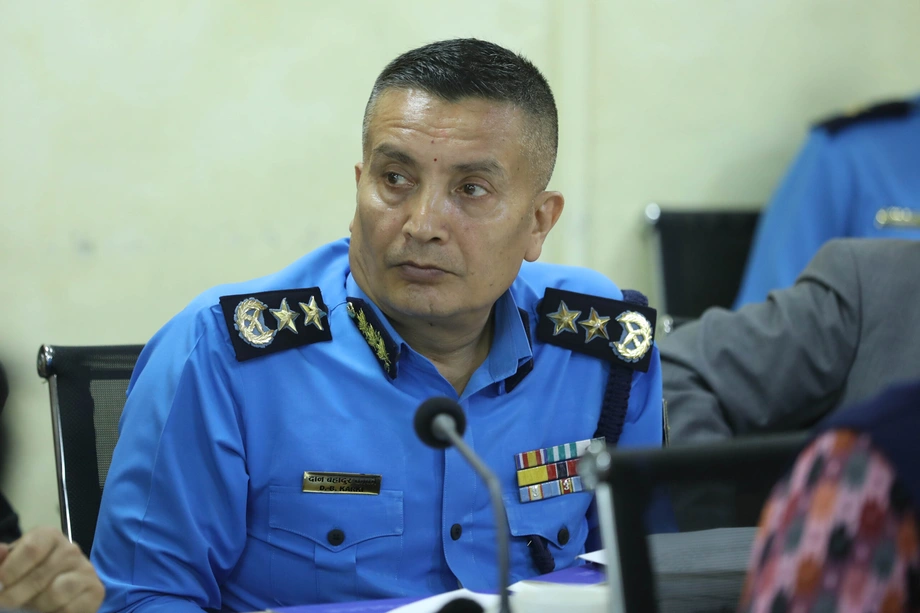
Karki seeks his command back, not a new office
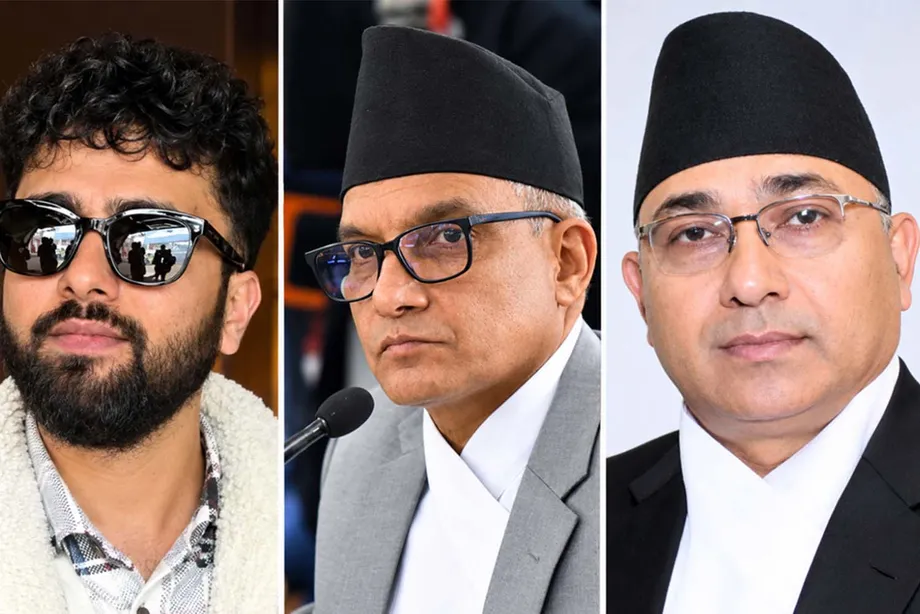
Dan Bahadur Karki had 17 months left as chief of Nepal Police when the Cabinet replaced him with Manoj Kumar KC. By Thursday, November 5, Karki had submitted a petition seeking reinstatement at the Supreme Court rather than collect the appointment letter for his new job as the prime minister's special security adviser.
Contents
- Karki seeks his command back, not a new office
- One Cabinet decision creates two positions
- Who asked for the police chief to change?
- The Sapkota investigation draws in powerful names
- Recordings bring a private rivalry into public view
- Journalist detentions expose a broken chain of responsibility
- What the Supreme Court challenge involves
- A precedent from 1997 returns to the centre
- KC inherits damaged buildings and unsettled officers
- Key Points
Inside the Prime Minister's Office at Singha Durbar, officials had reportedly arranged Room No. 207 for him, with an office, vehicle and security arrangements equivalent to those provided to a government secretary. Karki instead chose to challenge the decision that took him out of police command.
His lawyer, Tikabahadur Kunwar, said the petition remained under administrative review and was not registered on Thursday. Registration could take place on Friday, with a preliminary hearing expected only after the Tihar holiday if it proceeded. No hearing date had been announced.
The confrontation now connects three disputes: whether the government lawfully replaced a serving police chief, who ordered police to question journalists, and how an investigation into alleged intermediary Inam Sapkota became entangled with senior police officers and people close to Prime Minister Balendra Shah.
Government and ruling party leaders have also given conflicting explanations for the change. The government spokesperson said the Rastriya Swatantra Party, or RSP, had instructed the government to act. The party spokesperson denied issuing an instruction to replace Karki. On Thursday, party chair Rabi Lamichhane said the government itself must justify its decision.
One Cabinet decision creates two positions
Wednesday's emergency Cabinet meeting removed Karki from police leadership, appointed Additional Inspector General Manoj Kumar KC as his successor and created an adviser position at the rank of inspector general for Karki. KC received his insignia and assumed command that evening. Home Minister Sudan Gurung personally conferred the insignia, a task ordinarily performed by the home secretary.
The Cabinet described Karki's new role as providing security advice, recommendations and consultation to the prime minister to strengthen peace and security. The government maintained that the reassignment was not punishment, but gave no detailed explanation of the adviser's responsibilities or the grounds for replacing him before his tenure ended.
Hem Raj Aryal, spokesperson for the Prime Minister's Office, confirmed that office arrangements had been made. An official in that office said Karki had rejected both the appointment letter and the associated facilities. His petition challenges his removal and KC's appointment, arguing that the government's action was unlawful and unfair.
Karki and KC entered the police in the same batch. When Karki was appointed chief, KC ranked third and Rajan Adhikari ranked second. KC's promotion therefore brings a former colleague into command while Karki contests whether the government could lawfully move him elsewhere.
Who asked for the police chief to change?
Education Minister Sasmit Pokhrel, the government spokesperson, linked Wednesday's decision to instructions from the ruling party and to unspecified sensitive matters. Explaining the reassignment, he said:
The circumstances have changed. The party had instructed the government that something needed to be done on sensitive matters. His responsibilities have been changed. But advising the prime minister is also a sensitive responsibility.
RSP spokesperson Jagadish Kharel rejected that explanation. His response placed responsibility for the personnel decision with the government rather than the party:
The party has not issued any directive on whom to remove or appoint. We have not asked for the inspector general to be removed.
Speaking to journalists in Chitwan on Thursday, Lamichhane also said the party did not instruct the government to replace individual police officials. He denied a breakdown in coordination, saying the party could seek explanations and question government decisions without endorsing every action.
Lamichhane confirmed that the RSP had sought clarification after police entered newsrooms. He left the government to explain whether that intervention was connected to the change of police chief. His position separates the party's demand for accountability over the journalists' treatment from an instruction to remove Karki.
The Sapkota investigation draws in powerful names
Inam Sapkota is in police custody on charges involving money laundering and banking offences. Allegations about his contacts with police officers, judges and political figures form the background to the leadership dispute. The investigation into those relationships remains unresolved.
Accounts attributed to government officials describe growing anger in the Prime Minister's Office over the release of information about Sapkota's contacts. Particular attention fell on an allegation that Shah's adviser Kumar, also known as Ben, Byanjankar had kept Sapkota's mobile phone for two days after his detention.
Some officials attributed Karki's removal to suspicions that he had leaked information involving the adviser. Other officials described resistance by Karki to arrest instructions they considered legally untenable. The government has not publicly set out a detailed account connecting either allegation to its decision.
Messages attributed to Karki and Sapkota also became public, including an exchange in which Sapkota offered to bring something from the United States. Their release widened scrutiny of Karki at the same time that questions were being raised about Sapkota's access to people near the prime minister.
The concrete issue for investigators is how to examine those contacts while protecting evidence and making decisions under the law. For the police leadership, the challenge is sharper because information from the investigation has become part of a struggle over who commands the organisation.
Recordings bring a private rivalry into public view
A recording lasting one minute and 56 seconds, released on Monday, purportedly captured KC speaking with a man identified as Nirajan Bhandari. The conversation referred to alleged links between Sapkota and senior officers, including Karki and Additional Inspector General Rajan Adhikari, and to the possibility of Karki resigning.
A short video subsequently appeared showing what was described as a meeting between Bhandari and Karki at a Kathmandu hotel. The conversation in that meeting was not disclosed. Neither Karki nor KC publicly commented on the recordings.
The public exchanges followed an unusually broad Police Coordination Committee meeting on October 29. Alongside senior officers in the Kathmandu Valley, Karki summoned deputy inspectors general from all seven provinces. The meeting lasted nearly six hours and reportedly included sharp disagreements between Karki and KC.
Karki urged officers to stand together and criticised unnamed colleagues for visiting the ministry and working against the organisation's head. KC argued that people facing allegations should answer them individually rather than make the whole institution responsible. Participants described a meeting that exposed divisions rather than producing a common approach.
Former Inspector General Sarbendra Khanal warned that personal disagreements should not break organisational unity. Describing the effect on serving officers, he said:
Such incidents affect the morale of the entire organisation.
Journalist detentions expose a broken chain of responsibility
Police entered a media office and detained journalists on the Friday before Karki's removal. The Prime Minister's Secretariat subsequently said it had not been informed. Deepa Dahal, Shah's press adviser, said the prime minister directed police to release the journalists after learning what had happened.
Nepal Police gave a different explanation. Spokesperson and Deputy Inspector General Abinarayan Kafle connected the questioning to concerns raised by the Prime Minister's Office. In his statement, Kafle said:
Acting on the concern expressed by the Prime Minister's Office, the Cyber Bureau of Nepal Police called some journalists to its office with the proper intention of obtaining general information about the truth, factual basis and legal grounds of the publicity surrounding the matter. This was part of the police's official duties.
Pokhrel described the questioning as a police matter involving allegedly misleading information about Karki's impending removal. Home Minister Gurung offered no public explanation in the accounts of the incident.
The competing statements leave responsibility for the operation contested. The Prime Minister's Secretariat described an intervention to secure the journalists' release, while police described concerns from that office as the reason for questioning them. The RSP's request for clarification added pressure on the government to explain who authorised the action.
What the Supreme Court challenge involves
Karki's lawyers are seeking reinstatement through a writ petition, a request asking the Supreme Court to examine whether a public authority acted lawfully. Submission begins an administrative process; his petition was still being reviewed for registration at the end of Thursday.
The legal dispute concerns the difference between appointing someone to a vacant position and moving a serving chief out of office to create that vacancy. The Police Act of 2012 BS and Police Regulations of 2071 BS govern the relevant powers. These dates use Nepal's Bikram Sambat calendar; the regulations correspond to 2014 in the Gregorian calendar.
Section 9(2) of the Police Act provides for police personnel to hold office during the government's pleasure. The regulations classify the inspector general and additional inspectors general as special class officials. Rule 18(1)(a) gives the government authority to fill vacancies at those ranks, while Rule 48 addresses transfer powers, including transfers of additional inspectors general.
A legal analysis by former Home Ministry joint secretary Kanel argues that these provisions require the government to identify a lawful basis and an objective reason for displacing a serving inspector general. The practical question is whether creating another post was a lawful reassignment or a means of removing Karki without the necessary process.
Senior advocate Tikaram Bhattarai, who represented former police chief Achyut Krishna Kharel in an earlier dispute, said the governing legal principles remained relevant:
The government cannot remove an incumbent at will. It needs objective grounds and reasons, and the person concerned must be given an opportunity to be heard.
A precedent from 1997 returns to the centre
Achyut Krishna Kharel's case offers the closest historical comparison. In April 1997, the government transferred him from police chief to head the National Investigation Department and installed Dhruva Bahadur Pradhan as inspector general. Kharel challenged the transfer and refused to take up the intelligence post.
Kharel returned to police leadership in November 1997. The detailed legal account places his reinstatement before the Supreme Court's final judgment, rather than presenting it as the execution of that judgment. The ruling, published in Nepal Kanoon Patrika 2055, issue 11, decision No. 6624, addressed the dangers of arbitrary changes to police leadership.
The Supreme Court explained its concern about political control of the force in these terms:
If the police administration becomes dependent on political favour, the impartiality and sense of duty of the police service will deteriorate, undermining internal peace and security in the country.
The history of these appointments stretches back further. In 1992, a new limit of 30 years of service cleared the way for Ratna Shumsher and 48 other officers to leave, followed by Motilal Bohara's appointment. An extension provision subsequently allowed Bohara to continue serving until 1996.
The adviser position also has precedents. Pradhan was assigned to a similar role after Kharel returned. Ramesh Chand Thakuri was moved to a security adviser position in 2011 amid the Sudan Darfur procurement scandal; he was later suspended after a corruption case was filed and subsequently convicted.
The latest sequence has unfolded quickly:
- October 29: Karki convened senior officers, including provincial police leaders, for a lengthy coordination meeting.
- Monday before the replacement: A recording purportedly involving KC and Bhandari became public.
- Wednesday: The Cabinet replaced Karki with KC and created a special security adviser position for Karki.
- Thursday, November 5: Karki's representatives submitted his Supreme Court petition, which remained unregistered that day.
KC inherits damaged buildings and unsettled officers
Manoj Kumar KC, Nepal Police's 34th inspector general, takes command of an institution still recovering from the Gen Z protests. An internal police report recorded 74 buildings completely damaged and 222 partly damaged. Together, that is 296 buildings, with complete destruction accounting for one quarter of the total.
Repairs have made affected premises usable, but officers say replacement buildings are still needed. Police also face shortages of suitable equipment for controlling crowds. These practical problems compete for attention with the leadership dispute and the need to retain experienced personnel.
Junior officers who have completed 20 years of service have been submitting resignations, according to police sources. No total was given. Former senior officers describe low morale at both junior and senior ranks, with political intervention contributing to dissatisfaction at the top.
KC holds a doctorate in conflict transformation and previously led the Kathmandu Valley Crime Investigation Office, where he opened the investigation into the Bhutanese refugee case. On assuming command, he promised a separate mechanism to address grievances among personnel at the lower ranks and greater transparency in transfers and promotions.
Those promises touch a central cause of dissatisfaction: the belief that access to powerful people determines careers. KC also pledged to work collectively with senior officers. Delivering predictable personnel decisions while his own appointment faces a court challenge will be an immediate test.
Umesh Mainali, a former home secretary, described the government's handling of the replacement as damaging to credibility and morale. He framed the institution's relationship with political power directly:
Nepal Police is not anyone's private guard. It is an institution older than the civil service. Instead of strengthening it, changing its leadership to bring in someone of its choice undermines the institution's credibility and morale.
For serving officers, the consequences extend beyond which man occupies the chief's office. Investigations need secure evidence, clear instructions and confidence that lawful decisions will receive institutional support. The government must now defend its personnel decision while KC manages recovery, staff grievances and a divided senior command.
Key Points
- Dan Bahadur Karki seeks reinstatement after being replaced with 17 months remaining in his tenure.
- His Supreme Court petition remained under administrative review and was not registered on Thursday, November 5.
- Karki did not collect the appointment letter for the newly created special security adviser position.
- The government and RSP spokespersons gave conflicting accounts of whether the party instructed the leadership change.
- The dispute involves the Sapkota investigation, public recordings and conflicting explanations for journalist detentions.
- The 1997 Kharel case provides a precedent concerning arbitrary removal and political influence over police leadership.
- KC has assumed command and promised to address staff grievances and make transfers and promotions more transparent.