Four businesses placed under a Russian manager
Russian President Vladimir Putin signed a decree on November 5 placing stakes in four Russian businesses belonging to Japan Tobacco International under temporary management by a Russian company, Industrial Assets. The move reaches factories producing cigarettes and facilities processing tobacco, bringing a major foreign manufacturer into a system Moscow has already used against other international businesses.
Contents
- Four businesses placed under a Russian manager
- Which factories are affected?
- What temporary management means
- Who is Industrial Assets?
- Petro accounts for most of the reported revenue
- JTI stayed while other tobacco groups left
- A widening sequence of foreign asset interventions
- The decision comes amid tensions with Japan
- Key Points
The four companies are Petro, JTI Donskoy Tabak, JTI Yelets and Kres Neva. Together, their reported revenue in 2023 was about 93.1 billion rubles, with combined net profit of approximately 15.9 billion rubles. Those figures show the scale of the operations affected, although they are historical company results rather than a valuation of the assets.
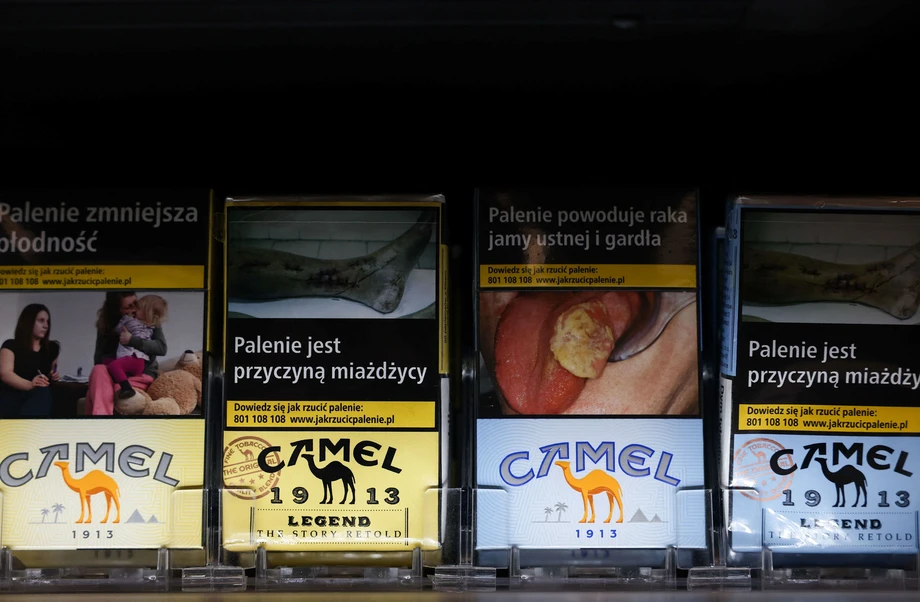
Japan Tobacco International, known as JTI, is the international tobacco division of Japan Tobacco Inc. It describes itself as Russia's largest tobacco manufacturer by sales volume and employs about 4,000 people across its Russian factories and offices. This is the first application of Russia's temporary management mechanism to the assets of a global tobacco group.
The decree took effect upon publication. It gave no reason for the decision, and JTI did not immediately provide a response. No timetable for returning management control was announced.
The immediate change concerns who exercises control over the businesses. Under Russia's temporary management framework, the appointed manager gains authority to manage the property, while legal ownership does not automatically change. For JTI, that means its Russian operations now face decisions made under an external management arrangement.
Which factories are affected?
The four companies perform different jobs within JTI's Russian production network. Two manufacture finished tobacco products, while two prepare the raw tobacco used in production. The decree therefore reaches several stages of the business rather than a single factory or brand.
- Petro, in St. Petersburg, manufactures finished tobacco products.
- JTI Donskoy Tabak, in Rostov-on-Don, also manufactures finished tobacco products.
- JTI Yelets, in the Lipetsk region, processes tobacco raw materials.
- Kres Neva, in the Leningrad region, processes tobacco raw materials.
The ownership breakdown identifies stakes amounting to 100% of each company. Petro and Kres Neva were wholly owned by JTI Investments Sarl. JTI Yelets had three shareholders: JT International Holding B.V. with 65.64%, JTI Russia with 18.85%, and Petro with 15.51%.
JTI Donskoy Tabak was owned almost entirely by JTI Russia, with a 99.9999% stake. Pereslavl-Tabak held the remaining 0.0001%. Although one published description named Pereslavl-Tabak among the four affected facilities instead of Petro, the detailed ownership list identifies it as a shareholder in Donskoy Tabak.
JTI's brands include Winston, Camel, LD, Sobranie and Mevius, alongside Russian brands. The intervention concerns the stakes in the Russian operating companies, covering the businesses behind production rather than an announced purchase of individual cigarette brands.
What temporary management means
Russia established the mechanism through the April 2023 presidential decree On the Temporary Management of Certain Property. It allows assets belonging to entities from countries Moscow considers unfriendly to be placed under outside management in response to seizures of Russian assets or restrictions on Russian property rights abroad.
A stake is an ownership share in a company. Managing that stake gives the appointed administrator power over how the ownership rights are exercised. In practical terms, the foreign group loses its previous freedom to direct the affected operations.
The framework separates management authority from the power to sell the property. The temporary manager can administer the assets but cannot dispose of them, including by selling them. The Russian president can terminate the arrangement.
For JTI's employees, suppliers and customers, the central operational issue is who now makes decisions about the businesses. The decree changes the structure of control across a network that employs thousands of people and supplies Russia's cigarette market.
Who is Industrial Assets?
The appointed manager is a joint stock company called Promyshlennye Aktivy, translated into English as Industrial Assets. The decree provides the name without further identifying details, such as a tax identification number. More than one Russian company has used that name, leaving the precise corporate identity of the administrator unresolved.
That matters because identifying a company's owners requires more than matching its name. A registration number or another unique identifier would allow the appointed entity to be distinguished from businesses with the same name.
Corporate accounts have linked companies bearing the Industrial Assets name to other Russian business interests, including the publisher of the game World of Tanks in Russia. Without a unique identifier in the decree, the new administrator's ownership cannot be reliably assigned to a particular businessman or corporate group.
Petro accounts for most of the reported revenue
Petro is the largest of the four companies by the published financial figures. Its 2023 revenue was about 73 billion rubles and its net profit was 13.2 billion rubles. Another published figure put revenue at 73.2 billion rubles, compared with 55.9 billion rubles a year earlier, an increase of about 31%.
JTI Donskoy Tabak recorded revenue of 10.3 billion rubles and net profit of 1.3 billion rubles in 2023. Kres Neva reported revenue of 8.5 billion rubles and profit of 1.28 billion rubles. JTI Yelets recorded revenue of 1.25 billion rubles and profit of 139.9 million rubles.
Using the rounded figure of 73 billion rubles for Petro, the four companies generated approximately 93.1 billion rubles in combined revenue. Petro accounted for about 78% of that total and roughly 83% of their combined net profit. The St. Petersburg factory is therefore the financial centre of the group of businesses affected.
Revenue is the money a business earns from sales before its costs are deducted. Net profit is what remains after expenses and other charges. These figures relate to 2023, the latest year for which these Russian group companies were reported to have published financial statements.
JTI stayed while other tobacco groups left
JTI has operated in Russia since 1999, following Japan Tobacco's acquisition of the international tobacco business of R.J. Reynolds. It became the leader of the Russian tobacco market in 2007 and expanded further by acquiring Donskoy Tabak in 2018.
After Russia's invasion of Ukraine in 2022, JTI suspended new investment and additional marketing activity in Russia but continued operating. At the time, it said employees would retain their jobs. In November 2023, the company announced that it would continue its Russian business.
Other large tobacco companies took a different course. Imperial Brands transferred its Russian business to Russian investors in 2022. British American Tobacco sold its Russian assets to local management in 2023. Philip Morris International had discussed a possible restructuring, including an asset transfer, without a subsequent transaction being identified in the accounts of this development.
Russia remained financially important to Japan Tobacco. In May 2024, chief executive Masamichi Terabatake said the country accounted for almost 20% of companywide profit. Japan Tobacco's profit for 2023 was reported at $3 billion. The management intervention therefore affects a market that had contributed close to one fifth of the group's earnings.
A widening sequence of foreign asset interventions
The tobacco decision followed interventions involving food producers, retailers and other European businesses. In September, Russia placed assets associated with Nestle, Auchan and Metro under temporary management. In October, it took control of assets belonging to four more European companies.
Moscow linked the October actions to European support for Ukraine and what it described as illegal expropriations of Russian property. The November 5 decree extended the use of temporary management to a major tobacco group with a long operating history in Russia.
- April 2023: Russia established its temporary management mechanism for certain property.
- November 2023: JTI announced that it would continue doing business in Russia.
- May 2024: Japan Tobacco's chief executive said Russia contributed almost 20% of companywide profit.
- September preceding the November decree: Russia placed assets associated with Nestle, Auchan and Metro under temporary management.
- October: Moscow took control of assets belonging to four more European companies.
- November 5: Putin signed the decree covering stakes in JTI's four Russian operating companies.
The sequence shows the measure spreading across industries. For foreign businesses that remain in Russia, the practical risk now includes a government order transferring management authority even while the underlying ownership structure remains in place.
The decision comes amid tensions with Japan
Russia's relations with Japan had already deteriorated before the tobacco decree. In October, Russia's Foreign Ministry described a Japanese company's sale of drones to Ukraine as a hostile step and warned of a harsh response.
Russia also announced in October that it had detained a Japanese journalist in the far eastern Sakhalin region on suspicion of espionage. The detention added another dispute to relations already strained by the war in Ukraine.
The Kremlin has linked earlier temporary management actions to the conduct of countries it labels hostile. In JTI's case, the published decree supplied no explanation connecting the asset intervention to a particular diplomatic dispute.
For Japan Tobacco, the concrete consequence is the loss of its previous management control over four Russian companies. For the Russian operations, the next decisions about production, spending and staffing fall within the new administrative arrangement, subject to the limits of Russia's temporary management rules.
Key Points
- Putin's November 5 decree placed stakes in four JTI businesses under the temporary management of Industrial Assets.
- The affected companies are Petro, JTI Donskoy Tabak, JTI Yelets and Kres Neva.
- Their combined reported revenue in 2023 was about 93.1 billion rubles, with approximately 15.9 billion rubles in net profit.
- JTI employs about 4,000 people in Russia and describes itself as the country's largest tobacco manufacturer by sales volume.
- The arrangement transfers management authority without automatically changing ownership. The manager cannot sell the assets.
- The decree gave no reason for the intervention or timetable for restoring control, and did not uniquely identify the appointed administrator.