Children account for nearly 180,000 cases
Indonesia's Ministry of Health has recorded 401,586 cases of acute respiratory infections across seven provinces and 63 districts and cities affected by forest and land fires, with children aged nine and younger accounting for nearly 45% of the total. The cumulative count reached that level at 4 p.m. Western Indonesian Time on November 2, 2026, after another 3,906 cases were added that day.
Contents
- Children account for nearly 180,000 cases
- How the health emergency grew
- Who faces the greatest burden?
- Hazardous air in two Central Kalimantan areas
- Why provincial trends need local attention
- Oxygen access and medical care
- Millions of masks and a wider care network
- A push for village shelters and mobile services
- Firefighting continues alongside health protection
- Key Points
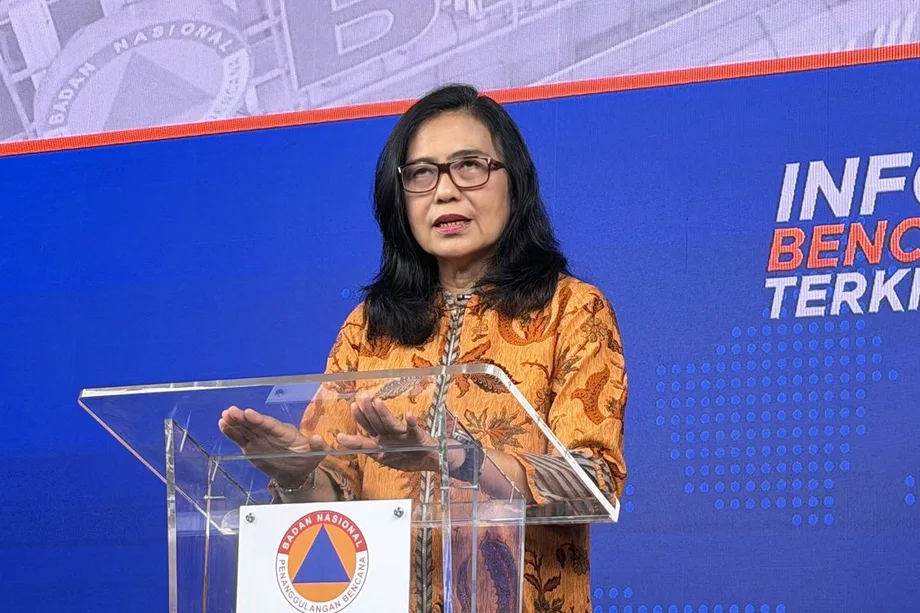
Ministry spokesperson Widyawati presented the figures on November 4 at the National Disaster Management Agency, known as BNPB, in East Jakarta. The health emergency stretches across parts of Sumatra and Kalimantan, where prolonged fires have exposed communities to smoke while placing sustained demands on clinics, hospitals and emergency supplies.
Air monitoring showed hazardous conditions in Kotawaringin Timur and Palangka Raya on November 3. Respiratory infections were increasing in East Kalimantan, which Widyawati singled out for particular concern, even as several other provinces recorded declining case trends.
The government has distributed about 3.8 million masks and prepared oxygen equipment, medical personnel and referral hospitals. A lawmaker subsequently called for more mobile medical services and rooms protected from smoke in villages, bringing attention to residents who live far from treatment or cannot avoid working outdoors.
How the health emergency grew
The earlier ministry tally stood at about 175,000 respiratory infection cases between August 18 and September 21, covering six provinces and 63 affected districts. Ministry spokesperson Berton Panjaitan said that figure included 40,363 cases among children under five.
By November 2, the cumulative total had risen by about 226,586 cases, or roughly 129%, compared with the September tally. The monitoring area also expanded from six provinces to seven. That change in coverage matters when comparing the totals: the later figure includes a wider provincial footprint as well as additional weeks of recorded illness.
The main dates show how firefighting, health monitoring and demands for further protection developed:
- Since June 2026: Dry weather worsened fires across Sumatra and Kalimantan.
- August 18 to September 21: The ministry recorded about 175,000 respiratory infection cases in six provinces.
- November 2, at 4 p.m.: The cumulative tally reached 401,586 cases in seven provinces.
- November 3, at 9 a.m.: Air monitoring classified two districts or cities as hazardous and another 15 as unhealthy.
- November 4: Widyawati announced the latest health figures and response measures.
- November 5: Legislator Asep Romy Romaya called for stronger medical services and protection from smoke.
Who faces the greatest burden?
Children aged zero to five accounted for 91,913 cases, while those aged six to nine accounted for another 87,704. Together, the two groups represented 179,617 cases, or approximately 44.7% of the ministry's cumulative total.
People older than 60 accounted for 56,092 cases. Adding that group to the children aged nine and younger gives 235,709 cases, approximately 58.7% of all recorded infections. The figures show why health officials are directing particular attention to young children and older residents.
The ministry also identified 590 pregnant women, 1,530 people with asthma and 8,086 outdoor workers for special monitoring. These categories describe people whose exposure or health conditions require closer attention. A conflicting asthma count of 3,530 was also published, without a ministry clarification resolving the difference.
Outdoor workers face a practical difficulty: avoiding smoke may mean leaving the place where they earn their income. People with asthma already have airways that can become inflamed and narrowed, making polluted air an additional concern. Pregnant women, young children and older residents also feature prominently in the ministry's protection efforts.
The earlier September tally used an under five category, while the November figures specify ages zero to five. The clearest comparison is therefore the large burden on young children in both periods, rather than an exact growth rate between those two age groups.
Hazardous air in two Central Kalimantan areas
Kotawaringin Timur district recorded a PM2.5 index value of 580, and Palangka Raya recorded 348, according to Indonesia's Air Pollution Standard Index, or ISPU, at 9 a.m. on November 3. Both areas were classified as hazardous. Another 15 districts and cities had unhealthy air.
PM2.5 refers to fine airborne particles measuring 2.5 micrometres or less across. Their small size allows them to travel deep into the lungs. The figures announced through ISPU are index readings, which translate pollution measurements into categories that describe the level of health concern.
West Kutai district in East Kalimantan had an unhealthy PM2.5 index reading of 164 on the morning of November 2. That local reading adds a concrete measure of pollution in the province where officials were especially concerned about rising respiratory illness.
The readings capture conditions at particular places and times. For residents deciding whether they can safely spend time outside, the local air category remains relevant even when the wider province has begun recording fewer infections.
Why provincial trends need local attention
Central Kalimantan, South Sumatra and Riau were recording declining respiratory infection trends, according to Widyawati's November 4 briefing. East Kalimantan and West Kalimantan were described as recording increases. A conflicting description of the briefing placed West Kalimantan among the provinces with falling cases; East Kalimantan was consistently identified as worsening.
Widyawati called for closer monitoring and readiness at health facilities in East Kalimantan. Central Kalimantan, meanwhile, illustrates how different health indicators can move on different schedules: its reported infection trend was declining while Kotawaringin Timur and Palangka Raya still had hazardous air.
Local daily figures were also given for several areas. Riau had recorded a peak of around 23 cases in a day, West Kalimantan a daily peak of six, and health facilities in South Kalimantan between zero and four cases a day. The reporting scope behind those small local figures was not specified alongside the nationwide addition of 3,906 cases.
Banjarbaru in South Kalimantan, Pekanbaru in Riau and Pontianak in West Kalimantan were identified as populous areas within the monitoring effort. Large urban populations and worsening trends in other locations create different service needs, requiring supplies and staff to be directed according to local conditions.
Oxygen access and medical care
Riau has established 10 oxygen centres to support patients with breathing problems. Widyawati said the ministry's concern extends beyond the number of centres to whether people who need treatment can actually reach them.
Widyawati, speaking as the Ministry of Health spokesperson, described access as a central part of the response:
"Our concern is not just the availability of oxygen centers, but also ensuring that people who need oxygen support, particularly those with respiratory problems, can access it easily," she noted.
Acute respiratory infection, often shortened to ARI in English and ISPA in Indonesian, is a broad term for an infection affecting the breathing passages. Smoke can irritate those passages and worsen existing breathing problems. Pneumonia is an infection affecting the lungs and may require more intensive medical attention.
Widyawati warned that falling case numbers in some places should not reduce attention to serious illness. She specifically identified toddlers, older people and patients with other medical conditions as groups needing care:
"We must not let our guard down. Pneumonia is a serious health issue that requires medical attention, especially for vulnerable groups such as toddlers, the elderly, and individuals with comorbidities," she stated.
Millions of masks and a wider care network
The ministry has distributed about 3.8 million masks to South Kalimantan, Central Kalimantan, West Kalimantan, East Kalimantan, Jambi, Riau and South Sumatra. Those seven provinces form the geographic focus of the latest health response.
Other assistance includes 280 oxygen concentrators, 939 oxygen cylinders and 41,000 pairs of medical gloves. A concentrator draws in surrounding air and supplies oxygen at a higher concentration, while a cylinder stores an oxygen supply. Both can support medical care when patients need additional oxygen.
The ministry also sent protective equipment, air purifiers, medicines, vitamins, supplementary food and other medical supplies. Widyawati said assistance was allocated according to the needs of individual health facilities, with attention to places facing greater risks and treatment demands.
The prepared care network includes 1,691 community health centre posts, 360 referral hospitals, 87 public health laboratories and the Public Safety Center 119 service. Doctors, nurses, midwives, pharmacists, nutrition staff and ambulance drivers have been mobilised to support the response.
For residents, the practical value of that network depends on the route from first contact to treatment: finding a nearby service, receiving an assessment and reaching a hospital when necessary. The figures describe a substantial response, while the calls for mobile care focus on communities beyond easy reach of those facilities.
A push for village shelters and mobile services
Asep Romy Romaya, a member of the Indonesian House of Representatives' Commission IX from the National Awakening Party, urged the ministry on November 5 to strengthen services for communities affected by haze. His requests covered medicines, respirator masks, oxygen cylinders and adequate medical staffing at community health centres and hospitals.
Asep called for health posts and mobile medical services to prioritise remote areas, especially places where respiratory cases were still increasing. Taking medical teams closer to residents would address the distance between affected communities and established health facilities.
He also requested free and evenly distributed respirator masks for outdoor workers and nearby residents. Respirators are designed to filter fine airborne particles. His request focused on that type of protection, while the ministry's announcement described its distribution of 3.8 million masks without specifying their types.
Village and neighbourhood authorities should prepare rooms with air conditioning and air purifiers for vulnerable residents, Asep said. Such rooms would give people with asthma and older residents somewhere to shelter when smoke thickens. His proposals were requests for further action; no implementation deadline was announced.
Firefighting continues alongside health protection
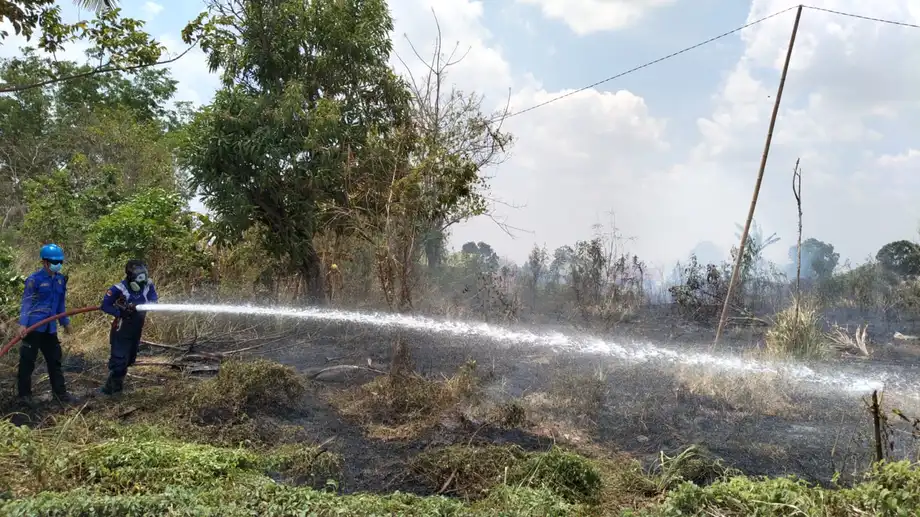
Indonesia deployed 64 aircraft and 54,394 personnel to fight the fires from August, according to government figures announced during the earlier phase of the emergency. Dry conditions since June had helped fires spread across Sumatra and Kalimantan, and smoke also affected Malaysia and Singapore.
Japan supported operations in Kalimantan with three CH-47 Chinook helicopters and around 180 military personnel, including aircrews and support staff. The helicopters were used for water bombing, carrying and releasing water over fire areas.
The Japan Maritime Self-Defense Force vessel JS Kunisaki transported the Japanese equipment and personnel. Its movement offshore near Ketapang enabled firefighting operations from two locations, according to Japan's Defense Ministry.
The health response has a different immediate task from extinguishing fires: reducing exposure and treating people who are already ill. Widyawati also warned that smoke and dust can irritate the eyes. She advised residents to avoid exposure and avoid rubbing their eyes when they feel sore or itchy.
The combined picture is an emergency with uneven local progress. Some provinces have recorded fewer infections, but hazardous pollution in Central Kalimantan, increasing illness in East Kalimantan and the large number of affected children keep medical access and protection from smoke at the centre of the response.
Key Points
- The Health Ministry recorded 401,586 respiratory infection cases across seven provinces and 63 districts and cities by November 2, 2026.
- Children aged nine and younger accounted for 179,617 cases, approximately 44.7% of the total.
- Kotawaringin Timur and Palangka Raya had hazardous air readings on November 3; another 15 districts and cities had unhealthy air.
- East Kalimantan's rising case trend prompted calls for closer monitoring and stronger readiness at health facilities.
- The ministry distributed about 3.8 million masks and prepared oxygen equipment, medical teams and a network of health facilities.
- Further requests include mobile care for remote communities, free respirators and village rooms protected from smoke.