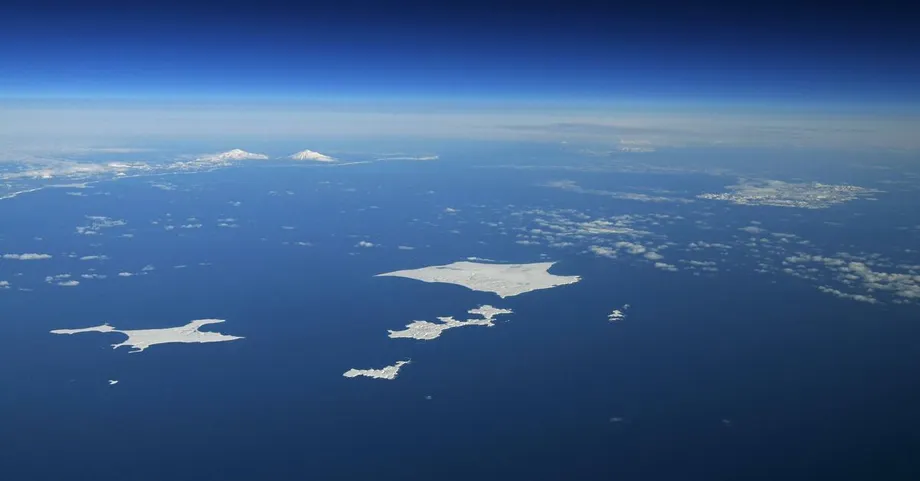
Tokyo keeps talks on its agenda despite a diplomatic freeze
Japan pledged on October 19, 2026, to keep seeking a settlement over four disputed island territories off Hokkaido, marking 70 years since an agreement promised the transfer of Shikotan and the Habomai islet group after a peace treaty. Russia controls all four territories, negotiations have been suspended since 2022, and recent visits and a journalist's detention have deepened the diplomatic strain.
Contents
- Tokyo keeps talks on its agenda despite a diplomatic freeze
- What the 1956 declaration actually settled
- Why two territories became central to a dispute over four
- Seventy years of commitments and setbacks
- Ukraine brought the negotiations to a halt
- Putin's visit and Chinese investment plans sharpen tensions
- A journalist's detention adds an urgent consular dispute
- Limited contacts continue despite the freeze
- Former residents remain a humanitarian priority
- Key Points
Chief Cabinet Secretary Minoru Kihara told a regular press conference in Tokyo that Japan would maintain communication with Moscow despite the deterioration in relations.
Even amid the difficult state of Japan-Russia relations, we will continue the necessary communication with the Russian side and work toward breaking the current deadlock,
The anniversary brings an unfulfilled commitment back into focus. The 1956 Japan-Soviet Joint Declaration restored diplomatic relations and ended the state of war, while leaving a peace treaty and the territorial settlement for later negotiations. Seven decades later, neither the treaty nor the promised island transfer has materialized.
Japan calls the disputed territories the Northern Territories; Russia calls them the Southern Kurils. They comprise Etorofu, known in Russia as Iturup, Kunashiri, Shikotan and the Habomai group. Tokyo maintains that Soviet forces seized them illegally after Japan's surrender in August 1945. Moscow argues that its control is a legitimate result of World War II and has hardened its position that the territorial question is settled.
What the 1956 declaration actually settled
Japan's National Archives records that the declaration was signed on October 19, 1956, and ratified on December 12. Its declaration archive entry, which displays the promulgated original, explains that the agreement ended the state of war and restored diplomatic and consular relations.
The declaration also covered the return of Japanese people detained in the Soviet Union, Moscow's waiver of claims for war reparations against Japan, and negotiations to establish trade relations. Soviet support for Japan's admission to the United Nations formed another part of the agreement, after which Japan joined the organization.
A peace treaty remained unfinished business. The declaration allowed the two countries to restore normal diplomatic contact while continuing negotiations over the issues they could not resolve in 1956.
The Japanese Cabinet Secretariat's published declaration excerpts set out the crucial sequence in paragraph nine: negotiations would continue after diplomatic relations resumed, and the actual transfer of Habomai and Shikotan would take place after a peace treaty was concluded. The territorial dispute has kept that final agreement out of reach.
Why two territories became central to a dispute over four
Shikotan and Habomai occupy a special place in the negotiations because the 1956 declaration expressly provides for their transfer. Kunashiri and Etorofu were left outside that transfer provision because the two governments could not agree on their status.
Japan's Ministry of Foreign Affairs, in its peace treaty history, states Tokyo's basic policy as resolving the status of all four territories and concluding a peace treaty. Sovereignty, the central issue, means which country has the legal authority to govern a place.
In November 2018, then Prime Minister Shinzo Abe and President Vladimir Putin agreed in Singapore to accelerate peace treaty negotiations using the 1956 declaration as their basis. Abe's approach was widely viewed as a move toward seeking the return of two territories rather than all four, because the declaration names only Shikotan and Habomai for transfer.
Earlier agreements had addressed all four. The 1993 Tokyo Declaration identified their status as the territorial issue to be resolved before a peace treaty. The 2001 Irkutsk Statement confirmed the legal validity of the 1956 declaration and made it the starting point for negotiations, while also reaffirming the approach set out in the Tokyo Declaration.
Seventy years of commitments and setbacks
The diplomatic record shows repeated attempts to reconcile a promise concerning two territories with negotiations concerning all four. Governments also tried deadlines, economic cooperation and more practical arrangements for former residents.
Several dates explain how the negotiations reached the present impasse:
- October 19, 1956: Japan and the Soviet Union signed the joint declaration, restoring relations and providing for the transfer of Habomai and Shikotan after a peace treaty.
- 1960: Moscow added a demand for the withdrawal of all foreign forces from Japanese territory before the transfer. Japan objected to the unilateral change.
- April 1991: A joint statement during Soviet President Mikhail Gorbachev's visit to Japan identified all four territories in writing as subjects of the territorial negotiations.
- October 1993: The Tokyo Declaration set out principles for resolving their status and concluding a peace treaty.
- November 1997: The Krasnoyarsk summit committed both governments to make every effort to conclude a treaty by 2000.
- March 2001: The Irkutsk Statement confirmed the 1956 declaration's legal validity.
- November 2018: Abe and Putin agreed in Singapore to accelerate negotiations based on the declaration.
- 2022: Russia suspended peace treaty negotiations after Japan imposed sanctions over the invasion of Ukraine.
- October 19, 2026: Japan renewed its pledge to seek a breakthrough on the declaration's 70th anniversary.
The treaty target of 2000 passed without agreement. At the Kawana summit in April 1998, the leaders had also agreed that a treaty should resolve the status of all four territories and contain principles for future friendship and cooperation.
Ukraine brought the negotiations to a halt
Russia's invasion of Ukraine in 2022 broke off a negotiating process that successive Japanese administrations had continued. Japan joined sanctions against Moscow, opposing the use of force to change the status quo. Russia responded by refusing to continue peace treaty talks and designating Japan an unfriendly country.
Moscow also scrapped an agreement on exchanges without visas involving the disputed islands. Japan and Russia have held no leaders' summit since the negotiations stopped, leaving relations among their most strained since diplomatic ties were restored.
The break followed several reaffirmations of the Singapore approach. Japan's official negotiating history records that Prime Minister Yoshihide Suga and Putin reconfirmed the 2018 agreement in September 2020. In October 2021, Prime Minister Fumio Kishida and Putin agreed to pursue peace treaty negotiations on the basis of earlier bilateral agreements.
Dmitry Streltsov, a professor at the Moscow State Institute of International Relations who studies Japan, assesses the wider international divide as a central obstacle. In his view, positive progress in bilateral relations is unlikely while the countries remain on opposing sides.
Putin's visit and Chinese investment plans sharpen tensions
Putin visited Etorofu in August 2026, his first visit to the island since he first took office in 2000. Japan protested. The day before the visit, he addressed senior officers of Russia's Pacific Fleet in Sakhalin, presenting Russian control of the disputed territories as a result of World War II and blaming Japan for deteriorating relations.
On October 13, the Sakhalin government announced another visit to Etorofu, this time by officials and businesspeople from China's northeastern province of Heilongjiang. The delegation was assessing a possible joint project between Russia and China at the invitation of Sakhalin Governor Valery Limarenko.
The visitors inspected potential tourism development sites and expressed interest in farming sea urchins and sea cucumbers. Limarenko said business development should improve residents' quality of life, while Russian authorities have sought investment through tax breaks and other measures.
Japan's Foreign Ministry protested to both Russia and China through diplomatic channels. It said Russian actions were incompatible with Japan's position that the territories are an inherent part of Japan.
China's involvement brings a third government into the practical development of an island claimed by Tokyo. It also follows a joint statement by Putin and Chinese President Xi Jinping in May criticizing Japan for "new militarism," amid tensions over Prime Minister Sanae Takaichi's remarks the previous year about a possible Taiwan contingency.
A journalist's detention adds an urgent consular dispute
Russian authorities announced on October 13 that they had detained Hokkaido Shimbun correspondent Imai Yuki in Sakhalin on suspicion of espionage. He was transferred to Moscow, where a court ordered his detention until December 12.
The Federal Security Service alleged that Imai gathered information about Russian defense capabilities under instructions from Japanese intelligence. The accusations concerned information about residents of the Kuril Islands who had been mobilized or volunteered to fight in Ukraine. They remain allegations in a criminal investigation.
Imai held press accreditation issued by Russia's Foreign Ministry. His newspaper said it was establishing the facts while prioritizing his safety. Espionage convictions in Russia can carry prison terms of up to 20 years.
Japan's Foreign Ministry summoned Russian Ambassador Nikolay Nozdrev, protested the detention and Moscow's announcement without prior explanation, and requested information and prompt access to Imai. Foreign Minister Toshimitsu Motegi said on October 14 that Japan sought humanitarian consideration and fair and impartial treatment.
Japanese officials had not promptly secured consular access. Such access allows diplomats to contact a detained citizen, check their welfare and help them obtain assistance. The December 12 detention deadline is the next specified date in the case.
Limited contacts continue despite the freeze
Prime Minister Takaichi's government, which took office in October 2025, has pursued some contact with Russia even as sanctions remain in place. Senior officials from Japan's Ministry of Economy, Trade and Industry visited Russia in May 2026. Motegi met Russian Foreign Minister Sergey Lavrov at an international conference in July.
Those contacts took place against instability in the Middle East and Japan's continuing interest in Russian energy supplies. Japan retains energy interests in Sakhalin, including liquefied natural gas, which is gas cooled into liquid form so that ships can carry it.
Diplomatic communication therefore has several immediate purposes alongside the territorial negotiations: protecting a detained citizen, managing disputes over island visits and addressing economic interests. Kihara gave no date for renewed peace treaty talks or a leaders' meeting.
The contrast with earlier cooperation is substantial. In December 2016, Abe and Putin agreed to begin discussions on joint economic activities under a special framework on all four territories. They also agreed to improve procedures for visits to former residents' graves. Today's contacts are taking place with formal territorial negotiations suspended.
Former residents remain a humanitarian priority
Japan plans to continue pressing for the resumption of visits to the graves of former island residents on humanitarian grounds. For people with family connections to the territories, the diplomatic freeze affects the ability to visit places where relatives lived and are buried.
Grave visits had previously been an area where the governments could make practical improvements while sovereignty remained unresolved. The 2016 agreement specifically addressed easier procedures for those visits, alongside discussions on economic cooperation.
Russia's suspension of exchanges has narrowed that channel. Tokyo now seeks progress on humanitarian access while maintaining its sanctions policy, rather than waiting for a comprehensive territorial settlement.
The anniversary therefore carries two linked challenges for Japan: preserving the possibility of a peace treaty and obtaining practical cooperation for people affected by the dispute. Kihara's pledge keeps diplomatic communication on the agenda, while the island transfers promised in 1956 remain tied to a treaty that neither government has concluded.
Key Points
- Japan pledged on October 19, 2026, to continue seeking a settlement over four territories controlled by Russia.
- The 1956 declaration ended the state of war, restored diplomatic relations and provided for the transfer of Shikotan and Habomai after a peace treaty.
- Russia suspended treaty negotiations in 2022 following Japanese sanctions over the invasion of Ukraine.
- Putin's August visit to Etorofu and a Chinese delegation's subsequent visit drew Japanese protests.
- Journalist Imai Yuki faces an espionage investigation, with a Moscow court ordering detention until December 12.
- Japan continues to seek humanitarian grave visits for former island residents while maintaining sanctions.