A New Year merger with NT$44.76 billion in shares
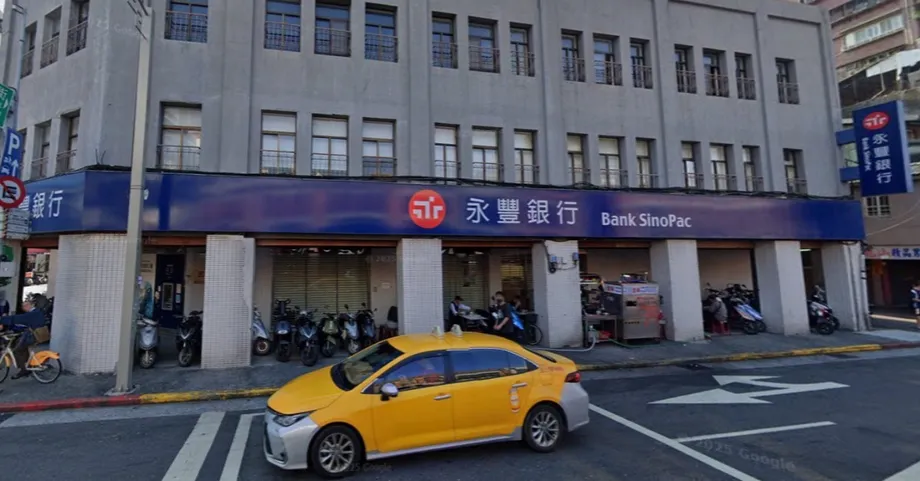
Bank SinoPac and King's Town Bank have set January 1, 2027 as their merger date, bringing two banks already owned by SinoPac Financial Holdings into a single institution. Bank SinoPac will survive the merger and issue 1.865 billion ordinary shares at NT$24 each, worth NT$44.76 billion, with an additional cash payment determined by an accounting formula.
Contents
- A New Year merger with NT$44.76 billion in shares
- How the shares and cash payment work
- From common ownership to a single bank
- A larger network for central and southern Taiwan
- Profits are rising, with different drivers
- The parent group's wider financial position
- Account numbers, passbooks and deposit protection
- Mortgage payments and digital services will change
- Energy finance adds another area of business
- What customers should check before January
- Key Points
The October 14, 2026 announcement fixes the timetable for a combination expected to give Bank SinoPac Taiwan's second largest branch network among private banks. The bank says the enlarged network will strengthen its presence in central and southern Taiwan, where King's Town has an established customer base.
Customers face practical changes alongside the corporate transaction. King's Town account numbers will expand from 12 to 14 digits, old passbooks will need replacement, and some digital payment and loan repayment services will change. Existing King's Town bank cards are scheduled to remain usable through December 31, 2027.
SinoPac Financial Holdings' October merger filing says the Financial Supervisory Commission approved the bank merger on July 24, 2026. The related issuance of new shares still awaits an effective filing with the commission's Securities and Futures Bureau. The boards have also authorised their chairmen, or designated representatives, to change and announce the relevant dates if necessary.
How the shares and cash payment work
Bank SinoPac will absorb King's Town through a transaction within their common parent group. SinoPac Financial Holdings owns all of King's Town and will receive the merger consideration from Bank SinoPac.
The total consideration will equal the book value of the parent company's King's Town investment on the day before the merger takes effect. Book value is the amount recorded in the company's accounts. With the current timetable, the relevant valuation date is December 31, 2026.
The share component is fixed at 1.865 billion shares multiplied by NT$24, producing NT$44.76 billion. Cash will cover the remainder after that share value is deducted from the total consideration. The final cash amount therefore depends on the book value used at the valuation date.
The transaction moves ownership and operations into the surviving bank while keeping them within SinoPac Financial Holdings. King's Town will cease to exist as a separate company, and Bank SinoPac will take over its business and contractual responsibilities.
From common ownership to a single bank
SinoPac Financial Holdings' March board announcement records its approval of the merger on March 27, 2026, naming Bank SinoPac as the surviving company and King's Town as the company to be absorbed.
The two bank boards approved the merger contract on the same date, exercising shareholder meeting powers under Article 15 of Taiwan's Financial Holding Company Act. The October filing then set both the merger date and the date for issuing the additional shares.
The main steps span more than a year:
- October 1, 2025: The Financial Supervisory Commission approved King's Town becoming a wholly owned subsidiary of SinoPac Financial Holdings.
- March 27, 2026: Both bank boards approved the merger contract, and the parent company's board approved the combination.
- July 24, 2026: The Financial Supervisory Commission approved the bank merger.
- October 14, 2026: Bank SinoPac announced January 1, 2027 as the merger and new share issuance date.
- January 1, 2027: The banks are scheduled to combine under Bank SinoPac.
A larger network for central and southern Taiwan
Bank SinoPac says the two institutions complement each other in branch locations, principal businesses and customer relationships. Its existing network has been concentrated more heavily in northern metropolitan areas, while King's Town brings a stronger presence in the south.
The bank expects the combined network's northern and southern branch proportions to reach four to six. Put simply, the stated split would place about 60 out of every 100 branches on the southern side of that division, compared with 40 in the north.
The expected ranking is specifically about the number of branches among Taiwan's private banks. Bank SinoPac also expects its asset base and market share to grow through the combination.
Local business lending and personal financial services are central to the bank's stated plans. Absorbing King's Town gives Bank SinoPac an existing network of business and household relationships through which to pursue that expansion, rather than relying entirely on opening new branches.
Profits are rising, with different drivers
Bank SinoPac earned NT$13.463 billion after tax in the first half of 2026, an increase of 20.9% from the same period a year earlier. Its annualised return on equity was 13.4%.
Return on equity compares profit with shareholders' capital. Annualising a figure expresses the reporting period's performance at a yearly rate, making it easier to compare with other periods.
King's Town earned NT$3.756 billion after tax in the same six months, up 138.6%. Its results benefited from reversals of bad debt expenses and a gain from selling King's Town International Leasing.
Banks set aside money to cover expected loan losses. When some of those earlier provisions are reversed, the reversal lifts profit. The leasing disposal also contributed a gain tied to a particular transaction, helping explain why King's Town's earnings grew much faster than Bank SinoPac's.
Together, the banks reported NT$17.219 billion in profit for the first half. Bank SinoPac contributed about 78% of that total and King's Town about 22%. The figures show the relative earnings size of the two businesses before their operations are brought together.
The parent group's wider financial position
SinoPac Financial Holdings reported preliminary net profit after tax of NT$36.776 billion for the first nine months of 2026, up 79% from a year earlier. Earnings per share reached NT$2.49, while annualised return on equity was 18.36%. All three measures reached records for the corresponding period.
The holding company's results cover the wider group and a longer reporting period than the banks' first half figures. They provide a broader picture of the parent company's performance as it prepares to combine its two banking subsidiaries.
Bank SinoPac's stated merger goals focus on a larger business, a broader customer base and a more balanced branch network. Delivering those goals will require transferring accounts and services while preserving the payment and borrowing arrangements customers already use.
Account numbers, passbooks and deposit protection
King's Town deposit accounts will transfer to Bank SinoPac, with account numbers changing from 12 to 14 digits. Customers who already hold accounts at both banks will retain separate accounts and passbooks rather than having them combined into one.
From the merger date, customers must take old King's Town passbooks to a Bank SinoPac branch for replacement. Before replacement, those passbooks cannot be used for deposits, withdrawals or transaction updates. Existing King's Town bank cards are scheduled to remain usable until December 31, 2027.
Customers should check any service that holds their account number, including employers paying salaries, insurers collecting premiums and organisations receiving automatic payments. The need for an update depends on the arrangements announced by the bank and the organisation collecting or sending the money.
Deposit insurance is another important change for people who hold money at both banks. After the merger, deposits at the two institutions will count together under the same insured bank. The maximum protection is NT$3 million per depositor, including both principal and interest.
For example, a customer with NT$2 million at each bank would have NT$4 million across the surviving institution. That amount is NT$1 million above the NT$3 million insurance limit, before allowing for interest. Separate account numbers and passbooks will remain, while insurance is calculated across the combined bank.
Mortgage payments and digital services will change
Existing authorised deductions for King's Town mortgages can continue after the merger. Loan account numbers will change to 14 digits, and the loan repayment functions in King's Town's internet banking service and app will be withdrawn. Customers can use authorised deductions, branch payments or remittances according to the bank's instructions.
Mortgage interest arrangements depend on the contract. Loans tied to King's Town's basic lending rate, benchmark rate or indexed mortgage rate will retain their existing reference rate arrangements. Loans priced using a posted time deposit rate will instead use Bank SinoPac's posted time deposit rate, with the contractual margin unchanged.
A reference rate is the starting rate used to calculate interest. The margin is the amount added to it under the borrower's agreement. Borrowers whose reference rate changes should check both parts when reviewing their future payments.
Bank SinoPac says it will automatically update account numbers where a King's Town account is used to pay a Bank SinoPac credit card bill. Customers will not need to set up that particular deduction again. Payments to other card issuers and outside organisations should be checked against the relevant institution's notice.
King's Town account links to JKoPay are scheduled to end at 5 p.m. on November 30, 2026. Customers will be able to link a Bank SinoPac account from the first business day after the merger. The payment link deadline arrives a month before the planned merger, making it an earlier date for affected customers to act on.
Energy finance adds another area of business
Bank SinoPac is also expanding its energy finance business as it prepares for the merger. At the end of August 2026, its overseas green energy financing balance had increased by 140% from a year earlier, while its total green energy financing balance grew 16%.
The bank identified wind power, small hydropower, geothermal energy and biomass power among the industries it finances. Biomass generation uses organic material to produce energy.
Its green electricity transaction trust platform also expanded. By August, the number of participating electricity retailers was up 50% from a year earlier. The generating capacity associated with participating electricity transfer arrangements exceeded 1,500 megawatts, twice the level at the end of 2025.
Megawatts measure generating capacity, while electricity delivered over time is measured in units such as megawatt hours. The bank says it plans to combine financing, electricity transactions and energy storage at customer premises into a broader service for businesses changing how they obtain and use energy.
What customers should check before January
November 30, 2026 is the first specific service deadline for customers using a King's Town account with JKoPay. January 1, 2027 is the planned date for the account transfer and passbook changes, followed by the December 31, 2027 deadline for continued use of existing King's Town bank cards.
Customers can prepare by checking that their mobile number, mailing address and email address held by the bank are current, then reviewing salary payments, insurance premiums, utilities, securities settlements and credit card deductions linked to King's Town accounts.
Borrowers should compare their loan contract with the repayment and interest arrangements announced for the merger. Bank SinoPac's merger information and customer service channels are the places to confirm account conversion details and any later changes to the timetable.
Key Points
- Bank SinoPac and King's Town plan to merge on January 1, 2027, with Bank SinoPac surviving.
- The consideration includes 1.865 billion new shares worth NT$44.76 billion, plus cash calculated from the investment's book value.
- The merger has regulatory approval; the new share issuance still awaits an effective securities filing.
- The combined bank is expected to have Taiwan's second largest private bank branch network.
- King's Town account numbers will expand to 14 digits, and old passbooks will require replacement.
- Deposits held at both banks will count together toward the NT$3 million insurance limit per depositor.
- JKoPay links are scheduled to end on November 30, 2026; existing King's Town bank cards can remain usable through December 31, 2027.