A shared automotive business with a 2027 target
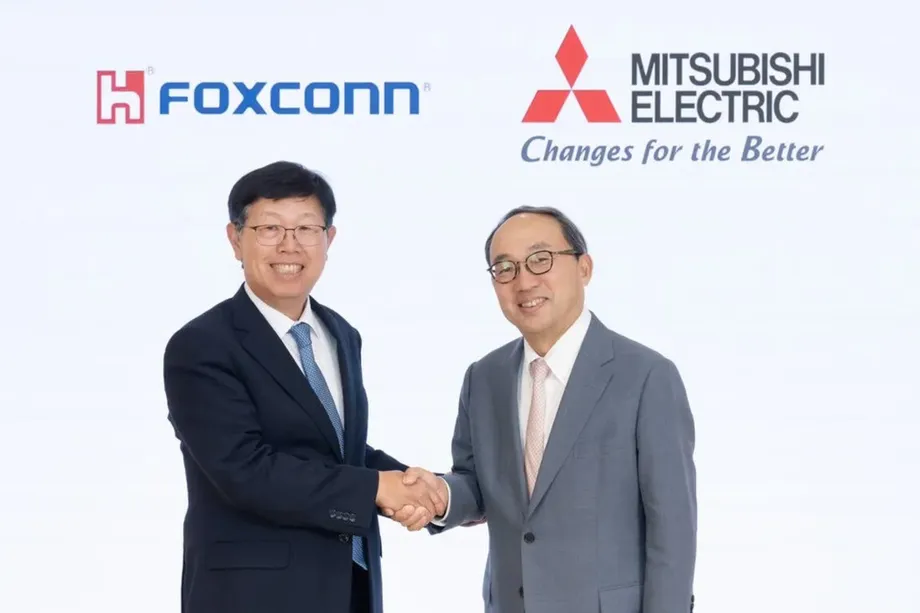
Mitsubishi Electric has reached a final agreement to sell 50% of its automotive equipment subsidiary, Mitsubishi Electric Mobility, to a company under Taiwan's Foxconn for an expected 115 billion yen. Announced on October 16, the agreement would put the Tokyo business under joint operation as the partners pursue electric vehicle platforms and other automotive technologies.
Contents
- A shared automotive business with a 2027 target
- What Foxconn is buying
- Why the deal has three different values
- From early talks to a final agreement
- The business must be reorganised before the sale
- What the partners want to build
- Supply and quality are part of the transition
- Foxconn is building several routes into vehicles
- What the agreement changes
- Key Points
The buyer is Lin Yin International Investment Co., Ltd., an investment management subsidiary of Hon Hai Precision Industry, better known as Foxconn. Mitsubishi Electric would retain the other half of the business, pairing its automotive engineering capabilities with Foxconn's manufacturing scale, cost advantages and ability to bring products to market.
The transaction assigns the automotive business an enterprise value of 320 billion yen and an equity value of 230 billion yen. Completion is targeted for October 1, 2027, subject to regulatory approvals and other contractual conditions. The share transfer therefore remains a future step, with business restructuring also planned before the partners begin operating the company together.
The agreement gives a more definite shape to discussions that Mitsubishi Electric formally announced in April 2026. Its stated ambitions extend beyond supplying individual components: the companies want to combine electric powertrain engineering, software and vehicle controls to provide electric vehicle platforms originating in Japan.
What Foxconn is buying
Mitsubishi Electric Mobility, based in Tokyo's Chiyoda district, handles automotive equipment. It recorded sales of 919.2 billion yen for the fiscal year ended March 2025, with its automotive equipment operations including alternators and starters.
Alternators generate electricity while a conventional vehicle's engine runs, while starters turn the engine to get it going. Those products help explain the established business behind the transaction, alongside the electric propulsion and software capabilities that the partners intend to develop.
Foxconn's investment would give it half ownership of an existing automotive supplier with engineering experience and substantial sales. Mitsubishi Electric, meanwhile, would keep an ownership interest and continue participating in the business through the planned joint operation.
Mitsubishi Electric had considered withdrawing from the automotive parts segment before choosing the partnership structure. Retaining 50% means it can pursue the business with another investor rather than making a complete exit. Foxconn's manufacturing resources and market reach are central to the partners' stated plans to strengthen the supplier's competitive position.
Why the deal has three different values
The 115 billion yen purchase price is half the agreed equity value of 230 billion yen. Equity value is the value assigned to the ownership shares, so it is the figure directly used to calculate the price of the 50% stake.
The larger enterprise value of 320 billion yen describes the value of the operating business on a broader financial basis. In a typical transaction, enterprise value and equity value are connected through adjustments for items such as debt, cash and other agreed financial obligations or assets.
The agreement puts the gap between those two valuations at 90 billion yen. The companies calculated the share value while taking account of changes in assets following the signing of the agreement. A detailed breakdown of the adjustments was not given.
The subsidiary's annual sales of 919.2 billion yen provide another measure of its size. The 320 billion yen enterprise valuation is approximately 35% of that revenue figure. Revenue measures money earned from sales before costs, while a business valuation also reflects factors such as expected earnings, assets and obligations. The figures describe different aspects of the company.
From early talks to a final agreement
Mitsubishi Electric's April 24 announcement said it had signed a memorandum of understanding with Foxconn to begin considering a strategic partnership. A memorandum of understanding records an intended direction for discussions before the parties settle the full transaction terms.
The April announcement contemplated Foxconn taking a 50% stake in Mitsubishi Electric Mobility. It also set out proposed cooperation in electrification, autonomous driving and vehicles whose functions can be defined or updated through software. The October agreement advances that plan to an agreed ownership transaction with a price and expected completion schedule.
The sequence shows how the proposal developed:
- March 18, 2026: Expectations emerged that the companies could reach a final agreement by May 2026.
- April 24, 2026: Mitsubishi Electric and Foxconn signed a memorandum to explore a strategic partnership, including a possible 50% investment.
- October 16, 2026: The companies announced the final agreement, with an expected transfer price of 115 billion yen.
- October 1, 2027: The targeted completion date, subject to approvals and other contractual requirements.
- Fiscal year ending March 2028: Mitsubishi Electric Mobility is expected to become an equity method affiliate of Mitsubishi Electric.
The final agreement came later than the May date anticipated in March. The next scheduled transaction milestone is the share transfer in October 2027.
The business must be reorganised before the sale
Mitsubishi Electric plans to move rights and obligations connected with its automotive equipment business into Mitsubishi Electric Mobility through a company split. Related business rights and obligations held by group companies in Japan and overseas would also move into the subsidiary or its subsidiaries.
A company split is a legal method for moving a business, including the rights and responsibilities attached to it, from one company to another. Here, it would bring the relevant automotive operations into the structure that Mitsubishi Electric and Foxconn intend to operate together.
The share transfer would follow that restructuring. Completion also requires permission from relevant authorities under competition law and other applicable rules, as well as satisfaction of the remaining contractual conditions.
Mitsubishi Electric Mobility is then expected to become an equity method affiliate from the fiscal year ending March 2028. Under that accounting approach, Mitsubishi Electric would generally recognise its share of the affiliate's earnings rather than include every item of the business's revenue and expenses in its own consolidated results.
What the partners want to build
Mitsubishi Electric Mobility brings technology and development capabilities in electric powertrains, software and controls. An electric powertrain is the equipment that turns electrical energy into the movement of a vehicle, including the motor and the electronics that manage its power.
Vehicle controls coordinate how different systems behave. Software can govern functions ranging from power delivery to driver assistance, making the relationship between mechanical engineering and computing increasingly important to the partners' plans.
Foxconn is expected to contribute manufacturing scale, speed and market execution. The intended combination is straightforward: use Mitsubishi Electric Mobility's engineering and quality capabilities alongside Foxconn's ability to organise production and reach customers at scale.
The companies want to supply an electric vehicle platform originating in Japan. A platform is a shared basic structure and set of systems on which different vehicle models can be developed. Sharing that foundation can reduce the amount of engineering that a manufacturer must repeat for each new model.
Mitsubishi Electric's April statement also identified autonomous driving and software defined vehicles as areas for possible cooperation. A software defined vehicle is a car in which software determines or updates many functions, allowing some features to change during the vehicle's life rather than remaining fixed when it leaves the factory.
Supply and quality are part of the transition
Mitsubishi Electric made maintaining stakeholder trust, stable supply and quality its highest priorities when it announced the partnership discussions in April. Those commitments matter to vehicle manufacturers that depend on components arriving reliably and meeting their specifications.
The planned ownership change brings together a large existing automotive business and a new investor. Its practical demands include transferring the relevant operations into the agreed structure while keeping production and customer relationships functioning.
The partners also connect the venture to strengthening Japan's industrial base. Their stated goal is to turn Japanese manufacturing technology and quality into products for the next generation of vehicles, then take those capabilities into global markets over the medium and longer term.
The commercial test will be concrete: developing products that vehicle manufacturers choose to buy, delivering them at a competitive cost and maintaining the quality expected of an established automotive supplier. The agreement sets out the resources the partners intend to combine for that purpose.
Foxconn is building several routes into vehicles
Foxconn's investment in Mitsubishi Electric Mobility fits alongside other automotive initiatives involving Japanese companies. Earlier in 2026, Foxconn and Mitsubishi Fuso Truck and Bus Corporation announced plans for a manufacturer based in Japan focused on vehicles with zero exhaust emissions, particularly electric buses for domestic and overseas markets.
The proposed bus operation also envisaged continuing work on vehicles with internal combustion engines. That gives the initiative a mix of existing vehicle technology and electric models, rather than a single product category.
Foxconn and Mitsubishi Motors have also agreed to develop a battery electric sport utility vehicle for Australia and New Zealand using Foxconn's MIH platform. The planned vehicle is based on the Foxtron Model B, developed through a separate venture with Yulon Motor. A production version was launched in Taiwan as the Foxtron Bria.
Mitsubishi Electric, Mitsubishi Motors and Mitsubishi Fuso are separate companies. Their projects with Foxconn cover different parts of the vehicle business: components, passenger vehicles and commercial vehicles.
Foxconn has also invested in batteries. It opened a lithium iron phosphate battery factory in Taiwan in March 2025 with planned initial capacity of 1.2 gigawatt hours. Lithium iron phosphate, commonly shortened to LFP, is a battery chemistry used in electric vehicles and energy storage. Gigawatt hours measure the amount of energy that batteries can store.
Together, these initiatives show Foxconn pursuing several positions in the automotive supply chain. The Mitsubishi Electric Mobility agreement adds a large established components business to its work on vehicle platforms, production and batteries.
What the agreement changes
Mitsubishi Electric's decision replaces the prospect of a full withdrawal from automotive parts with a plan for shared ownership. Foxconn would gain a substantial position in a Japanese supplier, while Mitsubishi Electric would retain half the shares and participate in its next stage of development.
The proposed structure connects two commercial needs: an established supplier's effort to improve its competitive position and Foxconn's effort to expand its automotive business. Their stated focus on electric propulsion, controls and software also links the transaction to products beyond the alternators and starters associated with the subsidiary's existing operations.
October 2027 is the point at which that ownership plan is scheduled to take effect. Before then, the companies must complete the internal business transfers, obtain required approvals and meet the agreement's other conditions.
Key Points
- Mitsubishi Electric agreed to sell 50% of Mitsubishi Electric Mobility to Foxconn subsidiary Lin Yin for an expected 115 billion yen.
- The transaction values the business at 320 billion yen and its equity at 230 billion yen.
- Completion is targeted for October 1, 2027, subject to approvals and contractual conditions.
- The subsidiary recorded sales of 919.2 billion yen for the fiscal year ended March 2025.
- The partners plan to combine automotive engineering, software and controls with Foxconn's manufacturing scale and market reach.
- Mitsubishi Electric Mobility is expected to become an equity method affiliate in the fiscal year ending March 2028.