Six Days of Learning From Home Across the Province
North Sumatra has ordered schools from early childhood education through senior high school to switch to distance learning from October 16 to 21, 2026, as smoke from forest and land fires affects air quality and visibility. Teachers and education staff must also work from home under the provincial Education Department's instructions.
Contents
- Six Days of Learning From Home Across the Province
- Which Schools Must Change Their Classes?
- What the Air Measurements Show
- How the Decision Developed
- Regional Instructions Add Attendance and Test Requirements
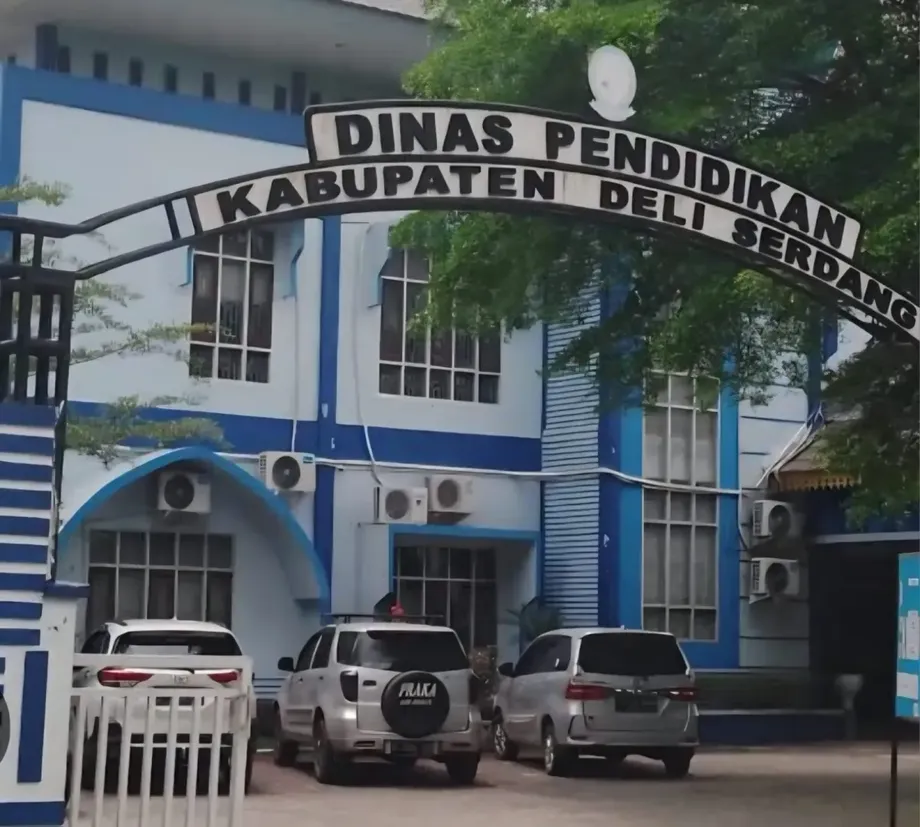
- Deliserdang Puts the Order Into Practice
- Haze Also Affects Travel and Outdoor Activity
- Weather Modification and Air Monitoring Continue
- Key Points
The order follows air monitoring that recorded fine particle concentrations of 55.5 to 150.4 micrograms per cubic meter on October 14. By 9 a.m. Western Indonesian Time on October 15, observations at Kualanamu, Aek Godang and Silangit meteorological stations showed visibility of just 1 to 3 kilometers.
Education Department Head Alexander Sinulingga signed Circular No. 400.3/106/DISDIK/X/2026 on October 15, following instructions from Governor Bobby Nasution. The circular directs education authorities and school leaders to keep lessons running while reducing exposure to haze for students, teachers and other school employees.
The province has set October 21 as the end of the initial distance learning period. Any extension or return to classrooms will be announced after an assessment of air quality and guidance from the authorities; no date for that announcement has been given.
Which Schools Must Change Their Classes?
The provincial circular covers early childhood centers and kindergartens, known locally as PAUD and TK; elementary schools, or SD; junior high schools, or SMP; and senior high schools, or SMA. Vocational high schools, known as SMK, and special education schools, known as SLB, are also included, along with equivalent institutions.
Schools must arrange learning from students' homes using digital platforms or other communication channels suited to their circumstances. The instructions leave the choice of platform to each school rather than requiring a single application across North Sumatra.
Parents and guardians are being asked to supervise children during lessons, make sure they participate, and keep them indoors during learning hours. Families are also urged to limit children's activities outside the home while haze remains a concern.
For teachers, the circular pairs continued instruction with a limit on workload: material should be delivered in proportion to students' needs and should not overburden them. The change moves schoolwork home while keeping teaching, supervision and reporting responsibilities in place.
What the Air Measurements Show
Monitoring by Indonesia's Meteorology, Climatology and Geophysics Agency, BMKG, recorded PM2.5 concentrations fluctuating between 55.5 and 150.4 micrograms per cubic meter from midnight to 9 a.m. on October 14. PM2.5 means tiny airborne particles measuring 2.5 micrometers or less across, small enough to travel deep into the lungs when inhaled.
The measurement describes the mass of those particles in a cubic meter of air. Across the reported range, the highest concentration was about 2.7 times the lowest, illustrating how much conditions varied during the monitoring period.
Hendro Nugroho, head of BMKG's Region I office in Medan, said monitoring on October 15 placed air quality in several parts of North Sumatra between moderate and unhealthy. The observations at Kualanamu, Aek Godang and Silangit also documented reduced visibility, adding a transport concern to the health concerns behind the school decision.
David Eltom Nainggolan, head of Education Branch Office Region I, warned in a separate circular that exposure to fine particles and spreading haze could affect public health. His office's instructions connect the air measurements directly to changes in lessons, attendance checks and outdoor activity.
How the Decision Developed
The move to remote classes followed air monitoring on October 14 and public instructions from the governor the next day. Bobby spoke on October 15 at the launch of a free pioneer bus service for students at SMA Negeri 1 Pulau Rakyat in Asahan Regency.
The governor initially called for senior high schools, vocational high schools and special education schools to begin distance learning on October 16. The provincial Education Department's circular set out the broader requirement covering all listed school levels, including younger children.
- October 14, midnight to 9 a.m.: BMKG monitoring recorded PM2.5 concentrations of 55.5 to 150.4 micrograms per cubic meter.
- October 15, 9 a.m.: Three meteorological stations recorded visibility of 1 to 3 kilometers.
- October 15: Bobby called for remote classes, and Alexander signed the provincial circular.
- October 16: The province's distance learning requirement began.
- October 21: The initial period is scheduled to end, with further arrangements subject to an official announcement.
Bobby stressed that children were expected to continue their education from home. His remarks, translated from Indonesian, described the purpose of the change:
Children should keep studying from home, not take a holiday, because we must protect children from exposure to smoke haze.
Regional Instructions Add Attendance and Test Requirements
Education Branch Office Region I issued Circular No. 400.3.12.2/049/CABDISDIK WIL.I/X/2026 alongside the provincial directive. Its eight measures provide more detail on how schools should organize remote teaching and monitor conditions.
Schools affected by haze are instructed to use agreed learning platforms or communication channels and provide structured assignments. They must also check the attendance and participation of teachers and students, while taking account of the schedule for the Tes Kemampuan Akademik, or TKA, an academic ability test.
The reference to TKA means schools must consider testing commitments as they adjust lessons. The instructions described do not announce a new test date or a cancellation.
The branch circular also asks school communities to reduce outdoor activity, wear masks when they must leave home, and maintain clean and healthy habits. School leaders must regularly report both local air conditions and the operation of distance learning to the relevant education authorities.
Deliserdang Puts the Order Into Practice
Deliserdang Regency's Education Department has confirmed that its schools will learn from home over the same October 16–21 period. Its announcement covers early childhood centers, kindergartens, elementary schools, junior high schools and equivalent special education institutions.
A. Fitrian Syukri, head of the Deliserdang Education Department, said the measure followed the governor's instructions and that his department had reported it to the regent. The local implementation carries through the provincial requirements for parental supervision, suitable communication methods and proportionate schoolwork.
Deliserdang's school leaders must monitor distance learning and report its progress to district and provincial education offices according to their responsibilities. Teachers and other education staff are to work from home.
The provincial and local instructions place several tasks on families at once: helping children join lessons, keeping track of assignments and reducing time outdoors. Schools retain responsibility for choosing workable teaching methods and avoiding excessive demands on students.
Haze Also Affects Travel and Outdoor Activity
The haze covering parts of North Sumatra was reported to have traveled from southern Sumatra and Kalimantan with moving air masses. Its effects extend beyond school grounds, particularly where smoke and mist have reduced the distance drivers can see.
Hendro advised people traveling through areas with poor visibility to slow down, maintain a safe distance from other vehicles and use vehicle lights as needed. With visibility measured at 1 to 3 kilometers at the three stations on October 15, the advice addresses travel conditions alongside the decision to reduce school journeys.
Residents were also urged to limit outdoor activity when air quality worsens and use suitable masks to reduce exposure to smoke particles. Bobby asked district and municipal leaders to keep monitoring air conditions and explain protective measures to their communities, especially for children and other vulnerable residents.
The school directives combine staying indoors with continued study. Their practical aim is to reduce time spent traveling to school, gathering outdoors and taking part in activities exposed to smoky air, while allowing instruction to continue through channels chosen by each school.
Weather Modification and Air Monitoring Continue
North Sumatra has attempted weather modification in Samosir Regency to encourage rainfall, Bobby said. The provincial government plans to continue those efforts in other areas as part of its response to the haze.
Weather modification seeks to encourage rain under suitable atmospheric conditions. In this case, the governor presented it as one part of the response, alongside changes to schooling, public health advice and monitoring by local authorities.
Bobby also said North Sumatra had coordinated with the South Sumatra provincial government over supporting technology to reduce the effects of smoke. His remarks described cooperation and attempted weather modification, without giving a measured reduction in haze from those efforts.
For schools, the next decision rests on air quality and instructions from the authorities. The provincial circular requires periodic evaluation, while the Region I directive asks school leaders to report conditions as well as the progress of remote classes. Those reporting duties connect the temporary timetable to conditions in the affected communities.
Key Points
- All listed school levels in North Sumatra must conduct distance learning from October 16 to 21, 2026.
- Teachers and education staff must work from home, while parents are asked to supervise students and limit outdoor activity.
- BMKG monitoring recorded PM2.5 concentrations of 55.5 to 150.4 micrograms per cubic meter on October 14.
- Visibility at Kualanamu, Aek Godang and Silangit stations fell to 1 to 3 kilometers on October 15.
- Deliserdang has confirmed local implementation, and Region I instructions include attendance checks and consideration of the TKA schedule.
- Authorities will assess air quality before announcing an extension or a return to classrooms.