Two years to redraw the boundary between military and civilian justice
Indonesia's Constitutional Court has given parliament and the government until October 15, 2028, to overhaul the country's Military Courts Law, ordering clearer limits on which crimes involving soldiers belong in military courts and which should go before general courts.
Contents
- Two years to redraw the boundary between military and civilian justice
- Which crimes should military courts hear?
- The families behind the challenge
- Why the military defended a separate system
- Parliament warned against a fragmented transition
- Why Supreme Court control matters
- A reform mandate dating to 2004
- How the case reached the ruling
- What the transition means for victims and lawmakers
- Key Points
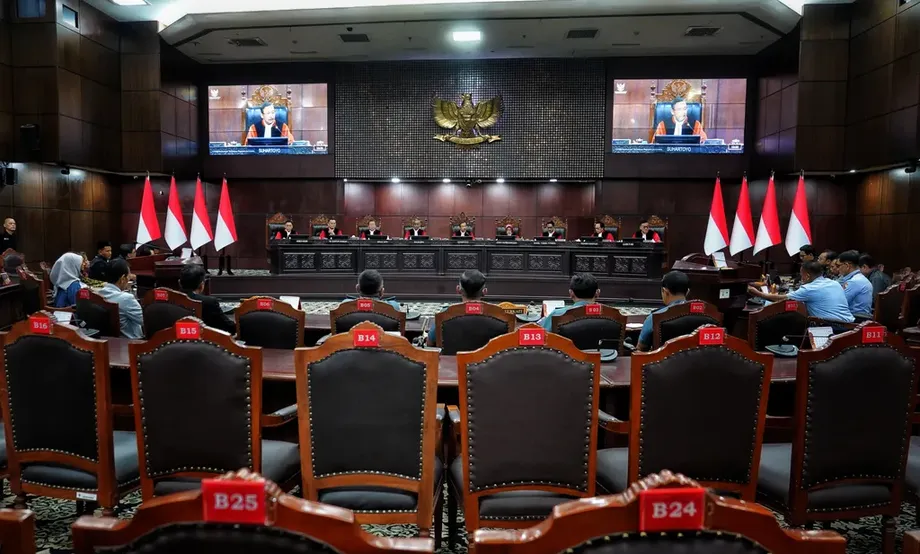
Chief Justice Suhartoyo read the decision in case No. 260/PUU-XXIII/2025 on October 15, 2026. The court granted the petition brought by Lenny Damanik and Eva Meliani Br Pasaribu, two women whose families suffered deaths linked to allegations involving military personnel.
The decision places Law No. 31 of 1997 on Military Courts under a constitutional deadline. Parliament and the government have a maximum of two years from the ruling to amend it. If they fail, the law will lose its binding legal force.
The court called for a comprehensive revision: clear definitions of military and ordinary crimes, boundaries between military and general court jurisdiction, full integration of military justice under the Supreme Court, and rules covering combat courts and criminal procedure.
For families seeking justice, the central issue is straightforward. When a soldier is accused of an ordinary crime, should the case go to a court because of the person's uniform, or because of the kind of crime alleged? The court's reasoning places the nature of the offense at the center of that decision.
Constitutional Court Justice Enny Nurbaningsih explained the principle while reading the legal considerations:
If an offense committed by a soldier is an ordinary criminal offense, it is formally more appropriate for it to be examined by a general court.
Which crimes should military courts hear?
Article 9 point 1 of the 1997 law gives military courts authority to try criminal offenses committed by soldiers and certain other people covered by the legislation. The petitioners challenged its broad reference to criminal offenses, alongside Article 43(3) and Article 127.
The wording matters because jurisdiction means a court's legal authority to hear a case. Under the arrangement challenged by the petitioners, the accused person's military status can determine the forum even when the alleged offense is an ordinary crime.
Their examples included corruption, traffic offenses, domestic violence, narcotics, psychotropic substances and offenses involving child protection. These are areas of criminal law that also apply outside military life.
The court explained that military crimes have a particular connection to service obligations, command structures, discipline or interests specific to the armed forces. Assessing such conduct can require knowledge of military duties as well as criminal law. Justice Arsul Sani, reading part of the reasoning, said the justification for military jurisdiction rests on that special subject matter rather than simply on the accused being a soldier.
The court accepted the argument that the phrase referring to criminal offenses in Article 9 point 1 should mean military criminal offenses. It also required broader legislative work rather than a revision confined to those words. Any exception allowing military courts to hear ordinary crimes during war in combat areas must be specifically and narrowly written into the law.
The families behind the challenge
Lenny Damanik is the mother of Michael Histon Sitanggang, a student from Medan who died at age 15 in May 2024 after an alleged assault involving First Sergeant Riza Pahlevi. Her challenge brought a family's demand for accountability into a constitutional dispute about the court system.
Eva Meliani Br Pasaribu is the daughter of journalist Rico Sempurna Pasaribu. He died with his wife, child and grandchild in a fire allegedly connected to reporting about gambling said to have military backing. Eva is also the mother of Loin Situngkir, who was three years old.
Eva expressed hope that military personnel responsible for her father's death could face trial in the general courts. Lenny hoped the decision would help other victims of crimes committed by military personnel.
The military disputed important allegations during the proceedings. In its March testimony, the TNI, Indonesia's armed forces, said the alleged involvement of Corporal H.B. in a planned murder had not been proven, citing a cassation decision and investigative findings. The constitutional case addressed the rules governing military justice, while the families continued to seek accountability through criminal proceedings.
The TNI also told the court that a military prosecutor had sought cassation in the Riza Pahlevi case under application No. APK/67K/PMI02/AD/II/2026. Cassation is a stage of review by the Supreme Court.
Why the military defended a separate system
Vice Admiral Hersan presented the TNI commander's position at a hearing on March 12, 2026. The Constitutional Court's March hearing transcript records the military's request for the petition to be rejected or declared inadmissible.
The commander argued that military service requires a distinct justice system because of command structures, discipline, readiness and national defense responsibilities. In that view, equality before the law can operate through different institutional arrangements.
The TNI also challenged the petitioners' legal standing, arguing that they had not shown a constitutional connection between their claimed harm and the provisions under review. Standing is the requirement that a person show a sufficient legal interest to bring a case.
On transparency, the military cited Article 141(2) and (3) of the 1997 law, saying military hearings are open to the public subject to specified exceptions. It also cited Article 2 of the Military Criminal Code concerning the application of ordinary criminal law to offenses outside that code, subject to statutory exceptions.
After the ruling, Major General Muhammad Nas, head of the TNI Information Center, said the armed forces respected and would comply with all Constitutional Court decisions. He also stated the institution's commitment to the rule of law and legal supremacy in Indonesia.
Parliament warned against a fragmented transition
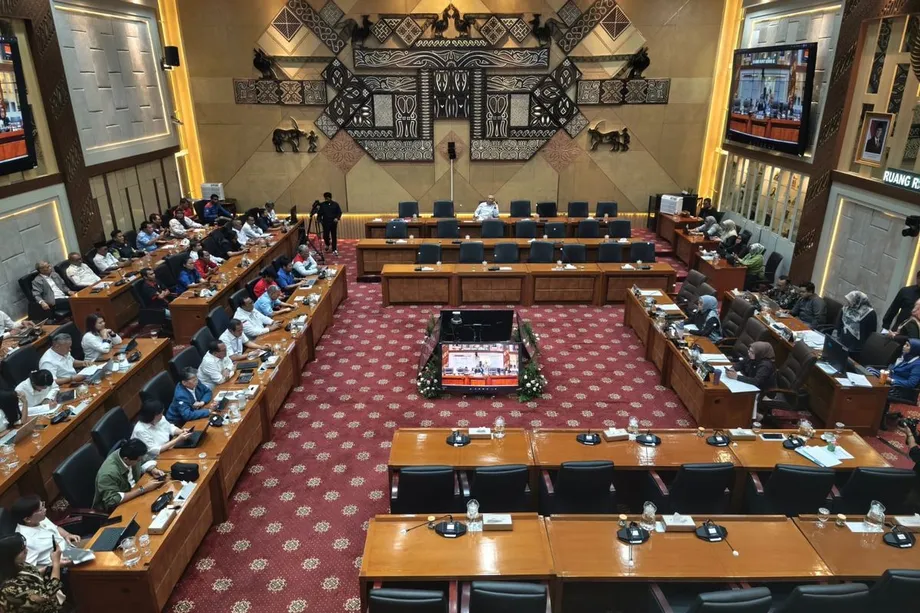
Abdullah, a member of parliament's Commission III, defended the existing provisions at the February 25, 2026, hearing. The Constitutional Court's February hearing account records his argument that changing military jurisdiction in isolated pieces could leave gaps in the law.
Abdullah said the transition involved the substance of criminal law, institutional structures, and defense and security interests. Referring to Constitutional Court decision No. 87/PUU-XXI/2023, he argued that such changes required a broader legislative process.
He also said military prosecution was coordinated by the Deputy Attorney General for Military Crimes to maintain a common prosecution policy. Parliament's position was that Article 9 point 1, Article 43(3) and Article 127 remained constitutional and binding.
The October judgment requires the comprehensive revision that parliament said would be necessary, while attaching a firm deadline and a consequence for inaction. Lawmakers must now decide how institutions will handle cases under the revised division of authority.
Why Supreme Court control matters
The court's order extends beyond deciding where a criminal charge should be heard. It also calls for military justice to be brought fully under the Supreme Court through what Indonesia calls the system of justice under one roof.
Recruitment and career development for military court personnel have remained under the TNI commander rather than being fully placed under the Supreme Court. The ruling identifies this incomplete integration as part of the institutional work lawmakers must address.
The practical issue is who manages the people administering justice. Moving personnel arrangements into a unified judicial structure is part of the court's effort to secure judicial independence and reduce conflicts of interest.
Article 43(3) presents another part of the problem. According to the TNI's hearing testimony, it gives the Main Military Court authority to resolve disagreements between a military prosecutor and the officer responsible for referring a case over whether it should proceed to court or be resolved outside court.
The revised law must also provide a clear way to settle disagreements about whether a case belongs in military or general jurisdiction. Definitions alone will leave difficult cases unresolved unless institutions have workable procedures for applying them.
A reform mandate dating to 2004
Law No. 34 of 2004 on the TNI already sets out the division at the heart of this dispute. Article 65(2) provides for soldiers to come under military courts for military criminal offenses and general courts for ordinary criminal offenses.
Article 74 links implementation to the enactment of a new military courts law. That connection has left the intended division dependent on legislation that had still not been completed when the Constitutional Court delivered its October 2026 judgment.
The court said the 2004 mandate had gone unfulfilled for 22 years. If lawmakers use the full two years now allowed, the interval from the 2004 law to the October 2028 deadline will reach 24 years.
The 1997 Military Courts Law was enacted before Indonesia's reform era and subsequent constitutional amendments. The court said it must be brought into line with the strengthened constitutional protections for independent justice, equality before the law and individual rights.
The judgment also referred to Article 14 of the International Covenant on Civil and Political Rights, which sets standards for fair proceedings before an independent tribunal. The court connected the use of general courts for ordinary crimes to accountability, independence and preventing impunity, meaning escape from legal responsibility.
How the case reached the ruling
The Constitutional Court's initial hearing account records the petitioners' arguments about equality before the law and civilian supremacy, meaning civilian authority over the military. Their lawyer, Ibnu Syamsu Hidayat, argued that broad military jurisdiction over ordinary crimes weakened both principles.
The proceedings developed through these main stages:
- January 8, 2026: The initial hearing examined the petition and the constitutional harm alleged by Lenny and Eva.
- January 21, 2026, at noon Western Indonesian Time: The deadline for submitting a revised petition.
- February 25, 2026: Parliament presented its defense of the existing provisions and warned against partial changes.
- March 12, 2026: The court heard the TNI commander's position in a session lasting from 1:02 p.m. to 1:33 p.m. Western Indonesian Time.
- October 15, 2026: The court granted the petition and ordered comprehensive revision.
- October 15, 2028: The deadline for amending the law.
The court's initial hearing page displays January 8, 2026, but gives January 8, 2025, within its text. The January 2026 revision deadline and subsequent accounts place the initial hearing in 2026.
Justice M. Guntur Hamzah had advised the petitioners to strengthen factual evidence of constitutional harm. He considered their standing argument concerning Article 9 relatively strong, while asking for fuller arguments on the other provisions. At the March hearing, their lawyers planned four expert submissions, two in writing and two in person.
What the transition means for victims and lawmakers
The ruling gives parliament and the government a defined task with a deadline: replace broad, status based jurisdiction with clear rules tied to the nature of the crime, while reorganizing the institutions that apply those rules.
Petitioners' lawyer Irvan Saputra welcomed the decision as a progressive step and stressed the consequence of missing the two year deadline. Fellow lawyer Ibnu Syamsu Hidayat criticized the length of the transition and wanted soldiers accused of ordinary crimes to face general courts sooner.
No timetable was announced for transferring particular pending cases into general courts. Families pursuing individual cases must therefore await the procedures governing that transition, alongside developments in their criminal proceedings.
The legislative work now includes defining both categories of crime, setting narrow wartime exceptions, resolving disputes between court systems, revising criminal procedure and completing integration under the Supreme Court. Each part affects whether victims, prosecutors and judges can identify the responsible institution without another prolonged dispute.
Key Points
- The Constitutional Court granted case No. 260/PUU-XXIII/2025 on October 15, 2026.
- Parliament and the government have until October 15, 2028, to revise Law No. 31 of 1997.
- The law will lose binding legal force if the required amendments are not made within two years.
- The court said ordinary crimes committed by soldiers should come under general court jurisdiction, with narrowly defined wartime exceptions.
- The revision must clarify jurisdiction, criminal procedure and full integration of military justice under the Supreme Court.
- The TNI said it respects and will comply with Constitutional Court rulings.