Parliament approves 313 articles, but implementation must wait
Indonesia's House of Representatives approved the Employment Protection Law on October 6, 2026, introducing tighter dismissal rules, a four year ceiling on temporary contracts and protections for digital platform workers. The legislation contains 23 chapters and 313 articles, but its approval does not mean those provisions immediately take effect.
Contents
- Parliament approves 313 articles, but implementation must wait
- A court deadline drove the legislative timetable
- Temporary contracts can total four years, not two
- Outsourcing restrictions leave competing interpretations
- Dismissal grounds narrow and severance rises
- A severance fund changes how obligations are financed
- Wage changes connect pay setting to living costs
- Leave, disability rights and apprenticeships receive attention
- Platform protections do not settle employee status
- Participation and enforcement divide unions
- Employers want clarity before assessing costs
- What to Know
The government describes a transition lasting one year from enactment and promulgation, with full implementation targeted for October 6, 2027. New wage provisions are expected to guide the setting of minimum wages for 2028. The precise starting date depends on promulgation, rather than the parliamentary vote alone.
A central uncertainty cuts across the changes: the final text had not been publicly released when several unions and employer representatives commented between October 6 and October 8. Some detailed claims therefore reflect circulating drafts or participants' descriptions, rather than a published final statute.
Manpower Minister Yassierli presented the legislation as an attempt to protect employment without undermining companies' ability to operate. Speaking to parliament after the vote, he said:
This bill reflects a balance between protecting workers' basic rights and the sustainability of businesses.
The practical test will involve more than higher compensation. It will depend on which dismissals remain permissible, whether contract and outsourcing restrictions prevent avoidance, and whether inspectors and courts can enforce the expanded rights.
A court deadline drove the legislative timetable
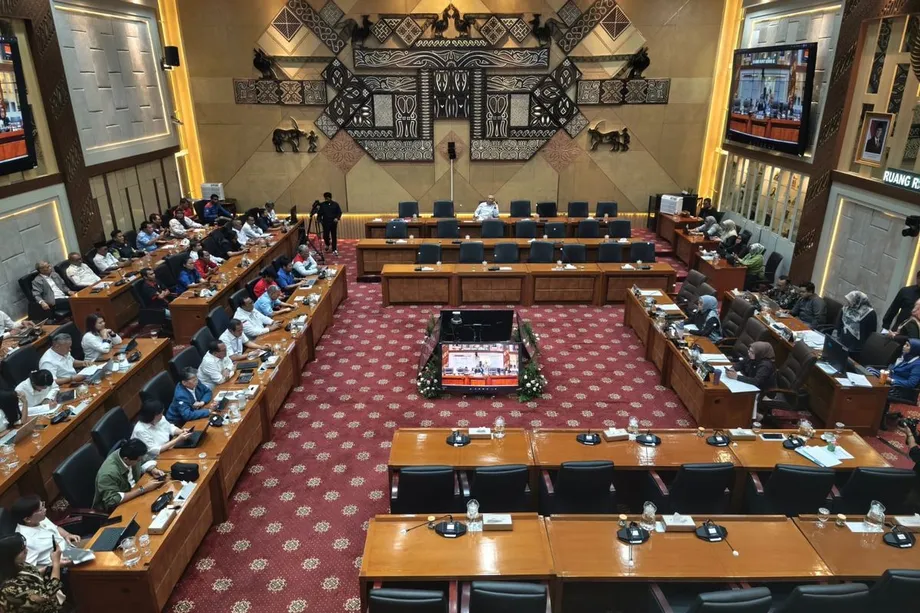
The vote took place at the House's ninth plenary meeting of the first sitting period of the 2026–2027 parliamentary year in Jakarta. Eight parliamentary factions approved the bill, around three weeks before the deadline arising from Constitutional Court Decision No. 168/PUU-XXI/2023.
Pronounced on October 31, 2024, that ruling required lawmakers to separate employment provisions from Law No. 6 of 2023 on Job Creation and adopt a standalone labor law within two years. The court also modified 21 provisions affecting contracts, outsourcing, wages, working time, dismissal and other employment matters.
The main dates show how quickly the parliamentary process moved:
- October 31, 2024: The Constitutional Court ordered a separate employment law within two years.
- August 27, 2026: The House adopted the bill as its own initiative.
- September 1, 2026: President Prabowo Subianto issued a letter appointing the government negotiating team.
- September 14–October 4, 2026: Joint deliberations took place, ending with agreement in Commission IX.
- October 6, 2026: The House approved the legislation in plenary.
- October 6, 2027: Full implementation is targeted, subject to the promulgation date.
- 2028: The new wage rules are expected to apply to minimum wage setting.
One account of the minister's presentation gives October 5, unlike the October 6 approval date consistently stated elsewhere. There is also a distinction between parliament approving legislation and the subsequent publication of its final enacted text.
Temporary contracts can total four years, not two
The reported contract schedule permits an initial two year fixed term employment agreement, known as PKWT, followed by no more than two extensions of up to one year each. The maximum cumulative period is therefore four years. Describing the limit simply as two years leaves out the extensions.
That is one year shorter than the five year ceiling under the Job Creation framework, a reduction of 20 percent. It remains one year longer than the three year total described for Law No. 13 of 2003, which allowed an initial two years and one extension of up to a year.
Andi Gani Nena Wea, president of the All-Indonesian Workers Union Confederation, said the four year limit fell short of unions' demand for one year. Said Iqbal, president of the Confederation of Indonesian Trade Unions and the Labor Party, said workers still needed after four years should become permanent employees.
The institutional detail comes from AHP's draft analysis, which examined the August 27 draft as it stood on October 2. It described a four year total, a separate two year ceiling for work expected to finish relatively quickly, written extension notice at least seven days before expiry, and automatic conversion to permanent employment for contracts failing the requirements. Those details concern the draft and require confirmation against the final law.
Outsourcing restrictions leave competing interpretations
The principal description limits outsourcing to five supporting service categories: cleaning, worker catering, security, support services in mining and petroleum, and worker transportation. The purpose is to restrict the use of outside labor for work directly connected with a company's production process.
The draft analysis identified an important qualification. A separate provision permitted outsourcing of work not directly connected with production, suggesting the five categories might not be exhaustive. The published final wording will determine whether that broader permission survived.
Accounts also differ on how to count the categories. Said Iqbal described four general categories, with separate arrangements for mining, petroleum and state owned enterprises. He said affected companies would need subsidiaries or comparable business entities to manage outsourced supporting work. Yassierli also described subsidiary arrangements for outsourcing at state owned enterprises.
Two employment relationships must be distinguished. Andi Gani said outsourced workers would become permanent employees of the outsourcing company. The draft separately provided that workers performing tasks directly connected with production would become employees of the company using their services. These describe different situations, not necessarily contradictory promises.
Under the draft, a worker disputing an outsourcing arrangement could seek a labor inspector's examination after unsuccessful negotiations and ask a District Court to ratify the findings. Existing outsourcing rules also include Manpower Minister Regulation No. 7 of 2026, effective from April 30, 2026.
Dismissal grounds narrow and severance rises
The August draft listed 14 dismissal grounds but omitted two efficiency grounds: actual financial losses and preventing anticipated financial losses. This is more specific than saying companies can never dismiss workers for economic reasons. Closure, bankruptcy and other identified circumstances remained in the draft.
Preventive steps would become a legal condition before negotiations between employer and worker. They included reducing overtime or working hours, temporarily standing workers down, allowing temporary contracts to expire without renewal, and offering early retirement. The draft did not settle whether every measure must be attempted in sequence.
Several severance multipliers would rise. Payments for specified grounds, including closure after sustained losses, force majeure, bankruptcy and breaches following warning letters, would increase from 0.5 times the base entitlement to one times. Certain merger and employer misconduct cases would rise from one times to two times.
The retirement multiplier would increase from 1.75 to two, about 14.3 percent. These multipliers apply to the severance component, not automatically to every payment owed when employment ends. The draft analysis said the changes would not alter the separate award for length of service.
Some accounts describe a minimum multiplier of one replacing the former 0.5 rate. The draft analysis ties increases to specific dismissal grounds, so a universal entitlement should not be assumed without the final text. Aloysius Uwiyono, a labor law specialist at Trisakti University, also cited the Constitutional Court's requirement that contested dismissals following failed negotiations await a binding decision from the industrial dispute resolution institution.
A severance fund changes how obligations are financed
The proposed severance guarantee, or jaminan pesangon, would require employer contributions to fund future payments. In the draft, employers remained responsible for any shortfall between the fund's payment and a worker's statutory entitlement. Any excess would be returned to the employer.
This is principally a funding mechanism, distinct from deciding how much a dismissed worker is owed. The contribution rate and operating arrangements were left to a government regulation. Job Loss Insurance, known as JKP, is another protection and should not be confused with the new severance program.
Said Iqbal described a further entitlement for contract and outsourced workers: one month's wages for each year of service, reaching four months after four years. He contrasted that with a permanent employee's base severance reaching nine months after nine or more years. These remain his descriptions pending publication of the final text, including clarification of how they relate to existing contract compensation.
Other assessments are less favorable. Timboel Siregar, secretary general of the Indonesian Trade Union Organization, said the legislation removes the former housing and medical compensation calculated at 15 percent. That claim also needs checking against the final provisions and their legal baseline.
Wage changes connect pay setting to living costs
The legislation addresses minimum wages, company wage structures and scales, overtime, payments in specified circumstances and deductions. Indah Anggoro Putri, the Manpower Ministry's director general for industrial relations and social security, said Statistics Indonesia, or BPS, would conduct a new Decent Living Needs survey in consultation with wage councils.
Decent Living Needs, abbreviated KHL, measures the costs used to assess whether earnings support a reasonable standard of living. Adding a survey does not itself determine the eventual wage increase. Ristadi, president of the National Workers Union Confederation, said the formula still uses inflation, economic growth and indices, while adding KHL as a consideration.
Nabiyla Risfa Izzati, a Gadjah Mada University labor law lecturer and researcher at the Center of Economic and Law Studies, cited a comparison in which five of 36 provinces setting a 2026 minimum wage were above KHL and 31 were below. That is roughly 14 percent above and 86 percent below. She also referenced an index range of 0.5–0.9 in Government Regulation No. 49 of 2025.
The August draft required sectoral minimum wages at least 5 percent above the corresponding regional minimum and annual review. It also required negotiation of company wage structures with worker representatives. These draft provisions should not be presented as confirmed final obligations.
Workers and employers sought different outcomes. The Confederation of Indonesian Trade Unions called for increases of 7.5–9.5 percent, while the Indonesian Employers Association proposed wage adjustments every two years. Neither request establishes the adopted increase. The government's current expectation is that the new framework will guide minimum wages for 2028.
Leave, disability rights and apprenticeships receive attention
The reported provisions retain a 40 hour working week, organized as eight hours daily across five days or seven hours daily under a six day schedule. Jumisih, chair of the National Workers Council of the Confederation of United Indonesian Workers, questioned a proposed 45 hour week during the debate. That concern is not evidence that 45 hours became the adopted standard.
Women workers would have menstrual leave of up to two days and three months of maternity leave, extendable by another three months in special circumstances. The legislation also addresses wage protection during leave and protections connected with miscarriage.
Disability provisions cover access to employment, accessibility, reasonable accommodation and equal treatment. Companies would be prohibited from withholding diplomas or other personal documents. Social protection includes national health coverage, work accident and death benefits, old age savings, pensions, JKP and the severance guarantee.
Apprenticeships would carry duration limits, allowances, safety protection, work accident and death coverage, and certificates. Andi Gani described eligibility for students and recent graduates, with six months for recent graduates; another account describes six months more broadly. The precise scope requires confirmation.
Said Iqbal warned that unclear apprentice working hours could allow companies to replace ordinary jobs with cheaper training arrangements. Yassierli said on October 7 that apprenticeships were not intended to replace workers with cheap labor. The law also strengthens competency certification through BNSP, described as an independent body reporting directly to the president.
Platform protections do not settle employee status
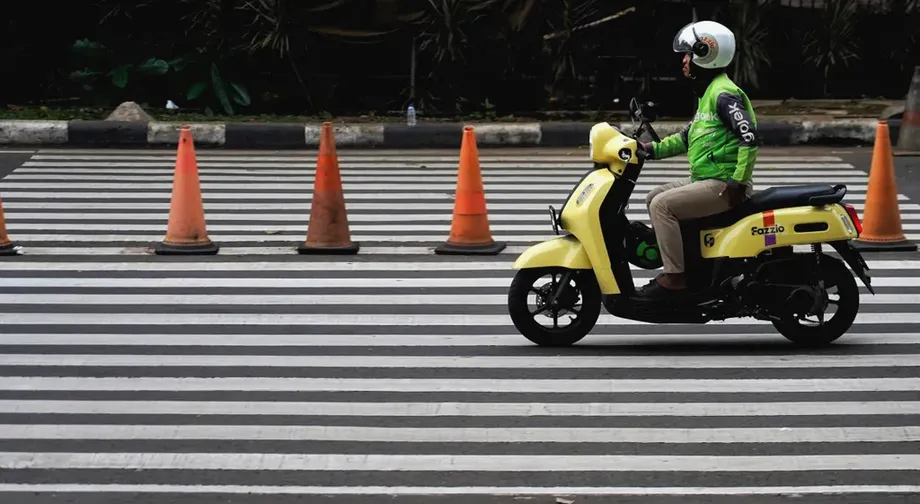
Digital platform workers, including drivers and freelancers, would gain reasonable earnings, occupational safety protection, safeguards against unilateral partnership termination or account deactivation, and a mechanism to object. The August draft additionally included social security, union rights and transparency about algorithms governing task allocation, performance and pay.
Algorithm transparency matters because an application can make decisions that determine a worker's income or access to work. However, recognizing these protections does not necessarily make every platform worker an employee.
Donna Priadi, managing director of the American Chamber of Commerce in Indonesia, identified classification as an unresolved issue, pointing to Grab and Gojek drivers operating as partners. The draft's reference to partnerships suggested that model could continue, while leaving unclear who would legally owe each obligation.
Informal workers also receive explicit recognition. Nabiyla welcomed that expansion but questioned whether fair and appropriate compensation creates an enforceable standard comparable to wages. The draft proposed considering working time, occupational risk and operating costs, with government contribution assistance for vulnerable workers covering at least accident and death benefits.
Participation and enforcement divide unions
Commission IX deputy chair Putih Sari said consultations and hearings informed the legislation. Ristadi described more opportunities for union participation than in previous labor reforms. Jumisih gave a different account, saying discussions were closed and her confederation had not received a draft despite rules affecting, by her estimate, 135 million workers.
Andi Gani said about 90 percent of union demands had been accommodated and his coalition would not challenge the law at the Constitutional Court. Mirah Sumirat, president of the Association of Indonesian Workers, initially welcomed approval but said her organization would examine the provisions and monitor implementing regulations. On October 8, she warned against outsourcing arrangements that leave workers cheap and insecure.
The legislation proposes more inspectors, staffing ratios tied to worker or company numbers, an oversight committee, parliamentary scrutiny, stronger sanctions and integrated national and regional employment data. Ristadi explained why enforcement capacity matters:
So far, the effectiveness of labor supervision has been hampered by limited personnel, authority, and facilities.
Aloysius warned that companies might pressure workers into apparently voluntary resignations to avoid dismissal obligations. He distinguished complaints about labor standard violations, which can go to local labor authorities through LAPOR MENAKER under Minister Regulation No. 11 of 2026, from payment disputes requiring negotiations, mediation or conciliation, and potentially the Industrial Relations Court.
Much still depends on executive rules. Nabiyla and the Center of Economic and Law Studies counted delegation to government regulations in at least 47 articles and to ministerial regulations in 15. The draft analysis also identified unresolved treatment of existing contracts, outsourcing arrangements and dismissals already underway.
Employers want clarity before assessing costs
Indonesian Employers Association chair Shinta Kamdani said on October 8 that she could not assess the law without its complete text. Employment chairman Bob Azam likewise acknowledged incomplete familiarity, while Indonesian Chamber of Commerce and Industry deputy chair Erwin Aksa said the changes reduce flexibility available under the Job Creation framework.
Apindo's comparisons put severance for a worker with five years of service at eight months' wages in Indonesia, against six in Thailand and 3.3 in Malaysia. Its estimated monthly labor costs were US$413 in Indonesia, US$414 in Malaysia and US$245 in Vietnam. These are employer association estimates, not a calculation of the new law's effects. Indonesia's estimate is US$168, or about 69 percent, above Vietnam's.
Apindo also estimated additional employer costs at 18.6 percent of wages in Indonesia, below Vietnam's 21.5 percent but above Malaysia's 14.95 percent and Thailand's 5 percent. Its claim that policy priorities could generate up to 22 million formal jobs is a projection, not an established outcome.
Indonesian Textile Association chair Jemmy Kartiwa Sastraatmaja said new textile workers need six to nine months of training. He also described supply pressure, with only one of three upstream raw material suppliers operating while two underwent overhauls. Those conditions complicate attributing hiring or production changes solely to labor legislation.
For now, Government Regulation No. 35 of 2021 remains a reference during the transition pending replacement rules. Companies are being urged to review employment agreements, internal regulations and collective agreements, but the missing final text, unspecified contribution rates and unresolved transition arrangements limit firm conclusions about compliance costs.
What to Know
- Parliament approved the 23 chapter, 313 article legislation on October 6, 2026.
- Temporary contracts are described as limited to four years, including two extensions.
- Dismissal rules would tighten, with higher severance for specified grounds and an employer funded guarantee.
- Outsourcing restrictions, apprentice limits and platform worker status require clarification in the final text.
- Implementation is targeted for October 2027, with new minimum wage rules expected for 2028.
- Unions and employers reported lacking the final published text, while many details await implementing regulations.