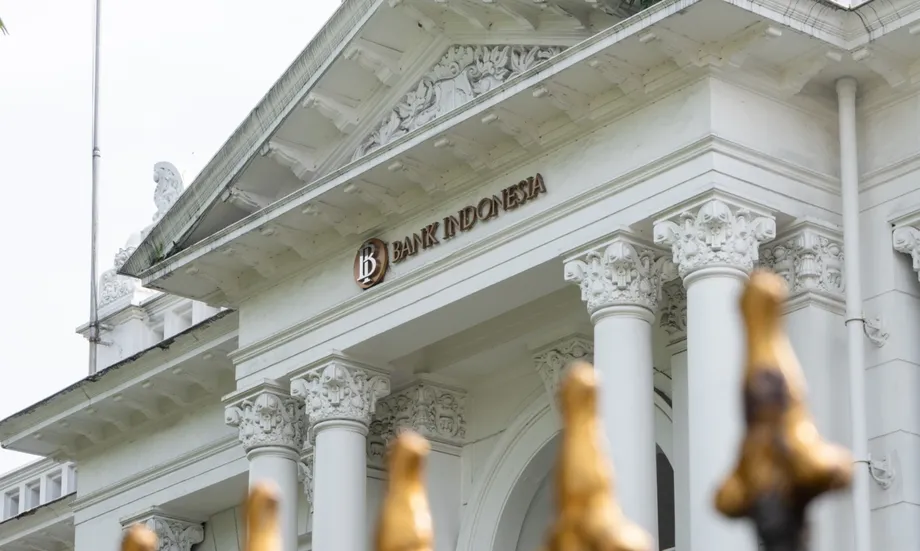
Currency pressure spreads across Indonesian markets
Indonesia's rupiah weakened beyond Rp18,000 per US dollar on Friday, October 16, 2026, as Bank Indonesia intervened in currency and bond markets amid a sharp stock market selloff and concern about foreign investors withdrawing money. Bloomberg data put the dollar at Rp18,054 at 09:28 Western Indonesian Time (WIB), up 116 rupiah, or 0.65%.
Contents
- Currency pressure spreads across Indonesian markets
- How the morning unfolded
- What Bank Indonesia is doing
- Why a stronger dollar is adding pressure
- MSCI consultation puts market access in focus
- Shares and bonds show the strain
- Confidence depends on ownership and enforcement
- What a weaker rupiah means for businesses
- Rates and forecasts depend on further outflows
- Key Points
Bank Indonesia said global investors were becoming more cautious and moving toward the dollar, putting pressure on domestic financial markets. Economists also pointed to a local concern: MSCI's consultation on whether to move Indonesia's stock market from its Emerging Market classification to Standalone Market status.
The Jakarta Composite Index, known as the IHSG, fell about 8% at the opening, triggering a reported trading suspension lasting 30 minutes. Morning readings subsequently showed losses exceeding 11%. Government bonds also came under pressure, with the yield on debt maturing in 10 years rising to 7.34%, according to Bank Permata chief economist Joshua Pardede.
Erwin Gunawan Hutapea, head of Bank Indonesia's Monetary and Securities Asset Management Department, said the central bank would maintain its market presence to support rupiah stability and orderly trading. He cited foreign exchange reserves of $146.3 billion at the end of September as support for Indonesia's ability to withstand external pressure.
The immediate challenge involves several connected markets. Foreign investors selling Indonesian shares may buy dollars to move their money abroad. That can weaken the rupiah while falling bond prices make government borrowing more expensive. Bank Indonesia is acting across those markets as economists call for measures addressing investor confidence.
How the morning unfolded
Refinitiv data showed the rupiah opening at Rp17,980 per dollar, down 0.33%, before reaching Rp18,000 at 09:02 WIB, a decline of 0.45%. The exchange rate then remained beyond that threshold through several later morning readings.
The principal dates and trading snapshots were:
- September 30, 2026: Indonesia's foreign exchange reserves stood at $146.3 billion, according to Bank Indonesia.
- October 15: Refinitiv data put the rupiah's close at Rp17,920 per dollar, down 0.14%, after it touched Rp17,957 during trading.
- October 16, 09:02 WIB: The rupiah reached Rp18,000 per dollar.
- October 16, 09:28 WIB: Bloomberg data put the dollar at Rp18,054, up 0.65%.
- October 16, 10:03 WIB: The rupiah traded at Rp18,060 while the IHSG stood at 5,253, down 10.41%.
- October 16, 10:40 WIB: The rupiah was quoted at Rp18,053 per dollar.
- April 30, 2027: MSCI's consultation period is scheduled to close.
- June 30, 2027: MSCI's final classification decision is due by this date.
Joshua cited a rupiah reading of Rp18,063, down about 0.69% from Rp17,938 the previous day; Refinitiv's account put the previous close at Rp17,920. The difference matters when comparing daily percentage changes, although both sets of figures show the currency weakening beyond Rp18,000.
What Bank Indonesia is doing
Bank Indonesia's response includes spot currency transactions, offshore non-deliverable forwards, domestic non-deliverable forwards and purchases of government securities in the secondary market. Erwin said the interventions were continuing consistently.
Spot transactions involve exchanging currencies at the current market rate. A non-deliverable forward is a contract used to manage exposure to a future exchange rate, with the difference settled in cash rather than by exchanging the full currency amounts. Offshore contracts trade outside Indonesia; domestic contracts operate within its market.
Purchasing government bonds in the secondary market means buying securities that investors already hold. Those purchases can support market liquidity, helping investors trade when selling pressure is heavy.
Bank Indonesia is also maintaining sufficient liquidity, managing money market interest rates and communicating with companies and market participants. The central bank did not disclose the value of its interventions or announce a new policy rate decision.
Why a stronger dollar is adding pressure
Erwin attributed the rupiah's weakness to rising global risk aversion. In simple terms, investors were becoming less willing to hold assets they considered risky and more willing to hold dollars. He warned that withdrawals from Indonesian portfolio assets could continue.
The US Dollar Index, or DXY, which tracks the dollar against six major currencies, rose 0.03% to 102.081 at 09:00 WIB. US producer prices had recorded their largest increase in four and a half years in September, while retail sales exceeded expectations. Strong spending and persistent price pressures can reduce expectations for lower US interest rates, supporting demand for dollars.
CME FedWatch showed a 73% probability that the Federal Reserve would leave interest rates unchanged at its October 27–28 meeting. Investors were also awaiting remarks from Federal Reserve Chair Kevin Warsh during the annual International Monetary Fund and World Bank meetings in Bangkok.
The dollar's gains were uneven. It rose 0.02% against the yen, 0.04% against the euro, 0.02% against the yuan and 0.05% against the Singapore dollar, while slipping 0.01% against both sterling and the Australian dollar. The quoted 0.65% rise against the rupiah was much larger than those moves, consistent with economists' accounts of additional pressure within Indonesia.
MSCI consultation puts market access in focus
MSCI, whose stock indexes are used by international investment funds, has opened a consultation on moving Indonesia from Emerging Market to Standalone Market status. The proposal remains under consultation, with feedback accepted until April 30, 2027, and a final decision due by June 30.
A standalone classification places a market outside MSCI's main country groupings. That matters because funds following emerging market indexes use those groupings to decide which shares to hold. A change could alter demand for Indonesian stocks, while uncertainty can prompt investors to reduce their holdings before a final decision.
MSCI's stated concerns involve investability, ownership transparency, suspected coordinated trading and the effectiveness of enforcement. Investability means whether investors can realistically buy, hold and sell the shares represented in an index.
During the consultation, MSCI is maintaining restrictions on several index changes. These include increases in the Foreign Inclusion Factor and Number of Shares, additions to the MSCI Indonesia Investable Market Index, and promotions to higher index size segments. The first two measures help determine how much of a company is represented in an index.
Shares and bonds show the strain
The IHSG stood at 5,203.19 at 09:30 WIB, down 660.59 points, or 11.27%. It was near 5,200 at 09:33 before recovering some ground to 5,253 at 10:03, when its decline was 10.41%. Joshua cited another morning snapshot of 5,271, down 10.10%.
Infrastructure shares fell more than 13.9%, energy stocks dropped about 11%, and basic materials declined 8.7%. Trading volume reached 61.6 million lots, with transactions valued at Rp1,730.3 billion, equivalent to about Rp1.73 trillion.
Stocks weighing on the index included Barito Renewables Energy, Dian Swastatika Sentosa, Bank Central Asia, Chandra Asri Pacific and VKTR Teknologi Mobilitas. Shares cushioning part of the decline included Amman Mineral Internasional, Bank Mandiri, Bank Rakyat Indonesia, United Tractors and Bank of India Indonesia.
Joshua said the yield on Indonesian government bonds maturing in 10 years rose eight basis points to 7.34%. Eight basis points equals 0.08 percentage points. Bond yields generally rise as prices fall, meaning investors demand a higher return to hold the debt.
Joshua explained that foreign investors who sell shares and exchange the proceeds for dollars add pressure to the rupiah. Investors who reinvest in Indonesian bonds or other domestic instruments keep those funds within the country's financial markets, producing a different effect on currency demand.
Confidence depends on ownership and enforcement
Fakhrul Fulvian, chief economist at Trimegah Sekuritas Indonesia, said the MSCI consultation was a test of confidence in Indonesia's market institutions. His concerns extended beyond the reported free float, meaning the portion of a company's shares available for public trading.
International investors, Fakhrul said, need reliable information about the people who ultimately own shares, the amount genuinely available to trade and concentrations of ownership. They also need to be able to verify that information consistently.
Fakhrul called for stronger market surveillance, disclosure, protection for minority investors and accountability among listed companies. He said rules must be applied consistently to potentially manipulative transactions and opaque ownership arrangements.
Joshua similarly urged the Financial Services Authority, known as OJK, and the Indonesia Stock Exchange to produce credible improvements in market governance. Muhammad Rizal Taufikurrahman, head of macroeconomics at INDEF, said currency intervention should be accompanied by ownership transparency, action against manipulation and credible fiscal discipline.
What a weaker rupiah means for businesses
Rizal said prolonged depreciation would raise the cost of imported raw materials and payments on debt denominated in foreign currencies. Companies receiving most of their revenue in rupiah would need more local currency to meet the same dollar bill, squeezing profit margins.
A simple calculation illustrates the change. A $1 million payment costs Rp17.92 billion at Rp17,920 per dollar and Rp18.054 billion at Rp18,054. That is an increase of Rp134 million, before fees or any protection from currency hedging contracts.
Energy prices added another pressure. Brent crude reached $105 per barrel and coal exceeded $159 per ton amid concern about global supplies. Joshua identified expensive oil, global uncertainty and expectations of persistently high US interest rates as additional forces weighing on the rupiah.
Bank Indonesia said the currency had weakened only 0.28% since the beginning of the quarter and remained broadly in line with regional currencies. Mega Capital Sekuritas equity analyst Revo Gilang Firdaus cited depreciation exceeding 7% since the start of the year and net foreign equity outflows of $4.9 billion over that period. The quarterly and annual figures cover different stretches of time, showing a relatively limited recent change within a larger annual decline.
Rates and forecasts depend on further outflows
Joshua said an increase in the BI-Rate from 5.75% should be considered if persistent rupiah weakness comes with large capital outflows, declining foreign exchange reserves and rising inflation risks. Higher interest rates can support a currency by making local investments more attractive, while also increasing borrowing costs for households and businesses.
Revo forecast a rupiah range of Rp17,724–Rp18,499 per dollar over the following month, assigning it a 74.9% probability. His range for the following week was Rp17,889–Rp18,280, with a stated probability of 77%. Those were analyst estimates; their practical message was that further weakness and some recovery were both possible within his projected ranges.
The next scheduled policy signal is the Federal Reserve meeting on October 27–28. Indonesia's longer timetable runs through MSCI's consultation deadline in April 2027 and its final decision by the end of June. Meanwhile, Bank Indonesia's intervention addresses immediate trading pressure, and the proposed market reforms address the confidence concerns economists identified.
Key Points
- The rupiah crossed Rp18,000 per dollar on October 16 and was quoted at Rp18,054 at 09:28 WIB.
- Bank Indonesia is intervening through currency transactions and government bond purchases.
- Indonesia held $146.3 billion in foreign exchange reserves at the end of September.
- The IHSG fell more than 11% during morning trading, while government bond yields rose.
- MSCI is consulting on a possible move to Standalone Market status, with a final decision due by June 30, 2027.
- Economists called for transparent share ownership, stronger enforcement and measures to preserve investor confidence.