Rice assistance awaits budget clearance as cooperatives prepare
Indonesia is preparing to distribute about 1 million tons of rice assistance to 33,244,408 beneficiary families during October through December 2026, using Merah Putih village cooperatives where they are operating and existing local distribution channels elsewhere. The program has a reported budget allocation of Rp17.5 trillion, while recipient checks and Finance Ministry administration must be completed before distribution can begin.
Contents
- Rice assistance awaits budget clearance as cooperatives prepare
- Who qualifies, and how much rice is planned?
- Where residents will collect their assistance
- What must happen before distribution begins?
- SPHP rice will be sold through the same network
- Current orders are smaller than the stocking goal
- Eight thousand cooperatives face equipment checks
- Construction targets remain ahead of operations
- Cooperatives are intended to do more than distribute rice
- Key Points
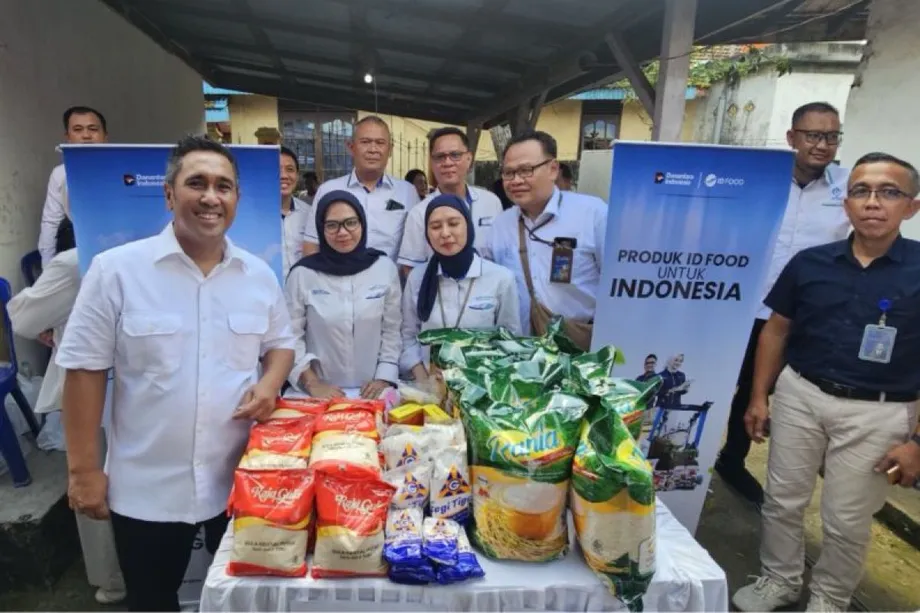
Coordinating Minister for Food Affairs Zulkifli Hasan outlined the preparations in Jakarta on October 14. The government is also arranging a separate allocation of 1 million tons of subsidized rice for sale under the Food Supply and Price Stabilization program, known as SPHP, with supplies planned through March 2027.
The two programs reach residents in different ways. Food assistance provides rice to eligible beneficiaries. SPHP makes subsidized rice available for purchase, at a stated price of Rp12,500 per kilogram. Village cooperatives are being prepared to handle both activities, alongside sales of fertilizer, cooking oil, sugar and liquefied petroleum gas, or LPG.
Hasan described the assistance target as 33.2 million recipients, while the detailed program announcement counted 33,244,408 beneficiary families. The household count gives the more precise description of the planned reach.
For families waiting for assistance, the immediate issues are practical: whether their names have cleared verification, whether their local cooperative is operating and when Bulog, the state logistics agency, receives its distribution assignment. The planned simultaneous start of cooperative operations on October 15 is one step in those preparations; rice assistance still requires budget clearance and the distribution order.
Who qualifies, and how much rice is planned?
The assistance targets households in deciles 1 through 4 of the National Single Socioeconomic Data system, known by its Indonesian abbreviation DTSEN. A decile is one of ten groups in a ranking. Here, the first four groups represent households toward the lower end of the socioeconomic scale.
Officials are rechecking recipient information before releasing the assistance. With more than 33 million families on the proposed list, those checks determine who receives an invitation and where each household collects its rice.
The detailed program announcement describes packages containing 10 kilograms of rice. Another distribution description attributed to Bulog chief Ahmad Rizal Ramdhani gives the allowance as 10 liters per month for October through December. Kilograms measure weight, while liters measure volume, so the final collection instructions need to clarify the unit and amount households will receive.
The announced rice allocation is about 1 million tons for the final three months of 2026. Bulog has said that less than 1 million tons would be needed to serve the targeted beneficiaries during that period.
Where residents will collect their assistance
Bulog plans to distribute assistance through Merah Putih village and urban ward cooperatives, collectively known as KDKMP, in places where those cooperatives are established and operating. Collection could take place inside a cooperative warehouse or in its yard under a tent.
Villages without an operating cooperative will continue using their previous local distribution arrangements. Rizal cited areas in Sulawesi, Kalimantan and especially Papua as examples where cooperative availability remains limited and the usual channels may still be needed.
Recipients must bring an invitation from the local social affairs office containing a barcode, together with their national identity card, known as a KTP. Bulog staff will scan the barcode and verify the recipient before handing over the rice. Moving collection to a cooperative therefore changes the location for some residents while retaining the existing identity checks.
What must happen before distribution begins?
The Finance Ministry's Directorate General of Budget is processing the administrative requirements and budget certainty for the assistance. Once that work is complete, the paperwork goes to the National Food Agency, known as Bapanas, which issues Bulog its assignment to distribute the rice.
Hasan said payment processing and recipient verification were also being completed. On October 14, he suggested the preparations might be finished the following week. No firm first collection date was announced.
The schedule brings together several tasks that run alongside one another: checking families, approving expenditure, stocking cooperatives and making sure their equipment works. The main dates and targets are:
- October 13, 2026: Officials monitored 107 cooperatives in Sukoharjo, Central Java, where SPHP rice orders totaled 53.5 tons.
- October 14: Hasan reviewed distribution preparations and announced checks on an initial group of 8,000 cooperatives.
- October 15: The simultaneous start of cooperative operations was scheduled, alongside the beginning of an eight day monitoring exercise.
- October through December: The planned period for the rice assistance program.
- By the end of October: Hasan aimed to complete stocking and operational facilities for about 8,000 priority cooperatives.
- Through March 2027: The planned supply period for the additional 1 million tons of SPHP rice.
Local distribution will proceed in stages as the administrative work and cooperative preparations are completed. Residents in areas using the previous channels will continue collecting through those arrangements.
SPHP rice will be sold through the same network
Bulog has been asked to prepare at least 2 tons of SPHP rice for each cooperative. Deliveries follow purchase orders submitted through PT Agrinas Pangan Nusantara, with the quantity sent to each location based on what is ordered.
Rizal said Bulog would meet those orders without setting a quantity cap on Agrinas Pangan's requests. About 1,250 cooperatives had submitted orders by October 14, and deliveries were beginning to locations ready to receive them.
At the stated SPHP price of Rp12,500 per kilogram, 10 kilograms would cost Rp125,000. Eligible food assistance recipients receive their allocation through the aid program, while residents buying SPHP rice pay the subsidized sale price.
Hasan linked the additional rice supply to President Prabowo Subianto's direction to ease pressure from rising rice prices during the dry season. Rizal also said the extra SPHP allocation would help prepare for El Niño and the lean season, when supplies between harvests can become tighter.
Current orders are smaller than the stocking goal
Bulog's operational figures give a closer view of how far the cooperative network had progressed. Its statement covering October 13 recorded service coverage of 1,985 cooperatives: 736 had received SPHP rice, while 1,249 were still going through the service process.
The 1,249 cooperatives had placed orders totaling 624,000 kilograms, or 624 tons. That works out to about half a ton per cooperative, compared with the government's desired stock of at least 2 tons at each location.
The same pattern appeared in Sukoharjo. Orders from the 107 cooperatives monitored there totaled 53,500 kilograms, or 53.5 tons, averaging 500 kilograms per location. Delivery to those points was targeted for completion on October 14.
Bringing the 1,249 cooperatives with pending orders to a stock level of 2 tons each would require 2,498 tons, using the government's stated benchmark. Their recorded orders of 624 tons amount to about a quarter of that volume. The figures show the scale of stocking still required as the network prepares for regular sales.
Bulog has separately said it holds 4.5 million tons of rice and expects to retain more than 3 million tons after completing the assistance program. The work at village level involves turning those central reserves into orders, shipments and rice available at local collection or sales points.
Eight thousand cooperatives face equipment checks
Hasan ordered an initial group of 8,000 cooperatives to be monitored over eight days starting October 15. The coordination meeting involved 107 attendees, including regional military commanders and governors, with local officials, village heads and cooperative managers also involved in the follow through.
Inspectors are checking more than buildings. They are reviewing stocks of subsidized fertilizer, sugar, cooking oil, LPG and SPHP rice, together with trucks, pickups and vehicles with three wheels, including motorized pedicabs.
Hasan said officials needed to check that vehicles actually had engines and could run. A listed truck is useful to the distribution system only when it can carry goods between warehouses, cooperatives and communities.
The timetable for the first 8,000 locations combines an intensive inspection period with a broader stocking target. Hasan, the coordinating minister responsible for food affairs, described his end of October goal:
We will finish this by the end of the month, hopefully the 8,000 can be completed,
He acknowledged uneven readiness, with some cooperatives already stocked and equipped and others still filling gaps. Officials were being asked to identify what each location already had and what remained to be supplied.
Construction targets remain ahead of operations
Hasan set a moderate target of completing 35,000 cooperative buildings by the end of 2026, with as many as 40,000 possible because land had been secured. The broader program calls for 80,000 buildings across Indonesia.
The figure of roughly 29,000 cooperatives has been described at different stages of preparation. Hasan's initial account called them ready, while the more detailed construction description placed nearly 29,000 at a stage of construction readiness. His stocking update said about 28,000 to 29,000 still needed supplies. The 8,000 priority locations were completing operational equipment.
The program proceeds from legal establishment to construction, then stocking and operational preparation. Each stage involves different work: registering a cooperative, completing premises, obtaining goods and arranging staff and transport to serve residents.
An earlier planning announcement had expected 35,872 facilities to be completed in August and September and around 40,000 cooperatives to operate by the end of the year. The October update puts the moderate construction target at 35,000 by December, while concentrating immediate operational checks on the first 8,000.
The government has involved the Indonesian military, known as the TNI, to accelerate construction. Ministries, state enterprises, regional administrations and officials down to village level are also part of the effort.
Cooperatives are intended to do more than distribute rice
The government is drafting a presidential regulation to support the operation of businesses under the cooperative program. The Ministry of Cooperatives and the Ministry of Villages and Development of Disadvantaged Regions are involved, with Hasan setting a target of completing the drafting process within a month of that announcement.
The planned role includes distributing welfare assistance, selling subsidized necessities and buying produce from local farmers and fishers. A cooperative acting as a buyer can give producers a nearby outlet for their goods, alongside its role supplying households with essentials.
Trade Minister Budi Santoso said the network was intended to improve access to staple goods and make the supply chain more efficient. Hasan similarly linked the cooperatives to stronger village economies and food distribution closer to residents.
Hasan said managers would need at least two years of guidance and training as they gained experience running businesses. That longer period of support sits alongside the immediate deadlines for rice deliveries, equipment checks and building completion.
For residents, the intended result is a local place to collect assistance, buy subsidized rice and obtain other necessities. Whether a particular village uses that route during the final quarter of 2026 depends on its cooperative's readiness; existing distribution channels will continue serving communities without an operating location.
Key Points
- Indonesia plans rice assistance for 33,244,408 beneficiary families during October through December 2026, with a reported budget of Rp17.5 trillion.
- Distribution awaits Finance Ministry administration, recipient checks and an assignment from Bapanas to Bulog.
- Operating village cooperatives will distribute assistance; other areas will retain their previous local arrangements.
- Recipients need a social affairs invitation containing a barcode and their national identity card.
- A separate 1 million tons of SPHP rice is planned through March 2027, with a stated sale price of Rp12,500 per kilogram.
- About 8,000 cooperatives are the immediate priority for operational checks and stocking by the end of October.
- The moderate construction target is 35,000 cooperative buildings by the end of 2026, with 40,000 considered possible.