A market already shrinking faces a bigger setback
Indonesia's Jakarta Composite Index plunged 11.1% on October 16, 2026, after MSCI proposed moving the country's equity market from Emerging Market to Standalone Market status. The proposed change could remove Indonesian shares from widely tracked international benchmarks and trigger further selling by foreign investment funds.
Contents
- A market already shrinking faces a bigger setback
- Trading halt followed by deeper losses
- What Standalone Market status would change
- Why share ownership matters to investors
- Indonesia's index footprint has already contracted
- Some index changes remain frozen
- Regulators defend reforms and seek clarification
- The dates that brought Indonesia to this point
- What investors and companies face next
- Key Points
The warning arrived after a steep contraction in Indonesia's presence in MSCI's indexes. According to the index provider, Indonesia's weight in its Emerging Markets Index fell from 1.16% at the end of 2025 to 0.43% on September 30, 2026. The number of companies in the MSCI Indonesia Index halved from 18 to nine over the same period.
MSCI's central concern is whether investors can reliably identify who owns shares and how many shares are genuinely available for trading. It also cited persistent suspicions of coordinated trading and insufficient evidence that enforcement has addressed those concerns across the market.
The consultation was announced in New York on October 15 and reached Indonesian trading on Friday, October 16. MSCI will accept feedback until April 30, 2027, and announce its decision on or before June 30, 2027. Indonesia retains its Emerging Market classification while the consultation proceeds.
MSCI, which builds stock indexes used by investment funds worldwide, has nevertheless set a demanding condition for reconsidering its proposal. In its October 15 announcement, the company explained what it would need to change course.
MSCI expects to proceed with the proposed reclassification unless the consultation identifies clear evidence of material improvements in market governance and functioning to warrant reconsideration.
Indonesian regulators responded by defending the market's economic prospects and promising continued reform. The Indonesia Stock Exchange said it would seek clarification about the basis and criteria behind MSCI's assessment.
Trading halt followed by deeper losses
The Jakarta Composite Index initially fell about 8%, triggering a trading halt, before its decline deepened to 11.1% after trading resumed. The fall was its steepest since early 1998 and took the index to its lowest level since 2020.
An early market reading put the index at 5,393, down 469 points, or 8.01%, following a halt lasting nearly two minutes. The index had closed Thursday at about 5,863, already down 1.33% that day.
Investors were responding to the prospect that funds following MSCI benchmarks could eventually have to sell Indonesian holdings. An index is a basket of securities used to measure a market. A fund designed to follow that basket changes its holdings when the basket changes.
About US$4.9 billion in foreign investment had already flowed out of Indonesian equities during 2026. The consultation added another potential source of selling pressure to a market already struggling to retain international capital.
What Standalone Market status would change
MSCI groups markets into Developed, Emerging, Frontier and Standalone categories. A standalone market sits outside its main emerging and frontier market groupings, although MSCI can continue calculating a separate index for that country.
For Indonesia, the practical consequence would be removal from the relevant combined international benchmarks. MSCI's market classification consultation says the proposed change would be reflected in all relevant global and regional composite indexes.
Argentina and Lebanon are among markets classified as standalone. Countries can receive that designation for different reasons involving market access, operations or investability. Indonesia's consultation focuses heavily on ownership transparency, reliable estimates of tradable shares and enforcement against suspected coordinated trading.
MSCI says market participants consider a move to Frontier Market status insufficient to reflect the depth of Indonesia's problems. Its questionnaire still asks whether Frontier Market status should be considered if participants reject the standalone proposal.
Why share ownership matters to investors
MSCI's concern begins with free float, the portion of a company's shares considered available for public investment rather than held by controlling owners or other strategic shareholders. Index providers use free float to help determine how much of a company international investors can realistically buy.
A company may have a large total stock market value while only a small share of its ownership is available for regular trading. If ownership disclosures are incomplete, investors may struggle to judge that available supply accurately.
Suspected coordinated trading adds another concern. When traders act together, their transactions can affect prices in ways that obscure the balance between independent buyers and sellers. MSCI says market participants remain worried about this behaviour and about the reliability of free float estimates.
Indonesia has announced disclosures for shareholders owning more than 1%, more detailed investor classifications, reporting under a High Shareholding Concentration framework, and a roadmap towards a minimum free float requirement of 15%.
Those measures address different parts of the problem. Ownership disclosures help identify large shareholders. Concentration reporting highlights stocks whose ownership is tightly held. A higher minimum free float aims to make more shares available to the public.
Institutional investors told MSCI they need consistent implementation and evidence of lasting results. The consultation seeks improvements across the broader market, including smaller securities outside the main indexes, rather than changes limited to the largest listed companies.
Indonesia's index footprint has already contracted
MSCI's figures show how much Indonesia's representation had diminished before the October selloff. The free float adjusted market value of the MSCI Indonesia Index fell from US$119.14 billion on December 31, 2025, to US$53.36 billion on September 30, 2026. MSCI describes the decline since January 1 as 55%.
Indonesia's Emerging Markets Index weight dropped by 0.73 percentage points, from 1.16% to 0.43%. That is a reduction of about 63% in its relative weight. Expressed simply, Indonesia went from representing US$1.16 in every US$100 of the benchmark to 43 cents.
The index also contained nine companies at the end of September, compared with 18 at the end of December. Together, the smaller company count and lower adjusted market value show that Indonesia's role in the benchmark was already narrowing.
MSCI's flagship Emerging Markets Index contains roughly 1,200 companies with a combined market capitalisation above US$10 trillion. Its size helps explain why a relatively small country weight can still matter to investors and listed companies.
Some index changes remain frozen
MSCI has kept restrictions on certain Indonesian index changes in place since January 2026. Those restrictions will continue until further notice during the consultation, affecting both scheduled index reviews and changes arising from corporate events.
The restrictions cover four main actions:
- No increases in Foreign Inclusion Factors, which help determine the proportion of a company's shares counted as available to international investors.
- No increases in the Number of Shares used in relevant index calculations.
- No additions to the MSCI Indonesia Investable Market Index.
- No moves into index segments for companies with larger market values.
MSCI will continue removing securities identified by Indonesian authorities under the High Shareholding Concentration framework. It will also use disclosures of shareholdings above 1% to revise its free float estimates.
Indonesia therefore faces restrictions on additions and upward adjustments while removals and revisions based on ownership information continue. Companies seeking greater representation in MSCI indexes face an immediate constraint even before a classification decision.
Regulators defend reforms and seek clarification
Friderica Widyasari Dewi, chair of the Financial Services Authority's Board of Commissioners, said the regulator respects MSCI's consultation plan and the independence of international index providers. The authority, known as OJK, said it was taking the assessment seriously.
Dewi defended the investment case for Indonesia by pointing to economic conditions, a growing investor base, valuations and company performance. In an official statement, she said:
We believe the domestic capital market remains prospective and attractive. This is supported by Indonesia's well-maintained economic fundamentals, a growing investor base, competitive stock valuations, and issuers' fundamental performance that is generally still positive,
Hasan Fawzi, OJK's chief executive responsible for capital market, financial derivatives and carbon exchange supervision, connected MSCI's concerns with the Indonesian Capital Market Integrity Reform Acceleration Action Plan. He said OJK remained committed to stronger and consistent law enforcement.
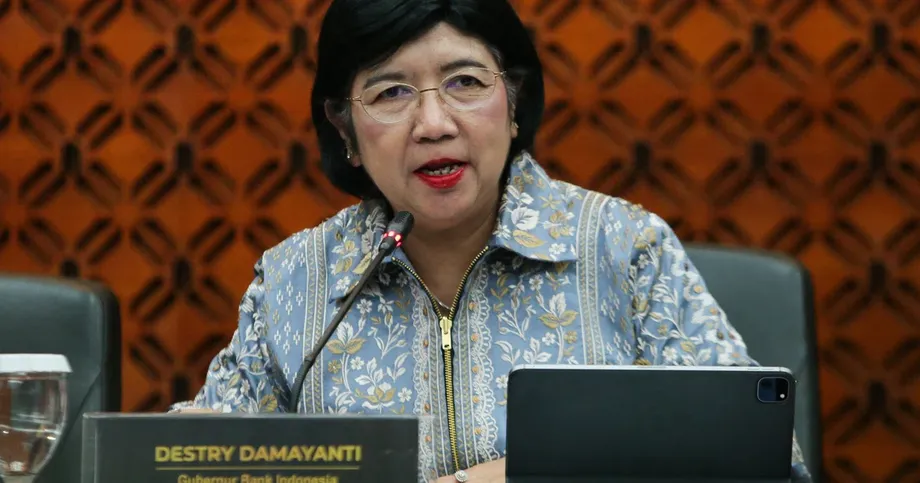
Jeffrey Hendrik, chief executive of the Indonesia Stock Exchange, said the exchange would ask MSCI to explain the considerations and assessment underlying its announcement. He said reforms undertaken with OJK had received positive responses from global investors and international index providers.
OJK and market institutions will continue discussions with index providers and global institutional investors. Their immediate task is to communicate progress while addressing the implementation and enforcement concerns identified in the consultation.
The dates that brought Indonesia to this point
Indonesia's dispute over market classification has developed over most of 2026. Authorities said in April that they had completed reforms intended to avoid a downgrade, while MSCI subsequently sought evidence that those measures were producing consistent results.
- January 2026: MSCI began freezing specified index changes and warned about a possible move from Emerging to Frontier Market status.
- April 2026: Indonesian authorities said reforms intended to address the downgrade risk had been completed.
- June 2026: MSCI retained Indonesia's Emerging Market status and said it would consider a reclassification consultation if sufficient progress was absent by the November index review.
- September 30, 2026: MSCI's figures showed nine Indonesian index constituents and a 0.43% Emerging Markets Index weight.
- October 15, 2026: MSCI announced the standalone consultation in New York, ahead of the previously identified November checkpoint.
- October 16, 2026: Indonesian stocks plunged and local authorities responded.
- April 30, 2027: Consultation feedback closes.
- June 30, 2027: Deadline for MSCI's final decision.
The decision deadline extends seven months beyond the November 2026 review previously identified as a checkpoint. MSCI may issue an interim update during the consultation. An implementation date has not been set; the questionnaire asks participants when a change should take effect and whether it should happen in one step.
What investors and companies face next
Wilbert Arifin, an analyst at Mirae Asset Sekuritas, estimated that passive foreign fund outflows could reach US$3 billion if the reclassification proceeds. Passive funds aim to follow an index, so their buying and selling often depends on benchmark membership rather than a fresh assessment of each company.
Arifin identified major banking stocks and companies with substantial foreign ownership as particularly exposed to portfolio adjustments. The US$3 billion figure is his estimate of potential selling, while the roughly US$4.9 billion already withdrawn describes foreign outflows earlier in 2026.
For Indonesian shareholders, further foreign selling could put pressure on prices and reduce liquidity, meaning fewer buyers and sellers available to complete transactions. For listed companies, a smaller international investor base could make attracting capital more difficult.
MSCI's accessibility review also identifies operational concerns: company information is not always available in English, currency transactions face constraints, transfers of securities without a corresponding cash payment are permitted only in certain cases, and stock lending is limited to specified securities and contracts lasting 90 days.
The consultation asks for evidence of reliable ownership disclosures, consistent enforcement of the 1% threshold and concentration framework, action against coordinated trading, and better surveillance across the market. It also asks whether investors fear coordinated trading could return once the index restrictions are lifted.
Indonesia's response therefore has two connected tasks: demonstrate that announced rules work consistently and make the market easier for international investors to assess and use. MSCI will evaluate that evidence before deciding whether Indonesia remains within its Emerging Markets benchmarks.
Key Points
- Indonesian stocks fell 11.1% on October 16 after MSCI proposed moving the market to Standalone status.
- MSCI cited opaque ownership structures, suspected coordinated trading and insufficient evidence of effective enforcement.
- Indonesia's MSCI Emerging Markets Index weight fell from 1.16% to 0.43%, while its constituent count halved to nine.
- Restrictions on specified index changes remain in place, while concentration related deletions and free float revisions continue.
- OJK defended the market's prospects, and the Indonesia Stock Exchange will seek clarification from MSCI.
- Feedback closes on April 30, 2027. A final decision is due by June 30, 2027.