A Rp93.74 Trillion Estimate Meets a Wider Promise
Indonesia is drawing up plans to remove both regular tuition and entrance charges at public universities, with an earlier calculation putting the cost of covering 2,833,169 students at about Rp93.74 trillion. Ministers are weighing whether to cover everyone immediately or begin with selected groups, including new students and those from poorer households.
Contents
- A Rp93.74 Trillion Estimate Meets a Wider Promise
- What Would Free Tuition Cover?
- From a September Pledge to October Calculations
- How Would the Government Pay?
- Who Would Receive Support First?
- Students Already Face Bills They Struggle to Pay
- Why Offered Places Still Go Unfilled
- Private Universities Want a Place in the Plan
- Keeping Teaching and Research Funded
- The Wider Plan Includes Religious Schools and Remote Areas
- Key Points
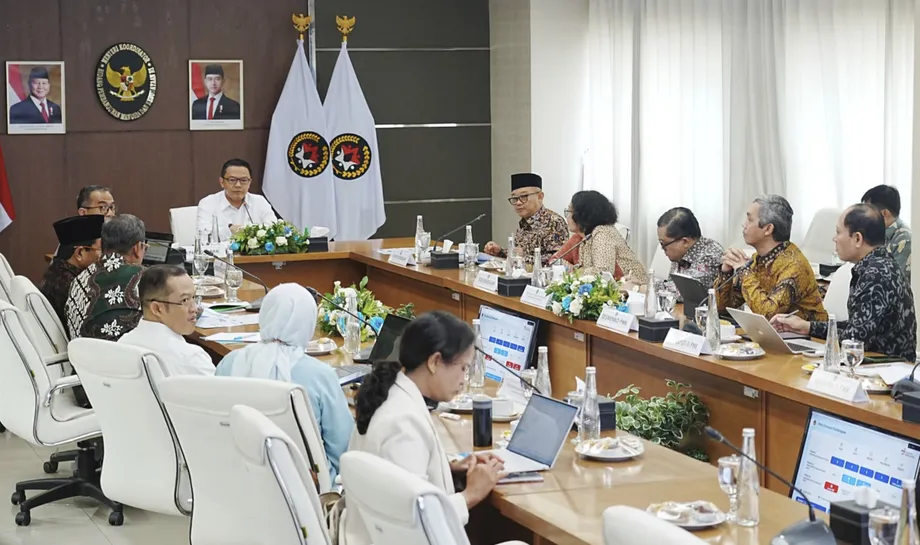
At an October 14, 2026 meeting in Jakarta, Coordinating Minister for Human Development and Cultural Affairs Sugiono said the proposed exemption should apply equally to public universities, known as PTN, and public Islamic universities, known as PTKIN. His instruction included charges paid by students admitted through university administered selection, often called the independent admission route.
The proposal would remove two major bills: Uang Kuliah Tunggal, or UKT, the tuition charged each semester, and Iuran Pengembangan Institusi, or IPI, an institutional development contribution commonly collected when students enter through independent admission. For families, eliminating only one could leave a substantial payment standing between a successful application and an actual university place.
Sugiono asked ministries to prepare both an ideal budget and a minimum funding scenario for discussion within a week, before submitting alternatives to President Prabowo Subianto. Higher Education, Science and Technology Minister Brian Yuliarto said the calculations would determine how quickly coverage could expand.
The government has not announced a final eligibility rule, approved funding allocation or starting date. Its central choice is now how much of the promise to deliver first, and how to replace university income while keeping teaching and research properly funded.
What Would Free Tuition Cover?
The Ministry of Religious Affairs' October meeting statement gives the clearest description of the charges ministers want removed. It says Sugiono called for both UKT and IPI to be covered, including education charges associated with independent admission.
Sugiono explained the intended scope in remarks translated from Indonesian:
Specifically for public higher education, free education includes UKT and entrance fees. The independent admission route that charges education fees is also something that should be covered so that free education truly becomes a reality and does not burden parents.
Students would therefore be considered according to the proposed funding rules, rather than excluded simply because of their admission route. Removing charges from independent admission is part of the funding proposal; ministers are also examining how the wider admissions system operates.
The earlier Rp93.74 trillion calculation covers D3 diploma, D4 applied undergraduate and S1 undergraduate education at public institutions, including vocational and academic programmes. The October instruction adds an explicit requirement for equal treatment of public Islamic universities. Detailed calculations will need to show how each group of institutions and students fits into the chosen budget.
From a September Pledge to October Calculations
Prabowo publicly called for free education at government institutions during the National Mandate Party's anniversary celebration on September 18. Five days later, the proposal reached a restricted cabinet meeting at Merdeka Palace.
The State Secretariat's September cabinet statement says the president ordered a special team led by then identified coordinating minister Pratikno, involving the State Secretariat and the ministries responsible for religion, finance and higher education. Brian initially expected firmer calculations and implementation stages within about two weeks to one month.
- September 18, 2026: Prabowo announces his call for free public education through university.
- September 23: A cabinet meeting orders deeper financial calculations and establishes a special team.
- September 30: Ministers review the team's work plan and priorities for the 2027 budget.
- October 14: Sugiono calls for UKT and entrance charges to be covered and requests alternative budgets within one week.
The October instruction points to another discussion around October 21, followed by a submission to the president. September statements name Pratikno as coordinating minister, while the October Religious Affairs Ministry statement identifies Sugiono in that role.
How Would the Government Pay?
Brian's calculations examine university receipts from tuition, development contributions and other activities. He said some institutions use income from postgraduate programmes to help finance undergraduate teaching. Replacing student fees therefore requires a closer look at how money moves across each campus.
The government plans to use the national budget, known as the APBN, rather than the investment agency Danantara. Finance Minister Suahasil Nazara has said funding would be designed within the existing education allocation instead of creating a separate new budget category.
The draft 2027 national budget provides Rp820 trillion for education, compared with Rp769 trillion cited for 2026. Against that proposed Rp820 trillion total, the Rp93.74 trillion public university estimate represents about 11.4%. Education spending must also support schools, teachers, assistance programmes and other commitments.
The Coordinating Ministry's September work plan places early action on making better use of, and reallocating, existing 2027 funding. Longer plans include reviewing financing arrangements and redesigning education management. Central and regional budget capacity, matching assistance recipient records and mapping teacher needs are all part of that work.
Calculations of standard university costs have been under development since 2024, taking account of the subject studied, the region and student numbers. A laboratory course and a classroom based course have different costs, so a national funding formula must account for more than the number of students enrolled.
Who Would Receive Support First?
Brian has described several options: covering all eligible students, starting with new entrants or beginning with particular household income groups. Officials refer to income deciles, which divide households into ten groups ranked by economic circumstances.
A scheme beginning with new students would immediately change costs for the next intake, while existing students would continue under whatever transition rules the government adopts. Targeting poorer households would direct the first payments toward financial need. Covering everyone would reach more students from the start but require a larger immediate commitment.
The September work plan prioritises people with low incomes and disadvantaged regions where participation in education needs to rise. That priority connects the university proposal to the government's wider programme of 13 years of compulsory education.
Existing assistance provides a starting point. Brian said 28.2% of new public university students in 2025 received government financing through KIP Kuliah or scholarships. KIP Kuliah had a budget of Rp14.9 trillion for 1.04 million recipients in 2025, with Rp15.3 trillion allocated for 2026. Coordinating a new exemption with this support will matter particularly for students who also need help with living expenses.
Students Already Face Bills They Struggle to Pay
Abdullah Umar Al Faruk, a social welfare student at the University of North Sumatra, initially faced tuition of Rp5.5 million each semester. An appeal reduced it to Rp3.5 million, leaving an annual tuition bill of Rp7 million.
His family in Aceh Tamiang was affected by the floods and landslides that struck Sumatra late in 2025. While studying in Medan, Umar sought scholarships, stayed at a mosque and tried to borrow Rp3 million from the owner of a nearby boarding house to pay tuition.
Naufal Purba, a student at the State Islamic University of North Sumatra, entered through independent admission and pays Rp4.4 million each semester, or Rp8.8 million a year. The eldest of three children, he works in a grocery shop alongside his studies to reduce the burden on his parents, who are teachers.
Both students expressed doubts that the promise would become reality. Their situations also show why the inclusion of public Islamic universities and independent admission matters: those categories contain students already combining study with work, borrowing or other efforts to keep their education going.
Why Offered Places Still Go Unfilled
A study by the House of Representatives Commission X working committee on student selection found that nearly 10% of public university capacity remained unfilled and that 60,131 successful applicants did not register again in 2025. The government also cited 17,816 prospective students who did not complete registration that year; the scope behind the two totals has not been clarified.
Commission X member Ferdiansyah identified unaffordable UKT, inconsistent access to KIP Kuliah, living costs and the difficulty of moving away from home among the barriers. Other applicants chose different subjects, institutions, admission routes or overseas study.
Removing tuition would directly address one expense. A student moving to another province would still need accommodation, food and transport. For students such as Umar, who already sought somewhere inexpensive to stay, those costs form part of the practical decision about whether university is affordable.
Tuti Budirahayu, a professor of educational sociology at Airlangga University, argues for more scholarships and subsidies based on financial need, alongside improvements from basic education through university. Her concern is that students from wealthier families could receive a large benefit from universal tuition removal while poorer students continue struggling with the other costs of attending.
Private Universities Want a Place in the Plan
Indonesia's higher education system extends far beyond public campuses. Higher Education Ministry portal figures cited in the debate list 3,944 private universities, representing 91.7% of the country's higher education institutions.
Said Abdullah, chair of the House Budget Committee, has called for further examination of how free tuition could apply to private universities. Students with limited means who fail to secure a public university place may depend on private institutions, scholarships and paid work.
Handi Risza, vice rector of Paramadina University, has urged regulations that support private institutions alongside assistance for public universities. He says some public universities with legal entity status admit up to 50% of students through independent routes, where development contributions can reach hundreds of millions of rupiah. He also argues that a system funded entirely through the national budget could require firm limits on public university intake.
The Indonesian Education Monitoring Network, known as JPPI, estimates that free tuition across public and private institutions would require Rp204.44 trillion for 10.75 million students. Its estimate for free education across all levels is Rp569.73 trillion. Those proposals cover a much larger population than the government's Rp93.74 trillion calculation for specified public university programmes.
Keeping Teaching and Research Funded
Deputy Higher Education Minister Stella Christie says designing free university education is more complicated than removing charges in primary and secondary schools. She identifies three goals that must be balanced: educational quality, affordability and the number of students who can attend.
Stella described the funding challenge in remarks translated from Indonesian:
We want UKT to be cheap or even free, but lecturers' salaries must be high and research funding must also be substantial.
Her comparison with the United States focused on the expense of maintaining quality while educating large numbers of students. For Indonesia, replacing tuition income would need to leave campuses able to pay staff, maintain facilities and conduct research as access expands.
Gadjah Mada University constitutional law professor Herlambang Perdana Wiratman has called for a clear budget and legal framework. He points to Law No. 11 of 2005, which ratified the International Covenant on Economic, Social and Cultural Rights, and Article 28I(4) of Indonesia's Constitution.
Herlambang describes the relevant approach as progressive realisation: the state expands access in stages, using its resources and taking concrete action. His argument gives the proposed phase in a legal focus, requiring measurable steps and financing rather than a promise alone.
The Wider Plan Includes Religious Schools and Remote Areas
The October meeting organised free education planning into three clusters. The first covers public schools, public madrasahs and public universities. The second extends planning to private schools, private madrasahs and religious education institutions. The third focuses on disadvantaged, frontier and outermost areas, commonly grouped under the Indonesian abbreviation 3T.
Sugiono connected that work to presidential instructions and a Constitutional Court ruling requiring free compulsory basic education in both government and private institutions. The university proposal forms part of a broader policy programme, while the court mandate described by the ministry concerns compulsory basic education.
Religious Affairs Minister Nasaruddin Umar said 95% of education units under his ministry are private and only 5% public. He also identified costs particular to Islamic boarding schools, including accommodation, meals, electricity, laundry and teachers working at night, beyond regular school operational assistance known as BOS.
Nasaruddin said his ministry would combine internal data and coordinate with the National Development Planning Agency, Bappenas, and the Finance Ministry to calculate support. His account shows why the definition of free education must be made practical for each institution: removing classroom fees and paying for a student to live at a boarding school require different budgets.
The wider programme also includes a planned Rp450,000 annual payment from 2027 through Program Indonesia Pintar for kindergarten children from poorer families. Ministers must fit early education, schools, religious institutions and universities into a funding plan that can sustain each commitment.
Key Points
- Indonesia is considering removing both semester tuition and entrance contributions at public and public Islamic universities.
- An earlier estimate put funding for 2,833,169 diploma and undergraduate students at Rp93.74 trillion.
- Options include universal coverage or a gradual start with new students or poorer households.
- Ministries were asked on October 14 to prepare ideal and minimum funding scenarios within one week.
- Funding is being examined within the national education budget, with no final launch date or eligibility rules announced.
- Living costs, support for private university students and continued funding for teaching and research remain central policy choices.