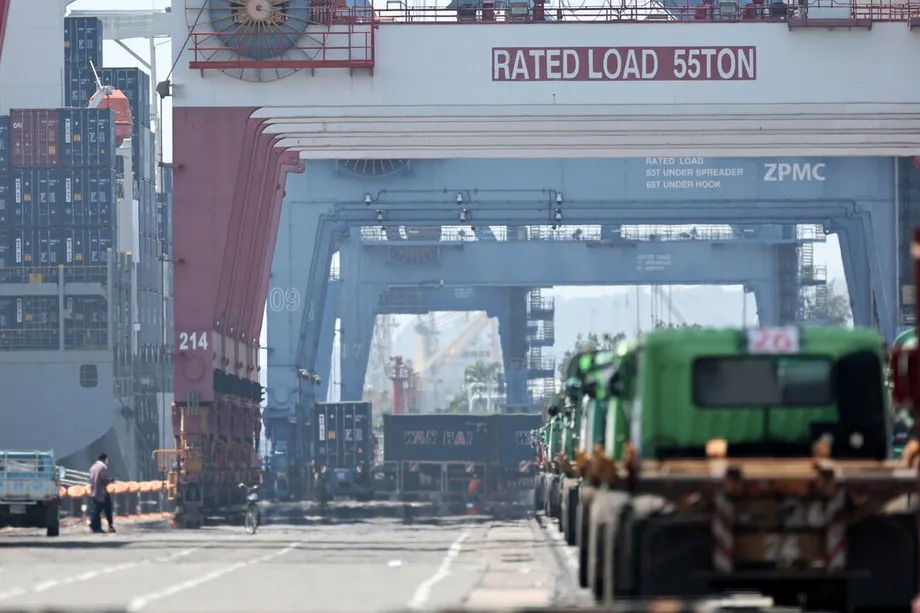
Heavy foreign selling hits both stocks and the currency
The Taiwan dollar closed at NT$32.085 against the U.S. dollar on October 13, 2026, after foreign investors sold a net NT$165.342 billion in Taiwanese shares, the third largest daily foreign selloff reported on record. The Taiex fell 960.65 points, or 1.95%, to 48,341.31, while demand for dollars pushed the local currency through the NT$32 threshold.
Contents
- Heavy foreign selling hits both stocks and the currency
- How the dollar crossed NT$32
- A smaller stock selloff produced greater currency pressure
- Why the trading record is disputed
- Oil and interest rate fears added to dollar demand
- TSMC accounted for about 400 points of the decline
- Financial and petrochemical shares offered support
- Outflows do not establish a complete foreign withdrawal
- Inflation data and TSMC results are the next tests
- Key Points
The Central Bank of the Republic of China (Taiwan) confirmed the closing exchange rate in its daily exchange rate table. Its figures show the dollar rising from NT$31.895 on October 12 to NT$32.085 a day later, a gain of NT$0.190, or about 0.60%, measured against the previous dollar quotation. The table uses data from Taipei Forex Inc. and provides each working day's interbank closing rate between 4 p.m. and 5 p.m.
The currency move was sharper during trading. Most reports put the Taiwan dollar's weakest level at NT$32.237 per U.S. dollar, before late intervention by the central bank reportedly reduced the losses. Dealers estimated that foreign investors moved more than US$2 billion out of Taiwan during the session, although that estimate is not an official capital flow total.
The pressure came from several directions: escalating tensions in the Middle East, rising oil prices, concerns about U.S. inflation and interest rates, and renewed doubts about the cost and valuation of artificial intelligence investments. Semiconductor shares bore much of the selling.
Two distinctions matter when assessing the damage. Foreign share sales are not the same as money actually transferred abroad, and foreign exchange turnover is not a measure of capital outflows. Reports also disagree substantially about total currency market turnover, making claims of an all time trading record less certain than the officially confirmed closing rate.
How the dollar crossed NT$32
The U.S. dollar opened at NT$31.970 and traded as low as NT$31.951 before reaching NT$32.237. Because these quotations show how many Taiwan dollars buy one U.S. dollar, a higher number means a weaker Taiwan dollar.
At the weakest reported point, the dollar quotation was NT$0.342 above the previous close, an increase of about 1.07%. It subsequently retreated NT$0.152 to finish at NT$32.085, reversing roughly 44% of that rise. That recovery reduced the pressure without restoring the currency below NT$32.
The central bank's daily table places the session within a longer weakening trend. The dollar had closed at NT$31.638 on September 11 and NT$31.781 on October 6. By October 13, its quotation was about 1.41% higher than on September 11. Reports described the latest close as the Taiwan dollar's fourth consecutive session of depreciation.
- September 11: The official closing rate was NT$31.638 per U.S. dollar.
- October 6: The rate closed at NT$31.781, followed by higher dollar quotations on October 7, October 8 and October 12.
- October 13, opening: The dollar began trading at NT$31.970.
- October 13, afternoon: Selling pressure intensified after the stock market closed, taking the dollar as high as NT$32.237 in most accounts.
- October 13, close: The official rate finished at NT$32.085 following reported central bank intervention.
One account instead gives the intraday extreme as NT$32.232. Reports also differ on the historical comparison: several describe a low of about two months, while others refer to June 30, 2025. The more specific closing comparison puts October 13 as the first finish above NT$32 since August 14, when the dollar closed at NT$32.046.
A smaller stock selloff produced greater currency pressure
Foreign investors had been net sellers for five consecutive trading sessions. Their cumulative sales were reported at more than NT$310 billion, with one account specifying NT$313 billion. The October 13 sale alone was therefore more than half of that five session total.
The contrast with two earlier selloffs is striking. The original figures put foreign net sales at NT$189.039 billion on July 17 and NT$177.419 billion on June 24, both above October 13's NT$165.342 billion. Yet the Taiwan dollar's intraday weakening on those earlier dates was reported at less than NT$0.200, compared with NT$0.342 on October 13.
Those figures suggest that the timing and intensity of dollar purchases mattered more than the ranking of share sales alone. Selling Taiwanese equities leaves investors with Taiwan dollars; converting those proceeds into dollars creates a separate source of pressure in the currency market.
The historical sale totals are not fully consistent across reports. An alternative account gives July 17 at NT$188.315 billion and June 24 at NT$177.403 billion, while a ranking attributed to financial data provider TEJ lists June 24 at NT$177.418 billion. All of those versions still place October 13 third.
Total institutional net selling reached NT$198.446 billion. The figures most frequently reported show foreign investors selling NT$165.342 billion and securities dealers selling NT$56.976 billion, partly offset by investment trust purchases of NT$23.872 billion. Those components reconcile with the reported total. Another account puts investment trust buying at NT$16.434 billion, which does not reconcile with that same total.
Why the trading record is disputed
The largest numerical disagreement concerns foreign exchange turnover. Several reports put combined trading through Taipei Forex Inc. and Cosmos Foreign Exchange International at US$7.1145 billion, describing it as a record. Others give US$5.433 billion for the same combined markets and call it the second largest total.
The historical benchmark cited in those accounts is US$5.561 billion on March 24, 2008, following Ma Ying-jeou's presidential election victory. A US$7.1145 billion total would exceed that record by about 28%; US$5.433 billion would fall about 2.3% short. One report carries both current totals, without explaining the difference.
A separate market closing account gives US$4.798 billion for the Taipei foreign exchange market alone. That narrower market scope can explain why its figure differs from a combined total, but it does not settle the conflict between the two combined figures.
The central bank's October 2025 market overview, released on November 24, 2025, provides an official methodology: it excludes double counting of interbank transactions when calculating net foreign exchange turnover for designated banks and offshore banking units. On that basis, October 2025 turnover totaled US$971.98 billion, averaging US$48.60 billion a day, with US$275.07 billion in broker-intermediated transactions and US$696.91 billion in direct transactions. These figures cover a different period and market scope from the two brokers' combined October 13, 2026 totals, so they do not establish which of the conflicting daily figures is correct.
The central bank's linked exchange rate table confirms the closing price, not these competing turnover totals. The defensible conclusion is that trading was unusually heavy. Whether it broke the historical record cannot be established from the conflicting figures.
Nor should any of those totals be treated as the amount of foreign money leaving Taiwan. Turnover counts transactions, including activity involving exporters, banks and reported central bank dollar supply. It is different from dealers' estimate of more than US$2 billion in foreign outflows.
Oil and interest rate fears added to dollar demand
Dealers linked the early rise in the dollar to reports of attacks on Saudi Arabian airports, attributed in some accounts to Houthi forces. Oil prices rose as tensions increased, and one account placed crude above US$100 a barrel. The reports do not identify a consistent oil benchmark or provide enough detail to establish the scale of the price increase.
The economic connection is straightforward: more expensive oil can raise fuel and transport costs, increasing pressure on consumer prices. Traders feared that renewed inflation could encourage the U.S. Federal Reserve to maintain a tougher stance on interest rates. Reports also described hawkish comments by Fed officials and U.S. Treasury yields remaining high.
Higher U.S. yields can make dollar assets more attractive relative to other investments. They can also weigh on expensive technology shares, because higher interest rates reduce the present value investors assign to profits expected far into the future. That combination helps explain why the dollar strengthened while semiconductor shares weakened.
These were market expectations, not a newly announced Fed decision. Whether the oil increase would materially change inflation or monetary policy depended on subsequent data, especially the September U.S. consumer price index release.
TSMC accounted for about 400 points of the decline
The Taiex traded between 48,066.36 and 49,126.27 before closing at 48,341.31. Its weakest point represented a fall of roughly 1,235 points, bringing the index close to 48,000 before buying in other sectors narrowed the loss.
Taiwan Semiconductor Manufacturing Co. fell NT$50, or 1.97%, to NT$2,490. Its decline accounted for about 400 points of the index's 960.65 point loss, roughly 42%. With TSMC representing more than 40% of the market's total value in the account describing its weight, its movement had an outsized effect on the benchmark.
Moore Securities Investment Consulting analyst Adam Lin linked the initial selling to the Philadelphia Semiconductor Index's 2.67% overnight decline. The U.S. semiconductor benchmark had fallen for four consecutive sessions. Lin also described concerns about possible delays involving Nvidia's Vera Rubin platform:
"Selling intensified as investors were stunned by falling technology stocks in Seoul this morning amid speculation about several developments, including a delay in shipments of Nvidia's Vera Rubin platform," Lin said.
The shipment issue was presented as speculation, not a confirmed company announcement. Other accounts described warnings by Broadcom chief executive Hock Tan and Intel chief executive Lip-Bu Tan that financing, rather than chip availability, was becoming the main constraint on AI expansion.
Losses extended across technology shares. Nanya Technology fell 7.40% to NT$488, Alchip Technologies declined 7.74% to NT$4,055, and MediaTek lost 2.16% to NT$4,525. Delta Electronics dropped 6.58% to NT$1,775. Hon Hai fell 1.84%, while Quanta Computer bucked the trend with a 0.31% gain.
Financial and petrochemical shares offered support
The session was not a uniform retreat from every sector. Financial shares rose 1.13%, with CTBC Financial gaining 2.02%, Mega Financial advancing 1.80%, and Cathay Financial adding 1.33%. Hua Nan Financial rose 3.57% to NT$49.35.
Petrochemical shares also attracted buying after companies in the Formosa Plastics Group released quarterly results. Reports linked the gains to strong profits at Nan Ya Plastics and Formosa Petrochemical, as well as higher oil prices. Formosa Petrochemical reached its daily 10% gain limit, although reports disagree on its closing price, listing NT$77.80 and NT$119.
Adam Lin, the Moore Securities analyst, described buying that shifted toward sectors outside technology:
Despite the heavy losses in technology stocks, the Taiex still saw active rotational buying," Lin said. "Petrochemical stocks were the beneficiaries, following the improved earnings of major companies in the Formosa Plastics Group.
Stock market turnover was reported at NT$1.125 trillion in one detailed account, NT$1.13 trillion in another and NT$1.12 trillion elsewhere. Using the NT$1.13 trillion figure and the previous session's NT$894.52 billion gives an increase of about 26%. The differing precision does not change the central observation that trading expanded sharply.
The breadth of losses remained substantial, with one account counting 1,347 declining companies across the listed and over the counter markets. Strength in finance and petrochemicals cushioned the index rather than cancelling the technology selloff.
Outflows do not establish a complete foreign withdrawal
Guo Ming-yu, manager of the E.Sun Taiwan Key Technology Active ETF (00413A), offered a different interpretation of the foreign selling. Guo said the proportion of listed company shares held by foreign investors had not declined and argued that investors were taking profits after substantial gains, rather than abandoning their core exposure to Taiwan.
That claim concerns the stock of foreign ownership, while daily net sales measure transactions during a particular period. Heavy selling can coexist with a large remaining foreign position. No ownership percentage or dated ownership series accompanies Guo's comments, so they do not independently establish how much foreign exposure changed.
Currency analyst Li Chi-chan also pointed to differences within regional markets, noting that Japan's broader Topix was fluctuating around unchanged even as technology shares weakened. Senior analyst Tsai Ming-han cited gains in the Dow Jones Industrial Average as evidence that the retreat was not universal panic.
Those assessments qualify, rather than negate, the immediate pressure. Foreign investors were selling Taiwanese shares and buying dollars, but the size of one day's transactions does not by itself prove a permanent exit from the market.
Inflation data and TSMC results are the next tests
The next scheduled economic signal was the September U.S. CPI report, due Wednesday, October 14, U.S. time. Traders were watching both the headline figure and core CPI, which excludes food and energy to help track underlying price trends.
A rise driven by oil would have a different message from persistent strength in core prices. Dealers expected stubborn inflation to support the dollar and Treasury yields, while softer core inflation could ease that pressure. Those are conditional market scenarios, not assured currency outcomes.
TSMC's investor conference on Thursday, October 15, was the next major company event identified in the reports. Investors hoped its outlook could restore confidence in semiconductor demand and reduce selling pressure.
Dividend payments were another factor. TSMC had distributed dividends the previous week, and dealers said some of those funds were being converted and transferred abroad. The size of those transfers was not given, leaving their contribution to the day's dollar demand uncertain.
Dealers expected further pressure as proceeds from share sales reached the currency market. Some anticipated another test of NT$32.2 during the week; another forecast suggested a possible range of NT$32.2 to NT$32.6. These were forecasts, not official targets. The amount of further central bank intervention, the eventual flow of funds and the unresolved trading totals remained unknown.
Key Points
- The official October 13 closing rate was NT$32.085 per U.S. dollar, up from NT$31.895 the previous session.
- Most reports put the Taiwan dollar's weakest intraday level at NT$32.237 before a late recovery.
- Foreign investors sold a net NT$165.342 billion in shares, reported as the third largest daily foreign selloff.
- The Taiex fell 1.95% to 48,341.31, with TSMC accounting for about 400 points of the decline.
- Combined foreign exchange turnover is disputed between US$5.433 billion and US$7.1145 billion, leaving the record claim unresolved.
- Financial and petrochemical shares gained despite broad technology losses.
- The next scheduled tests were U.S. inflation data on October 14 and TSMC's investor conference on October 15.