

A record close leaves Taiwan just short of a milestone
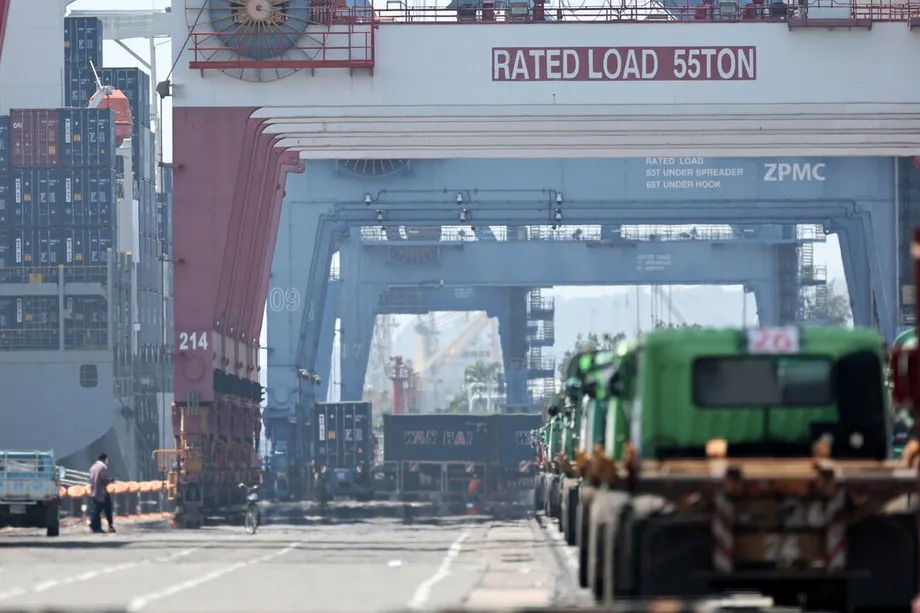
Taiwan's stock market came within 31.08 points of 50,000 on October 6, 2026, before profit taking slowed its advance. The Taiex still finished at a record 49,822.55, up 110.51 points, or 0.22%, with trading turnover of about NT$975.94 billion. Taiwan Semiconductor Manufacturing Co. (TSMC) supplied roughly 80 points of that gain, showing how heavily the benchmark depends on its largest company.
Contents
- A record close leaves Taiwan just short of a milestone
- How the approach to 50,000 unfolded
- TSMC supports the index, while other shares diverge
- Can profit growth justify higher prices?
- The AI investment story reaches beyond chips
- Oil changes the balance of economic risks
- Higher rates complicate the equity case
- Why the bank prefers bonds with three to seven years remaining
- Dollar support may fade while gold retains its role
- The next test is company evidence, not the round number
- Key Points
The subsequent retreat sharpened the central question facing investors: can earnings growth keep supporting prices as borrowing costs and energy risks rise? The index closed at 49,806.37 on October 7, then fell 492.93 points to 49,313.44 on October 8, ahead of the Double Ten holiday. Taiwan index futures lost another 652 points in night trading.
Standard Chartered's answer is that corporate profits still support a positive view of Taiwan, even as volatility increases. Its September 25, 2026, House Views maintains an overweight allocation to global equities and Taiwan, citing visibility into growth driven by artificial intelligence. Overweight means allocating more to an asset or market than the investment benchmark normally assigns.
That position is not a forecast for the date Taiwan will cross 50,000. It is a judgment that earnings can offset some pressure from higher interest rates. The distinction matters: a brief move above a round number, particularly in futures trading, does not establish that the cash market can close there and hold its gains.
How the approach to 50,000 unfolded
The sequence shows both the strength of the rally and the selling it attracted near the milestone. On October 5, the Taiex surged 1,236.3 points to 49,712.04. Index futures subsequently reached 50,265 in night trading, raising expectations that the cash benchmark would soon follow.
- August 28, 2026: Standard Chartered's Taiwan market outlook assigned a 50% probability to a soft landing and maintained a positive view of Taiwan equities.
- September 25: Its newer House Views lowered the soft landing probability to 45% and raised oil forecasts.
- October 5: The Taiex gained 1,236.3 points; night session futures moved above 50,000.
- October 6: The cash index reached 49,968.92 during trading and closed at a record 49,822.55.
- October 7: Standard Chartered presented its fourth quarter outlook; the Taiex closed at 49,806.37.
- October 8: The benchmark fell to 49,313.44, followed by a further decline in night session futures.
- October 15: TSMC's scheduled investor conference provides the next major test of expectations for its business and overseas expansion.
Reports that OpenAI revenue had fallen short of expectations contributed to caution before the holiday. Concerns around that news later eased, and all four major US stock indexes rose on October 9. That recovery improved the external backdrop, but did not settle whether Taiwan's earnings outlook would justify another sustained advance.
TSMC supports the index, while other shares diverge
TSMC closed October 6 at NT$2,585, up 0.39%, after reaching NT$2,590 during the session. Its market value rose to NT$67.03 trillion. With the company representing more than 40% of the market's total value, its roughly 80 point contribution accounted for about 72% of the Taiex's 110.51 point gain.
Kerry Huang, an analyst at Concord Securities, described the selling near the milestone and TSMC's role in preserving the advance:
As the 50,000-point mark neared, some investors sold shares to lock in gains," Huang said. "Fortunately, TSMC (Taiwan Semiconductor Manufacturing Co.) stayed resilient and still posted gains after retreating from an intraday high, helping the broader market break its previous closing record.
The record did not mean that shares rose uniformly. MediaTek dropped 4.74% and United Microelectronics fell 3.28%, while Delta Electronics gained 2.24% and Hon Hai Precision Industry rose 0.79%. The financial sector advanced 1.29%, compared with just 0.05% for the electronics index. The OTC index, which represents many smaller companies, declined 0.37%.
Foreign institutional investors were net sellers of NT$6.66 billion on the main board that day. Meanwhile, the number of shares priced above NT$1,000 reached 56, matching a historical record. Those figures describe a market with strong headline prices but uneven participation, rather than an advance shared by every sector or company.
Can profit growth justify higher prices?
Liu Chiahao, head of investment strategy in Standard Chartered Taiwan's wealth management business, argues that rising share prices need to be assessed alongside earnings. He cited Nvidia as an example: its earnings growth had exceeded its share price increase, bringing its price to earnings ratio down from about 30 at the beginning of the year to between 20 and 25.
A price to earnings ratio measures how much investors pay for each unit of profit. It can fall even while a share price rises if earnings increase faster. Liu's example supports the bank's argument that new market highs do not automatically mean valuations have become more expensive. It does not establish that every AI company offers the same value.
Allianz Global Investors Taiwan provides another measure of the earnings expectations behind the rally. It forecasts aggregate Taiwan corporate profit growth of 84.07% in 2026 and another 35.56% in 2027. For the electronics industry, its 2027 growth estimate is 45%.
If the two annual market forecasts are achieved on a comparable basis, profits in 2027 would be about 2.5 times their 2025 level. That calculation combines growth of 84.07% with a further 35.56%, rather than simply adding the percentages. These are forecasts, not reported results, and the distinction will become more consequential as companies release revenue and earnings.
Liao Benlong, manager of Allianz's 00984A active ETF, cautions that some growth industries have already experienced large price gains and higher valuations. Guo Chinfu, manager of its 00993A active ETF, expects investors to demand firmer evidence of revenue and earnings per share growth. Strong industry demand can therefore coexist with sharp differences in individual stock performance.
The AI investment story reaches beyond chips
Standard Chartered estimates that global AI capital expenditure could grow at a compound annual rate of about 33% through 2030. Its fourth quarter outlook expects investment momentum to continue into 2027, with Taiwan benefiting from a supply chain that extends across semiconductors, optical communications and printed circuit boards.
The bank contrasts that range with South Korea's greater concentration in high bandwidth memory, a type of memory used to move large volumes of data quickly for AI processors. Taiwan's broader industrial exposure gives investors several routes into the spending cycle, although many of those businesses still depend on the same underlying demand for AI infrastructure.
Hsiao Huichung, manager of Allianz's Taiwan Daba and Taiwan Technology funds, points to higher capital spending plans among North American cloud service providers. Demand for graphics processors, custom chips and advanced application processors is feeding orders for advanced chip manufacturing and packaging.
Allianz identifies chip design intellectual property, custom chips, packaging and testing, circuit boards, chip substrates, cooling, water cooling modules and optical communications as areas of interest. It also reports tightening supply and demand for certain multilayer ceramic capacitors and chip resistors as AI servers, powerful computing systems, consumer electronics and automotive applications increase component demand.
The spending cycle extends into electricity supply, grid upgrades and electrification. Delta Electronics' power management business is one example of this wider exposure. Analyst Chen Chihlin also identifies advanced packaging, semiconductor testing and the CoWoS supply chain as areas attracting attention ahead of TSMC's conference. CoWoS is TSMC's packaging technology for combining processors and memory in powerful computing systems. Expectations for capacity expansion still need confirmation through company guidance and results.
Oil changes the balance of economic risks
Standard Chartered's newer official outlook gives a soft landing a 45% probability, compared with 30% for continued strong growth without a substantial slowdown and 25% for a downside outcome. A soft landing means inflation eases without a recession. The downside allocation consists of a 15% probability of stagflation, where weak growth accompanies persistent inflation, and a 10% probability of recession.
Those figures differ from the bank's August 28 Taiwan market outlook, which assigned 50% to a soft landing, 25% to continued strong growth and 25% to downside risks. The earlier downside assessment allocated 15% to recession and 10% to stagflation. The later outlook therefore changes both the central scenario probabilities and the composition of the downside risk.
Oil forecasts also rose between the documents. The August page projected New York oil futures at US$90 a barrel over three months and US$70 over 12 months. The September House Views and October briefing put West Texas Intermediate crude at US$100 and US$80, respectively. Both horizons increased by US$10 a barrel.
The bank identifies geopolitical conflict and supply disruption as the main threats. Its September outlook links a stagflation scenario to worsening conflict and oil remaining above US$120 a barrel. Liu warned that prices in the US$120 to US$150 range could produce a more severe inflation and growth shock. These are risk thresholds, not the bank's central oil targets.
Standard Chartered also argues that lower oil use relative to economic output and inflation adjusted energy prices make the current situation less severe than some historical energy shocks. That assessment does not remove the risk: sustained increases could delay inflation relief and keep borrowing costs higher.
Higher rates complicate the equity case
The September House Views expects two further Federal Reserve increases, one European Central Bank increase and three Bank of Japan increases by June 2027. It describes September as the first month in which all three raised rates together. The Fed's increase brought its policy range to 3.75% to 4.00%; the ECB deposit rate reached 2.50%; and the Bank of Japan raised its rate by 0.25 percentage points to 1.25%.
This differs from the August Taiwan outlook, which expected the Fed to leave rates unchanged during 2026. The newer document anticipates that fading energy and tariff effects will eventually permit the Fed and ECB to cut rates by the third quarter of 2027. That is a forecast conditional on inflation easing, rather than an announced policy schedule.
At the October briefing, Liu cited US Treasury yields of 5.2% to 5.3% for the 10 year maturity, expected inflation of about 2.3% over the next decade, and a real yield of approximately 2.95%, described as the highest since 2008. A real yield represents the return after allowing for expected inflation.
Higher yields can pressure equities in two ways: they increase financing costs and make bond returns more competitive with future corporate profits. Standard Chartered believes earnings growth can cushion that pressure, but its outlook does not claim that AI shares are immune to it.
Why the bank prefers bonds with three to seven years remaining
Standard Chartered favors bonds with maturities of three to seven years rather than taking substantial exposure to government bonds with much longer maturities. When yields rise, existing bond prices usually fall. Bonds that pay investors over a longer period generally experience larger price changes for a given move in rates.
The bank particularly favors emerging market government debt denominated in US dollars, while remaining cautious on developed market government bonds. Its August outlook identifies attractive yields as a reason for that preference, alongside risks from issuer credit quality and US trade policy.
Investment grade and lower rated corporate bonds can provide coupon income, but the fourth quarter outlook notes that credit spreads are narrow. A credit spread is the extra yield investors receive for taking a borrower's repayment risk rather than holding a government benchmark. A small spread leaves less compensation if that risk worsens.
The allocation message is consequently more selective than simply buying bonds for protection. Standard Chartered recommends screening issuers, spreading holdings across borrowers and focusing on dependable coupon income. Dollar denomination does not remove credit risk, and investors measuring returns in Taiwan dollars also face exchange rate movements.
Dollar support may fade while gold retains its role
The bank expects the dollar to stay supported initially, then soften as inflation eases and interest rate differences narrow. Its September and October forecasts put the dollar index at 100.2 over three months and 98 over 12 months, compared with 101.5 and 99 in the August outlook. The direction is similar in both assessments, but the numerical targets are different.
For the yen, the October briefing projects US$1 at 157 yen over three months and 153 yen over 12 months. The September official document also gives a medium term target of 153. A lower number means the yen strengthens against the dollar. Further Japanese rate increases could support that move by reducing the return advantage of dollar assets.
Gold targets are consistent across the official documents and the October briefing: US$4,750 an ounce over three months and US$5,000 over 12 months. Liu points to gold purchases by central banks, including those of China and Poland, as support, alongside limited scope for sustained dollar appreciation. These targets describe expected future prices, not guaranteed returns.
The next test is company evidence, not the round number
TSMC's October 15 investor conference is the clearest forthcoming checkpoint. Huang expects investors to focus on business guidance and overseas expansion. Mega International Investment Services chairman Liu Chengyu also identifies TSMC's September revenue and Largan Precision's investor briefing as immediate areas to watch.
Shen Chienhung, manager of Taishin's Taiwan small and medium company active ETF, says the market will examine whether annual earnings meet expectations and whether growth continues in the fourth quarter. Price increases in selected industries could support another advance, but only if they translate into business performance.
US midterm elections in November add policy uncertainty that could affect sentiment and capital flows. Standard Chartered nevertheless places corporate profits ahead of election outcomes as the driver of sustained market performance. Its preferred approach combines a greater allocation to equities than bonds, purchases spread over time, regional diversification, and some gold and bonds with moderate maturities.
No confirmed date has been given for a sustained Taiex move above 50,000. The earnings forecasts support the case for further gains, while the recent selling shows that investors are already demanding evidence. The next phase depends on company results and guidance meeting those expectations without a larger oil or interest rate shock.
Key Points
- The Taiex reached 49,968.92 during October 6 trading and closed at a record 49,822.55.
- TSMC supplied about 72% of that day's index gain, while smaller shares lagged.
- Allianz forecasts Taiwan corporate profit growth of 84.07% in 2026 and 35.56% in 2027.
- Standard Chartered's September outlook assigns a 45% probability to a soft landing and favors Taiwan equities.
- Its newer oil targets are US$100 a barrel over three months and US$80 over 12 months, above the August forecasts.
- The bank favors bonds with three to seven years remaining and maintains gold targets of US$4,750 and US$5,000 an ounce.
- TSMC's October 15 investor conference is the next major checkpoint for earnings and investment expectations.