
September Record Brings the Annual Target Closer
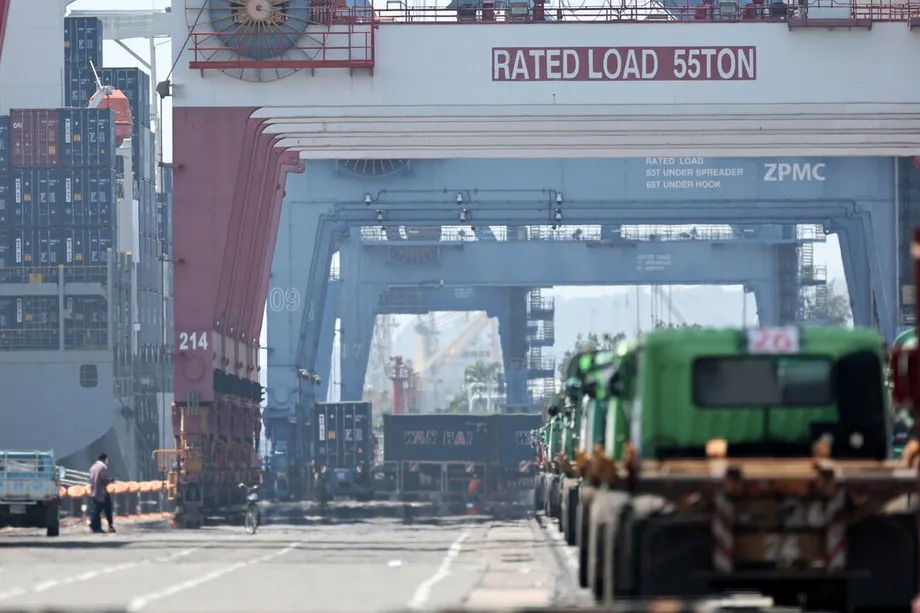
Taiwan exported $87.22 billion worth of goods in September 2026, a record monthly total and a 60.9% increase from a year earlier. With exports reaching $661.55 billion in the first nine months, the Ministry of Finance now considers an annual total above $900 billion highly likely. Demand for artificial intelligence equipment is driving the surge, from semiconductors to the electrical equipment needed to power data centers.
Contents
- September Record Brings the Annual Target Closer
- How the $900 Billion Calculation Works
- What Would It Take to Reach Fifth Place?
- Two Product Groups Account for Most Exports
- AI Spending Is Reaching Electrical Equipment
- A Global Trade Forecast Revised Around AI
- Economic Gains Come With Uneven Benefits
- The Dates and Results That Matter Next
- The Bottom Line
The expansion could also lift Taiwan sharply in the global export rankings. Its $640 billion in exports in 2025 placed it 12th, its best position since 1994 and four places above its 2024 ranking. A forecast of $903.6 billion for 2026 would represent an increase of $263.6 billion, or about 41.2%, in one year.
That forecast has raised the prospect of Taiwan becoming the world's fifth largest exporter, ahead of Hong Kong, Japan and South Korea. The ranking is a possibility, not an established result: Taiwan's final position will depend on other economies' 2026 exports as well as its own. Comparing its forecast with their 2025 totals shows the scale of the opportunity, but cannot establish the eventual order.
The immediate evidence is unusually strong. September marked Taiwan's 35th consecutive month of export growth, the longest such run on record. The first nine months of 2026 had already exceeded the entire 2025 export total by $21.55 billion, or about 3.4%, leaving the final quarter to build on a record already secured.
How the $900 Billion Calculation Works
At the ministry's October 8 release, statistics department director Tsai Mei-na said the probability of exports exceeding $900 billion was very high. Her calculation used a monthly export figure below September's record: $80 billion in each of October, November and December.
Adding that $240 billion to the first nine months produces an annual total of $901.55 billion. Under this scenario, cumulative exports would cross $700 billion in October, $800 billion in November and $900 billion in December. These are cumulative milestones, not projections that any individual month would reach those amounts.
The ministry's specific October forecast was stronger than that scenario, at $85.2 billion to $87.7 billion, representing annual growth of 40% to 44%. To reach exactly $900 billion for the year, exports would need to average about $79.48 billion per month during the final quarter.
The Directorate General of Budget, Accounting and Statistics' August forecast of $903.6 billion would require a fourth quarter monthly average of about $80.68 billion. Both calculations sit below September's result, although monthly exports can fluctuate and the full year figure remains a forecast.
What Would It Take to Reach Fifth Place?
The Ministry of Finance's 2025 comparison put mainland China first with $3.7718 trillion in exports, equivalent to 14.4% of the global total. The United States followed with $2.1852 trillion and an 8.3% share, while Germany ranked third with $1.7642 trillion and 6.7%. The Netherlands occupied fourth place.
Hong Kong ranked fifth at $753.6 billion, Japan sixth at $738.3 billion and South Korea eighth at $709.3 billion. Taiwan's $640 billion represented 2.4% of global exports, behind all three.
At $903.6 billion, Taiwan would exceed Hong Kong's 2025 total by $150 billion, Japan's by $165.3 billion and South Korea's by $194.3 billion. Those gaps explain why fifth place is being discussed. They do not show how those economies, or other exporters ahead of Taiwan, will perform in 2026.
Global exports totaled $26.3 trillion in 2025, up 7.2% from 2024. Taiwan's prospective growth of about 41.2% in 2026 illustrates the speed of its expansion, but the figures cover different years. Its future share of world exports cannot be calculated until the corresponding global total is known.
Two Product Groups Account for Most Exports
September's trade figures show how heavily the boom rests on technology. Information, communications and audiovisual products generated $39.13 billion in exports, twice their value a year earlier. Electronic components contributed another $31.13 billion, up 45.3%.
Together, the two categories accounted for $70.26 billion, or about 80.6% of September's $87.22 billion total. Both recorded their second highest monthly export values, even as total exports reached a new peak. These are broad product categories, so their combined share should not be treated as a precise measure of AI exports.
Tsai identified four forces supporting demand: continued technology investment, more sophisticated components and greater component use, tight electronics production capacity supporting export prices, and shipments ahead of new mobile device and consumer electronics releases.
The distinction between prices and quantities matters. An export total measures the value of goods sold abroad. It can rise because manufacturers ship more units, sell more expensive products or receive higher prices. The ministry's explanation points to several of these effects operating together, rather than a simple increase in shipment volumes.
AI Spending Is Reaching Electrical Equipment
The gains are extending beyond the two largest technology categories. September exports outside electronic components and information, communications and audiovisual products rose 25.4% from a year earlier. Excluding months affected by the Lunar New Year holiday, that was the strongest increase in almost five years.
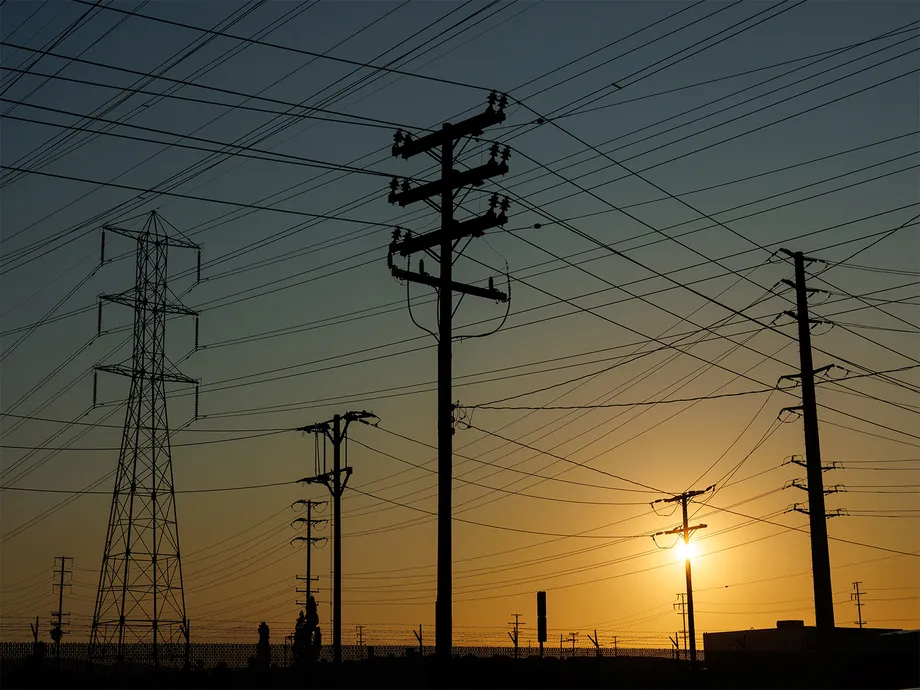
Electrical machinery exports grew 29.8%, marking their 26th consecutive month of expansion. Tsai linked demand to data center construction, grid upgrades and replacement of electrical equipment. These products connect the AI investment boom to manufacturers that supply physical infrastructure rather than computing chips.
AI systems need electricity as well as processing power. New computing facilities therefore create demand for equipment that supplies and manages power. The ministry also pointed to relatively long order cycles for electrical machinery, helping explain its sustained performance.
The broader increase is evidence that some traditional industries are benefiting. It does not establish that every manufacturing sector is recovering at the same pace, or that export gains are translating equally into profits and wages.
A Global Trade Forecast Revised Around AI
The World Trade Organization's October 8 update to its Global Trade Outlook and Statistics forecast put global merchandise trade volume growth at 3.9% for 2026, up from the 1.9% projected in March. Its 2027 forecast rose by 1.5 percentage points to 4.1%.
The WTO said the value of trade in goods supporting AI development, including semiconductors and data center equipment, increased 67% during the first half of 2026. Those goods accounted for about 47% of merchandise trade growth during that period.
Taiwan, Hong Kong, mainland China and South Korea together supplied 51% of AI related goods exports in 2025. Their combined share increased to 52.7% in the first half of 2026, a rise of 1.7 percentage points. Taiwan had the largest individual share, although no exact percentage for Taiwan was given.
WTO chief economist Staiger said AI related trade had accelerated when the organization's earlier forecasts had assumed it would slow. That helps explain why Taiwan's export outlook has become more optimistic alongside the global forecast.
The measurements remain different: the WTO's headline forecast concerns trade volume, while Taiwan's export targets are dollar values. Stronger prices can lift export revenue without producing an equivalent increase in the volume of goods traded.
Economic Gains Come With Uneven Benefits
National Development Council deputy minister Kao Shien-quey attributed Taiwan's rising economic standing to private companies' willingness to push into new markets and technologies. She identified strengths in chips and AI computing infrastructure, giving Taiwanese businesses greater pricing power and an important position in technology partnerships.
She also pointed to manufacturing expertise and production networks abroad that make Taiwan a trusted supplier for democratic economies seeking alternatives to supply chains centered on mainland China. This describes Taiwan's commercial position, rather than a guarantee that every export business will benefit equally.
The growth forecasts are striking. The Directorate General of Budget, Accounting and Statistics projected economic growth of 11.05% for 2026, while the central bank's September estimate was 11.48%. The forecasts differ by 0.43 percentage points and are not final results.
Kao said Taiwan's GDP per person had exceeded Japan's and South Korea's in 2025 and could pass $45,000 in 2026. GDP per person measures economic output divided by population; it is not the same as an individual's salary or household income.
That distinction is central to concerns about a K shaped economy, where some sectors advance rapidly while others lag. Kao identified gaps between traditional and technology industries, businesses of different sizes, wages and access to skilled workers. The export concentration shows why these concerns persist even as some electrical equipment producers share in the expansion.
The Dates and Results That Matter Next
The progression from last year's ranking to this year's forecasts is visible in several milestones:
- 2025: Taiwan exported $640 billion in goods and ranked 12th globally, up four places from 2024.
- March 2026: The WTO forecast 1.9% growth in global merchandise trade volume for the year.
- August 2026: Taiwan's statistics agency forecast annual exports of $903.6 billion.
- September 2026: Taiwan recorded monthly exports of $87.22 billion, bringing the nine month total to $661.55 billion.
- October 8, 2026: The finance ministry presented its September figures, while the WTO raised its global trade forecasts.
- October to December 2026: Exports averaging $80 billion a month would bring Taiwan's annual total to $901.55 billion.
The remaining monthly results will determine whether Taiwan clears $900 billion and how closely it matches the statistics agency's forecast. No exact dates for the next releases are given. A fifth place global ranking requires another step: comparable full year results from competing exporters.
The Bottom Line
- Taiwan's September exports reached a record $87.22 billion, up 60.9% from a year earlier.
- The first nine months generated $661.55 billion, already exceeding the entire 2025 total.
- Exports averaging $80 billion a month in the final quarter would produce $901.55 billion for 2026.
- Fifth place globally is possible, but depends on other economies' final export results.
- Two broad technology categories supplied about 80.6% of September exports, while electrical machinery also recorded strong growth.
- The WTO raised its trade forecasts as AI investment continued, while Taiwan faces uneven benefits across industries and workers.