
New booking charges arrive as Delhi jet fuel reaches Rs 137 a litre
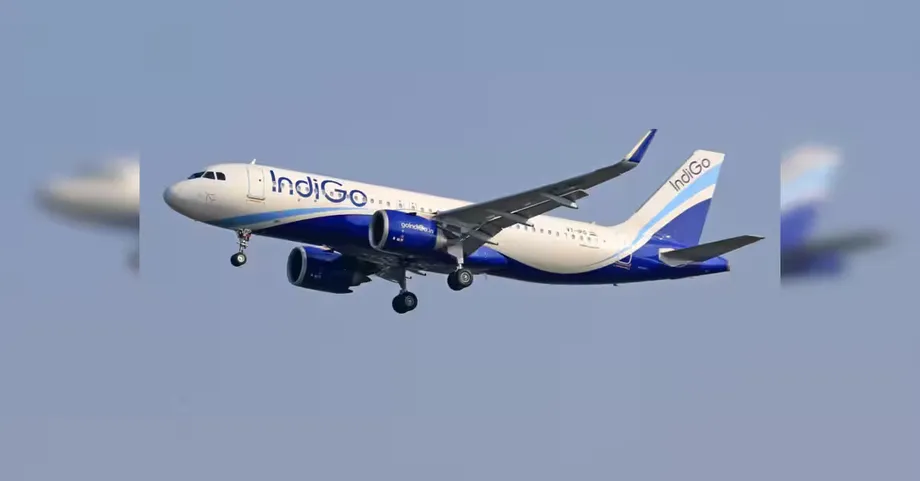
IndiGo has increased fuel charges to between Rs 375 and Rs 1,300 on domestic flights and between Rs 1,000 and Rs 10,000 on international routes for new bookings made from 00:01 on October 6, 2026. The move follows a rise in aviation turbine fuel prices in Delhi from about Rs 110 a litre in July to Rs 137 in October, an increase of approximately 24.5%.
Contents
- New booking charges arrive as Delhi jet fuel reaches Rs 137 a litre
- How much more will domestic passengers pay?
- International charges rise unevenly across regions
- What the conflicting figures mean
- Three monthly fuel increases reverse July's relief
- Air India and Akasa introduce their own schedules
- A partial recovery of costs, not a complete offset
- Passenger demand was already weakening
- Government considers a fuel fund and pricing changes
- Credit support and the dates that matter
- Key Points
Air India, Air India Express and Akasa Air followed with surcharge changes announced on October 8 and applicable to new bookings from October 9. Together, the decisions put fresh pressure on travel budgets ahead of the festive season, at a time when August passenger figures already showed a decline.
IndiGo said its latest monthly increase in fuel costs exceeded 14%, leaving aviation turbine fuel, or ATF, among its most expensive levels of the past decade. The airline operates more than 2,200 flights a day and carries nearly two thirds of India's domestic air traffic, giving its pricing decisions a broad reach.
The change applies to new bookings, not tickets already purchased. The distinction matters: October 6 is the booking threshold, rather than a requirement that every passenger flying from that date pay the revised charge.
A fuel surcharge is a separate component of an airfare intended to recover some fuel expenditure. It is not the full ticket price. Base fares and other charges still determine the final amount, so a rise in the surcharge does not establish the exact change in every fare.
How much more will domestic passengers pay?
IndiGo retains five domestic distance bands. Compared with the previous structure introduced in April, the additional charge is between Rs 100 and Rs 350 per flight sector, meaning each individual flight leg.
- Up to 500 km: Rs 375, up from Rs 275, an increase of Rs 100.
- 501 to 1,000 km: Rs 600, up from Rs 400, an increase of Rs 200.
- 1,001 to 1,500 km: Rs 900, up from Rs 600, an increase of Rs 300.
- 1,501 to 2,000 km: Rs 1,150, up from Rs 800, an increase of Rs 350.
- Above 2,000 km: Rs 1,300, up from Rs 950, an increase of Rs 350.
The largest percentage increases are in the two middle bands: Rs 400 to Rs 600 and Rs 600 to Rs 900 both represent rises of 50%. The shortest band increases by about 36.4%, while the longest rises by about 36.8%. These percentages describe the fuel charge alone, not the total ticket price.
The route examples illustrate the reach of the change. Delhi to Jaipur falls in the shortest band, Delhi to Mumbai in the 1,001 to 1,500 km band, and Delhi to Bengaluru in the 1,501 to 2,000 km band. For a return journey comprising two sectors in that last band, the surcharge increase would total Rs 700, before any change in other fare components.
International charges rise unevenly across regions
IndiGo's international structure combines distance bands within South Asia with regional charges elsewhere. SAARC refers to the South Asian Association for Regional Cooperation, while GCC means the Gulf Cooperation Council.
- SAARC routes up to 500 km: Rs 1,000, compared with Rs 900 previously.
- SAARC routes of 501 km and above: Rs 3,000, compared with Rs 2,500.
- Southeast Asia, the GCC and Middle East, and North and East Asia: Rs 5,500.
- Africa: Rs 6,000, compared with Rs 5,000.
- Europe: Rs 10,000.
The largest reported international increase is Rs 2,500 per sector. For West Asia flights up to 2,000 km, the charge rises from Rs 3,000 to Rs 5,500, approximately 83.3%. Longer West Asia flights previously carried Rs 5,000, making their increase Rs 500.
For Southeast Asia and China, the earlier charge was Rs 3,500 for flights up to 2,000 km and Rs 5,000 for longer flights. Both now attract Rs 5,500. The same new amount therefore produces an increase of Rs 2,000 on shorter routes and Rs 500 on longer ones.
Europe also requires a distinction. Greece and Turkey rise from Rs 7,500 to Rs 10,000, while the rest of Europe retains the existing Rs 10,000 charge. The maximum levy is consequently not a new increase for every European passenger.
What the conflicting figures mean
Most accounts agree with IndiGo's announced domestic range of Rs 375 to Rs 1,300 and international range of Rs 1,000 to Rs 10,000. However, reports differ on several details that matter when calculating a fare.
One account lists Rs 425 for domestic routes below 500 km and SAARC charges of Rs 500 and Rs 1,000. Those figures conflict with the broadly reported current schedule of Rs 375 domestically and Rs 1,000 or Rs 3,000 for SAARC routes. Another account gives Europe a Rs 6,000 charge, rather than the Rs 10,000 listed in the announced schedule and most other reports.
The descriptions of the revision also differ. It has been called the third increase, the second revision since March, and a reintroduction. Detailed accounts identify an initial March charge, an April change and the October adjustment. Some reports also describe reductions around July, without giving a complete intervening IndiGo schedule.
April dates are inconsistent too: one account identifies April 1 as the last revision, while another says the previous rates applied to bookings from April 2. These differences do not alter the consistently reported October 6 booking threshold, but they prevent a definitive count of every earlier adjustment.
Three monthly fuel increases reverse July's relief
The domestic fuel price sequence shows how quickly a period of relief ended. ATF was about Rs 115 a litre in June, fell to Rs 110 in July, returned to Rs 115 in August and reached approximately Rs 121 in September. The October price of Rs 137 followed a third consecutive monthly increase.
A more precise September figure of Rs 121.28 implies an October rise of Rs 15.72 a litre, or approximately 13%. That is consistent with reports describing an increase of about Rs 16. IndiGo's statement cites a monthly rise exceeding 14%. The Delhi price calculation and the airline's stated increase differ, and the basis for reconciling them has not been specified.
The reported global average jet fuel price was $187.34 a barrel, up 1% over the preceding week. Compared with the reported range of $85 to $90 before the conflict, that is more than double. The precise monitoring week is not identified, so the figure should not be treated as a price for a specified October day.
Reports date the outbreak of the conflict to February 28, when the United States and Israel attacked Iran. Separately, the Federation of Indian Airlines describes operating pressures from the West Asia conflict since April 2026. That reference does not establish a different confirmed starting date for the war.
Air India and Akasa introduce their own schedules
Air India Express's revised charges apply to bookings from 00:00 IST on October 9, while Air India's begin at 11:00 IST that day. Akasa Air's threshold is 00:01 on October 9. Although one research summary reverses the Air India Group times, the quoted airline statement and detailed accounts identify midnight for Air India Express and 11 a.m. for Air India.
Air India and Air India Express set domestic charges at Rs 400 up to 500 km, Rs 600 for 501 to 1,000 km, Rs 850 for 1,001 to 1,500 km, and Rs 1,200 for both longer distance bands.
Against IndiGo, that means Rs 25 more in the shortest band, the same charge in the second band, Rs 50 less in the third, Rs 50 more for 1,501 to 2,000 km, and Rs 100 less above 2,000 km. These are surcharge comparisons, not evidence that one airline's complete ticket will cost less.
Air India Group's selected international charges are $55 for West Asia and the Middle East, $135 for Europe including the United Kingdom, $210 for Australia and $215 for North America. They are quoted in dollars, unlike IndiGo's rupee schedule, so a direct comparison requires the applicable currency conversion.
Akasa's domestic charges match IndiGo through 2,000 km: Rs 375, Rs 600, Rs 900 and Rs 1,150 across the corresponding bands. Akasa retains Rs 1,150 for all sectors above 1,500 km, leaving it Rs 150 below IndiGo beyond 2,000 km. Its international charge is Rs 2,500 on India routes to Kuwait, Qatar, Saudi Arabia, the UAE, Thailand and Vietnam.
A partial recovery of costs, not a complete offset
IndiGo says the revised charges will recover only part of its additional fuel expenditure. In its statement explaining the decision, the airline described the adjustment as smaller than the increase required to cover the full cost rise.
"While offsetting the increase in fuel costs would have required a significantly larger increase in the fuel charges, IndiGo has implemented a measured and relatively modest adjustment to minimise the impact on customers," the airline said.
That description should be read alongside the passenger arithmetic. An adjustment can recover only part of an airline's additional costs while still increasing particular surcharge bands by 50% or more. The two measures describe different things: the carrier's total expenditure and the fee attached to a ticket.
Estimates of fuel's share of expenses also differ. Several accounts put it at about 40%, or above 40%, of operating costs. The Federation of Indian Airlines says the current share is 55% to 60%, compared with 30% to 40% historically. Another account uses 30% to 40% of variable costs, a narrower category than total operating costs. These figures are not interchangeable.
Airspace restrictions, diversions and rupee depreciation add pressure beyond the price of fuel itself. Longer routes can require more fuel, while a weaker rupee increases the domestic currency cost of expenditure linked to dollars.
Passenger demand was already weakening
The surcharge changes arrive after a decline in August traffic. Directorate General of Civil Aviation figures put domestic passengers at 121.26 lakh, or 12.126 million, compared with 129.47 lakh, or 12.947 million, in July 2026. That is a monthly fall of 6.34%, equivalent to about 821,000 fewer passengers.
International Air Transport Association data separately showed India's domestic revenue passenger kilometres falling 7.5% from a year earlier in August. This measure multiplies paying passengers by the distance flown, so it tracks both passenger numbers and journey length. It is different from the DGCA's monthly passenger count.
Reports associate weaker demand with expensive tickets and describe some travellers shifting to other transport. However, the figures do not establish how much of the decline was caused by fares, or isolate the effect of fuel surcharges. August traffic also predates the October revisions.
The resulting tension is concrete: airlines are trying to recover rising costs while avoiding prices that discourage bookings. The Federation of Indian Airlines has warned that, without timely relief, carriers could withdraw from financially unsustainable routes. No specific route closure is identified.
Government considers a fuel fund and pricing changes
Civil Aviation Minister K Ram Mohan Naidu said the government was discussing fuel costs with airlines and oil marketing companies. Speaking on the sidelines of the IQFM Symposium 2026, he described the burden created by the West Asia crisis.
"One of the most important things is the West Asia crisis and how it's putting a big burden on ATF prices. But we are still in discussion both with the airlines and also the OMCs. Let us see how the discussion unfolds," he said.
The Centre is considering reviving a proposed Rs 10,000 crore ATF Price Stabilisation Fund. Its earlier framework used a benchmark of Rs 115 a litre, but the scheme lapsed after no domestic airline signed the required memorandum of understanding with state owned oil marketing companies within the deadline.
Market prices had temporarily fallen below that benchmark when airlines declined to sign. October's Rs 137 price is Rs 22 above it, illustrating the changed circumstances. A revised framework has not been finalised, and no launch date has been announced.
The federation also seeks pricing based on production costs plus a margin for domestic ATF, rather than international benchmarks, alongside a fixed excise levy and continued relief on taxes and airport charges. Locally refined fuel can still reflect global prices, dollar exchange rates, central excise duty and state value added tax. Domestic production therefore does not automatically insulate airlines from international volatility.
Whether these proposals would reduce passenger fares would depend on the formula, crude prices, taxes and how airlines pass savings through. No agreed reform or resulting fare reduction has been announced.
Credit support and the dates that matter
The Federation of Indian Airlines, which represents Air India, IndiGo and SpiceJet, sought government intervention in a September 25 letter. It has also requested faster release of sanctioned funds under the Emergency Credit Line Guarantee Scheme, or ECLGS 5.0, saying some airlines received only part of their approved credit because lenders delayed the remainder.
The scheme provides government backed guarantees for eligible lending, reducing banks' credit risk. Implemented through the National Credit Guarantee Trustee Company, it covers eligible small businesses, other qualifying businesses and scheduled passenger airlines. It provides access to credit, rather than directly reducing the fuel price.
The minister also placed the immediate cost discussions alongside longer term aviation goals. He said India produces about $4 billion in aerospace equipment and components and targets $10 billion by the end of the decade, or 2.5 times the current value. He also said the UDAN regional connectivity scheme had started 693 routes in ten years. Neither figure establishes that manufacturing growth or regional support will offset the current fuel increase.
The main sequence of developments is:
- March 2026: IndiGo introduced a flat Rs 425 domestic fuel charge, with initial international charges ranging from Rs 425 to Rs 2,300.
- April 2026: IndiGo moved to domestic distance bands of Rs 275 to Rs 950 and revised international charges.
- September 25: The airline federation sought government relief.
- October 1: Domestic ATF rose to about Rs 137 a litre.
- October 5 and 6: IndiGo announced its revision, then applied it to new bookings from 00:01 on October 6.
- October 8 and 9: Air India Group and Akasa announced changes, then applied them at their respective October 9 booking thresholds.
Airlines say they will continue reviewing fuel prices and charges. No next surcharge review date, deadline for a revived stabilisation fund, or timetable for releasing delayed credit has been specified.
Key Points
- IndiGo's revised charges apply to new bookings from 00:01 on October 6, 2026; existing bookings are unaffected.
- Domestic charges range from Rs 375 to Rs 1,300, increases of Rs 100 to Rs 350 per sector.
- International charges range from Rs 1,000 to Rs 10,000, with different increases by region and distance.
- Air India, Air India Express and Akasa introduced their revised schedules on October 9.
- Delhi ATF rose from about Rs 110 a litre in July to Rs 137 in October, approximately 24.5%.
- The government is discussing fuel pricing and a possible stabilisation fund revival, but no final framework or launch date has been announced.