
Dhaka seeks protection against the driest periods
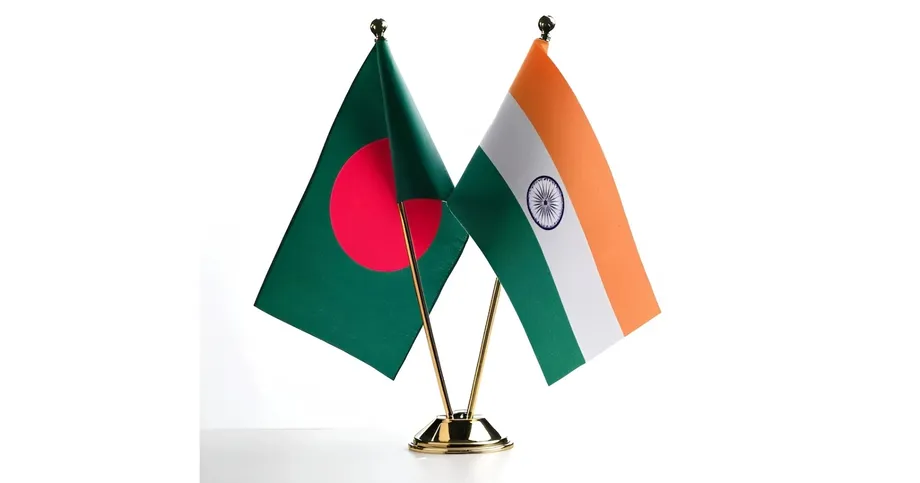
Bangladesh wants a new or revised Ganges water treaty with India before the current agreement expires on December 12, 2026, with a safeguard ensuring that its allocation does not collapse when river flows fall. Its central demand is to restore a provision from the 1977 agreement that protected at least 80% of Bangladesh's scheduled share during exceptionally low flows.
Contents
- Dhaka seeks protection against the driest periods
- Two different kinds of water guarantee
- How the current allocation formula works
- What two decades of measurements show
- The agreements that led to the deadline
- Negotiations continue, but terms are unsettled
- Bihar presses its own water demands
- A Nepal proposal puts river health in focus
- Other shared rivers remain outside an agreement
- Key Points
The negotiations concern water released at the Farakka Barrage in West Bengal during the January 1 to May 31 dry season. The existing treaty, signed on December 12, 1996, by Indian Prime Minister H. D. Deve Gowda and Bangladeshi Prime Minister Sheikh Hasina, lasts 30 years. Bangladesh and India share 54 rivers, but the Ganges is the only one covered by a bilateral water sharing agreement.
Water Resources Minister Shahiduddin Chowdhury Anee has said Dhaka wants substantive changes rather than a simple extension. Speaking after a water governance seminar in October, he identified the earlier safeguard as the government's main negotiating priority.
"Our main priority will be to bring back the guarantee clause that was included in the 1977 agreement," he said.
The stakes extend beyond the wording of a treaty. Studies in Bangladesh estimate that nearly one third of the country's 170 million people depend on the river system for livelihoods, biodiversity and water supply. That represents roughly 57 million people, using the population figure cited in those studies.
Negotiators also face competing demands within India, proposals to involve Nepal, and evidence that the existing allocation formula can produce sharp fluctuations during the months when water is most needed.
Two different kinds of water guarantee
The phrase guarantee clause needs careful explanation because the 1996 treaty already contains an alternating minimum allocation. That is different from the protection Bangladesh now wants restored.
Under the 1977 agreement, Bangladesh was assured at least 80% of its scheduled allocation when Farakka flows became exceptionally low. The safeguard was tied to Bangladesh's scheduled share rather than a fixed volume alternately assigned to each country. That agreement lasted five years and expired in 1982.
The 1996 treaty instead guarantees each country 35,000 cusecs in alternate periods between March 11 and May 10. A cusec means one cubic foot of water flowing each second. An allocation of 35,000 cusecs is approximately 991 cubic metres per second.
This distinction explains why officials can describe the current treaty as lacking a guarantee while an academic assessment describes guaranteed allocations within it. The missing protection is the broader 80% safeguard against scarcity, not the alternating 35,000 cusec provision.
An official cited another protection in Article III of the 1977 agreement: water released at Farakka for Bangladesh should not be reduced along the intervening stretch, except for reasonable Indian uses capped at 200 cusecs before both banks of the Ganges lie inside Bangladesh. This addresses a separate issue, the difference between water released upstream and water reaching the downstream country.
The academic assessment also identifies a provision in the 1996 treaty allowing Bangladesh at least 90% of scheduled flow during a review process if agreement on necessary adjustments is not reached. That conditional review provision should not be confused with the earlier guarantee governing exceptionally low flows.
How the current allocation formula works
The 1996 treaty divides the dry season into 15 allocation periods, generally described as 10 day cycles. Its formula distributes the flow available at Farakka, while an indicative schedule provides a reference based on historical river measurements.
When flow is below 70,000 cusecs, the basic formula provides equal shares. Between 70,000 and 75,000 cusecs, Bangladesh receives 35,000 cusecs and India receives the remainder. The alternating 35,000 cusec guarantee during March 11 to May 10 is a further condition affecting these allocations.
Article II requires immediate consultations if Farakka flow falls below 50,000 cusecs in any allocation period. The governments must then seek emergency adjustments based on equity, fair play and avoiding harm to either party. Consultations, however, do not themselves establish the 80% floor Bangladesh seeks.
The arithmetic illustrates the difficulty. At a total flow of 50,000 cusecs, providing one country with 35,000 cusecs leaves only 15,000 for the other before any negotiated adjustment. This is an illustration of the formula's pressure during scarcity, not a claim about a particular recorded allocation.
What two decades of measurements show
A study published in the journal Water Policy, the Ganges Water Sharing review, examined measurements from 1997 to 2016 and found that Bangladesh did not receive its guaranteed share in 65% of observations during critical dry periods. That finding concerns the study's defined periods and historical dataset, not every allocation throughout the year or conditions in 2026.
The analysis used river measurements at Farakka and Hardinge Bridge in Bangladesh, water sharing records from Bangladesh's Water Resources Planning Organization and Joint Rivers Commission, and rainfall data for 14 Indian meteorological subdivisions within the basin.
It documented substantial departures from indicative allocations. During March 21 to 31 in 2010, Bangladesh received 474 cubic metres per second against an indicative 841, a shortfall of about 44%. In the same period in 2016, it received 442 cubic metres per second, about 47% below that benchmark.
The researchers also found that average water availability after the treaty broadly matched its indicative schedule, yet individual dry years repeatedly produced much lower flows. An average can describe conditions across many years while concealing shortages within the particular weeks when farmers and other users need water.
The study's recommendation differs from Dhaka's current political demand. It argues that the alternating fixed allocation of 991 cubic metres per second contributes to sharp rises and falls in each country's share and recommends removing that condition. Bangladesh's ministers want the earlier proportional safeguard restored. These are different proposals addressing different weaknesses, not a single agreed remedy.
The researchers recommend better observations and modelling to estimate dependable future availability. Their findings suggest that changing a guarantee without revising the assumptions about available water may leave recurring shortages unresolved.
The agreements that led to the deadline
The present negotiations follow decades of temporary arrangements, gaps in coverage and attempts to manage Farakka's effects. The barrage became operational in 1975, diverting Ganges water toward the Hooghly to flush sediment and maintain navigability at Kolkata Port.
The main steps in the water sharing negotiations were:
- 1975: Bangladesh and India reached a temporary allocation agreement lasting 41 days.
- 1976: Bangladesh raised the Farakka issue at the United Nations General Assembly.
- November 1977: The countries signed a five year agreement containing the 80% safeguard.
- 1982: The 1977 agreement expired, followed by memoranda that omitted that safeguard.
- 1989 to 1996: The academic review identifies a period without an operational sharing mechanism.
- December 12, 1996: The governments signed the current 30 year treaty.
- December 12, 2026: The current treaty is due to expire.
Reports differ on the dates assigned to the intervening memoranda. One legal account identifies agreements in 1982 and 1985, while the academic review describes arrangements between 1983 and 1988. Both agree on the central point relevant to today's negotiations: the 1977 minimum safeguard was removed.
The agreements also used different methods to estimate water availability. The 1977 schedule drew on flows recorded from 1948 to 1973 and an availability standard intended to reflect relatively dependable water supplies. The 1996 indicative schedule used average flows from 1949 to 1988, combining years before and after Farakka became operational.
That difference matters because a schedule based on average conditions does not necessarily protect either country in a particularly dry year. The academic review identifies the flow projections and allocation rules as contributors to recurring shortages.
Negotiations continue, but terms are unsettled
State Minister for Foreign Affairs Humaiun Kobir said Bangladesh's negotiating committee was ready and awaiting a final response from India. He said national interests and security would guide the choice between renewing the treaty and replacing it.
"Our committee is ready. We are just waiting for the final response from our Indian counterparts. So yes, we are hopeful," he said.
Indian Ministry of External Affairs spokesperson Randhir Jaiswal said the Ganges treaty and other shared river matters would be discussed through the Joint Rivers Commission. Technical meetings on the treaty have continued. Anee has also expressed optimism that an agreement can be completed before December 12.
The current treaty's Article VII establishes an escalating dispute process: differences first go to the Joint Committee, then to the Joint Rivers Commission, and finally to the two governments for urgent discussions. It does not provide an arbitration mechanism. A legal analysis recommends using Article X's review procedure to seek both a minimum safeguard and arbitration, but neither change has been announced as an agreed negotiating outcome.
Prof. Shahab Enam Khan, executive director of the Bangladesh Center for Indo-Pacific Affairs, supports revising the treaty and revitalising the commission. He also calls for transparent, accountable sharing of data and negotiations informed by engineering, science and economics alongside diplomacy.
A possible visit to India by Bangladesh Prime Minister Tarique Rahman has been reported as an opportunity for a signing with Prime Minister Narendra Modi if agreement is reached. No confirmed visit or signing date is given. The firm deadline remains December 12.
Bihar presses its own water demands
Within India, the Janata Dal (United) party has demanded protection for Bihar's future water requirements before any renewal. Its working president, Sanjay Kumar Jha, says the state needs Ganges water for industry, drinking supplies and irrigation through 2050.
Jha said Bangladesh receives about 1,500 cubic metres per second, or 53,000 cusecs, during January to May, including roughly 1,100 cubic metres per second contributed by Bihar. On his figures, Bihar's contribution would represent about 73% of that flow.
Those figures are Jha's stated assessment, not a fixed allocation established by the treaty. They should not be treated as directly interchangeable with the alternating 35,000 cusec minimum or the academic study's measurements for individual dry periods. They refer to different quantities and time frames.
JD(U)'s Nitish Dialogue campaign is planned across 12 districts along the Ganges. The party says Bihar's interests were neglected when the treaty was signed and argues that renewal should wait until the state's needs are assured.
The campaign also draws on concerns about Farakka's effects upstream. A 2016 meeting organised by Bihar's government discussed sediment accumulation, flooding and ecological imbalance. Its Patna Declaration recommended a national policy on removing silt. These concerns broaden India's domestic debate beyond how much water crosses the border.
A Nepal proposal puts river health in focus
Manjur A. Chowdhury, former chairman of Bangladesh's National River Conservation Commission, proposes replacing the current treaty with a three year interim agreement, followed by a better researched arrangement involving Nepal.
Speaking on October 6, 2026, Chowdhury argued that the present treaty lacks adequate consideration of ecological flows and climate change. Ecological flow means the water needed to sustain a river's habitats and natural functions, rather than treating all available water as a supply to divide between users.
He identified the Ghaghara, Gandaki and Koshi rivers as routes through which Himalayan snowmelt from Nepal contributes to the Ganges, particularly relevant during lean months. His proposal would bring those upstream contributions into a broader framework for monitoring and planning.
India is reported to prefer separate bilateral arrangements rather than a combined regional treaty. It already has water cooperation frameworks with Nepal through the Mahakali Treaty and the Kosi and Gandak agreements. No decision to include Nepal in the Ganges negotiations has been announced.
The academic review offers another reason to examine the river between measurement points. Before Farakka, average dry season flow at Hardinge Bridge was about 16% greater than at Farakka, reflecting tributary inflows, a larger drainage area, rainfall and groundwater contributions. That difference narrowed to about 9% after the barrage and 8% after the treaty.
These measurements do not by themselves identify every cause of the change. They show why negotiators need to distinguish water available at Farakka, water released there and water measured farther downstream. A single allocation figure cannot describe all three.
Other shared rivers remain outside an agreement
The Ganges deadline sits alongside unresolved concerns over the Teesta, which Anee described as especially important to northern Bangladesh. Its seasonal pattern brings water shortages during the dry months and erosion and flooding during the monsoon.
Anee said feasibility studies and technical assistance for the Teesta project were underway. Those activities concern river management and do not establish that a bilateral Teesta allocation agreement has been reached. The Ganges remains the only one of the 54 shared rivers covered by such an agreement.
Bangladesh has joined the UN Water Convention, while the Delta Plan 2100 and national river management initiatives provide broader planning frameworks. Kobir said international law was being considered in water sharing discussions and called for international partnerships, technology transfer and scientific cooperation. Participation in an international framework does not itself determine an allocation at Farakka.
Foreign Minister Dr Khalilur has said a new or revised treaty should meet people's essential needs and support relations over the next 25 to 50 years. His call for durability contrasts with Chowdhury's proposed three year interim arrangement, although both seek a better basis for future cooperation.
The immediate unresolved issues are concrete: whether the agreement will be revised or replaced, what protection will apply during scarcity, how dependable flows will be calculated, and how disagreements will be settled. There is no announced final text, agreed guarantee level or confirmed signing date. Bangladesh's demand is established; India's acceptance of that demand is not.
Key Points
- The 1996 Ganges Water Sharing Treaty expires on December 12, 2026.
- Bangladesh wants to restore the 1977 safeguard protecting at least 80% of its scheduled share during exceptionally low flows.
- The current treaty's alternating 35,000 cusec allocation is a different form of guarantee.
- A study of 1997 to 2016 found Bangladesh missed its guaranteed share in 65% of critical dry period observations.
- Technical talks continue through bilateral mechanisms, but no final agreement has been announced.
- Bihar's water demands, river health and a proposal to involve Nepal add further issues to the negotiations.
- The Ganges remains the only one of 54 shared rivers covered by a bilateral water sharing agreement.