Three Death Sentences in Cases Involving 12.2 Billion Yuan
Chinese courts have sentenced Wei Huairen, Chen Dawei and Liao Jingfang to death in cases involving criminal compounds in Myanmar's Kokang region, gambling and fraud funds exceeding 12.2 billion yuan, and the deaths of Chinese citizens. The first instance verdicts, announced on October 13, 2026, also imposed life imprisonment on three defendants and prison terms on another 55.
Contents
- Three Death Sentences in Cases Involving 12.2 Billion Yuan
- Who Was Sentenced and Who Faces Separate Proceedings
- How Armed Protection Supported the Compounds
- What the Courts Said About the Deaths
- Why China Can Prosecute Crimes Committed in Myanmar
- The Bai Judgment Shows the Scale of an Earlier Case
- The Ming Case and the Political Connections
- How the Prosecutions Developed
- What the Wider Crackdown Figures Establish
- The Essentials
The Intermediate People's Court of Quanzhou and the People's Court of Nan'an, both in China's Fujian Province, issued the judgments against members of the Wei family criminal network. In total, 61 people received sentences. The prison terms ranged from three years and three months to 24 years, with fines, confiscation of property and deportation imposed where applicable.
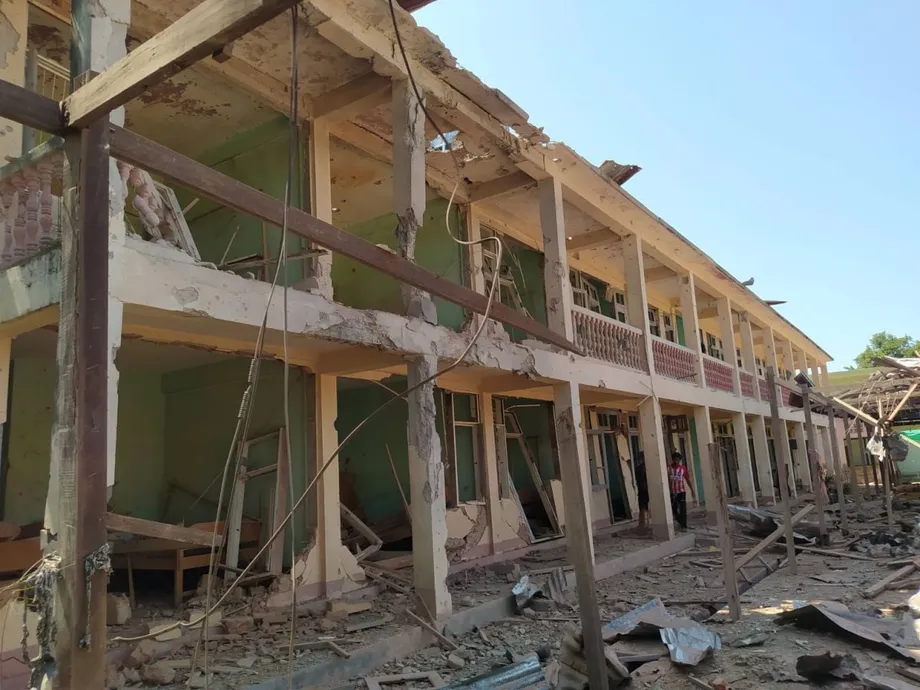
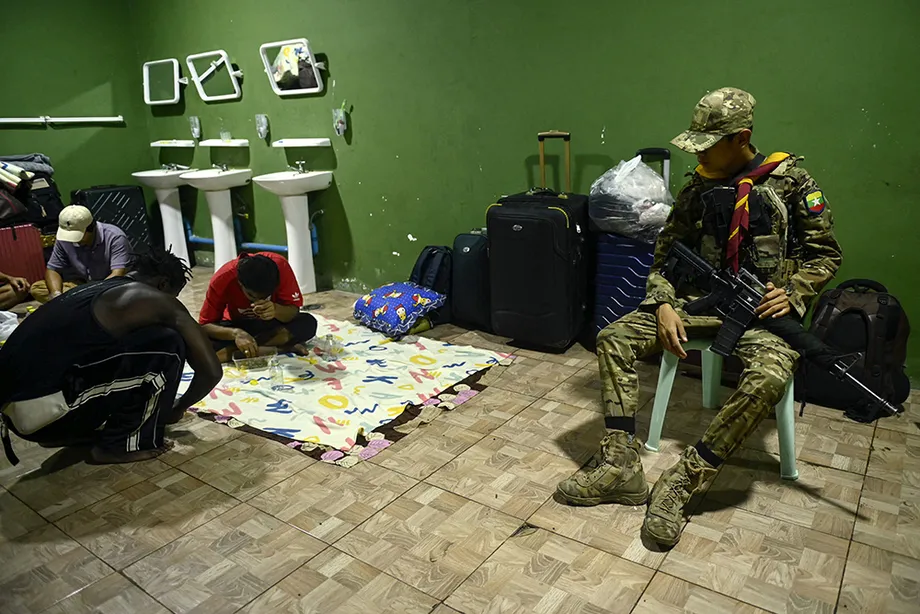
The courts described two criminal groups that used the Wei family's influence and armed forces to establish and protect compounds in Laukkaing, the main town in Kokang, on Myanmar's border with China. Their activities extended beyond online scams to illegal casinos, extortion, prostitution, drug trafficking and organizing illegal border crossings.
The judgments are part of a wider Chinese campaign against Kokang crime families whose businesses combined local political influence, armed protection and fraud operations targeting people abroad. Earlier prosecutions involved the Bai and Ming families, with some defendants subsequently reported to have been executed.
The latest verdicts are death sentences, not announcements of executions. They were issued at the first instance stage. No appeal outcome, final approval of the death penalties or execution date is given in the accounts of these rulings.
Who Was Sentenced and Who Faces Separate Proceedings
Wei Huairen was identified as a leader of one of the two groups. Chen Dawei and Liao Jingfang also received death sentences, although the detailed account of the court findings does not set out Liao's individual conduct.
Wei Qingtao, Kang Min and Xiong Hengxing received life imprisonment. The other 55 defendants included Su Hongxiang, Deng Zida and Chen Longjiang. Their different sentences reflect findings about individual conduct rather than a single punishment imposed on everyone associated with the network.
The first group was led by Wei Huairen and Wei Qingsong. Its important members included Chen Longjiang, described as a close subordinate, and armed force leaders Cha Guicheng and Yan Longdi. Wei Qingsong, Cha Guicheng and Yan Longdi are being dealt with in separate cases.
The second organization, known as the Henry criminal group, was led by Wei Rong, Wei Qinghai and Wei Qingtao. Su Hongxiang, a family member, and Deng Zida, a close subordinate, were among its important members. Proceedings involving Wei Rong and Wei Qinghai are also separate.
These distinctions matter because the 61 sentences do not complete every prosecution connected with the Wei family. The courts found that defendants including Wei Huairen and Wei Qingtao had organized, led or participated in criminal groups and committed crimes falling under seven offenses, including intentional homicide and fraud.
How Armed Protection Supported the Compounds
According to the court findings described in the verdict accounts, the two groups had operated since 2019. They used the Wei family's position in Kokang to establish multiple compounds in Laukkaing and attract criminal operators who were given armed protection.
The groups committed offenses independently or together with those operators. This arrangement connected the owners and protectors of the compounds with the people running fraud, gambling and other illegal businesses inside them. It was therefore more than a prosecution of individual scammers using phones or computers.
One account places the network's operations at 14 large compounds. The more detailed account of the rulings describes multiple compounds without giving that total. Recruitment reportedly included false promises of high salaries that drew Chinese citizens to Myanmar.
People working in such compounds can have very different circumstances. Some participate willingly in fraud, while others are trafficked, confined and forced to carry it out. The reports describe both patterns in the regional scam industry, but do not establish how many people in the Wei compounds belonged to either category.
The 12.2 billion yuan figure also needs careful reading. The detailed court account describes it as funds connected with gambling and fraud, rather than a separately audited measure of profit or losses suffered by victims. Reports convert the same yuan amount to approximately $1.7 billion or $1.8 billion. Those dollar estimates differ, but the underlying Chinese currency figure is consistent.
What the Courts Said About the Deaths
The most detailed description of the Wei findings attributes four Chinese citizens' deaths to the criminal groups. It says members colluded with telecom fraud gangs to kill people involved in fraud who refused to comply with their orders, causing two deaths.
It separately says Chen Dawei used armed forces under his control to kill people indiscriminately, causing the deaths of another two Chinese citizens. This account connects the convictions to violence used both to enforce orders and through armed action.
A shorter account says the gang killed at least two Chinese citizens. That is a narrower description than the four deaths recorded in the detailed account, rather than necessarily a contradictory total. The distinction should not be lost when describing why the courts imposed their most severe penalties.
Reports also describe investigators finding victims' remains bound with iron wire and skulls bearing bullet wounds. Those details support the accounts of violence inside the network, but do not establish a further death toll beyond the deaths attributed in the court findings.
The courts said they considered the facts, nature and circumstances of each defendant's crimes, along with the harm caused to society. The sentencing accounts do not explain every defendant's role or the precise reasoning behind each individual penalty.
Why China Can Prosecute Crimes Committed in Myanmar
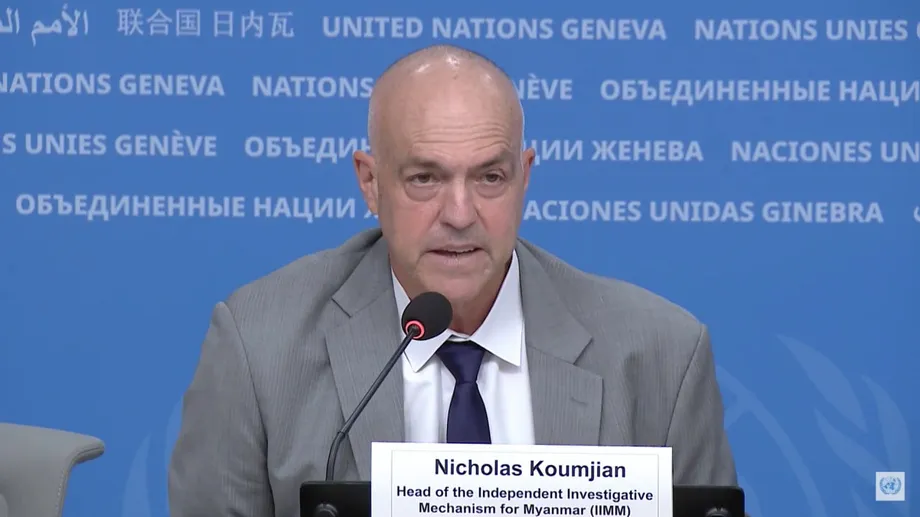
The location of the compounds outside China does not by itself prevent Chinese prosecution. Huo Zhengxin, a professor at the China University of Political Science and Law, said the case invokes Article 8 of China's Criminal Law, which provides for protective jurisdiction.
Protective jurisdiction means a country can, under specified conditions, apply its criminal law to conduct abroad that harms the state or its citizens. As described by Huo, Article 8 can apply to foreign nationals committing offenses outside China against China or Chinese citizens when the minimum punishment under Chinese law is at least three years' imprisonment. It includes an exception where the conduct is not punishable under the law of the place where it occurred.
Huo described the legal basis in these terms:
"Protective jurisdiction is also a widely recognized basis for jurisdiction under international law," Huo said.
That explanation addresses why a Chinese court may hear such a case. It does not mean every offense abroad automatically falls within Chinese jurisdiction, or that the presence of a Chinese victim alone answers every legal question.
Huo also explained that deportation applies to foreign nationals and stateless people, not Chinese citizens, and excludes foreign nationals entitled to diplomatic immunity. When imposed alongside imprisonment, it generally takes effect after the principal sentence has been served or after release on parole. It is therefore distinct from an immediate removal following conviction.
The Bai Judgment Shows the Scale of an Earlier Case
The strongest official comparison is the Shenzhen Intermediate People's Court's Bai family judgment, announced on November 4, 2025. The court sentenced Bai Suocheng, Bai Yingcang, Yang Liqiang, Hu Xiaojiang and Chen Guangyi to death. Li Fushou and Li Zhide received death sentences suspended for two years.
Five defendants received life imprisonment and nine received prison terms ranging from three to 20 years. One report gives the latter range as 20 to 30 years, but that conflicts with the official court statement, which specifies three to 20 years.
The court found that the Bai group established 41 compounds using family influence and armed forces. Its gambling, fraud and related funds exceeded 29 billion yuan. The judgment recorded six Chinese citizens killed, one Chinese citizen who died by suicide and multiple injuries. Bai Yingcang was also involved in trafficking and manufacturing approximately 11 tons of methamphetamine.
The official judgment covered 12 offenses, including fraud, intentional homicide, intentional injury, kidnapping, extortion, organizing and forcing prostitution, and organizing illegal border crossings. Its financial figure, like the detailed Wei account, covers funds connected with criminal activities rather than simply stating net profits.
The Bai family death sentences marked an earlier major step against Kokang networks. Comparing the published figures, the Bai case involved more than 29 billion yuan, while the Wei cases involved more than 12.2 billion yuan. The respective thresholds differ by 16.8 billion yuan. Because both figures are stated as exceeding those amounts, an exact ratio between the two networks cannot be calculated.
The Ming Case and the Political Connections
A separate prosecution at the Wenzhou People's Intermediate Court in Zhejiang Province targeted the Ming family network. The reported sentencing breakdown was 11 immediate death sentences, five suspended death sentences and prison terms ranging from 24 years to life for 23 other defendants.
The court findings linked that syndicate to at least 16 deaths and financial losses exceeding approximately $1.4 billion. Those sentenced to death included Ming Guoping and Ming Zhenzhen, the son and granddaughter of Ming Xuechang. Myanmar authorities said Ming Xuechang shot himself during his arrest in November 2023 and later died in hospital.
Yadanar Maung, spokesperson for the advocacy organization Justice For Myanmar, described the family's links to local military and political institutions:
"The Mings were key figures in both the Kokang cyber scam industry and local Myanmar military institutions, the Kokang Border Guard Force and the ruling Union Solidarity and Development Party," Yadanar Maung said.
Maung called for sanctions against the Myanmar military and the individuals and businesses behind the scam industry. Her position connects the prosecutions to the armed and political structures that supported the compounds, while the Chinese cases focus on proving offenses and assigning responsibility to named defendants.
The Bai, Wei, Ming and Liu families have been identified as four major Kokang power centers. Reports connect the prosecutions with the upheaval following Operation 1027, a military campaign launched by an alliance of ethnic armed groups that presented action against scam operations as one of its aims.
How the Prosecutions Developed
The cases span years of compound operations, arrests, transfers and trials. The dated events help distinguish the latest sentences from earlier rulings and subsequent reports of executions:
- 2019: The two Wei groups began the criminal activities described in the court findings.
- November 2023: Ming Xuechang died following his arrest, according to Myanmar authorities.
- January 30, 2024: Reports place the transfer of Bai Suocheng and other important suspects to Chinese custody on this date.
- July 11, 2025: Trials in the Bai case reportedly began.
- September 29, 2025: The Ming case produced 11 immediate and five suspended death sentences.
- November 4, 2025: Shenzhen Intermediate People's Court announced the Bai judgment.
- October 13, 2026: The Quanzhou and Nan'an courts announced the Wei verdicts.
Accounts of subsequent executions differ. One places the execution of 11 Ming defendants in January and four Bai defendants in February. Another says China executed 15 members of Myanmar criminal gangs in February. Those descriptions disagree about the monthly breakdown and should not be treated as a single verified chronology.
The distinction between an immediate death sentence and a suspended death sentence also matters. A sentence suspended for two years is a separate legal outcome, not a scheduled execution two years later. Likewise, a first instance death sentence must be distinguished from the completion of appeals and the required death penalty review.
What the Wider Crackdown Figures Establish
Figures attributed to China's Supreme People's Court indicate that, by the end of 2025, Chinese courts had concluded first instance trials in more than 27,000 cases connected with telecom fraud operations in northern Myanmar and sentenced more than 41,000 repatriated suspects.
A separate account says more than 7,600 Chinese nationals suspected of telecom fraud were repatriated from Myanmar during the preceding year. That number measures a group transferred over a particular period, whereas the 41,000 figure concerns people sentenced across a broader set of proceedings. The totals cannot be directly compared as if they describe the same population.
China's Criminal Investigation Bureau has also been cited as saying joint operations with Myanmar since 2023 dismantled four major criminal gangs in Kokang. Another reported indicator was an annual decline in Chinese telecom fraud cases for 11 consecutive months, from October 2025 through August 2026.
Those measures show the breadth of the enforcement campaign, but they do not establish that scam operations throughout Myanmar have ended. The Wei cases themselves leave named leaders facing separate proceedings. No next hearing dates for those cases, appeal timetable for the 61 defendants, or execution schedule is specified.
The Essentials
- Wei Huairen, Chen Dawei and Liao Jingfang received death sentences in verdicts announced on October 13, 2026.
- Three defendants received life imprisonment and 55 received prison terms of three years and three months to 24 years.
- The courts linked the Wei groups to more than 12.2 billion yuan in gambling and fraud funds and four Chinese citizens' deaths.
- The compounds operated in Laukkaing, Myanmar, with protection from armed forces controlled by the Wei family.
- The official Bai judgment recorded 41 compounds and more than 29 billion yuan in funds connected with criminal activities.
- The latest sentences are first instance judgments; no execution date or appeal outcome has been announced in the verdict accounts.