New arrivals expose the risks of returning home
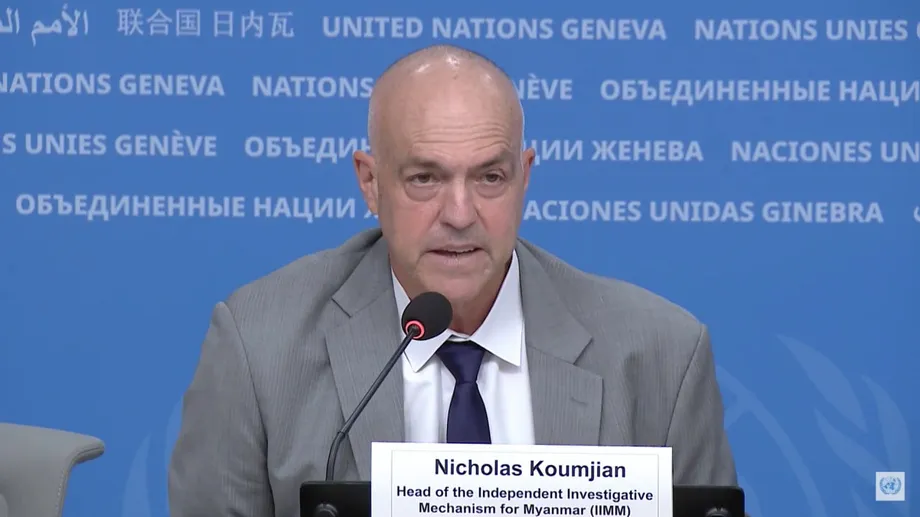
More than 154,000 Rohingya have reportedly crossed into Bangladesh since the beginning of 2024, even as efforts continue to arrange the return of refugees already living there. Nicholas Koumjian, head of the United Nations Independent Investigative Mechanism for Myanmar (IIMM), has warned that continuing violence against civilians in Rakhine State makes safe and sustainable repatriation impossible without an end to atrocities and progress toward accountability.
Contents
- New arrivals expose the risks of returning home
- Bangladesh meetings bring demands for justice
- Displacement figures show successive waves of flight
- Control of the border has not brought protection
- Forced labour allegations are disputed
- Hunger makes security impossible to separate from survival
- Investigators are examining crimes across communities
- Land seizures connect accountability to return
- Different courts address different responsibilities
- Key Points
The warning concerns more than the fighting between Myanmar's military and the Arakan Army. Investigators are examining village burnings, killings, torture and rape, while refugees describe restrictions on movement, forced labour and an inability to obtain food or medical care. The displaced Rohingya population in Bangladesh is estimated at about 1.2 million.
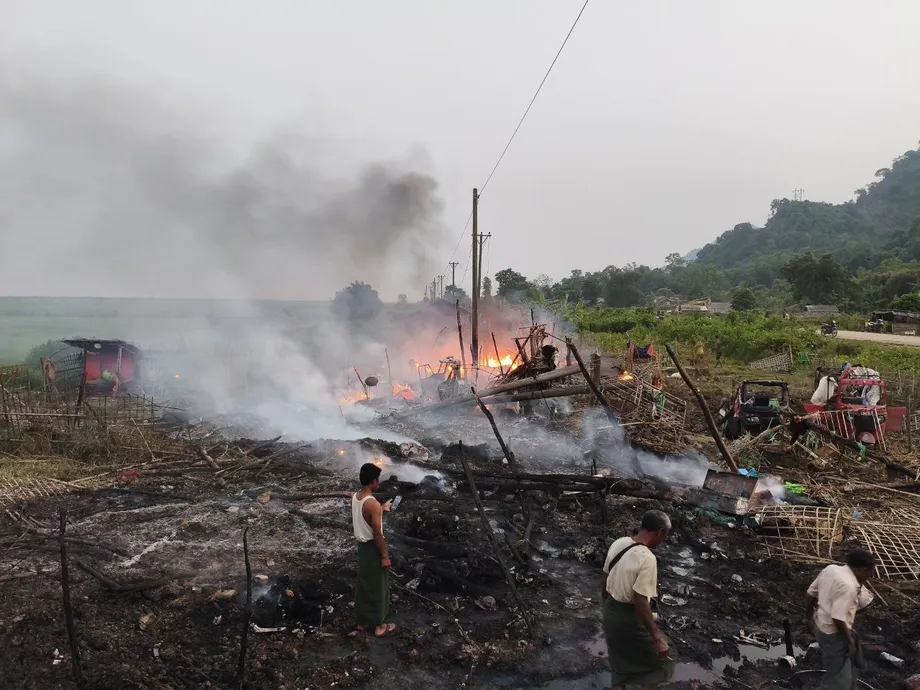
In its August 2025 statement, the IIMM said approximately 150,000 Rohingya had fled to Bangladesh during the preceding 18 months. It announced new investigations into crimes against Rohingya, ethnic Rakhine and other civilians, alongside work on the seizure of Rohingya land after the military's 2017 operations.
Koumjian, who leads the mechanism responsible for collecting and preparing evidence for judicial proceedings, described the conditions required for return:
The more than one million Rohingya forcibly displaced to Bangladesh will not be able to safely and sustainably return to Myanmar until the violence against them ends and perpetrators can be brought to justice.
His position connects three problems often treated separately: immediate civilian safety, the ability to resume ordinary life in Myanmar, and accountability for crimes that drove people from their homes. A change in territorial control alone does not resolve any of them.
Bangladesh meetings bring demands for justice
Reports of an October visit describe Koumjian meeting Bangladeshi officials, including Home Affairs Minister Salahuddin Ahmed, Disaster Management and Relief Minister Asadul Habib Dulu, and State Minister for Foreign Affairs Humayun Kabir. They also describe engagement with more than 200 Rohingya and other displaced community members in Cox's Bazar.
A separately dated account places Koumjian's meeting with Dulu at the minister's secretariat office on October 5, 2026. Dulu called for justice for crimes against humanity committed against Rohingya and urged the IIMM to help restore their rights and support sustainable repatriation. That account attributes the figure of more than 154,000 arrivals since early 2024 to Koumjian.
The October chronology is not fully established. One account says a visit lasting six days concluded on October 12 without specifying a year; another explicitly dates the Dulu meeting to October 5, 2026. Those details do not establish a consistent schedule and should not be conflated with the IIMM's separately documented January 2025 visit.
In its January visit statement, the IIMM confirmed that Koumjian concluded five days in Bangladesh on January 24, 2025, after meeting more than 100 Rohingya activists and community representatives. Officials he met included Khalilur Rahman, the chief adviser's representative on Rohingya issues; foreign affairs adviser Md. Touhid Hossain; home affairs adviser Lt. Gen. Md. Jahangir Alam Chowdhury; and Border Guard Bangladesh director general Major General Mohammad Ashrafuzzaman Siddiqui.
Displacement figures show successive waves of flight
The reported arrival totals differ by date and reporting period. In February 2025, Bangladesh government estimates put arrivals since late 2023 at more than 65,000, while other estimates reached 80,000. By August, the IIMM described approximately 150,000 arrivals over 18 months. Amnesty International's September account cited more than 150,000 over 20 months.
The later figure of more than 154,000 covers the period since the beginning of 2024. These totals point to continued displacement, but their different time windows and estimation methods prevent a precise calculation of the rate of increase. The estimated refugee population of 1.2 million also should not be treated as an exact registration count.
The sequence of major developments helps explain why repatriation discussions have continued while people are still fleeing:
- 2017: Military clearance operations drove approximately 750,000 Rohingya into Bangladesh, according to the IIMM.
- November 2023: The Arakan Army began an offensive that pushed Myanmar's military out of much of northern Rakhine.
- 2024: The Arakan Army captured Buthidaung and Maungdaw townships; reports described forced recruitment of Rohingya by both sides.
- November 2024: The International Criminal Court prosecutor requested an arrest warrant for military commander Min Aung Hlaing.
- January 24, 2025: Koumjian concluded a documented visit to Bangladesh focused on investigations and accountability.
- August 24–25, 2025: Bangladesh hosted a dialogue in Cox's Bazar on the Rohingya situation, ahead of a UN conference planned for the end of September.
Control of the border has not brought protection
The Arakan Army now controls northern Rakhine and Myanmar's entire border with Bangladesh, according to Amnesty International. Myanmar's military retains the state capital, Sittwe, an important route for aid and transport. Rohingya and ethnic Rakhine civilians remain exposed to fighting, restrictions and attacks across this divided territory.
Amnesty's September repatriation assessment drew on interviews with 15 Rohingya refugees who had reached Bangladesh within the preceding year, including people who arrived in July 2025. It also consulted representatives of the Arakan Army's political wing, the United League of Arakan, and its humanitarian coordination office.
Refugees alleged arbitrary detention, forced labour, restrictions on fishing and travel, and inadequate access to health care, education and aid. Amnesty also described military obstruction of aid through Sittwe and deadly air strikes. An attack earlier that September reportedly killed at least 19 ethnic Rakhine students while they slept.
Joe Freeman, Amnesty International's Myanmar researcher, said the conditions did not support safe return:
Existing conditions in Myanmar's northern Rakhine State are nowhere near ready for Rohingya to return safely.
The risk therefore extends beyond crossing the border. Returnees would need protection where they live, access to services and the ability to move and work without coercion. Refugee accounts suggest those conditions are absent in places from which people have recently fled.
Forced labour allegations are disputed
A 60 year old Rohingya man who fled with his family in July 2025 told Amnesty that people in a displacement camp in Buthidaung were required to carry construction materials to Arakan Army checkpoints. He said his children had performed the work more than 10 times and that people who refused were beaten.
Other interviewees described compulsory clearing of bodies and debris after fighting, household requirements to supply workers, and demands for night guards that included children. A woman who arrived in Bangladesh in January 2025 alleged that boys as young as 10 were required to serve as guards.
The Arakan Army denied practising forced labour against civilians. Its representatives said some work was assigned to convicted detainees or prisoners of war, while activities to clear debris were voluntary community work. The distinction matters: forced labour means work demanded under threat of punishment that a person has not voluntarily agreed to perform.
Movement restrictions were also contested. Amnesty obtained travel documents consistent with refugees' descriptions of permission requirements. Arakan Army representatives acknowledged fees of 2,000 to 3,000 kyats for travel authorizations, but denied that restrictions discriminated against Rohingya and said security measures applied to ethnic Rakhine communities too.
Rohingya interviewees described a different experience, including bans on fishing, short travel permissions and punishment for trying to earn a living. These remain allegations disputed by the Arakan Army, rather than judicial findings.
Hunger makes security impossible to separate from survival
The World Food Programme reported in August 2025 that 57 percent of families in central Rakhine could not meet basic food needs, compared with 33 percent in December 2024. That is an increase of 24 percentage points, or about 73 percent relative to the earlier share.
The figures describe central Rakhine, not the northern townships where many Rohingya would return. The agency warned that conditions in northern Rakhine, where international organizations were not active, were likely worse. That assessment does not provide a measured northern percentage, but it underlines the limits of humanitarian access.
Refugees interviewed by Amnesty described eating infrequently, drinking unsafe water and losing access to medicine and schooling. Restrictions on fishing and movement could make food scarcity harder to escape, even where some supplies remained available.
Khalilur Rahman, Bangladesh's representative on Rohingya issues under interim leader Muhammad Yunus, said in February 2025 that humanitarian and livelihood assistance required an end to violence and unrestricted access for aid providers and recipients. His position linked assistance inside Rakhine to the conditions needed for voluntary return, rather than treating repatriation as a substitute for protection.
Investigators are examining crimes across communities
The IIMM was created by the UN Human Rights Council in 2018 to collect, preserve and analyse evidence of the most serious international crimes and other violations committed in Myanmar since 2011. It began operating in August 2019. Its mandate includes preparing evidence and analysis for use by national, regional and international judicial authorities.
The mechanism is not a court and does not itself issue convictions. Its role is to organize evidence so prosecutors and judges can assess alleged crimes and individual responsibility. Accounts from recently displaced people can help document newer incidents alongside investigations of the military's 2017 operations.
During his January visit, Koumjian made clear that the mechanism's work was not confined to one armed force or community:
I would like to stress that the Mechanism investigates all perpetrators of serious international crimes in Myanmar, regardless of their ethnicity, religion or political affiliation. This includes crimes committed by non-state actors.
That mandate is relevant to allegations against the Arakan Army as well as Myanmar's military. Reports in February 2025 also described forced recruitment by both sides, including testimony from Roshid Ahmad, a 21 year old refugee from Maungdaw, who said abducted Rohingya youths had disappeared. Investigating such allegations does not prejudge the responsibility of any individual.
Land seizures connect accountability to return
The IIMM's August statement identified a separate investigation into the destruction and dispossession of Rohingya land and property in 2017. Investigators were focusing on land appropriated by authorities to build security bases.
This work addresses a practical barrier to repatriation: whether displaced people can return to their actual homes and communities. Even if fighting stops, destroyed villages or occupied land could prevent families from rebuilding their lives where they previously lived.
Koumjian explained why the property investigation matters to the experience of displacement:
The loss of their land and property has destroyed the social and cultural fabric of the Rohingya communities, and it is an enduring aspect of the loss they have suffered.
The mechanism said its findings could be relevant to reparations in future judicial proceedings. Reparations are measures intended to address harm, potentially including compensation or restoration of property, depending on what a court has authority to order. No specific remedy or timetable was announced.
Legal recognition is another unresolved condition. Rohingya activist Htway Lwin argued that repatriation must protect people from renewed statelessness and dispossession, not merely transfer them across the border. Amnesty also cited a September 2 UN human rights report saying restrictions imposed by previous governments remained in place and that the Arakan Army denied Rohingya identity by referring to them as Bengalis or Muslims.
Different courts address different responsibilities
The IIMM said it was sharing evidence with the International Criminal Court (ICC), the International Court of Justice (ICJ) and judicial authorities in Argentina, while responding to information requests from the United Kingdom. These processes are related, but they serve different purposes.
The ICC considers individual criminal responsibility. Its prosecutor requested an arrest warrant in November 2024 for Min Aung Hlaing, commander of Myanmar's military, over alleged crimes against humanity of deportation and persecution of Rohingya. The IIMM said its evidence and analysis were heavily used in that request. A prosecutor's request is not itself an issued warrant or a conviction.
In Argentina, the mechanism said its evidence was used when a federal investigative judge ordered arrest warrants in February 2025 for Min Aung Hlaing and 24 others. Those proceedings are separate from the ICC process.
The ICJ addresses state responsibility under the 1948 Genocide Convention, rather than convicting individuals. Proceedings concern allegations against Myanmar arising from operations against Rohingya, including those in 2016 and 2017. Although reports describe a ruling as expected in coming months, no fixed judgment date is established here.
No verified repatriation start date has been announced in these accounts. The unresolved issues are concrete: continuing attacks, humanitarian access, freedom of movement, recognition of rights, access to land and accountability. Judicial progress may help address past crimes, but it does not by itself make present conditions safe.
Key Points
- About 1.2 million Rohingya refugees are estimated to be living in Bangladesh, with continued arrivals from Rakhine.
- The IIMM says safe and sustainable return requires an end to violence and accountability for perpetrators.
- Refugees allege forced labour, movement restrictions and livelihood bans under Arakan Army control; the group disputes those allegations.
- Food insecurity in central Rakhine rose from 33 percent of families in December 2024 to 57 percent in August 2025.
- Investigators are examining recent atrocities and the seizure of Rohingya land after the 2017 operations.
- ICC, ICJ and Argentine proceedings address different forms of responsibility; no confirmed return timetable or ICJ judgment date is established.