
Four bombs strike a village sheltering displaced families
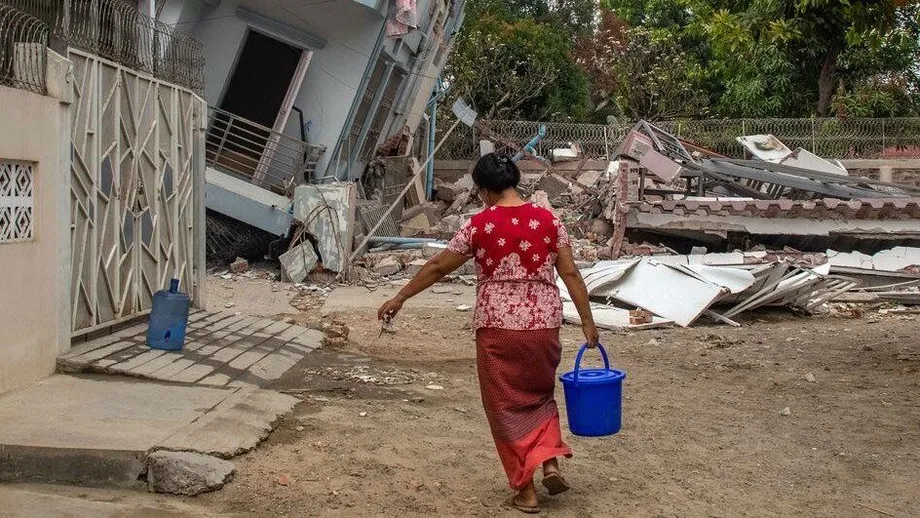
A Myanmar military airstrike on Sin Ai village in Pauktaw Township reportedly killed seven civilians and injured 17 on the evening of October 10, 2026. The dead included a 95-year-old woman, a Muslim mother and her six-year-old son, and a 20-year-old student. Three of those killed were identified as Muslim people displaced from their homes.
Contents
- Four bombs strike a village sheltering displaced families
- Who was killed and injured?
- Why the casualty figures differ
- Displacement did not provide safety
- The fighting around Sittwe and Ngapi Island
- A sequence of attacks across Rakhine
- What the wider casualty counts show
- Markets and medical care have also been hit
- What remains unconfirmed
- Key Points
Accounts describe one jet fighter dropping four bombs shortly after 6 p.m. The most detailed account places the attack at approximately 6:20 p.m. and describes the weapons as 200-pound bombs. Other accounts give times ranging from about 6 p.m. to 6:30 p.m., without confirming the weight of the bombs.
Residents and a humanitarian worker said there was no active ground fighting in the village. Sin Ai, also written as Sin Ein or Sin Aing, is described as a coastal settlement on Alay Phru Khaung Island, across the water from Sittwe, the capital of Rakhine State. One account places it more than eight miles from the fighting on nearby Ngapi Island.
The attack occurred during a military offensive around Sittwe and Pauktaw, where the Arakan Army (AA) controls much of the surrounding territory. Fighting nearby provides the military context, but it does not establish that Sin Ai itself contained a military target. The allegation that civilians were deliberately targeted has not been independently established, and no military explanation for this particular strike is included in the accounts.
Who was killed and injured?
The fullest reported casualty list names Daw Win Ma, 95; Daw U Mya Than, 65; Daw Yee Yee Than, 50; Daw Ma Khin Than, 65; Ma Ni Ni, 28; her son Sar Hat, six; and Maung Marmoud Sorit, 20, described as a Grade 8 student.
That list comprises five women and two male victims, including the child, matching another account of the composition of the seven deaths. Ma Ni Ni, Sar Hat and the student were identified as the three Muslim displaced people killed.
Names differ across reports. Another account identifies the 20-year-old victim as Mamauk Chaw Yeik, while several older victims appear under slightly different English spellings. Those differences cannot be resolved without a verified casualty register. The names should therefore be treated as reported identifications rather than a fully reconciled list.
Among the injured was Ma Khin Khin Win, also known as Waing Sein Ma, 24, originally from Sittwe. Another account spells her name Ma Khine Khine Win and her alternative name Wine Sein Ma, and says she fled Tayar Thei Su Ward in Sittwe to seek refuge in Sin Ai.
Some injured people were reported to be in critical condition. Homes were also damaged, although no confirmed count of destroyed buildings or detailed assessment of the injuries has been published in these accounts.
Why the casualty figures differ
Reports give death tolls of five, six and seven, and injury figures ranging from about 10 to 17. The clearest explanation for at least part of that variation is a report that the death toll increased by two between the evening of October 10 and the morning of October 11.
Writer and humanitarian aid worker Wai Hun Aung was cited as confirming five deaths in one account. Another account attributed to a writer identified as Wei Htut Aung described an initial toll of five dead and at least 10 injured, followed by news of two additional deaths the next morning. The varying English renderings of the name should not be assumed to establish separate witnesses.
Other reports continued to give six deaths, including one published on October 11. Later reporting gave seven deaths and 17 injuries. These differences may reflect the timing of updates and access to casualty information, but that explanation does not resolve every discrepancy. It is also unclear whether the additional deaths followed injuries or the discovery of more victims.
The bomb count is more consistent: most accounts describe four weapons dropped by a single aircraft. One resident, however, described two bombs falling inside the village and approximately two or three outside it. That recollection does not precisely match the repeated total of four.
Displacement did not provide safety
The deaths of three Muslim displaced people give the attack a second dimension. They were reportedly living away from their original homes when the village where they had sought protection was bombed.
One account places their previous accommodation in the Anauk Yae and Kyaukphyu Muslim displacement camps. It does not identify which victim came from which camp or establish when they moved to Sin Ai. The injured woman from Sittwe offers another specific example of a person exposed to violence after seeking refuge elsewhere.
Related incidents were reported two days before the bombing. On October 8, artillery allegedly fired from military positions in Sittwe struck a Rohingya village near Sin Ai, injuring residents. The number injured was not specified.
That same day, a fishing boat near the confluence of the Kyweku and Kaladan rivers reportedly came under fire, injuring a resident of Thawinchoung village. Together, the accounts describe danger extending beyond the immediate battlefield to settlements, waterways and the activities people depend on for food and income.
The fighting around Sittwe and Ngapi Island
The AA seized Pauktaw in 2024. It subsequently controlled 14 of Rakhine State's 17 townships, as well as Paletwa Township in neighboring Chin State. Sittwe, Kyaukphyu and Manaung remained under military control. In 2025, the AA also expanded operations into Ayeyarwady, Bago and Magway regions.
The latest military counteroffensive, described as Operation 4926, began on September 4. Residents reported fighting along the route between Sittwe and Pauktaw, while accounts described military attempts to land troops on Ngapi Island and resistance by the AA.
On October 7, AA artillery reportedly hit two of nine Myanmar Navy vessels off Pauktaw. An unnamed person within the AA said the vessels withdrew to Shwemingan Naval Base in Sittwe. The extent of the damage was not established.
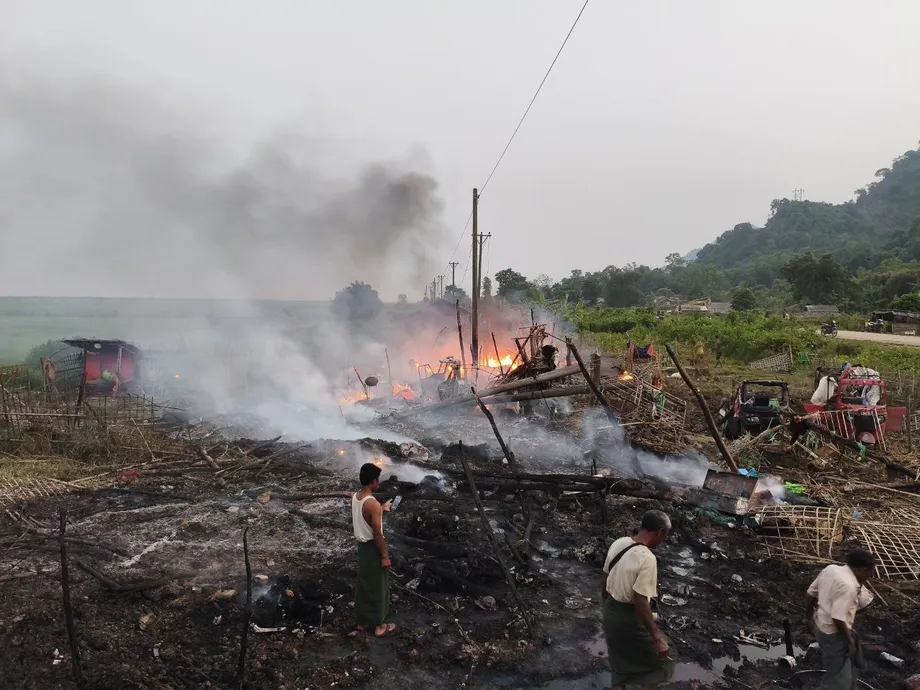
At least 420 homes across three Ngapi Island villages reportedly burned after military artillery fire between October 7 and 10. No casualties were reported in those incidents, and residents had fled the island in early 2024. The destruction nevertheless affected homes that displaced families might otherwise hope to return to.
Claims circulated that the military had captured Ngapi Island, but the change in control was not independently confirmed. Earlier reporting said the AA had not lost territory during the counteroffensive. Without a verified update, neither account should be treated as a settled description of control on the island after the latest fighting.
A sequence of attacks across Rakhine
The Sin Ai bombing followed reported attacks in several other Rakhine townships. The sequence shows how the civilian toll developed during the weeks after the September 4 offensive began, although casualty figures remain unevenly verified.
- September 4: The military began the counteroffensive described as Operation 4926.
- September 28: A bombing of Kyauktaw's India Market and nearby Kissapanadi Bridge killed at least 50 people.
- October 1: Airstrikes were reported in Kyauktaw and Thandwe, with one person reported injured.
- October 2: An airstrike on Aung Phyu Pyin village in Ponnagyun Township reportedly injured three people.
- October 3: Attacks in Rathedaung reportedly killed two people and injured 13.
- October 4 and 5: Airstrikes in Ponnagyun reportedly killed eight people and injured 11.
- October 7 to 10: Artillery fire reportedly burned at least 420 homes on Ngapi Island.
- October 10: A jet reportedly dropped four bombs on Sin Ai shortly after 6 p.m.
- October 11: One account raised the Sin Ai death toll from five to seven.
The Kyauktaw market bombing had already illustrated the scale of civilian losses during this offensive. Its reported death toll reached 50 after additional bodies were recovered the following day. Injury estimates ranged from at least 58 to more than 60, another example of casualty counts changing or differing as information emerged.
Separate reporting put September's toll from air and artillery attacks in Rakhine at at least 65 deaths and nearly 80 injuries. These monthly totals should not be added to figures covering the offensive because their periods overlap.
What the wider casualty counts show
The Institute for Strategy and Policy Myanmar reported at least 70 civilian deaths amid 71 airstrikes and 32 clashes since September 4. A separate reported tally covering September 4 through October 10, 2026, counted 83 civilians killed and at least 142 injured. The different totals cannot be reconciled without matching their reporting dates, geographic coverage and counting methods.
Longer term figures attributed to the United League of Arakan (ULA), the political organization associated with the AA, put airstrike deaths in Rakhine at 565 and injuries at 1,261 between November 13, 2021, and February 28, 2026. For the same period, it counted 268 deaths and 729 injuries from shelling, and approximately 600,000 people displaced by aerial and artillery attacks. Those figures were not independently verified.
Reporting citing a United Nations report says airstrikes killed at least 982 people across Myanmar in 2025, including 232 children. Children therefore accounted for approximately 24 percent of that reported death toll, calculated from 232 out of 982. The report was also described as recording a 52 percent increase from 2024.
ISP Myanmar's Conflict and Security Tracker recorded at least 222 aerial attacks in Rakhine between March 31 and August 31, 2026, out of 1,583 across Myanmar. That represents approximately 14 percent of the national total for that period. Magway recorded 322 attacks. These figures measure attacks rather than casualties and cannot be used to calculate the risk from an individual strike.
Markets and medical care have also been hit
Other documented incidents show displaced residents facing danger in places used for daily necessities. On February 24, 2026, two 500-pound bombs reportedly struck a market in Yoe Ngu village in Ponnagyun Township, killing 17 people at the scene and injuring 15. A wounded poultry farmer died two days later.
The village reportedly housed about 850 displaced people alongside a population of approximately 2,500. After the bombing, residents moved into nearby fields and temporary shelters. Among them were people who had already fled Sittwe, making their experience similar to that of displaced families seeking safety in Sin Ai.
Medical care has also been struck. The December 10, 2025, attack on Mrauk U Division Hospital reportedly killed 33 people and injured 80, including seven staff members. The hospital had 250 beds and approximately 140 patients present when it was attacked. Separate reporting counted at least 110 military attacks on health facilities across Myanmar in 2025, with 34 health workers killed and 33 arrested.
Major Myint Zaw Than, a military defector interviewed in Rakhine on February 25, described changes in military capabilities since the 2021 coup:
"It uses suicide drones extensively now, which was absent five years ago. Surveillance has also improved," he said.
His account helps explain the expanding means of attack, but it does not identify the aircraft, crew or command decisions involved in Sin Ai. The immediate needs there remain medical treatment, secure shelter and reliable information about missing or injured relatives.
What remains unconfirmed
The most detailed accounts agree on seven deaths and 17 injuries, but a reconciled casualty register is still needed to settle names, alternative spellings and the condition of survivors. The exact strike time and bomb specifications also lack independent confirmation.
No verified military target in Sin Ai has been identified in the reporting. Residents and humanitarian workers allege a deliberate attack on civilians. Establishing responsibility for that allegation would require evidence about the target selection, orders, weapons and circumstances of the strike, beyond the fact that fighting was occurring elsewhere in the township.
There is no announced investigation timetable, public hearing or deadline for a military response in the reporting. Control of Ngapi Island also remains disputed. The immediate developments to establish are whether critically injured patients survive, whether families must move again, and whether further attacks affect their access to treatment and shelter.
Key Points
- Seven civilians were reportedly killed and 17 injured when a jet bombed Sin Ai on October 10, 2026.
- The reported dead included three Muslim displaced people, among them a mother and her six-year-old son.
- Earlier accounts gave five or six deaths and about 10 injuries; one report recorded an increase to seven deaths by October 11.
- Residents said there was no active ground combat in the village, which was reportedly more than eight miles from fighting on Ngapi Island.
- At least 420 homes on Ngapi Island reportedly burned during artillery attacks from October 7 to 10.
- The allegation of deliberate civilian targeting, exact bomb specifications and claims of changed control on Ngapi Island remain unconfirmed.