
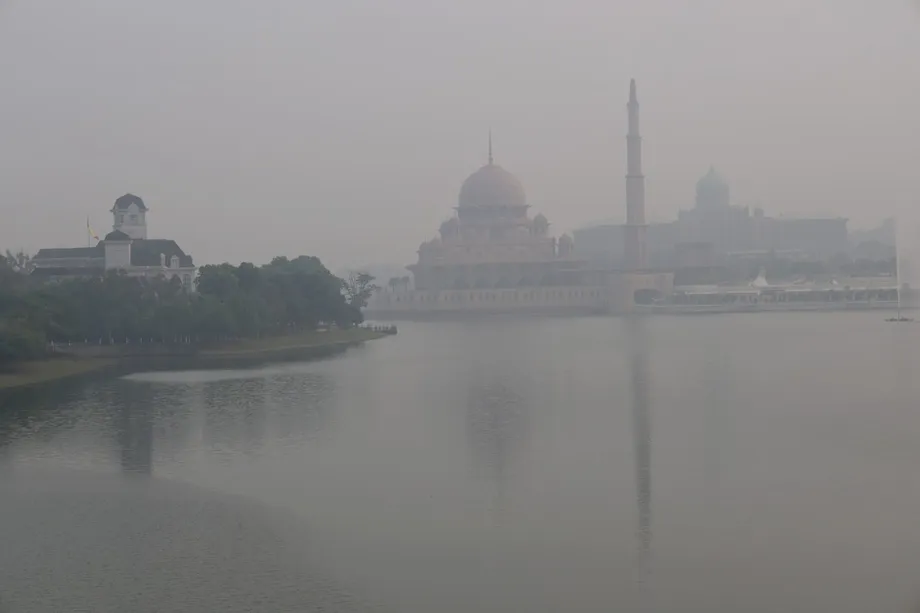
Health figures sharpen demands for action
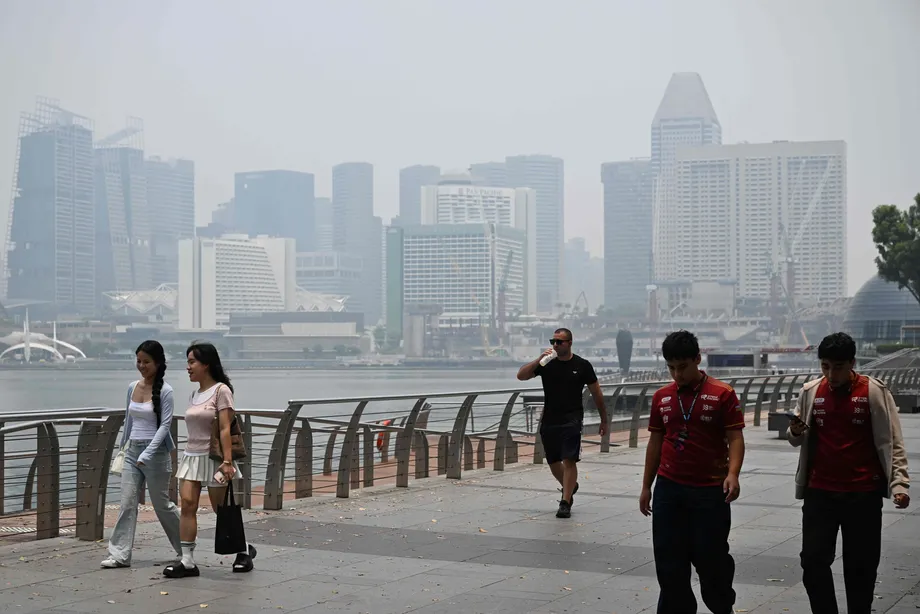
Malaysia faces renewed pressure to pass a transboundary haze law after Health Ministry surveillance figures cited by lawyer Vivekananda Sukumaran showed asthma cases rising 259% and upper respiratory tract infections increasing 124% in a single week in August. The demand follows a haze emergency in Serian, where the Air Pollutant Index reached 519 on 4 September, and school closures in Johor affecting more than 617,000 pupils.
Contents
- Health figures sharpen demands for action
- What the health increases establish
- Schools close as the thresholds change
- How the crisis developed
- Domestic penalties and the enforcement gap
- What Singapore's law offers Malaysia
- From smoke attribution to a provable case
- Regional obligations and compensation
- What is proposed and what remains undecided
- Key Points
Vivekananda, chairman of the Bar Council Criminal Law Committee and an advocate and solicitor of the High Court of Malaya, wants the government to treat prolonged haze as a public health emergency. In his appeal dated 11 October, he called for immediate protection of vulnerable people, stronger enforcement against domestic open burning and legislation reaching companies responsible for pollution arriving from abroad.
He described the crisis in terms that challenge a response centred on weather conditions:
This is not a weather story. It is a public health crisis.
Malaysia has considered a transboundary haze law since 2018. The Natural Resources and Environmental Sustainability Ministry was still examining Singapore's legislative approach in September 2026, with no parliamentary deadline identified in the reported government response.
The demand now extends beyond passing a bill. A separate legal commentary by Shahrul Mizan Ismail calls for a permanent investigative team, evidence gathering across borders and compensation for proven losses. Together, the proposals distinguish two tasks: protecting people during the current haze and building cases capable of holding responsible operators to account.
What the health increases establish
The surveillance increases cited by Vivekananda are substantial. A 259% rise means recorded asthma cases reached 3.59 times the previous week's level, while a 124% rise means upper respiratory tract infections reached 2.24 times that level. These comparisons show the scale of the reported change without supplying a patient count.
The figures do not include the underlying numbers, the geographical coverage of surveillance or a breakdown establishing how many cases were attributable specifically to haze. They support concern about a sharp increase in illness, but do not by themselves measure the national medical burden caused by the fires.
Vivekananda identified children, older people and those with heart or lung conditions as groups needing particular protection. His proposals include free N95 masks for vulnerable groups, classroom air purifiers in badly affected districts and federal guidance on outdoor work and flexible working hours.
He also wants one minister made answerable for the national response, supported by regular public briefings. That is a proposal for clearer responsibility, rather than an announced government arrangement. His central argument is that diplomatic engagement and cloud seeding cannot replace measures directed at reducing people's exposure.
Schools close as the thresholds change
School policy became a focal point after Johor Regent Tunku Mahkota Ismail ordered every school in the state to close on 7 October. The measure covered 1,198 schools and more than 617,000 pupils. On 8 October, Malaysia's King, Sultan Ibrahim, called for closures where unhealthy readings persisted and urged the Education Ministry to give the situation serious attention.
The ministry subsequently lowered its closure threshold from an API reading of 200 to 180, with a further trigger at 150 when readings persisted for three consecutive days. Reports differ slightly on the exact wording: one describes readings above 180 and above 150, while another describes thresholds of 180 and 150. That distinction matters for a school recording exactly either figure.
Vivekananda wants the lower thresholds made permanent. He also proposes using Malaysia's MyCMAQ air quality forecasting model, described in his commentary as launched in March 2026, to close schools before dangerous pollution arrives rather than waiting for measured exposure.
The closures followed regional haze and closures that also affected Singapore. Initial action in Johor's Batu Pahat district came after an API reading of 203, before the response expanded statewide. The sequence illustrates the difference between reacting to an individual local reading and preparing for a wider pollution episode.
How the crisis developed
The reported chronology stretches across more than two months. It includes a severe pollution episode in Sarawak, increasing health cases and later disruption in Peninsular Malaysia. The principal dates are:
- 3 August to 29 September 2026: authorities received 1,447 complaints about open burning.
- August: Health Ministry surveillance figures cited by Vivekananda recorded the sharp weekly increases in asthma and upper respiratory infections.
- 4 September: Serian's API reached 519, with an emergency declared across the division.
- 25 September: the ministry was reported to be examining mechanisms for a specific transboundary haze law.
- 30 September: a Department of Environment statement attributed the haze to smoke from hotspots in Kalimantan and central and southern Sumatra. NADMA reproduced the statement on 1 October.
- 7 October: Johor's statewide school closure order covered 1,198 schools.
- 8 October: 38 areas recorded unhealthy readings, the prime minister's call to Indonesia's president was announced, and the school closure thresholds were lowered.
Prime Minister Anwar Ibrahim's call to Indonesian President Prabowo Subianto and more frequent cloud seeding were welcomed by Vivekananda. He nevertheless argued that neither addressed the full need for health protection, domestic prosecution and corporate accountability.
He also criticised the government's coordination, saying the haze had not been on the formal agenda of the ASEAN Health Ministers' Meeting in Kuala Lumpur in September. His account said the government spokesman confirmed on 30 September that the Cabinet had not discussed the haze or contingency measures should it worsen.
Domestic penalties and the enforcement gap
Malaysia already has a law against domestic open burning. Section 29A of the Environmental Quality Act 1974 prohibits it within the statute's framework and exclusions. Following amendments in 2024, the reported penalties are fines of RM25,000 to RM1 million, imprisonment of up to five years, or both.
The enforcement figures cited in Vivekananda's appeal show a much smaller number of formal actions than complaints. The 1,447 complaints received between 3 August and 29 September resulted in 41 directive notices, 27 compounds and three court cases.
Three court cases amount to roughly 0.21% of the complaint count. That is a comparison of reported totals, not a conviction rate or proof that all other complaints involved offences left unpunished. The figures do not explain how many complaints overlapped, remained under investigation or concerned conduct outside the prohibition.
A compound generally allows an alleged offence to be settled through payment without a court conviction. A directive notice serves a different purpose, requiring action rather than establishing criminal guilt. Vivekananda wants greater use of prosecution and publication of case outcomes so the public can see whether enforcement produces consequences.
The domestic record matters to the proposed transboundary law. A new power to pursue overseas conduct would not remove the need to investigate fires within Malaysia or distinguish imported smoke from local pollution.
What Singapore's law offers Malaysia
Singapore's Transboundary Haze Pollution Act 2014 supplies a concrete legislative model. Section 4 extends the law to conduct outside Singapore that causes or contributes to haze pollution within Singapore. Sections 5 and 6 provide criminal and civil liability.
The legal commentary describes a basic criminal fine under section 5(2)(a) of up to S$100,000 for each day or part of a day of qualifying haze pollution, subject to the applicable S$2 million aggregate ceiling under section 5(5). Sections 9 and 10 provide powers for preventive notices and gathering information.
The distinction between criminal and civil liability is central. Criminal proceedings seek punishment for a proven offence. Civil proceedings can provide a route to compensation when a claimant establishes responsibility for a legally recognised loss. Neither route makes a company guilty merely because it operates near a fire.
Vivekananda wants a Malaysian bill to reach companies operating abroad, including parent companies and directors responsible for harmful operations. Shahrul argues that liability should depend on evidence of direction, knowing approval, consent or culpable neglect, rather than share ownership or a corporate title alone.
Singapore's experience also shows the limits of legislation without access to evidence. A parliamentary reply dated 13 September 2021 said notices had been issued to six Indonesian companies over the 2015 haze. Two cases had been closed after information was supplied, while four investigations remained open at that time. Those figures are historical, not a statement of their current status.
From smoke attribution to a provable case
The Department of Environment's attribution of the haze to hotspots in Kalimantan and Sumatra supports investigation of a transboundary source. It does not establish which company, director or landholder was legally responsible.
Shahrul proposes a permanent team combining environmental scientists, corporate investigators and government lawyers. Its work would connect verified fire locations to land control, operational decisions, smoke movement and harm suffered in Malaysia.
Satellite hotspots are a starting point, not a complete case. The Department of Environment's explanation, cited in the commentary, warns that detection can produce false indications and that cloud cover can obstruct observations. Investigators would need corroboration, records of who controlled the land and evidence addressing other possible pollution sources.
The proposed team would also identify defendants against whom proceedings could realistically be brought and assets against which a judgment could lawfully be enforced. Cooperation with Indonesian authorities would be necessary for evidence gathering there, through arrangements respecting Indonesian sovereignty.
Any new criminal law would face a constitutional boundary. Article 7(1) of Malaysia's Federal Constitution prohibits punishment for conduct that was not punishable when it occurred and prohibits a heavier punishment than the law then allowed. New haze offences could not simply be applied retrospectively to earlier conduct.
Regional obligations and compensation
The ASEAN Agreement on Transboundary Haze Pollution already provides a framework for seeking cooperation. As described in Shahrul's commentary, Article 3(1) recognises responsibility for preventing activities under a state's jurisdiction or control from harming neighbouring environments and human health. Article 4 addresses cooperation and domestic implementation.
Article 4(2) requires a state from which haze originates to respond promptly to affected states' requests for relevant information or consultations. Article 9 concerns fire prevention and control. Shahrul proposes formal requests for concession maps, operator identities, fire control records and enforcement outcomes, each with a proposed response date.
He also cites the International Court of Justice's 2010 ruling in Pulp Mills on the River Uruguay on due diligence in preventing significant transboundary environmental damage. Due diligence concerns whether a state took the preventive measures reasonably required of it. It does not mean automatic state liability whenever smoke crosses a border.
Compensation would require a similarly disciplined approach. Shahrul proposes recovery of proven medical expenses, lost earnings and defined losses, alongside a lawful route for reasonable public spending on treatment and emergency response. These are proposed remedies, not compensation rights already established by a new Malaysian haze statute.
Recording losses now could help future claims, but claimants would still need to connect the damage to the pollution and the responsible defendant. Competing causes and double recovery would have to be addressed. The reported health percentages alone cannot provide a defensible compensation total.
What is proposed and what remains undecided
Vivekananda wants Malaysia to use the Conference of the Parties to the ASEAN haze agreement, scheduled for Vietnam in December, and its hosting of the regional ministerial steering committee in 2027 to seek enforceable commitments, a fully operational haze coordinating centre and traceable supply chains.
Shahrul's proposed programme includes government deadlines of 14, 30 and 90 days. These are suggested targets, not adopted deadlines. No confirmed date for tabling a Malaysian transboundary haze bill, agreed provisions on corporate liability or announced compensation mechanism is identified.
Vivekananda also cited the Court of Appeal decision in Tan Tek Seng v Suruhanjaya Perkhidmatan Pendidikan & Anor, reported in 1996, in support of his argument that the constitutional right to life includes quality of life. He connected that legal principle to the disruption already experienced by families:
There is little quality in air that sends children to clinics and keeps them out of school.
His appeal says the minister warned that dry conditions could last until the middle of 2027. That is a warning about conditions sustaining the risk, not a prediction that every affected area will experience continuous haze until then. The immediate decisions concern health protection and enforcement; the longer task is a law supported by evidence gathering and workable remedies.
Key Points
- Vivekananda Sukumaran wants Malaysia to treat prolonged haze as a public health emergency and table a transboundary haze bill without delay.
- Health Ministry figures he cited showed weekly increases of 259% in asthma cases and 124% in upper respiratory infections.
- Johor's school closure order affected more than 617,000 pupils in 1,198 schools. National closure thresholds were subsequently lowered.
- Authorities received 1,447 open burning complaints between 3 August and 29 September, with three court cases reported.
- Singapore's law provides a model for overseas corporate liability, but its enforcement history illustrates difficulties obtaining evidence across borders.
- A permanent investigative team and compensation for proven losses have been proposed. No confirmed parliamentary deadline for Malaysia's bill is identified.
- Regional engagements in December and 2027 offer opportunities to seek cooperation while dry conditions are expected to sustain haze risks.