
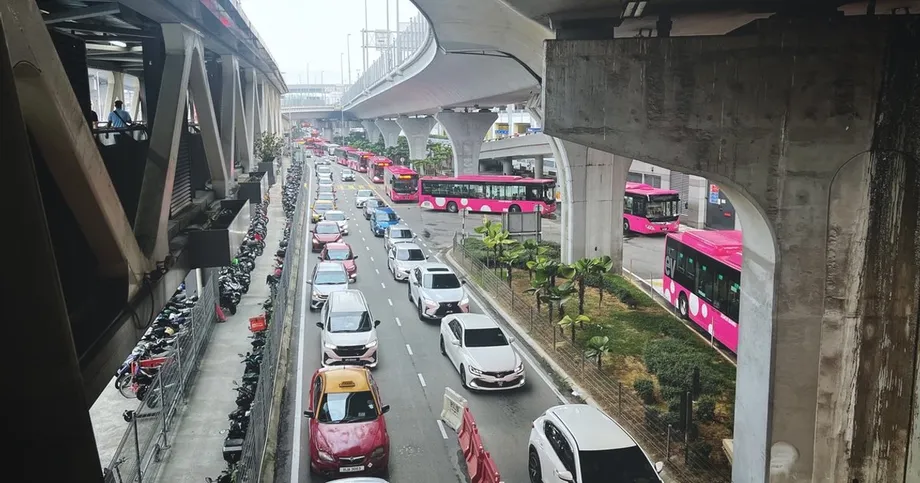
More tourism funding, with transport delivery under scrutiny
Malaysia plans to allocate RM935 million to tourism and culture in 2027, raise the shopping allowance for qualifying visitors to Langkawi and Labuan to RM10,000, and expand transport connections in Johor ahead of the expected February 2027 opening of the Rapid Transit System (RTS) Link with Singapore. The tourism allocation is RM230 million, or 32.6 percent, above the RM705 million budgeted for 2026.
Contents
- More tourism funding, with transport delivery under scrutiny
- A larger visitor target needs stronger spending
- Kuala Lumpur connects heritage sites on foot
- Langkawi and Labuan get a tenfold shopping allowance
- Johor must connect RTS passengers before e-ART arrives
- Bus numbers and the RTS timetable still need confirmation
- Border funding rises more than thirteenfold
- Investors await the special economic zone blueprint
- Headquarters incentives extend beyond a headline tax rate
- A wider budget connects tourism, industry and trade
- Hotels want better returns, not just more arrivals
- Key Points
The package combines the extension of the Visit Malaysia campaign through 2027 with heritage restoration, 22 kilometres of covered walkways in Kuala Lumpur and tax incentives for regional business operations. In Johor, the immediate challenge is getting passengers beyond Bukit Chagar, where the RTS Link from Woodlands North in Singapore is designed to carry up to 10,000 passengers an hour.
Prime Minister and Finance Minister Anwar Ibrahim identifies elevated Autonomous Rapid Transit (e-ART) as the main answer to Johor Bahru congestion in the Finance Ministry's 2027 budget speech. However, that project has a construction timetable measured in years. More buses, additional KTM Komuter services and Grab Shuttle connections will therefore carry much of the initial responsibility for dispersing arriving passengers.
Investment policy runs alongside the tourism push. The Johor-Singapore Special Economic Zone (JS-SEZ) recorded RM132 billion in investments between 2025 and June 2026, while an expanded Global Services Hub incentive will offer qualifying income a 5 percent tax rate for periods extending to a maximum of 30 years.
Reports differ on the budget presentation date. Several place it on October 9, 2026, while one tourism industry account gives October 7. The measures themselves are set out in the Finance Ministry's speech, with several incentives explicitly beginning on January 1, 2027.
A larger visitor target needs stronger spending
Malaysia recorded 42.2 million visitors in 2025, described in tourism reports as a record and the highest total among Southeast Asian countries that year. Around 28.8 million arrivals followed in the first eight months of 2026, led by Singapore, China and Indonesia. The target of 47 million visitors, initially set for 2026, has been extended to 2027.
Reaching 47 million would mean attracting 4.8 million more visitors than in 2025, an increase of about 11.4 percent. The Visit Malaysia campaign began promotions in 2025, so its extension gives the programme another year to pursue that target rather than creating an entirely new campaign.
The economic stakes extend beyond arrival counts. Tourism contributed 15.9 percent of Malaysia's gross domestic product in 2025 and supported about 3.7 million jobs, equivalent to 22.1 percent of employment. Travel receipts rose from RM95.4 billion in 2024 to RM110.6 billion in 2025, an increase of RM15.2 billion, or about 15.9 percent.
Travel accounted for 39.8 percent of services exports. Malaysia recorded a RM5.3 billion services trade surplus in 2025, its first since 2011, compared with a RM12.6 billion deficit in 2024. A Finance Ministry assessment also found that every RM10 billion in inbound tourism spending generated RM16.8 billion in total output across 27 industries. That figure includes business activity flowing through suppliers, rather than representing tourism revenue alone.
Malaysia ranked first among 150 destinations in the 2026 Global Muslim Travel Index and 26th among 110 countries in the World Economic Forum's Travel & Tourism Development Index 2026. Those positions provide a competitive base, but flight access, visitor spending and service quality will determine how much value the campaign produces.
Kuala Lumpur connects heritage sites on foot
The restoration programme builds on the Sultan Abdul Samad Building, which reopened in February 2026. Anwar said the building and surrounding heritage restoration had attracted about half a million local and foreign visitors. The next sites identified are Menara Dayabumi, Kuala Lumpur Railway Station and the KTMB headquarters, also described as the century old Railway Administration Building.
Kuala Lumpur City Hall will build 22 kilometres of covered pedestrian routes linking landmarks including Masjid Negara, Dataran Merdeka and Pasar Seni, known in English as the National Mosque, Independence Square and Central Market. The speech also provides for covered routes between residential areas and shops, schools, clinics and public transport stations.
Buggies are planned at attractions including Tugu Negara, Taman Botani and Carcosa Seri Negara, particularly to assist older visitors. These measures address movement between attractions as well as the condition of the buildings themselves.
Hanafi Hamzah, a tourism management professor, welcomed the walkway plan and described how pedestrian access could spread spending to smaller businesses.
Walking is an attractive way to discover a city.
More pedestrian movement may encourage spontaneous visits to cafes, craft outlets, local restaurants and smaller attractions.
The budget speech does not give a completion date for the full walkway network or the next restoration projects. Their contribution to the 2027 campaign will depend on when usable routes and attractions become available.
Langkawi and Labuan get a tenfold shopping allowance
Visitors to the duty free islands of Langkawi and Labuan will qualify for a RM10,000 purchase allowance if they stay for at least 48 hours. That is ten times the previous RM1,000 allowance. Earlier arrangements also included separate one litre alcohol limits, although the budget excerpt does not explain how every product restriction will operate under the new rules.
The minimum stay condition connects the shopping incentive to overnight tourism. A longer visit can produce spending on accommodation, meals and activities, rather than concentrating the benefit in retail purchases alone.
Irene Vairo, resort manager at Temple Tree Resort Langkawi, welcomed the higher allowance as a way to encourage longer stays and more local spending. She also argued that transport access and distinctive experiences must support the retail incentive.
"Sustainable tourism growth is about more than increasing visitor numbers in a single campaign year," she said.
For island businesses, the practical test is whether visitors extend their trips and return. The higher allowance does not by itself resolve flight availability, local transport or the need to protect natural and cultural attractions.
Johor must connect RTS passengers before e-ART arrives
The RTS Link will connect Singapore's Woodlands North with Bukit Chagar in Johor Bahru. Its expected passenger capacity makes onward transport a central part of the opening plan: a fast border crossing will be less useful if passengers encounter long waits for local connections.
Anwar, speaking as prime minister and finance minister during the budget presentation, called for immediate action on congestion.
"Traffic congestion in Johor Bahru must be addressed immediately," he said.
The government has agreed to implement e-ART, described as a trackless smart tram system serving the Skudai, Tebrau and Iskandar Puteri corridors. Cabinet approved the RM10 billion project on May 17, 2026. As of July, financing, federal commitments and repayment arrangements were still being negotiated.
Transport Minister Anthony Loke said funding entirely from private sources was "not viable" and that the federal government would help pay. The consortium holding the letter of intent comprises DOM Industries, MMC Engineering, BTS Group Holdings and Nylex. Construction is expected to take up to four years after the letter of acceptance, placing e-ART beyond the immediate RTS opening period.
Before then, the budget promises more local bus routes and departures, higher KTM Komuter frequency and Grab Shuttle services in busy areas. KTM Komuter links JB Sentral with destinations including Kulai and Kluang, while Grab Shuttle provides shared rides to locations such as malls and hospitals. Hanafi said e-ART could eventually help visitors unfamiliar with local roads explore beyond the station area.
The wider rail network follows the southern railway electrification programme, which covered the 192 kilometre Gemas to Johor Bahru corridor. Budget 2027 also provides for 42 new train sets for ETS and KTM Komuter, although it does not specify how many will serve Johor or when they will enter service.
Bus numbers and the RTS timetable still need confirmation
The proposed BAS.MY Johor Bahru extension would run for five years from 2027 and include 230 new buses. Planned destinations include UTM, Terminal Tiram, Johor Jaya, Eco Tropics and Mall of Medini. Main route services are proposed every 15 to 20 minutes, with feeder services every 20 to 30 minutes.
An earlier July plan cited 254 buses, 28 routes and 16 dedicated bus lanes. Because the figures come from different stages of planning and the contract was not final, the confirmed fleet size remains unclear. The budget speech itself does not specify Johor route allocations, additional train departures or the locations of new shuttle services.
The national package includes RM270 million for local bus services in major cities. MyKomuter50 is also intended to benefit 40,000 KTM Komuter users, with average savings of up to RM160 a month. Neither figure should be treated as a Johor only commitment.
Several dates will shape the transition:
- May 17, 2026: Cabinet approved the RM10 billion e-ART project.
- End of 2026: Anwar and Singapore Prime Minister Lawrence Wong are expected to launch the JS-SEZ masterplan, with a leaders' retreat anticipated in December.
- December 31, 2026: RTS system tests and trial operations are targeted for completion in one account; another places completion of physical works at this date and describes further testing.
- January 1, 2027: Changes to the Global Services Hub incentive are scheduled to begin.
- February 2027: RTS passenger services are expected to start, replacing an earlier January target.
The differing descriptions of the December milestone mean construction completion and operational readiness should not be treated as interchangeable. The exact RTS opening requires approval from both countries.
Border funding rises more than thirteenfold
The Malaysian Border Control and Protection Agency, known as AKPS, will receive RM490 million in 2027, up from RM37 million in 2026. The increase is RM453 million, taking the allocation to about 13.2 times its previous level.
In an October 10 statement, the agency said it would strengthen operational capacity and integrated border management. Priorities include service arrangements, officer skills, Malaysia Border Guard capabilities and readiness at gazetted entry points, with preparations for full RTS operations and increased movement of people, goods and trade.
The Home Affairs Ministry receives RM22 billion, while 48 new body and baggage scanners are planned for major international airports. Those scanners are a separate airport security measure, not equipment specifically assigned to the RTS crossing. AKPS also committed to prudent and transparent use of funding under the government's reform programme.
The preparations follow the Johor QR clearance trial launched in 2025 at selected passenger car lanes at the Causeway and Second Link checkpoints. That pilot was scheduled to run until February 28, 2026. The budget information does not establish its final outcome or confirm whether comparable procedures will apply to RTS passengers.
Investors await the special economic zone blueprint
The 3,505 square kilometre JS-SEZ, developed from a January 2025 initiative, is intended to promote investment and ease movement between Johor and Singapore. Anwar's speech records RM132 billion in investments from 2025 through June 2026 and commits to a joint masterplan launch with Lawrence Wong at the end of 2026.
Mohd Shahrin Rahmat, chief executive officer of the Johor Economic, Tourism and Cultural Office, said some investors were waiting for the blueprint, particularly its tax incentive details, before making decisions. He expected the RTS opening to affect tourism and talent mobility more directly than investment attractiveness, and said property values could also rise after services begin.
That distinction matters. Easier commuting can widen access to workers and customers, but companies also need certainty about eligible activities, tax treatment and operating conditions. Mohd Shahrin said incentives already approved by the Finance Ministry might not differ greatly from the eventual masterplan, yet some investors still wanted the formal document.
Johor's investment story was already visible in Johor's property market surge, which linked industrial demand and Singapore related activity to stronger regional property performance in 2025. That earlier coverage referred to a 2026 RTS opening target; the current expectation is February 2027.
At Nexus Sedenak, a 1,188 hectare industrial site redeveloped from an oil palm plantation, Anwar identified potential investment of RM12 billion and 45,000 jobs. These are prospective figures, not confirmed investment or employment already delivered.
The government will upgrade roads from the Sedenak interchange and use an anchor investor to attract suppliers and other businesses. A special task force will coordinate negotiations across agencies. Leo Leow, Malaysia country director at Turner & Townsend, suggested that a major semiconductor or electronics manufacturer could serve as the anchor. No selected investor is identified.
Headquarters incentives extend beyond a headline tax rate
The improved Global Services Hub scheme begins on January 1, 2027. New qualifying companies can receive a 5 percent tax rate on income from eligible activities. Existing Principal Hub or Global Services Hub companies can receive that rate on qualifying income above a specified base.
The official speech says incentive periods can be extended every five years, up to a maximum of 30 years. The distinction is important: the measure provides a potential long duration, rather than establishing an unconditional 30 year award for every applicant.
Companies must be incorporated in Malaysia and conduct regional or global group functions there. These can include headquarters, shared services and treasury operations. Shared services centralise tasks such as finance or administration; treasury centres manage group cash, funding and financial risks.
Qualifying treasury and fund management activities also receive withholding tax exemptions on interest payments and stamp duty exemptions for agreements covering loans between group companies. The speech extends these provisions to relevant activities under the JS-SEZ package.
Steve Chia, tax leader at PwC Malaysia, described the benefit for multinational groups.
"This gives groups the long-term certainty to locate regional headquarters, shared services and treasury centres in Malaysia," he said.
Forest City adds a separate financial services package. Its Single Family Office scheme provides zero tax on qualifying income for up to 20 years, and a planned Multi-Family Office model would allow licensed fund managers to serve several families.
A wider budget connects tourism, industry and trade
Federal expenditure is projected at RM510 billion in 2027, compared with RM470 billion in 2026, an increase of about 8.5 percent. The fiscal deficit is forecast to narrow from 3.6 percent to 3.3 percent of GDP, towards a 3 percent target in 2028. Revenue is projected at RM380.8 billion in 2027, following a revised RM363.6 billion estimate for 2026.
Chia attributed the room for tax relief alongside deficit reduction to stronger revenue collection and savings from targeted subsidies. Personal tax changes could provide up to RM1,600 in additional disposable income for about five million taxpayers. SME tax reductions could save eligible businesses up to RM6,000 annually and benefit about 300,000 firms, supported by financing guarantees of up to RM32 billion.
Approved investments nationally reached RM218.5 billion in the first half of 2026, up 11.7 percent from a year earlier. That figure is not directly comparable with the JS-SEZ's RM132 billion, which covers a different period beginning in 2025.
Other corridors also receive attention. Trade along Bukit Kayu Hitam-Sadao reached RM27 billion in the first six months of 2026. The 49.37 hectare NCT InnoSphere hub will support heavy vehicles, engineering, maintenance and logistics serving Kulim and Penang. Malaysia and Indonesia agreed to accelerate reopening the Tebedu-Entikong trade route, alongside border road upgrades.
Industrial measures include deductions of up to RM5 million for qualifying relocation costs incurred by wholly locally owned automotive vendors moving to Automotive Hi-Tech Valley between January 1, 2027, and December 31, 2030. Energy initiatives include the Pengerang biorefinery partnership with EniLive and Euglena, producing fuels including sustainable aviation fuel, and Petronas and TNB participation in the Asean Power Grid.
Hotels want better returns, not just more arrivals
Nikie Mok, complex general manager of PARKROYAL COLLECTION and Pan Pacific Serviced Suites Kuala Lumpur, expects new international and charter flights to support hotel occupancy, room revenue and average daily rates. She warned, however, that operating costs, uneven infrastructure, competition from alternative accommodation and staffing gaps could weaken profits.
Mok described the commercial challenge directly.
"The main challenge for hotels is ensuring the anticipated rise in arrivals convert into higher yield," she said.
Higher yield means earning more from the demand available, rather than simply accommodating more guests. That makes room prices, spending on hotel services and operating costs as relevant as arrival totals.
Aaishah Bohari, managing director of Canary Tours, identified insufficient luxury accommodation in Kota Bharu, Kuala Terengganu and Kuching, and shortages of qualified guides speaking French, German and Spanish. She called for incentives for international hotel brands and more training, alongside improvements in airport efficiency and connections.
Tax incentives for international incentive travel, conferences and trade exhibitions are extended through the 2030 year of assessment. They could help sustain business tourism beyond the Visit Malaysia campaign. For now, the decisive gaps are practical: confirmed transport services, completion dates for visitor infrastructure, trained staff and clarity on investment rules.
Key Points
- Tourism and culture funding rises to RM935 million in 2027, up 32.6 percent from 2026.
- Visit Malaysia continues through 2027, with a target of 47 million visitors.
- Kuala Lumpur plans 22 kilometres of covered walkways and further heritage restoration.
- Langkawi and Labuan visitors staying at least 48 hours qualify for a RM10,000 duty free purchase allowance.
- RTS passenger services are expected in February 2027, while e-ART requires a much longer delivery period.
- AKPS funding increases from RM37 million to RM490 million for border readiness and operations.
- The JS-SEZ masterplan is expected at the end of 2026; Nexus Sedenak's RM12 billion investment and 45,000 jobs remain potential outcomes.
- Global Services Hub incentives offer a 5 percent rate on qualifying income, with extensions up to 30 years.
- Hospitality operators identify accommodation, staffing, connectivity and profitability as tests of the tourism package.