Older adults dominate deaths as vaccination plans widen
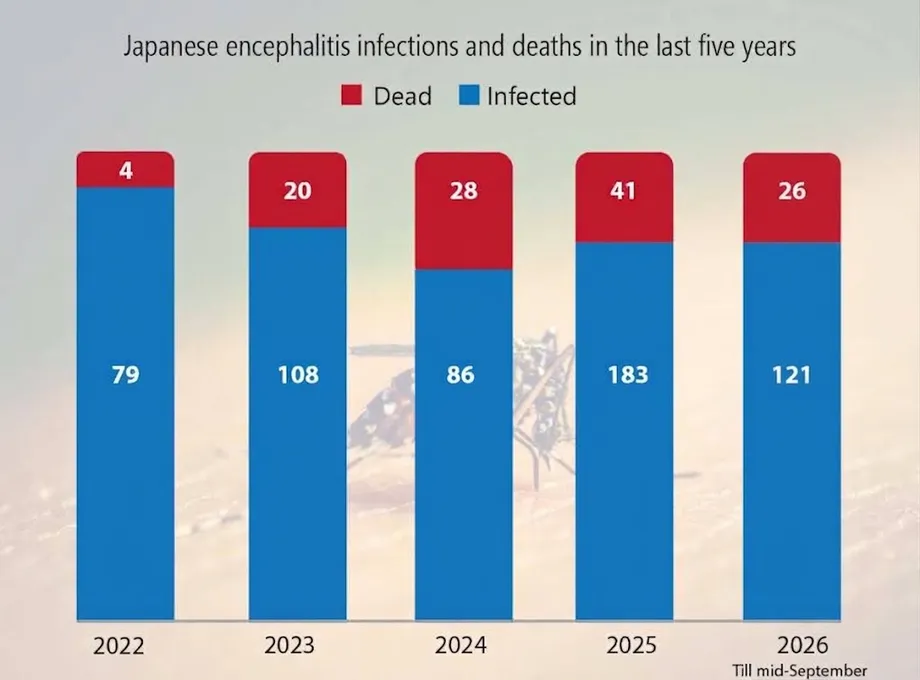
Nepal's Japanese encephalitis outbreak has reached 121 recorded infections and 26 deaths in an update counting cases since June, a fatality rate of 21.5 percent. Officials say 77 percent of those who died were older than 50, and all the deceased were unvaccinated. Preparations for vaccination in Jhapa and three local authorities in Kailali mark a move toward protecting adults who fall outside routine childhood immunisation.
Contents
- Older adults dominate deaths as vaccination plans widen
- A child's illness becomes years of family care
- What the outbreak figures establish
- Jhapa's six deaths shape the emergency response
- Why the childhood schedule misses many adults
- How Nepal built its vaccination programme
- What vaccine evidence does and does not show
- Targeted campaigns face procurement and funding limits
- Protection is needed beyond the traditional risk areas
- Key Points
The immediate concern is Jhapa, where an earlier district tally recorded six deaths among 10 confirmed cases. Officials initially considered an emergency campaign for residents over 30, using doses purchased for childhood vaccination and replacing them when new supplies arrived. A subsequent announcement scheduled a district campaign from September 21, although that announcement does not establish whether vaccination actually began.
The policy gap is precise. Nepal's routine programme gives Japanese encephalitis vaccine at 12 months, with missed doses available before a child's fifth birthday. It does not provide a standing vaccination programme for adults. Earlier mass campaigns reached some older residents, so adults are not uniformly unprotected, but many missed those campaigns and have no routine route to vaccination.
The Family Welfare Division's JE surveillance manual identifies human vaccination as the only proven method for reducing Japanese encephalitis disease. It also directs surveillance toward identifying populations at risk and informing vaccination policy. The current concentration of deaths among older, unvaccinated people makes those tasks central to the response.
Behind the deaths is another burden: survivors who require years of care. Sayal Rai, infected at 12 and now 14, remains dependent on a ventilator in Dharan. His family's experience shows why counting fatalities alone misses much of the damage.
A child's illness becomes years of family care
Sayal, from Belaka Municipality in Udayapur district, was in sixth grade when he developed a high fever. His parents took him to Birat Medical College and Teaching Hospital in Biratnagar, where his deteriorating condition required intensive care. He was later transferred to BP Koirala Institute of Health Sciences in Dharan after the family could no longer afford mounting bills.
Nirmala, his mother and principal caregiver, described his continuing dependence on hospital support.
It's already been more than two years since the infection, and my son is still on a ventilator,
She said he cannot breathe independently or speak and has developed wounds from remaining in the same position. The family spent around Rs800,000 on his initial treatment and says it owes approximately Rs4 million to the hospital in Dharan. Hospital administrators moved him to a free bed, but medicines, diapers, wound ointments and other supplies still require payment.
Nirmala rents a room near the hospital for Rs2,000 a month and prepares food for his tube feeding. She has learned to monitor him and tend his wounds. Her husband now carries sand near the Indian border to support the household, while help from relatives has dwindled.
Dr Basanta Rai, an assistant professor and consultant paediatrician at BP Koirala Institute of Health Sciences, said doctors cannot promise full recovery.
JE is not like other diseases. Those who suffer know the real consequences,
Sayal's vaccination status is not established. His illness illustrates the lasting consequences of severe infection, rather than proving why he contracted it.
What the outbreak figures establish
Successive outbreak updates show wider geographical spread. A tally dated August 25, 2026 recorded 85 confirmed cases in 62 municipalities across 26 districts, with 21 deaths. Another update counted 121 cases and 26 deaths across 84 local authorities in 36 districts, with cases in all seven provinces.
These figures should not be treated as a single simultaneous count. Earlier accounts described 21 deaths and 59 other infections over roughly six weeks. That wording suggests around 80 affected people, while the accompanying provincial figures total 79 cases, including 21 deaths. The precise denominator in that early snapshot is therefore uncertain.
Vaccination figures also vary between updates. Earlier officials said 89 percent of cases were unvaccinated; the August 25 account gave 86 percent. The proportion of deaths among people over 50 changed from 81 percent in earlier updates to 77 percent in the 121 case tally. These differences may reflect changing case totals, but the published figures do not explain every revision.
The consistent finding is that the deceased were reported to be unvaccinated and older people accounted for most deaths. A case fatality rate measures deaths among recorded cases, not the probability that every person infected with the virus will die. Mild or symptomless infections may never enter the surveillance count, and doctors have warned that testing concentrated on hospitalised patients can miss part of the burden.
Jhapa's six deaths shape the emergency response
The early provincial breakdown placed Koshi at the centre of the outbreak, with 24 cases and 10 deaths. Madhesh recorded 19 cases and six deaths; Sudurpaschim, 13 and two; Bagmati, 10 and one; and Lumbini, seven and two. Gandaki recorded five cases and Karnali one, with no deaths listed in either province in that snapshot.
Jhapa accounted for six of Koshi's 10 deaths, or 60 percent, and six of the 21 deaths nationally, about 29 percent. Its six deaths among 10 cases produced a 60 percent case fatality rate. That is a grave local signal, although a rate based on 10 cases can change substantially as further cases are identified.
Dr Manohar Pradhan, an expert adviser to Health Minister Nisha Mehta, explained the proposed initial target.
The death rate of 60 percent is alarming,
He said preparations focused on vaccinating people above 30 in Jhapa. Other affected districts included Kailali, with seven cases and two deaths; Saptari, with six and two; and Sunsari, with five and two.
Some district figures conflict. Parsa's four cases and two deaths support its stated 50 percent fatality rate. For Nawalparasi and Ilam, reports differ between one and two deaths among two cases in each district, while describing both rates as 50 percent. One death out of two is 50 percent; two deaths out of two would be 100 percent. Those totals need clarification before they can support reliable district comparisons.
Why the childhood schedule misses many adults
The government's 2025 surveillance manual, hosted by the World Health Organization, sets routine vaccination at 12 months and allows missed doses before age five. It assigns female community health volunteers a role in ensuring eligible children receive vaccination. Annual Search and Vaccinate activities and Immunization Month in Baishakh, April to May, aim to reach children who missed doses.
Those measures address childhood coverage, not the large pool of unvaccinated adults. Earlier outbreak figures indicated that about 70 percent of cases in the preceding year were among people older than 15, while 76 percent of deaths were among people over 40.
Dr Arun Kumar Neopane, a senior paediatrician and member of the National Immunisation Advisory Committee, described the recent age pattern.
Now people above 30 are getting severe and dying. Most people above 30 in Nepal have not been vaccinated against JE.
That recent pattern does not contradict the longer historical record. The surveillance manual's analysis for 2004 to 2024 found almost 60 percent of cases in children under 15. A cumulative record spanning two decades can remain dominated by childhood cases even as recent deaths concentrate among older adults.
The manual also says people of all ages can be affected where Japanese encephalitis appears for the first time. Vaccination decisions therefore need both recent age data and geographical information, rather than an assumption that this remains primarily a childhood disease everywhere.
How Nepal built its vaccination programme
The official manual describes a phased expansion rather than one nationwide starting date. Campaign vaccination began in 2006; routine introduction followed district campaigns. The main milestones are:
- 1978: Japanese encephalitis was first confirmed in Nepal.
- 2004: Dedicated surveillance began, according to the government manual.
- 2006: Phased vaccination campaigns began.
- 2011: Campaigns had been completed in 31 districts at high risk.
- 2012: Routine vaccination had been introduced across those 31 districts.
- 2016: Campaigns in 47 districts, including three with outbreaks, were followed by routine vaccination across the remaining districts.
- August 11, 2025: An outbreak update recorded 33 cases and three deaths in 18 districts.
- August 25, 2026: An update recorded 85 cases and 21 deaths in 26 districts.
Different descriptions give different introduction dates. The 2025 manual's introductory text names 2008, while its detailed history dates campaigns to 2006 and nationwide routine coverage to 2016. Other reports name 2015 as the year of routine incorporation. The detailed district chronology provides the clearest account of the expansion, but the dates are not fully consistent.
The Family Welfare Division's historical figures record 26,700 identified infections and 5,400 deaths from 1978 to 2003. Early campaigns reached all age groups in several heavily affected districts before later campaigns focused on children. That history matters because an adult's age alone does not establish whether they were vaccinated.
What vaccine evidence does and does not show
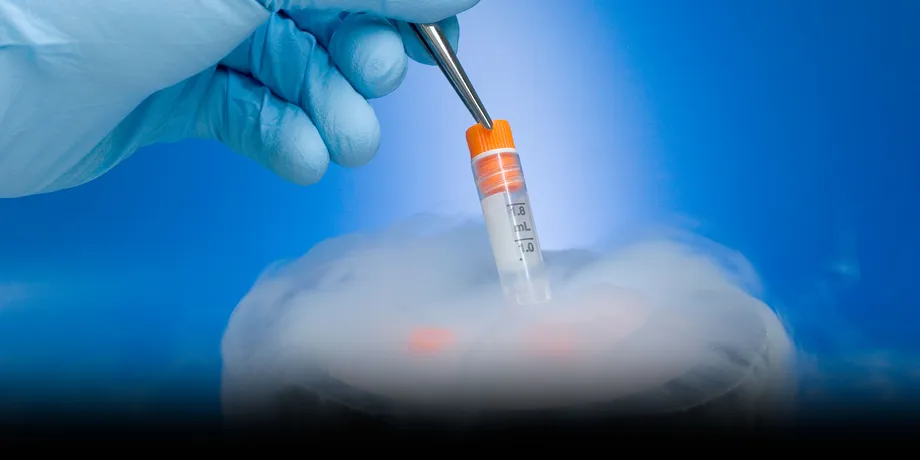
Nepal uses a live attenuated Japanese encephalitis vaccine, meaning it contains a weakened form of the virus intended to generate protection without causing the disease. The official manual cites studies in children aged one to 15 in endemic settings, where the virus regularly circulates.
Those studies found vaccine effectiveness of 99.3 percent during the period from one week to one month after vaccination and 98.5 percent at one year. Another study following a mass childhood campaign found effectiveness of 96.2 percent five years later. These are findings about protection against disease in studied children, not a measured effectiveness rate for the proposed adult campaign.
The manual also cites a small convenience sample of 69 vaccinated individuals, in which antibody protection was detected in 89.9 percent at four years and 63.8 percent at five years. An antibody measurement and a study of actual disease prevention assess different things. The lower antibody percentage should not be substituted for the separate five year vaccine effectiveness result.
Dr Shyam Raj Upreti, an immunisation expert and former director general of the Department of Health Services, said protection from the live vaccine develops within 15 days to one month. Vaccination therefore does not provide immediate protection on the day of injection or treat an infection already established.
Upreti has attributed India's lower infection and fatality rates to its free programme using two doses. The Nepal figures establish an urgent domestic burden, but without matching Indian case and death totals, they do not permit a reliable numerical comparison between the countries.
Targeted campaigns face procurement and funding limits
Officials described an initial plan to obtain 3.5 million doses for nine districts at high risk. Another account put the requirement at approximately 3.4 million doses to reach people missed by earlier campaigns. The difference is 100,000 doses, and no final procurement quantity is established.
The target areas have not been presented as one settled list. Historical case burden during 2020 to 2025 was high in Nawalparasi East, Chitwan, Kailali, Tanahu, Dang, Jhapa, Kapilvastu, Morang and Rupandehi. The list of districts with the most deaths was different. Current mortality, past burden and the number of unvaccinated residents can therefore point toward different priorities.
Officials proposed using childhood programme stock first and replenishing it later. They also explored procurement from China, including a possible agreement between governments. Nepal has previously purchased Japanese encephalitis vaccine from China, and officials have sought international assistance.
A subsequent announcement said preparations were complete for vaccinating people above 30 in Dhangadhi Sub metropolitan City, Lamkichuha Municipality and Ghodaghodi Municipality in Kailali. It also named September 21 for the Jhapa campaign. Completion, actual doses delivered and coverage achieved have not been confirmed.
Funding statements concern different scales of response. Officials described a budget for targeted work in nine districts, while saying there was no allocation to vaccinate the entire unvaccinated population. In August 2025, officials had reported no vaccine or budget for the proposed wider response and unsuccessful requests to development partners. Targeted funding does not establish that a nationwide adult programme is affordable or approved.
Protection is needed beyond the traditional risk areas
Japanese encephalitis reaches humans through infected Culex mosquitoes. Pigs and certain birds help maintain the virus in the transmission cycle. Humans do not carry enough virus to sustain onward transmission through mosquitoes, so vaccinating adults chiefly protects those individuals rather than breaking a chain of transmission between people.
People living near paddy fields, standing water and pig farms face particular exposure. Estimates place 12.5 million Nepal residents at high risk. An academic correspondence on JE by Amogh Verma, Sanjit Sah and colleagues used an estimate of 12 million and documented the outbreak's reach into Kathmandu Valley in 2024. Neither estimate represents a count of infected people.
The correspondence recorded 63 confirmed cases and 17 deaths since June 2024 at the time it was written. For the completed 2024 year, both government manual versions give 86 laboratory confirmed cases and 25 deaths, a fatality rate of about 29 percent. Other reports give 86 cases and 28 deaths, or at least 80 cases and 23 deaths. These annual totals remain inconsistent.
For 2025, one annual series gives 183 cases and 41 deaths, approximately 22.4 percent. Other accounts give 141 infections and 41 deaths while stating a rate near 23 percent. That rate does not follow if the 41 deaths are included within the 141 cases; the wording leaves the denominator unclear.
The academic authors called for reassessing vaccination advice for visitors, including urban travellers. That is a recommendation from the authors, not evidence that travel guidelines have formally changed. Their account also describes symptoms including fever, headache, neck stiffness, confusion, seizures and paralysis, usually appearing five to 15 days after infection.
There is no specific antiviral treatment for Japanese encephalitis. Care manages complications, including breathing difficulties and neurological injury. Mosquito repellents, clothing that covers the arms and legs, bed nets and screened rooms can reduce exposure while vaccination plans proceed. Severe neurological symptoms require urgent medical assessment.
Key Points
- An outbreak update recorded 121 cases and 26 deaths since June, a fatality rate of 21.5 percent.
- Officials said 77 percent of deaths were among people over 50 and all deceased were unvaccinated.
- Routine vaccination is scheduled at 12 months, with missed doses available before age five.
- Jhapa recorded six deaths among 10 cases in an earlier district tally.
- Adult campaigns were announced for Jhapa and three local authorities in Kailali, but completion is not confirmed.
- Procurement plans described approximately 3.4 million to 3.5 million doses for nine priority districts.
- No funded nationwide programme for all unvaccinated adults has been established.
- Conflicting annual totals and some district death counts require clarification.
- Survivors can need prolonged care, as Sayal Rai's continuing dependence on a ventilator demonstrates.