
A 24 yuan cancer medicine becomes difficult to find
Injectable cyclophosphamide, a chemotherapy medicine normally listed at about 24 yuan per vial in China, has been offered online for 600 to 650 yuan during a shortage that has disrupted hospital treatment. Some accounts put asking prices as high as 1,200 yuan. Meanwhile, the European Medicines Agency expects shortages of Baxter's intravenous products to continue into the first quarter of 2027.
Contents
- A 24 yuan cancer medicine becomes difficult to find
- What regulators say went wrong
- How the disruption unfolded
- Why this medicine is hard to replace
- Can tablets bridge the injection shortage?
- Why Chinese generic suppliers cannot fill the gap immediately
- A shortage risk identified years earlier
- Emergency purchasing and Australia's alternative supplies
- What the recovery forecasts do and do not show
- Key Points
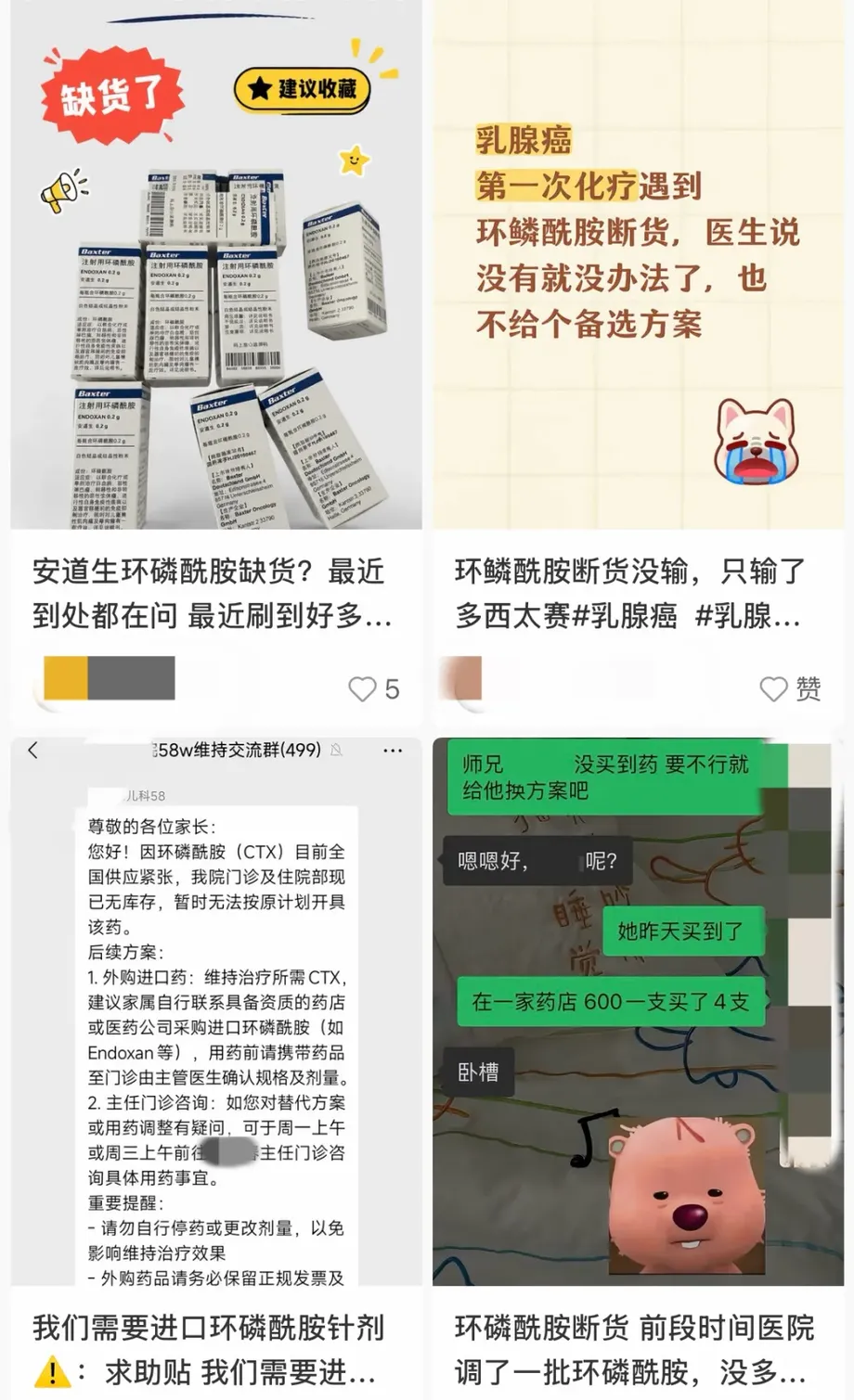
The price reports differ, and online asking prices are not the same as verified purchases. Against a 24 yuan baseline, however, 600 yuan is 25 times the usual price, 650 yuan is about 27 times, and 1,200 yuan is 50 times. One patient described needing four vials for a treatment session, bringing the quoted cost to 2,400 yuan rather than about 96 yuan.
Reports from China describe patients searching across hospitals, chemotherapy appointments being postponed and families encountering scams while trying to buy scarce supplies. On July 7, staff at major hospitals in Wuhan, Beijing and Shanghai reportedly said they had no injectable cyclophosphamide in stock and could not confirm when deliveries would resume.
The international picture is more varied. Australia's Therapeutic Goods Administration said in a September 4, 2026 update that most strengths were again available from Baxter and projected supply could meet normal demand. That improvement does not establish that China's shortage has ended. It shows why the product strength, country and date matter when assessing availability.
The immediate problem is a manufacturing disruption. The deeper vulnerability is a medicine with substantial clinical value but a small commercial market, where several manufacturing approvals have not translated into enough spare production to absorb a major supplier's interruption.
What regulators say went wrong
The European Medicines Agency's cyclophosphamide shortage notice identifies two causes: a technical problem at the manufacturing site and improvements required after a regulatory inspection in September 2025. Together, they caused a temporary pause in manufacturing and release of finished medicine.
The EMA says production has resumed, but the site is not expected to regain full capacity until the first quarter of 2027. Its notice, last updated on March 3, 2026, covers Baxter products marketed as Endoxan, Sendoxan and Genoxal and says the shortage affects all European Union and European Economic Area countries.
The agency also makes a distinction between a manufacturing interruption and the safety of medicine already being supplied:
The shortage is not related to a quality defect of the product or a safety issue.
A separate account traces the disruption to an FDA warning involving a German sterile injection filling facility. It describes 47 detections of Gram negative bacteria and deficiencies in sterile operations and cleaning validation, with a possible correction period of six to 12 months. Those details are reported allegations about the facility; the EMA notice does not reproduce them or establish that timetable.
The accounts should therefore not be treated as identical explanations. The official European notice confirms a technical problem and required improvements after the September 2025 inspection. Baxter's supply notification to its Chinese distributor, dated February 26, 2026, reportedly described a technical failure at its contract manufacturer, resumed production at reduced capacity and approximately nine months of restricted supply.
How the disruption unfolded
Several dates help distinguish the factory interruption, formal shortage notifications and the later effects on Chinese hospitals. Reports describe some clinicians noticing shortages from March, while a documented hospital notice followed in April.
- September 2025: A regulatory inspection identified required manufacturing site improvements, according to the EMA.
- Early February 2026: Baxter notified Australia's TGA of cyclophosphamide and ifosfamide injection shortages.
- February 24, 2026: The EMA records the start of the European cyclophosphamide shortage.
- February 26, 2026: Baxter's notification to its Chinese distributor forecast roughly nine months of constrained supply.
- April 23, 2026: Hangzhou First People's Hospital listed injectable cyclophosphamide as unavailable.
- May 19, 2026: Gansu announced emergency procurement listing for Huiyu Pharmaceutical's 0.2 gram injection, effective May 20.
- June 23, 2026: Baxter and its Chinese distributor reportedly confirmed the supply notification's authenticity.
- July 7, 2026: Major hospitals in several Chinese cities reportedly said they had no stock.
- September 4, 2026: The TGA reported improving supply in Australia, with most Baxter strengths available again.
The forecasts also differ. Australia's listed end date for Endoxan 1 gram and 2 gram shortages is November 30, 2026. Europe expects constraints through the first quarter of 2027. These are estimates for different markets, issued at different times, rather than a single confirmed global recovery date.
Why this medicine is hard to replace
Cyclophosphamide entered clinical use in 1959. It damages DNA in ways that interfere with cell division, helping suppress cancer cells and certain overactive immune cells. Its uses extend beyond leukemia to lymphoma, breast cancer, other solid tumors, severe autoimmune disease and preparation for transplantation.
For breast cancer, it is part of established combinations such as AC, which pairs an anthracycline medicine with cyclophosphamide, and TC, which combines docetaxel with cyclophosphamide. For diffuse large B cell lymphoma, it is a component of the standard R CHOP combination alongside rituximab, doxorubicin, vincristine and prednisone.
It also commonly accompanies fludarabine before CAR T cell therapy. That preparation reduces existing lymphocytes before patients receive immune cells engineered to attack their cancer. A shortage at this stage can interfere with a tightly scheduled treatment process even after the engineered cells have been prepared.
Ma Jun, director of the Harbin Institute of Hematology and Oncology, said that lymphoma, myeloma and hematopoietic stem cell transplantation generally lack straightforward substitutes for cyclophosphamide. He also indicated that clinicians may find alternatives in particular circumstances, including some preparation regimens for CAR T treatment. That is not a recommendation for patients to replace the medicine themselves.
Zhang Fang, a general surgeon and medical director at Parkway's Xintiandi Medical Center, distinguished between missing one administration and lacking cyclophosphamide throughout a breast cancer chemotherapy course. He said the latter could impair treatment effectiveness. The clinical consequences depend on the disease, regimen and duration of the interruption, not simply whether another chemotherapy drug is available.
Can tablets bridge the injection shortage?
Doctors have described oral cyclophosphamide as an emergency option, but their assessments differ. Some hospitals reportedly began using tablets with pharmacy advice, taking account of how much of an oral dose reaches the bloodstream. Others sought oral supplies while acknowledging that their usual guidelines did not recommend replacing the injection that way.
Liu Weiping, a professor in the lymphoma department at Peking University Cancer Hospital, supported switching from intravenous cyclophosphamide to oral tablets under a doctor's supervision during the exceptional shortage. Zhang Fang, discussing established breast cancer regimens, said the intravenous component was not routinely replaced with oral tablets or ifosfamide.
These positions concern different clinical settings and should not be flattened into a universal answer. An oral formulation contains the same active medicine, but changing the route can change absorption, exposure and the dosing schedule. A tablet is not automatically interchangeable with an injection on a milligram for milligram basis.
The EMA advises clinicians first to check whether another supplier can provide intravenous cyclophosphamide. If none is available, any switch to another medicine should depend on a suitable alternative and relevant clinical guidelines. Patients need an individualized treatment decision, rather than an online purchase or a substitution based solely on price.
Why Chinese generic suppliers cannot fill the gap immediately
China has multiple approvals for injectable cyclophosphamide. Reported holders include Hengrui, Huiyu, Pude and Hanhui, while other accounts list additional manufacturers. A count of approvals, however, does not show how many companies are actively supplying hospitals, how much they produce or how quickly they can expand.
Domestic sales of injectable cyclophosphamide were reportedly about 291 million yuan in 2024. That is consistent with a separate estimate placing the market below 300 million yuan. Despite its wide range of uses, a low unit price and limited treatment courses keep the market relatively small.
Reports describe some approved producers as having stopped production and others as maintaining only modest supply. Pude reportedly stopped supplying injectable cyclophosphamide nationwide in 2020. The medicine had not entered China's national centralized procurement program, so the current disruption cannot simply be attributed to that program.
The suggestion that a new generic production line may take five years describes a possible development period, not a confirmed deadline for every manufacturer. Building a new line and increasing output on an existing approved line are different tasks. Sterile injections require contamination controls, validated manufacturing processes and checks before finished batches can be released.
The practical issue is therefore not whether generic cyclophosphamide exists. It is whether approved manufacturers have usable capacity, commercial reasons to maintain it and a way to deliver additional batches quickly. No confirmed schedule has been given for Chinese generic suppliers to close the entire gap.
A shortage risk identified years earlier
Cyclophosphamide's supply problems predate the current factory disruption. Reports from around 2005 described Chinese manufacturers stopping or reducing production when the state limited its maximum retail price to just 4 yuan per vial, making costs difficult to cover.
In 2020, a notice issued by China's National Health Commission and other departments placed injectable cyclophosphamide on a list of 57 clinically necessary medicines requiring special monitoring because of shortage risk. It appeared again in related monitoring in 2022.
Those earlier warnings help explain why a new interruption can have such a broad effect. A medicine may have several approved manufacturers but still depend on one or two major suppliers in practice. When one loses capacity, the others may have little spare output.
A 2019 FDA analysis of drug shortages identified weak production incentives, insufficient rewards for mature quality management and difficulty recovering after supply disruptions as central problems. The Chinese market figures fit part of that pattern: high medical importance does not necessarily produce enough revenue to maintain reserve manufacturing capacity.
Ma Jun and Zhang Fang both called for national measures to protect access to basic medicines rather than relying solely on manufacturers' commercial incentives. The current shortage adds urgency to a supply concern already recognized years before this interruption.
Emergency purchasing and Australia's alternative supplies
Gansu's response offers a concrete Chinese procurement measure. On May 19, the province announced emergency listing of Huiyu's 0.2 gram injectable cyclophosphamide at 23.9 yuan per vial, effective May 20, because normal supply had become unreliable.
That price is close to the longstanding 24 yuan benchmark and far below reported online offers. Emergency listing makes a product available through the procurement system, however; it does not by itself establish that enough stock exists to meet demand across the province or nationwide.
Australia has used a different regulatory route. The TGA's injection shortage update lists overseas registered cyclophosphamide products authorized under section 19A of the Therapeutic Goods Act 1989 to reduce the shortage's effects.
These include Seacross 1,000 milligram and 2,000 milligram products, Sagent 2 gram vials and Northstar Rx 1 gram and 2 gram vials. The Northstar products are subsidized through Australia's Pharmaceutical Benefits Scheme. Those authorizations concern Australia and do not establish that the products can be purchased or used through the same route in China.
The TGA cautions that instructions for preparing and administering overseas products may differ. Healthcare professionals must check the corresponding product information and decide whether the alternative is suitable for the patient. That makes organized hospital purchasing different from families searching informal online sellers.
What the recovery forecasts do and do not show
Australia's September update offers a more encouraging picture than the earlier shortage reports. The TGA and its Medicine Availability Working Group modelled a six month period from July using data from Baxter, state and territory health services and compounding services.
The work used the Dynamic Model of Medicine Availability, developed by Australia's Department of Health, Disability and Ageing. It found cyclophosphamide stock available from Baxter, with supply expected to increase and available and forecast supply sufficient for normal demand. The TGA warned that modelling depends on accurate, complete data.
The regulator also stated a limit on its authority:
We can work with pharmaceutical companies to communicate information about medicine shortages to health professionals and patients, but we cannot compel companies to increase supply or apply to have their products subsidised on the PBS.
Some shortages remain listed even while deliveries improve. Australia's Endoxan 1 gram and 2 gram shortages are expected to end on November 30, 2026, with partial supply continuing meanwhile. Related Holoxan ifosfamide shortages have a December 15 estimate. Europe still projects full manufacturing capacity in the first quarter of 2027.
For China, the unresolved issue is when individual hospitals can reliably obtain enough medicine to complete planned courses. Neither the overseas forecasts nor the emergency procurement listing provides a confirmed national recovery date. The EMA's practical advice is to check sufficient supplies before starting a treatment course, making reliable hospital inventories as important as any announced factory restart.
Key Points
- A medicine normally listed at about 24 yuan per vial has reportedly been offered online for 600 to 650 yuan, with some accounts reaching 1,200 yuan.
- The EMA links the disruption to a manufacturing technical problem and improvements required after a September 2025 inspection.
- European shortages are expected through the first quarter of 2027; Australia's September update reports improving supply.
- Cyclophosphamide is part of established cancer and transplant regimens, and alternatives depend on the patient's treatment.
- China's multiple manufacturing approvals have not guaranteed enough spare production to replace lost supply.
- Gansu introduced emergency procurement at 23.9 yuan per vial, but no confirmed nationwide Chinese recovery date has been given.