
Inside Shunda Park, a rescue exposes an industry still growing
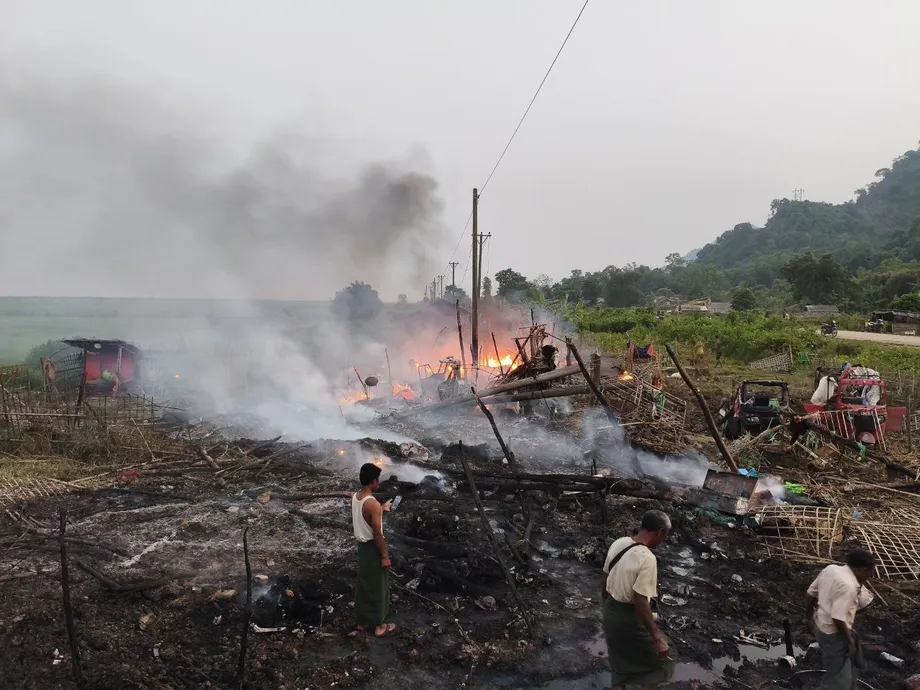
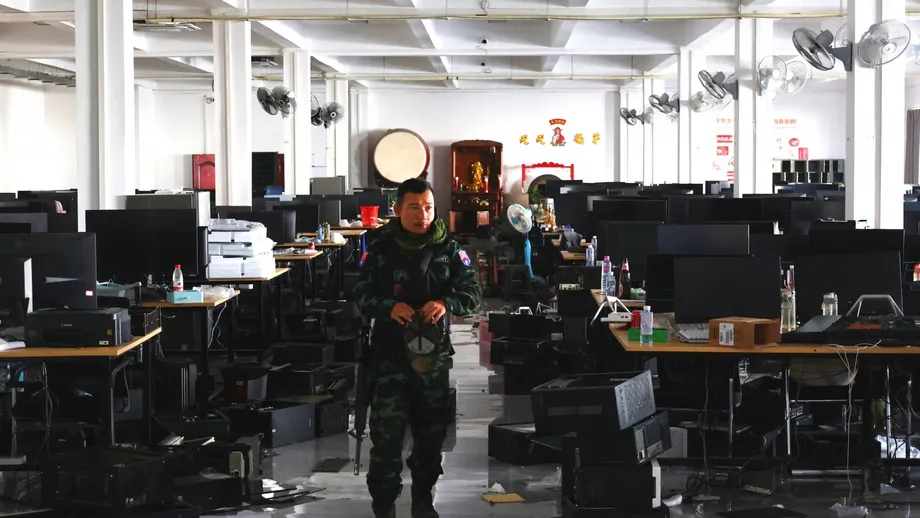
About 3,000 people were working inside Shunda Park when the Karen National Liberation Army entered the fortified apartment complex in Myanmar's Karen State after retaking territory from a militia. Behind jungle cover and razor wire, troops found thousands of phones, SIM cards and hard drives, along with manuals teaching workers how to conduct romance scams. Survivors described chains, confinement and beatings for failing to steal enough money.
Contents
- Inside Shunda Park, a rescue exposes an industry still growing
- How large is the scam economy?
- Raids and rescues have not ended recruitment
- Demolition does not necessarily mean closure
- Smaller sites are moving beyond border visibility
- Fraud victims and forced workers are connected by coercion
- Leaving a compound can lead to another form of detention
- Ransoms create a second market around captivity
- Evidence from Shunda Park reaches international investigators
- Targeting networks while protecting survivors
- Key Points
The discovery exposed more than one abusive operation. Investigators tracking Myanmar's borderlands say scam businesses are spreading into smaller, more remote facilities even as authorities announce raids and demolitions at better known sites. Satellite internet, generators and solar power allow operators to move away from the Thai border without losing access to victims around the world.
A UN Human Rights report published on 20 February 2026 documents torture, sexual abuse, forced abortions, food deprivation and solitary confinement across the wider industry. Its interviews cover survivors from nine countries trafficked into operations in five countries between 2021 and 2025.
Shunda Park shows how that abuse translates into daily work. Cameron, a Free Burma Rangers humanitarian worker using a pseudonym for security, helped provide medical assistance after the compound was taken. He described workers left exposed near the river and punishment rooms on the building's lower floors.
Ivan, a Malaysian survivor trafficked through Thailand into Myanmar, said missing fraud targets brought severe punishment:
When we didn't hit the targets of scamming enough people, we were hung by chains and kept in dark rooms.
The central problem is now the gap between removing people from particular buildings and dismantling the networks that recruit, imprison and exploit them. A compound can be captured while its operators, money and armed protection survive elsewhere.
How large is the scam economy?
The Global Initiative Against Transnational Organized Crime's border scam analysis estimates that the Border Guard Force, also known as the Karen National Army, and the Democratic Karen Benevolent Army partner with Chinese criminal groups to operate about 40 compounds along 200 kilometres of the Myanmar and Thailand border. Together, those sites reportedly hold between 50,000 and 100,000 people.
Those figures describe a particular border network, not all of Myanmar. A widely cited UN estimate puts at least 120,000 people in Myanmar in situations where they may be forced to conduct online scams. Another estimate puts more than 100,000 people in such circumstances in Cambodia. A broader regional estimate places about 300,000 workers in compounds across Myanmar, Cambodia and Laos, without establishing that every worker is trafficked.
The financial estimates also measure different things. The UN Office on Drugs and Crime's April 2025 report estimates that hundreds of major scam centres generate just under US$40 billion in annual profits. The US Institute of Peace estimates annual funds stolen by criminal groups based in Southeast Asia at more than US$43.8 billion, nearly 40 percent of the combined formal gross domestic product of Laos, Cambodia and Myanmar.
Other estimates of annual theft from the lower Mekong region range from US$18 billion to more than US$40 billion. These figures cannot be treated as a single precise total: profits differ from money stolen, and the geographical coverage varies. They nevertheless indicate an industry large enough to sustain armed protection, trafficking routes and extensive financial services.
Raids and rescues have not ended recruitment
The trafficking of Chinese actor Wang Xing in early 2025 brought intense public pressure for action. Criminal recruiters used what appeared to be a legitimate film role to draw him to Thailand before moving him into Myanmar. His girlfriend's publicity campaign helped trigger his rescue and a wider enforcement response.
Several subsequent developments show both the scale of that response and its limits:
- Early 2025: Wang Xing's rescue prompted greater Chinese pressure and Thai restrictions on electricity, internet and fuel supplies to border operations.
- March 2025: China established a ministerial cooperation mechanism with Thailand and Myanmar targeting border scam syndicates.
- 13 April 2025: More than 270 people released from scam compounds attempted to leave detention in Myanmar after prolonged delays in returning home.
- June 2025: Zhong Haobin, a 25 year old model, was trafficked to Myawaddy through a similar recruitment scheme, according to the Global Initiative.
- October 2025: Myanmar's military announced its seizure of KK Park, including hundreds of buildings and satellite internet equipment.
- 20 February 2026: The UN Human Rights Office published further evidence of widespread abuse and called for protection rather than punishment of trafficking victims.
The Global Initiative estimates that the militias transferred about 10 percent of people held in their compounds into detention following the Wang Xing case. Several thousand people from 38 countries then waited for repatriation, while most people inside the operations remained there and new recruits continued arriving.
Demolition does not necessarily mean closure
Myanmar's military and Thai authorities have publicised action against Shwe Kokko and KK Park, two complexes much larger than Shunda Park. Estimates suggest KK Park once housed as many as 25,000 people conducting scams, although Thai officials warned that the true population could have been higher.
The military's claimed KK Park seizure in October 2025 involved around 200 buildings, more than 2,000 detainees and 30 Starlink terminals, according to its announcement. That was a claim about a particular operation, not proof that the entire complex or surrounding scam network had permanently stopped functioning.
Reports differ on the extent of the shutdown. The military presented raids and demolition as evidence of dismantling. Investigators subsequently described buildings that remained operational and businesses that shifted elsewhere. Mechelle Moore, an anti trafficking specialist at Global Alms Inc., described the destruction as "performative demolition", with conspicuous buildings damaged while the underlying business survived.
Jason Tower, a senior analyst at the Global Initiative Against Transnational Organized Crime, described the broader change:
The problem isn't disappearing, it's morphing.
Shwe Kokko's history helps explain why arresting a prominent investor may be insufficient. The project began with a 2016 to 2017 agreement between Yatai International Holdings and Border Guard Force commander Saw Chit Thu. Marketed as a US$15 billion development, it grew into a centre for casinos and online fraud. Beijing rejected claims that it belonged to China's Belt and Road Initiative in 2020.
Yatai figure She Zhijiang was arrested in Bangkok in August 2022 and later extradited to China. The continued activity around Myawaddy indicates that his removal did not remove the other investors, armed partners and service providers supporting the industry.
Smaller sites are moving beyond border visibility
Australian Strategic Policy Institute analyst Nathan Ruser, who monitors compounds through satellite imagery, says new facilities have appeared while authorities promoted crackdowns elsewhere. Cameron also reported seeing several probable scam compounds under construction while travelling to Shunda Park.
The Global Initiative identifies relocations of 100 to 200 kilometres from the Chinese and Thai borders in Shan and Karen states. Better satellite internet and solar energy make that distance less of an obstacle. Instead of relying entirely on supplies crossing an international frontier, operators can obtain power and connectivity through different routes.
Thai fuel restrictions also produced unintended pressure on local communities. According to the Global Initiative, militias and syndicates drew fuel from domestic markets, contributing to price increases in Karen, Mon and Shan states. Restricting one supply channel did not eliminate demand or the operators' ability to pay.
Tai Chang, also written as Taichang Park, illustrates the newer geography. Satellite imagery suggests the site appeared in 2024, while human rights groups received appeals describing brutal treatment inside. The Global Initiative identifies it as a place associated with torturing new recruits and demanding ransom payments.
Ruser argues that isolated sites depend more heavily on trafficked workers and have less medical care and infrastructure. Tower describes an emerging model of mobile jungle operations using temporary structures, portable walls, generators and satellite connections. These can be assembled and moved more readily than the sprawling complexes visible from Thailand.
The technological shift matters because a smaller physical footprint does not necessarily mean a smaller pool of potential fraud victims. Internet access connects a concealed worksite to people abroad, while isolation can make escape, monitoring and medical assistance more difficult.
Fraud victims and forced workers are connected by coercion
Many people sending fraudulent messages are themselves trafficking victims, although some workers participate willingly. Recruitment commonly begins with an apparently credible job in translation, customer service or technology, followed by transport across a border, confiscation of documents and demands to conduct fraud.
Lin, a Taiwanese survivor identified by a pseudonym, said a promised translation job brought him to Bangkok before he was trafficked into Myanmar. When he contacted Taiwanese police and emailed his location, he said he was punished. In an appeal to humanitarian organisations, he described the confinement:
I was confined to a cage and forced to stand handcuffed in the sun for hours each day.
The fraud method often called pig butchering involves building a false friendship or romantic relationship before persuading someone to invest. Criminals may initially return small sums to make a fake investment platform appear legitimate, then solicit much larger deposits. Cryptocurrency transfers can help move the proceeds, but the essential deception is the invented relationship and investment opportunity.
Survivors from Shunda Park said Americans were primary targets, with Australians also approached. Cameron described upper floors reserved for workers who generated substantial revenue, while unsuccessful workers were confined below in isolation rooms with internet access so they could continue scamming to earn release.
The UN Human Rights Office found similar coercion across countries. One Thai survivor reported a daily fraud target of about US$9,500, with failure risking fines, beatings or transfer to a harsher compound. All survivors interviewed experienced salary deductions, and none received their full promised pay. Receiving some wages did not mean their work was voluntary.
Leaving a compound can lead to another form of detention
On 13 April 2025, more than 270 people, mostly from Ethiopia and other African countries, attempted to walk out of a detention site in Myanmar after spending about two months waiting to return home. Survivors said they feared being sent back to scam operations after guards suggested a return to work was possible.
They left carrying their belongings but encountered armed soldiers and eventually returned after discussions. The militia holding them was identified in that account as the Democratic Kayin Buddhist Army. It was described under a different name from the Democratic Karen Benevolent Army terminology used in other accounts of the DKBA.
At that time, Thailand's Ministry of Foreign Affairs said about 7,200 people, overwhelmingly Chinese nationals, had returned home, while about 1,700 remained in Myanmar. That left roughly one in five of the combined 8,900 people still waiting. Many were held in military camps or repurposed scam compounds.
Thailand said the group's names were being added to the official repatriation list. Ethiopia reported that 130 citizens from an earlier group had returned and said further rounds were expected within 10 days. That was an April 2025 expectation, not confirmation that every detained person subsequently reached home.
The Global Initiative later reported that more than 700 Ethiopians had been brought out of Myawaddy scam syndicates during 2025. It also found that syndicates targeted people from countries with limited diplomatic resources. Rescue therefore depends on more than opening a gate: survivors need recognised identities, permission to cross borders, travel documents, transport and somewhere safe to go.
Ransoms create a second market around captivity
The same networks can make money from families trying to secure a person's release. The Global Initiative estimates that more than 100 Chinese families paid extraction fees of US$30,000 to US$50,000 each during 2025. At those rates, payments from just 100 families would amount to US$3 million to US$5 million.
Intermediaries with connections to armed groups or criminal figures have formed what the institution describes as a rescue industry. Families confronting threats may have little ability to distinguish a genuine route to safety from another extortion scheme.
The UN Human Rights Office documented traffickers using video calls to make relatives watch abuse and pressure them into paying ransom. It also recorded survivors being forced to witness or inflict violence on other workers. Such practices turn both family relationships and fear into instruments of control.
Evidence from Shunda Park reaches international investigators
The capture of Shunda Park produced evidence beyond survivor accounts. FBI personnel worked with Thai authorities to examine recovered phones and hard drives and interview former workers. Investigators identified Chinese operators and helped build cases against two alleged leaders.
Huang Xingshan allegedly acted as a manager and enforcer and personally participated in punishing trafficked workers. Jiang Wen Jie allegedly supervised teams targeting Americans. Prosecutors say one worker under Jiang's command took more than US$3 million from a single victim through a fake investment platform.
Both men were later arrested in Thailand while allegedly trying to travel from Cambodia back into Myanmar. These allegations are not findings of guilt, and no trial date or final outcome is established in the accounts of the case.
China's northern Myanmar investigations show another scale of enforcement. A documentary jointly produced by China's Ministry of Public Security and state television says officials held three rounds of talks with Kokang's Bai, Wei, Liu and Ming families before arrests in 2023. Chinese authorities say joint operations repatriated 59,000 suspected fraud offenders and that 15 core syndicate members were executed.
Those totals concern a different geography and enforcement process from the Shunda Park investigation. They cannot establish how many people remain captive near Thailand, nor whether everyone repatriated as a suspected offender participated voluntarily. The distinction matters when investigators must separate organisers and willing participants from people compelled to commit crimes.
Targeting networks while protecting survivors
UNODC argues that enforcement must reach the financial infrastructure supporting compounds. Its April 2025 report describes underground banking, cryptocurrency transfers, data brokers, malware, deepfakes and services using artificial intelligence. Underground banking moves value outside ordinary regulated channels, making the movement of criminal proceeds harder to trace.
The agency recommends stronger financial investigations, coordination of financial intelligence and international cooperation on recovering assets. It also documents expansion beyond Southeast Asia into Africa, South Asia, the Middle East and Pacific islands. Closing one border operation may displace activity rather than eliminate it.
Tower argues that the Karen National Union, the political organisation associated with the Karen National Liberation Army, has local knowledge and the willingness to confront compounds. That assessment requires a qualification: earlier reporting traced KK Park's initial development to a 2020 lease under KNU authority. The Shunda Park operation demonstrates a specific intervention, not a simple division between all resistance actors and all militia interests.
UN Human Rights Chief Volker Türk calls for trafficking laws to recognise forced criminality and protect victims from punishment for offences they were compelled to commit. He set out that requirement explicitly:
Effective responses need to be centred in human rights law and standards. Crucially, that means explicitly recognizing forced criminality within anti-trafficking laws and regulations and guaranteeing the non-punishment principle for victims of trafficking.
Türk also calls for safe rescue, rehabilitation, safeguards against return to danger, oversight of recruitment and action against corruption. Those measures address failures visible throughout the story: deceptive job recruitment, abusive confinement, stalled repatriation and the ability of criminal operators to retain protection.
The lasting effect of the Shunda Park capture is not yet established. Investigators have evidence and alleged organisers in custody, but new construction and relocation continue. No comprehensive closure timetable is identified, and Myanmar's continuing war leaves rescuers and survivors exposed to renewed fighting around the compounds.
Key Points
- About 3,000 people were found working at Shunda Park, where survivors described torture for missing fraud targets.
- The Global Initiative estimates about 40 compounds holding 50,000 to 100,000 people along a 200 kilometre border corridor.
- Operators are moving inland using satellite internet, solar power and smaller facilities.
- Raids, demolitions and arrests have disrupted individual sites without establishing that the wider networks have stopped.
- Released workers have faced prolonged detention, repatriation delays and fears of being returned to scam operations.
- Evidence recovered at Shunda Park supported investigations into two alleged Chinese organisers.
- UN agencies call for financial disruption, international cooperation and protection from punishment for trafficking victims forced to commit crimes.