

A prisoner release opens a wider diplomatic channel
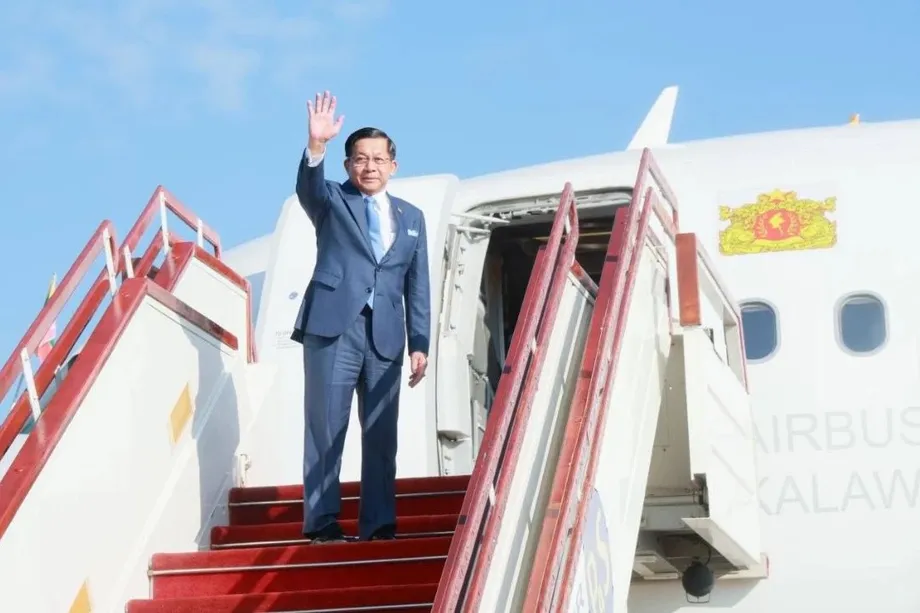
U.S. intelligence official Michael Vance joined talks with Myanmar leader Min Aung Hlaing in Naypyidaw on September 15 and 16, 2026, helping secure the release of American businessman Adam Castillo and opening a channel that could extend to online fraud enforcement and rare earth supplies. The meetings were described as Washington's highest level contact with Myanmar's military leadership since the February 2021 coup.
Contents
- A prisoner release opens a wider diplomatic channel
- How the contacts developed
- Washington's requests extend beyond online scams
- Two competing routes to Myanmar's minerals
- Why a mine deal would not break China's dominance
- India offers a possible route, not a ready supply chain
- Sanctions, lobbying and opposition contacts
- Diplomatic gains amid continuing violence
- Poverty figures require a distinction between past and present
- Key Points
Castillo, a former U.S. Marine and former president of the American Chamber of Commerce in Myanmar, was freed and deported on September 16. Reporting based on seven current and former officials and other people familiar with the outreach indicates that Myanmar sought official engagement at an appropriate level with Washington in return for his release.
The immediate result was concrete: a detained American went home. The broader bargain is much less settled. Min Aung Hlaing remains under U.S. sanctions, Myanmar's war continues, and many of the mineral deposits and scam compounds attracting American attention lie outside his government's effective control.
State Department spokesperson Tommy Pigott defended direct engagement as a way to address problems affecting American interests:
You don't solve problems by ignoring them. You solve problems by addressing them.
That argument places practical cooperation at the center of the opening. It does not establish that Myanmar's leadership can deliver lasting enforcement against fraud networks, access to minerals, or the humanitarian changes Washington says it requested. No comprehensive agreement or timetable for further talks has been announced.
How the contacts developed
The September visit followed earlier discussions in Tokyo in June 2026. U.S. participants reportedly included officials from the Treasury Department, which administers sanctions, the Department of Homeland Security and the Pentagon. Michael Vance also participated, according to people familiar with the meetings. The identities of Myanmar's representatives have not been established publicly.
The contacts also followed a separate round of mineral proposals presented to Washington in 2025. Those proposals should not be confused with the negotiations over Castillo's later detention. The sequence shows how commercial advocacy, law enforcement interests and prisoner diplomacy converged:
- February 2021: Myanmar's military overthrew the elected government, prompting U.S. sanctions and diplomatic isolation.
- 2024: The Kachin Independence Army seized Pangwa, a major rare earth mining hub near China.
- July 17, 2025: Castillo attended a meeting with advisers in Vice President JD Vance's office to discuss Myanmar policy and mineral access. The vice president did not attend.
- June 11, 2026: Myanmar authorities detained Castillo at Yangon airport.
- June 2026: U.S. and Myanmar officials held talks in Tokyo.
- September 15 and 16, 2026: Michael Vance joined talks in Naypyidaw. Castillo was released and deported on September 16.
Castillo's supporters described the charges against him as fabricated. The U.S. government has not publicly said whether it formally considered him wrongfully detained. White House, National Security Council and State Department officials reportedly participated in private negotiations for his release.
Washington's requests extend beyond online scams
A detailed account of the Naypyidaw visit identifies five American requests: action against online fraud operations, reduced violence, engagement with ethnic armed groups, the release of political prisoners and unrestricted humanitarian assistance. The State Department separately said it raised the need to cease violence, allow humanitarian access and release political prisoners.
Scam centers provide the most immediate American security rationale. Networks operating from Myanmar run romance scams and other financial frauds that have cost Americans billions of dollars. The FBI reportedly has had direct contact with Myanmar authorities about these operations.
The enforcement problem is territorial and financial. Many compounds operate in border areas controlled by militias, ethnic armed groups or military aligned border forces. Researchers have also said some scam proceeds may reach the military. Cooperation with central authorities therefore cannot automatically be treated as cooperation from every armed actor protecting a compound.
The same distinction applies to minerals. Naypyidaw can discuss access, but it cannot necessarily guarantee entry to mines, safe transport or reliable exports from territory controlled by its opponents. A promise from the government and an operating supply chain are different things.
Two competing routes to Myanmar's minerals
The mineral proposals heard by U.S. officials presented a basic choice: engage the military government to seek an agreement with the Kachin Independence Army, or work directly with the KIA without involving Naypyidaw. The KIA controls much of the northern mining belt that Washington would need to reach.
Castillo advocated a deal between the military and the KIA involving local governance. He also proposed sending minerals from KIA territory through India for processing and eventual shipment to the United States. Other suggestions included easing threatened 40 percent U.S. tariffs, reducing sanctions and appointing a special envoy. These were proposals, not announced policy decisions.
Sean Turnell, an Australian economist and former adviser to detained Myanmar leader Aung San Suu Kyi, presented a different political argument. He said he urged State Department, National Security Council and congressional officials to continue supporting Myanmar's democratic forces, with possible mineral access through the KIA forming part of that case.
A senior administration official described the July 2025 meeting as a courtesy to American businesses and an effort to address a $579 million U.S. trade deficit with Burma. The exploratory nature of those discussions was central to the earlier Kachin proposals. The subsequent diplomatic opening does not, by itself, establish that Washington has selected either mineral strategy.
Why a mine deal would not break China's dominance
Myanmar's attraction lies partly in heavy rare earth elements such as dysprosium and terbium. These help permanent magnets keep working at high temperatures, making them valuable for electric vehicle motors, wind turbines and defense equipment. Access to the deposits, however, addresses only the first stage of production.
Reported U.S. Geological Survey estimates put Myanmar's 2025 output at approximately 22,000 tonnes of rare earth oxide equivalent. A separate estimate places its share of global production at 7.1 percent in 2024. S&P Global estimates that Myanmar supplied 52.8 percent of China's rare earth imports in 2025, meaning more than half of China's imported supply came from Myanmar.
China's industrial position is much larger than its reliance on any single mining country. International Energy Agency estimates put China's share of global magnet rare earth refining at about 91 percent in 2024 and its share of sintered permanent magnet manufacturing at 94 percent. These magnets are made by compacting and heating material into a solid industrial component.
Those percentages measure different stages and cannot be compared as if they described one market. They show why obtaining Myanmar's raw material would not automatically free the United States from Chinese processing. Reports describing Myanmar as the largest source of heavy rare earths in 2022 and as the fourth largest rare earth producer refer to different mineral categories and periods, rather than necessarily conflicting rankings.
The industry's expansion also carries environmental costs. Research has linked mining to toxic water contamination and deadly landslides. Those costs were detailed in Myanmar's mining damage. The KIA's political counterpart, the Kachin Independence Organization, says it has issued no new mining permits since taking control of Pangwa and reached an agreement in January with existing Chinese operators on environmental standards. That statement is not proof that pollution has ended.
India offers a possible route, not a ready supply chain
Routing minerals west toward India would require moving material across remote mountains and contested territory rather than through the established commercial connections into China. The historic Stilwell Road links Ledo in Assam with Kunming through northern Myanmar and crosses Pangsau Pass. It has attracted attention as a possible alternative corridor, but it is not an established rare earth export route.
Any such project would require arrangements with the authorities controlling mines and roads, as well as local communities and national governments. Kachin and Naga political claims add layers of negotiation that a bilateral agreement with Naypyidaw could not simply remove.
India's industrial plans show both potential and unfinished work. In November 2025, New Delhi approved a scheme worth Rs. 7,280 crore, approximately $760 million, to create annual capacity for 6,000 tonnes of sintered rare earth permanent magnets. Approval of planned capacity does not demonstrate that those factories are operating or able to process Myanmar's minerals.
Earlier reporting said India lacked the facilities needed to produce rare earth magnets commercially at the required scale. The subsequent investment scheme addresses that gap, but building infrastructure and arranging reliable feedstock would take time. The United States and India signed the Strategic Critical Minerals Cooperation Framework in May 2026, supporting cooperation without establishing a specific Myanmar corridor.
Bertil Lintner, an author and specialist on Kachin State, warned that the proposed route would face severe transport constraints and Chinese intervention. Joshua Kurlantzick, a senior fellow specializing in Southeast and South Asia, likewise argued that the location of the deposits near China's border and Beijing's influence would make American access extremely difficult. These are assessments of feasibility, not evidence that China has blocked an announced U.S. project.
Sanctions, lobbying and opposition contacts
Direct talks have not ended the sanctions on Min Aung Hlaing. After the coup, the Biden administration froze Myanmar's assets at the Federal Reserve Bank of New York and sanctioned senior officers and military linked businesses. Congress subsequently authorized nonlethal opposition assistance under the BURMA Act of 2022, including support for airstrike warnings and military defections.
Most of those assistance programs were reportedly cut during Trump's foreign aid overhaul in 2025. The State Department says it continues to assist areas outside military control and that engagement with the government does not diminish its relationships with other groups, but it has not detailed that assistance.
Gregory Meeks, the ranking Democrat on the House Foreign Affairs Committee, challenged the policy shift and its relationship to congressional requirements:
By engaging Min Aung Hlaing while failing to implement congressionally mandated sanctions and deploy appropriated democracy funding, Secretary (Marco) Rubio is ceding U.S. leadership and providing this murderous regime greater international legitimacy.
Another proposed congressional response, the BRAVE Burma Act, had not reached the Senate Foreign Relations Committee's markup agenda in reporting on the policy debate. No next consideration date was identified.
Myanmar's leadership has also invested in Washington advocacy. Justice For Myanmar reported contracts with McKeon Group and DCI Group totaling $3.36 million. Foreign Agents Registration Act filings reportedly show that longtime Trump adviser Roger Stone began consulting through DCI for Myanmar's Ministry of Information in April. Separately, the American Chamber of Commerce in Myanmar had a $290,000 Mercury Public Affairs contract covering December 2024 through August 2025 to promote American business interests. These arrangements involve different clients and should not be treated as one lobbying operation.
Opposition National Unity Government foreign minister Zin Mar Aung said Washington had explained its direct contacts in advance and had distinguished engagement from recognition or normal relations. Michael Vance has also met democratic opposition figures and ethnic armed groups, in person and virtually.
Vance's policy role raises a separate institutional concern. Confirmed as the State Department's top intelligence official in August 2026, he has helped shape the Myanmar approach. Richard Betts, an adjunct senior fellow at the Council on Foreign Relations who has advised intelligence agencies, warned against allowing policy preferences to determine intelligence judgments:
If you let policy dictate to intelligence, you can't be sure you're getting a real honest assessment of the facts.
Diplomatic gains amid continuing violence
Less than two weeks after the September meetings, a military airstrike on a crowded Rakhine State marketplace killed more than 50 people and injured scores more, according to U.N. human rights officials. The attack illustrates the distance between Washington's request for reduced violence and events inside Myanmar.
Min Aung Hlaing also faces continuing accountability efforts over the Rohingya. The International Criminal Court prosecutor applied for an arrest warrant in November 2024 concerning deportation and persecution. An application is not the same as a warrant issued by judges. A separate genocide complaint in Indonesia was received by prosecutors in April 2026.
Reports also describe the Arakan Army turning Rohingya villages in northern Rakhine into camps and barracks. Civilian protection concerns therefore extend beyond the military government, although abuses attributed to other armed groups do not remove the military's responsibility for its own conduct.
Since becoming president in April, Min Aung Hlaing has pursued regional acceptance through visits to Vietnam, Cambodia, Laos and Thailand, followed by an official welcome in Malaysia. During his October Malaysia visit, Prime Minister Anwar Ibrahim supported eventual fuller Myanmar participation in ASEAN while discussing migrant returns.
Myanmar's leadership has remained excluded from ASEAN's highest level meetings over its failure to make meaningful progress on the bloc's April 2021 Five Point Consensus. That plan calls for an end to violence, dialogue among all parties, mediation by an ASEAN envoy, humanitarian assistance and an envoy visit to meet all sides. Bilateral welcomes do not demonstrate fulfillment of those commitments.
Earlier American openings also offer a factual comparison. The 2002 release of Aung San Suu Kyi was followed by renewed detention in 2003. The 2011 opening under President Thein Sein involved prisoner releases, relaxed censorship and renewed electoral participation before Washington eased restrictions. The present talks have produced Castillo's release, but no comparable package of domestic political reforms has been announced.
Poverty figures require a distinction between past and present
The war following the coup has reportedly killed more than 100,000 people and displaced 3.8 million. A United Nations Development Programme assessment places more than two thirds of the population in multidimensional poverty or at risk of entering it, amid damage to health care, education and the economy.
Multidimensional poverty measures deprivation beyond income. The Oxford Poverty and Human Development Initiative's Myanmar poverty dataset uses 10 indicators across health, education and living standards, with each of those three dimensions weighted equally. It provides standardized estimates for states and regions and identifies deprivation in individual indicators.
The dataset covers January 1, 2015, through December 31, 2016, before the coup. Its upload modification date does not make the survey estimates current. It therefore cannot independently verify the recent claim that more than two thirds of Myanmar's population is poor or at risk.
The method combines the proportion of people who are poor with the average intensity of their deprivation. People at risk are a separate category from those already classified as poor. That distinction matters when assessing the humanitarian setting for diplomacy: a broad vulnerability estimate should not be presented as the current poverty rate alone.
The unresolved issues are concrete. Washington has not announced a mineral agreement, a timetable for another meeting, sanctions relief for Min Aung Hlaing or measurable commitments on political prisoners and humanitarian access. Myanmar's leadership has gained a diplomatic channel. Whether that channel delivers benefits beyond one prisoner's release will depend on actions across territory that no single authority controls.
Key Points
- Michael Vance joined September 15 and 16, 2026, talks with Min Aung Hlaing, the highest level U.S. contact since the coup.
- American businessman Adam Castillo was released and deported on September 16.
- Washington sought action on scams, violence, political prisoners and humanitarian access.
- Rare earth proposals involve either engagement with the military government or direct cooperation with the KIA.
- Chinese processing dominance, contested transport routes and unfinished Indian capacity limit the mineral options.
- Min Aung Hlaing remains under U.S. sanctions, and no broader agreement or next meeting date has been announced.