
Four warrants expose a wider case against Taliban leaders
The International Criminal Court made public four arrest warrants on 5 October 2026 against Taliban Supreme Leader Haibatullah Akhundzada, Chief Justice Abdul Hakim Haqqani and the officials responsible for Afghanistan's education and higher education ministries. Judges found reasonable grounds to believe the four bear criminal responsibility for persecution on gender and political grounds, a crime against humanity under Article 7(1)(h) of the Rome Statute.
Contents
- Four warrants expose a wider case against Taliban leaders
- Who is accused, and why education matters
- From investigation to public warrants
- What persecution means in this case
- Harm beyond physical violence
- Gender identity and supporters are also covered
- Why publication does not mean immediate arrest
- Taliban rejection and international pressure
- The investigation extends beyond these four suspects
- Key Points
The decision reveals the reach of a case that extends beyond restrictions on schooling. It concerns the severe deprivation of rights through Taliban policy, alleged violence connected with that policy, and the targeting of people considered supporters of women and girls or inconsistent with Taliban expectations about gender.
The ICC's Pre-Trial Chamber II said the alleged crimes began when the Taliban seized power on 15 August 2021 and continued until at least 20 January 2025. That final date defines the minimum period covered by the findings, not a declaration that the persecution stopped then.
The court's October unsealing announcement identifies two sets of warrants, issued on 8 July and 9 September 2025. The existence of the July warrants against Akhundzada and Haqqani was already public. The latest decision also exposes the warrants against Acting Minister of Education Habibullah Agha and Acting Minister of Higher Education Neda Mohammad Nadim.
None of the four has been convicted in this case. An arrest warrant means judges have found reasonable grounds to believe a suspect bears responsibility for an alleged crime. It is not a final determination of guilt. All four were reported to remain at liberty when the warrants were unsealed.
Who is accused, and why education matters
Akhundzada and Haqqani represent the Taliban's highest leadership and judicial authority. The court said both had exercised actual authority in Afghanistan from at least 15 August 2021. Their warrants allege responsibility through ordering, inducing or soliciting persecution, rather than requiring an allegation that they personally carried out every abusive act.
Agha and Nadim hold the education portfolios. Their inclusion brings officials responsible for schooling and higher education into the same criminal case as the supreme leader and chief justice. The prosecutor's office applied for their warrants on 6 March 2025, and judges issued them on 9 September that year.
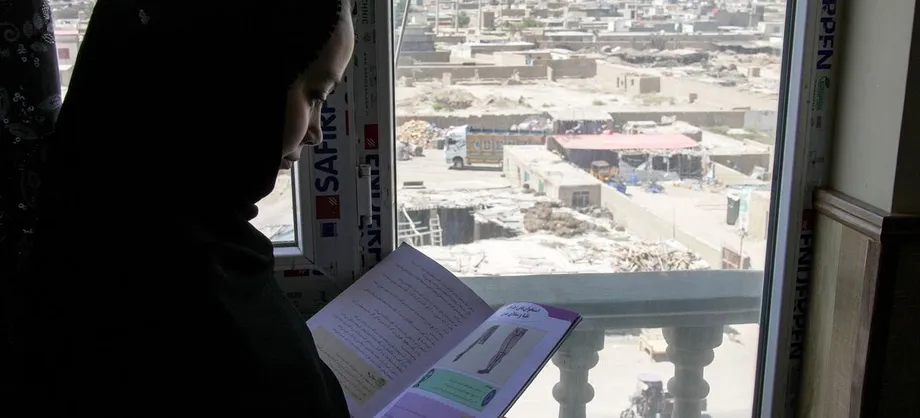
The education restrictions are among the clearest differences between rules imposed on the population generally and those directed at women and girls. Taliban rules bar girls from education beyond the sixth grade and women from university study. UN Women has described Afghanistan as the only country where girls are prohibited from secondary education and women from university education.
In its statement welcoming the warrants, the ICC Office of the Prosecutor connected the additional cases directly to the right to education. Deputy Prosecutor Nazhat Shameem Khan said:
The issuance of the two additional arrest warrants in the Situation of Afghanistan is a further vindication of the rights of Afghan women and girls, particularly their right to education. Education is a fundamental human right that must be enjoyed by all. Afghan women and girls deserve accountability for the severe deprivation of their rights and freedoms.
From investigation to public warrants
The October decision follows years of proceedings over Afghanistan, followed by separate applications against the four Taliban officials. The distinction between applying for a warrant, issuing it and publishing it explains why some names were known long before the documents became public.
- March 2020: ICC judges authorised an investigation into the Afghanistan situation.
- October 2022: Judges authorised the investigation to resume after a pause involving Afghanistan's former government's request to defer proceedings.
- 28 November 2024: Six ICC member states referred the Afghanistan situation to the prosecutor.
- 23 January 2025: The prosecutor applied for warrants against Akhundzada and Haqqani.
- 6 March 2025: The prosecutor applied for warrants against Agha and Nadim.
- 8 July 2025: Judges issued the first two warrants and disclosed their existence while keeping them under seal.
- 9 September 2025: Judges issued the warrants against Agha and Nadim.
- 5 October 2026: The chamber unsealed all four warrants, with sensitive information redacted.
The ICC's July warrant announcement explains the original decision to keep the documents confidential: protecting victims and witnesses and safeguarding the proceedings. At the same time, judges considered public knowledge of the warrants useful for preventing further crimes.
What persecution means in this case
The legal charge is persecution as a crime against humanity under Article 7(1)(h) of the Rome Statute, the treaty establishing the ICC. In accessible terms, the case concerns severe deprivation of fundamental rights because people belong, or are perceived to belong, to a targeted group. The chamber identified both gender grounds and political grounds.
Judges found reasonable grounds to believe that the suspects, acting on behalf of the Taliban, implemented government policy producing severe violations of the civilian population's rights. They connected that policy with acts of murder, imprisonment, torture, rape and enforced disappearance. Enforced disappearance involves people being deprived of their liberty while their detention or whereabouts are concealed.
The central alleged offence described in the announcements is persecution. The references to other acts explain the violence and abuse connected with it; they should not be mistaken for a final conviction of each suspect for every listed act.
The chamber also distinguished restrictions affecting all Afghans from the specific targeting of women and girls because of their gender. It said decrees and edicts severely deprived them of education, privacy and family life, alongside freedoms of movement, expression, thought, conscience and religion.
Harm beyond physical violence
A central part of the judges' reasoning is that gender persecution can take forms other than direct physical or sexual violence. Institutions and discriminatory social rules can themselves impose serious harm when they strip a targeted population of fundamental rights.
That reasoning connects the education bans to restrictions on employment, access to public spaces and participation in daily life. It allows the case to examine the operation of Taliban policy, rather than treating every restriction as an isolated incident unrelated to the others.
Human Rights Watch, in its January 2025 assessment, described more than 100 written or announced Taliban decrees restricting the rights of women and girls. The organisation cited limits on movement, expression and association, prohibitions on many forms of work, education bans and arbitrary detention.
Other reported accusations concern the legitimisation of domestic violence, abolition of the minimum marriage age law and restrictions on women's ability to seek divorce. Those accusations form part of the wider account of Taliban rule, but the ICC announcements do not establish that each is a separate charge in these four warrants.
Gender identity and supporters are also covered
The chamber interpreted gender in the Rome Statute as extending beyond a purely biological understanding of sex. It said the assessment of gender persecution must recognise social roles, behaviours, expectations and hierarchies traditionally attached to people because of their sex.
This interpretation matters because the alleged targeting includes people whose sexuality, gender identity or expression the Taliban considers incompatible with its policies. The prosecutor's office expressly identified members of the LGBTQI+ community among those whose rights and experiences the warrants recognise.
A separate strand concerns persecution on political grounds. Judges said people perceived as opposing Taliban gender policies were targeted even when their opposition was passive or took the form of failing to act. The chamber described those considered allies of women and girls as people the Taliban viewed as political opponents.
The two strands therefore cover different reasons for targeting. One concerns gender and conformity with Taliban gender expectations. The other concerns perceived opposition to those policies. The finding does not limit alleged political persecution to people who joined an organised opposition movement or publicly protested.
Why publication does not mean immediate arrest
Unsealing makes the allegations and judicial findings accessible, but it does not place the suspects in custody. Public versions of the warrants contain redactions, and some documents connected with their issuance remain confidential.
The court's stated reasons for publication include informing victims and the public, preventing further crimes and supporting international cooperation in enforcement. The decision also instructed the Registry, the court's administrative arm, to prepare requests for assistance with arrest and surrender where necessary and send them to relevant authorities.
Actual enforcement depends on cooperation by states and other relevant bodies. ICC member states have treaty obligations to cooperate with the court, including in executing arrest and surrender requests. Afghanistan is itself a member of the ICC, although the Taliban rejects the institution.
The warrants therefore create a legal demand for arrest, not a prediction about when an arrest will happen. The public announcements give no arrest date, surrender arrangement or scheduled trial for these four suspects. Publication may support enforcement, but the decisive practical step remains bringing the suspects before the court.
Taliban rejection and international pressure
Taliban spokesman Zabihullah Mujahid rejected the warrants, saying the movement does not recognise the ICC or attach value to its positions. He maintained that Taliban leaders had committed no acts deserving arrest or punishment and said they answer to Islamic Sharia rulings and courts.
That response disputes both the court's authority and the substance of the accusations. It does not alter the judges' decision or withdraw the warrants. A statement attributed to the Embassy of Afghanistan said the country's obligations to the ICC were not nullified by Taliban declarations.
Separately, the UN Human Rights Council adopted a resolution condemning the worsening oppression of women and girls and calling on the Taliban to repeal its discriminatory policies. Its response addresses the wider human rights situation, while the ICC proceedings concern the alleged criminal responsibility of named individuals.
The distinction matters for expectations. A demand to repeal restrictions seeks a change in policy. An arrest warrant seeks custody of a suspect so criminal proceedings can advance. Neither announcement establishes that the Taliban has lifted the education bans or other restrictions identified by the court.
The investigation extends beyond these four suspects
The prosecutor's office says it continues to investigate alleged gender persecution and persecution on political, ethnic and religious grounds in Afghanistan. The four warrants do not mark the end of that work, and no date has been announced for further applications.
Rights organisations have also called for a wider approach to accountability. In its response to the applications, Amnesty International urged investigations into serious violations from May 2003 onward, including attacks on Hazaras and religious minorities by Islamic State of Khorasan Province.
Amnesty also urged the prosecutor to reconsider the 2021 decision to give lower priority to investigations into alleged war crimes by US military and CIA personnel, other international forces and the former Afghan government's security apparatus. Human Rights Watch likewise called for investigations covering abuses by those actors, alongside the Taliban and Islamic State of Khorasan Province.
These demands concern the breadth of the Afghanistan investigation, not a defence of the four Taliban suspects. Both organisations argue that accountability should reach other alleged perpetrators and victims whose cases are not addressed by these warrants.
Amnesty Secretary General Agnès Callamard also called for gender apartheid to be recognised as a crime under international law. That is a separate legal proposal. The offence identified in the present warrants is persecution under the Rome Statute, not a distinct charge of gender apartheid.
The immediate position is therefore specific: four public warrants, allegations covering a defined period beginning in August 2021, and an investigation that remains open. Whether the suspects are arrested, whether further warrants follow and how broadly other alleged crimes are pursued are unresolved. The court has announced no next hearing or deadline for these four cases.
Key Points
- The ICC unsealed four Taliban arrest warrants on 5 October 2026.
- The suspects are Haibatullah Akhundzada, Abdul Hakim Haqqani, Habibullah Agha and Neda Mohammad Nadim.
- The warrants allege persecution on gender and political grounds as a crime against humanity.
- The alleged crimes span 15 August 2021 until at least 20 January 2025.
- The case covers women, girls, people targeted over gender identity or expression, and perceived supporters of women and girls.
- The warrants are not convictions, and all four suspects were reported to remain at liberty.
- Enforcement depends on cooperation, while investigations into other alleged persecution continue.