
A regional agenda built for a more fragmented world
Singapore plans to use its 2027 chairmanship of the Association of Southeast Asian Nations to strengthen economic ties within the bloc and connect it with a wider range of partners. Foreign Minister Vivian Balakrishnan said the goal is to help member states combine their strengths in fields such as energy and technology, while opening more channels with Europe, Canada, Africa, South America and the Pacific Islands.
Contents
- A regional agenda built for a more fragmented world
- Why integration is central to the chairmanship
- Partnerships beyond ASEAN’s usual networks
- Technology growth brings standards and safety questions
- How Singapore is positioning itself between major powers
- Growth is an opening, not a guarantee
- The Bottom Line
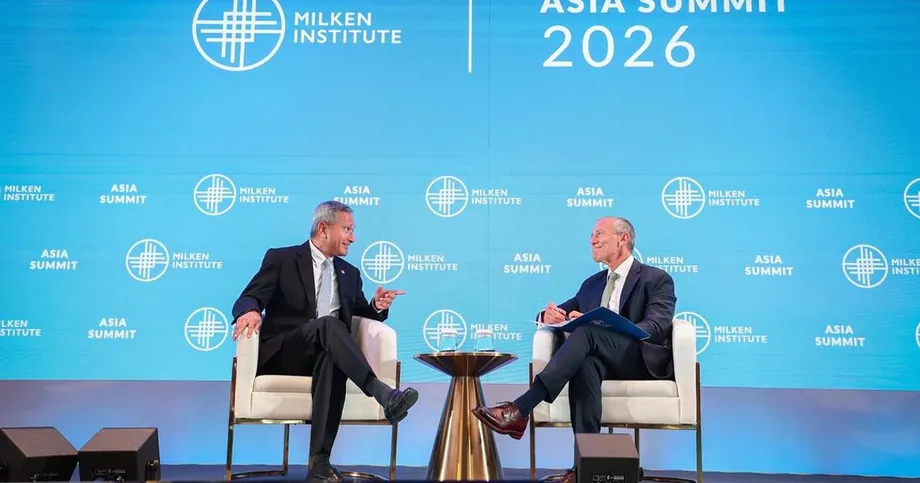
Singapore will take the rotating chair from the Philippines. Its test of success, Balakrishnan said at the Milken Institute Asia Summit in Singapore on Oct. 7, will be whether ASEAN economies keep growing and become more integrated, so their collective capabilities exceed what each country could achieve alone.
The agenda comes as trade barriers rise, supply chains are being reorganized and strategic competition between major powers puts pressure on smaller economies. Balakrishnan argued that Southeast Asia should be judged on its own economic and political merits, not treated as an arena for superpower rivalry or proxy conflicts.
He described ASEAN, whose members together form the world’s fourth-largest economy, as having substantial room to grow over the next two decades. Strong performance in several regional economies during the first half of 2026 has added urgency to the question of how countries can turn current demand into broader, more durable cooperation.
For Singapore, integration means more than increasing trade. It means connecting energy systems, technology capabilities, supply chains and economic policies so that countries can better withstand disruptions. Balakrishnan compared the task to linking economies closely enough to cope with rough conditions.
Why integration is central to the chairmanship
ASEAN’s members have different economic structures and levels of development. Some are major manufacturing centres; others are important sources of energy, commodities, labour or services. Closer coordination can help businesses operate across borders and allow countries to share infrastructure and expertise, while reducing their exposure to a shock in any single market or supply route.
The region’s growth is being supported in part by artificial intelligence, semiconductors and related technology. Chips are essential components in data centres, telecommunications equipment, vehicles and industrial systems. As companies expand computing capacity and spread production across more locations, Southeast Asian economies have drawn investment and export demand.
Balakrishnan cited first-half growth figures of more than 8 per cent for Vietnam, 6.1 per cent for Singapore and more than 5 per cent for Malaysia and Indonesia. Separate forecasts and reporting have also pointed to strong growth in regional electronics exports. Singapore’s role in semiconductor production is substantial: the country accounts for about one in 10 chips made worldwide, and a major new wafer fabrication plant opened there in 2026.
The technology boom brings risks alongside business opportunities. A World Bank warning cited in reporting on the region’s growth is that dependence on AI-related investment could become a vulnerability if global spending slows. Countries can also compete for the same investments, talent and industrial capacity. A more connected regional market could help ASEAN members attract projects while spreading the benefits across the bloc.
Broader partnerships are another part of the strategy. Singapore has described its aim as extending ASEAN’s reach beyond traditional dialogue partners, including through a wider trans-Pacific approach. Prime Minister Lawrence Wong has separately said that the chairmanship should strengthen ties with existing partners and seek opportunities in Latin America, Africa and the Middle East. Senior Minister Lee Hsien Loong has pointed to possible cooperation between Southeast Asia and Central Asia.
Partnerships beyond ASEAN’s usual networks
The proposed outreach is already taking practical form. During a visit to Kazakhstan in August, Lee said Singapore would explore closer cooperation between Southeast Asia and Central Asia in transport, connectivity, energy and sustainable development. Agreements announced alongside the visit covered digital trade routes and water management.
One partnership aims to improve digital coordination along the Middle Corridor, a transport route linking China and Europe through Central Asia and other regions. Better handling of trade documents, logistics and supply-chain information could help goods move across borders where customs systems and processes differ. Singaporean officials have described the route as a strategic alternative as conflicts disrupt other trade links.
A second agreement concerns water management. Singapore is to share experience in areas including water sustainability, flood management, water reclamation and digital systems. Kazakhstan faces pressure on water supplies from climate change, rising temperatures and declining resources, including changes affecting rivers fed by glaciers. The collaboration may also create openings for companies working in water technology and infrastructure.
These efforts reflect a broader Singaporean argument: countries can remain connected even as the global economy becomes more fragmented. Wong has said Singapore cannot afford to turn inward because trade is about three times the size of its gross domestic product. He has also presented the country as a potential connector between regions seeking new commercial and diplomatic links.
That approach is not a substitute for ASEAN’s established relationships. Rather, it seeks to add more routes for cooperation and investment. For a region dependent on trade, a wider network may offer more options when political disputes, tariffs or conflicts disrupt established channels.
Technology growth brings standards and safety questions
Singapore’s chairmanship is also likely to focus on how countries govern emerging technologies. Balakrishnan pointed to artificial intelligence and biotechnology as fields where rapid development makes shared international standards increasingly necessary. Such standards can help establish common expectations for safety, accountability and cross-border activity, even when national laws differ.
AI systems are software trained on large collections of data to perform tasks such as generating text, analyzing information or controlling automated processes. More advanced systems can take actions through connected tools, which can make them useful but also harder for people to predict and supervise. Balakrishnan said his own experiments with AI agents had convinced him that loss of control is a real risk.
He warned that state and non-state actors could misuse AI in areas such as chemistry and biology, potentially helping them develop dangerous weapons. He also argued that AI can reflect biases and harmful material in the data used to train it. The point is not that every system will cause harm, but that technical capability can spread faster than institutions and safeguards can adapt.
Biotechnology presents a related challenge. Advances in the ability to read, design or modify biological material can support medicine and agriculture, while also creating risks if misused. International standards and cooperation can help governments share information and reduce gaps between national oversight systems.
Balakrishnan cited the UN High Seas Treaty as evidence that countries can still reach agreements on complex issues. Formally known as the Biodiversity Beyond National Jurisdiction agreement, the treaty concerns marine areas beyond any country’s national waters. Singaporean diplomat Rena Lee led the negotiations, and UN members adopted the agreement by consensus in 2023. It entered into force on Jan. 17 after ratification by more than 80 countries.
The treaty is relevant to the technology debate because it shows how states can set shared rules for an area that no single government controls. Balakrishnan described such agreements as necessary safeguards, or brakes, that allow societies to pursue innovation without ignoring risks.
How Singapore is positioning itself between major powers
The push for wider ASEAN connections sits alongside Singapore’s effort to preserve room for independent choices amid US-China rivalry. At the Milken discussion, Balakrishnan said maintaining trust with both powers is vital. The United States is a source of investment and technology and a major market for Singaporean goods and services. China is linked to Singapore through deep economic, cultural and historical ties.
He said Singapore does not want to become a vassal or a proxy of either power. That position reflects a practical concern for a small, trade-dependent country: choosing sides could narrow its strategic options and expose its economy to decisions made elsewhere. Balakrishnan said Singapore aims to take a steady, principled position based on its own long-term interests.
His comments also placed today’s rivalry in the context of domestic pressures in the United States and China. In his account, political polarization in the US and economic imbalances and demographic challenges in China have contributed to strains in the international system. The previous era of expanding globalization, with open markets and supply chains organized for efficiency, is giving way to a period in which governments and companies place more weight on resilience.
That shift is often described as moving from “just in time” production to “just in case.” The first approach keeps inventories low and relies on goods arriving when needed. The second holds more запас запас? Need ASCII. replace via rewrite. The sentence went: holds more запас. Must rectify. Short translate. The second approach keeps reserves or spreads suppliers to reduce the damage if a shipment is delayed or a route closes.
Singapore’s position is not free of tension. Wong has voiced frustration over US tariffs on Singapore despite a free-trade agreement, while also recognizing concerns about goods being routed through third countries to avoid tariffs. He has said many pharmaceutical and semiconductor firms operating in Singapore are American, underlining how closely intertwined trade and investment can be even during policy disputes.
Growth is an opening, not a guarantee
Strong technology demand has helped Southeast Asian economies grow while other parts of the world face trade disruption. That momentum could support new jobs, investment and capabilities. It also creates exposure to shifts in global demand, especially if growth depends heavily on a narrow set of industries or on investment in data centres and AI infrastructure.
Singapore’s leaders have stressed the need to use the current window to build capabilities that last beyond a single boom. Wong has said the semiconductor sector should be used to develop new skills and better jobs, while ensuring workers share in the gains from AI. Singapore’s tripartite system, which brings together government, employers and unions, is intended to help manage changes in workplaces and provide safeguards as technologies are introduced.
Trust is another part of the government’s case for Singapore’s role. Balakrishnan said transparent rules, reliable contracts and honest communication about trade-offs help preserve public confidence during rapid change. He argued that governments which cannot explain the costs and choices involved may find it harder to make decisions, particularly when societies are already divided.
For ASEAN, the same principle applies across borders. Integration requires countries to agree on practical rules and to accept that cooperation may involve compromise. Shared standards for technology, easier trade procedures and stronger links between energy and transport systems could deliver benefits, but they also require sustained political effort from governments with different priorities.
The Bottom Line
- Singapore will chair ASEAN in 2027 and wants deeper economic integration among member states.
- The country plans to widen ASEAN engagement with Europe, Canada, Africa, South America, the Pacific Islands and Central Asia.
- Technology demand, especially for AI and semiconductors, is supporting regional growth but also creates economic and safety risks.
- Singapore is calling for international standards in emerging fields and points to the UN High Seas Treaty as an example of successful cooperation.
- Balakrishnan says Singapore will seek to maintain working relationships with both the United States and China without becoming a proxy for either.