
A small acquisition with a wider industry story
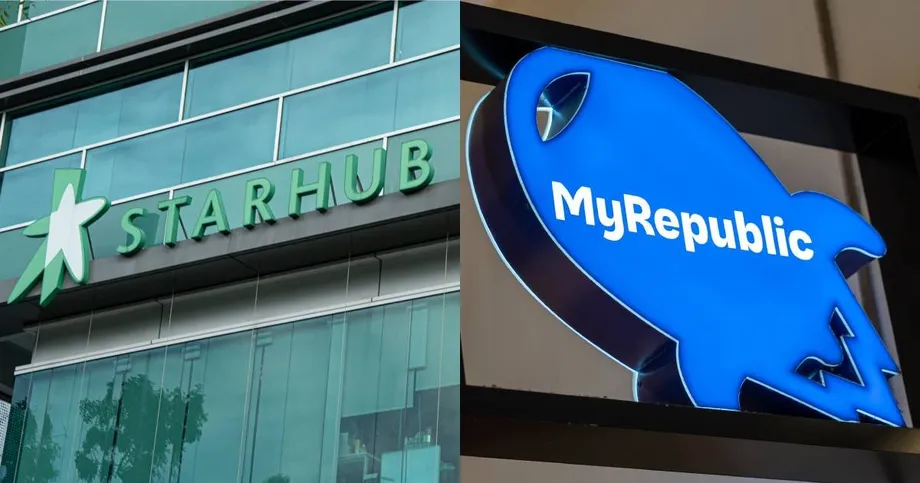
StarHub plans to acquire MyRepublic’s Singapore mobile business, bringing the two companies’ local broadband and mobile operations under StarHub ownership. The deal covers a business with about 85,000 active subscribers and reported net profit of $2.4 million for the 12 months ended June 30. Completion is expected by April 30, 2027, subject to conditions being met, including regulatory approval.
Contents
For customers, the companies say the change should not disrupt existing service. MyRepublic Mobile will keep its brand, plans and current service arrangements, while subscribers are progressively moved onto StarHub’s mobile network. The companies have already begun migrating MyRepublic customers from M1’s network, which the mobile virtual network operator used to provide service.
The deal’s financial terms have not been disclosed as a fixed purchase price. The amount will be calculated using factors including the number of active 4G and 5G subscribers, their average revenue per user, and how long they remain customers. StarHub will also pay MyRepublic an additional $1 million when 25,000 subscribers have migrated to its network, with another $1 million due if the total reaches 50,000 by March 14, 2027.
The acquisition is modest in subscriber numbers, yet it adds to a broader shift in Singapore’s mobile market. Larger operators have been absorbing or moving customers from smaller mobile brands, seeking greater scale in a sector facing price competition and pressure on revenue.
What changes for MyRepublic customers?
StarHub and MyRepublic say customers will retain their existing plans and services without interruption. MyRepublic Mobile will remain a distinct brand, while its subscribers gain access to StarHub’s network, including its nationwide 5G+ service. A 5G network can deliver faster data speeds and support more connected devices, although the experience a customer receives depends on location, device, network traffic and plan.
MyRepublic’s mobile service operates as a mobile virtual network operator, or MVNO. An MVNO sells mobile plans under its own brand but relies on another company’s radio network to connect customers. In this case, MyRepublic has been using M1’s network and is moving customers to StarHub’s network under an earlier agreement.
That existing migration means the acquisition is not starting with a sudden change to how every customer connects. StarHub says the transition already under way provides a basis for continuity. The companies have also said there will be no workforce reductions arising from the acquisition, according to StarHub’s statement to local media.
MyRepublic Group Chief Executive Vaughan Baker said continuity and service quality were the company’s main priorities. He thanked customers for their support and said their existing plans and services would remain in place.
For MyRepublic Mobile customers, we deeply appreciate your support and loyalty over the years and nothing changes for you.
Those commitments address the immediate customer concern, but service quality will depend on how the migration is managed and how StarHub’s network performs in the places subscribers use it. A change of network can affect coverage and performance differently from one location to another, even when a plan’s price and data allowance stay the same.
How the deal fits StarHub’s strategy
StarHub describes the acquisition as part of a multi brand approach: maintaining different names and plans to appeal to customers with different budgets and preferences, while supporting those services with a shared network. The company already owns MyRepublic’s local broadband business, completing its move to acquire the mobile operation as well.
StarHub Chief Executive Nikhil Eapen said the acquisition completes a process that began with the company’s investment in MyRepublic Broadband in 2021. The broadband business became wholly owned by StarHub after the remaining 49.9 per cent stake was acquired in August 2026, according to the supplied reports.
Eapen said consolidation would give the company greater scale for investment in networks, resilience and innovation. Chief Executive-designate Matt Williams said the transaction fits StarHub’s strategy of serving different customer segments through distinct brands, while extending access to StarHub’s network.
Different customers want different things from their mobile experience, and our approach allows us to offer distinct brands and propositions while giving more customers access to the strength of StarHub’s network.
In practical terms, owning more customers and brands can spread the cost of network investment across a larger base. Telecommunications networks require ongoing spending on radio equipment, backhaul links, software and maintenance. That scale may help an operator fund upgrades, but it does not by itself guarantee lower prices or better service for every customer.
StarHub has also moved customers from another MVNO, redOne, to its budget brand eight. These steps indicate that the operator is combining customer bases while continuing to market separate propositions, rather than placing every subscriber under one consumer facing brand.
How much is MyRepublic Mobile worth?
The final purchase price remains undisclosed and depends on the business’s subscriber profile. The reports say the calculation takes account of active 4G and 5G subscriber numbers, average revenue per user and subscriber lifetime. These measures help estimate the revenue stream attached to the customers being acquired.
MyRepublic Mobile’s blended average revenue per user was about $13 a month. ARPU is calculated by dividing service revenue by the number of users over a given period. It is a common industry measure, but it does not show profit on its own: operators must also account for network access costs, customer support, marketing and other expenses.
The business reported $2.4 million in net profit for the 12 months ended June 30. One report describes that figure as net profit before tax attributable to the mobile business, so the precise accounting basis should be considered when comparing it with other companies’ results. The subscriber linked payment milestones also mean part of the consideration depends on how quickly customers complete their migration.
The arrangement aligns some payment with the transfer of subscribers to StarHub’s network. It also makes the eventual cost less straightforward to assess than a single announced price. The migration targets and deadline provide measurable conditions, though the supplied reports do not set out the full formula or all transaction terms.
Why are Singapore’s telcos consolidating?
The MyRepublic deal arrives amid challenging trading conditions for mobile operators. StarHub’s mobile service revenue fell 10.5 per cent year on year to $245.3 million in the first half of the year ended June 30, according to the reports. Its underlying net profit, excluding cybersecurity business Ensign, fell 76.1 per cent to $12.4 million from $51.9 million a year earlier.
Singtel Singapore’s first quarter operating revenue declined 3.1 per cent year on year to $901 million. Singtel attributed the decrease to continued intense price competition. The figures point to pressure across the sector, though they cover different reporting periods and financial measures.
When prices and average revenue per user are under pressure, operators may seek savings by combining customer operations, reducing duplicated costs or moving subscribers onto networks they already control. A larger customer base can also strengthen the business case for investment in coverage and capacity. At the same time, fewer independent operators can reduce competitive pressure if consolidation limits the range of providers or weakens price competition.
Eapen said at an August earnings briefing that smaller MVNOs could be absorbed by larger, well funded operators as the industry consolidates. StarHub’s acquisition is one example of that trend, although its 85,000 subscribers represent a limited step compared with a major merger between network operators.
StarHub and Keppel confirmed in September that they were in talks over a potential transaction involving M1. The talks follow an earlier proposed sale of M1 by Keppel to Simba that was blocked by the regulator, according to the supplied research. Any eventual agreement involving M1 would be a separate and much larger development; the MyRepublic acquisition does not itself settle the future ownership of M1.
What the transaction does and does not establish
The deal strengthens StarHub’s position as both a network operator and the owner of multiple consumer brands. It gives MyRepublic Mobile customers a path from M1’s network to StarHub’s, while preserving the brand and plans they already know. It also completes StarHub’s stated effort to bring MyRepublic’s Singapore broadband and mobile businesses under one owner.
However, the acquisition alone does not show whether customers will see better prices, faster service or improved coverage. Those outcomes will depend on the terms customers keep, the quality of the migration and how StarHub allocates future network investment. The company says it plans to invest in faster speeds and stronger indoor coverage, but those are stated priorities rather than results already measured for MyRepublic subscribers.
The transaction remains subject to applicable conditions and is expected to close by April 30, 2027. Until then, the immediate focus is the continued migration of subscribers and the payment milestones tied to that process.
Key Points
- StarHub plans to acquire MyRepublic’s Singapore mobile business, with completion expected by April 30, 2027, subject to conditions.
- The business has about 85,000 active subscribers and reported $2.4 million in net profit for the 12 months ended June 30.
- MyRepublic Mobile customers are expected to keep their existing brand, plans and services as they move to StarHub’s network.
- The purchase price depends on subscriber numbers, average revenue per user and subscriber lifetime.
- StarHub will pay migration bonuses of $1 million at 25,000 subscribers and another $1 million if 50,000 have migrated by March 14, 2027.
- The acquisition adds to consolidation in Singapore’s mobile market, where operators face falling revenue and intense price competition.