
Appeal challenges the escalation from prison to execution
An appeal seeking to overturn the death sentence imposed on Sri Lankan migrant worker Anojan Sivarasa has been filed with Saudi Arabia's Supreme Court, following consultations between lawyers from both countries. Filing reports place the submission on Sunday, October 11, with two explicitly giving the date as October 11, 2026.
Contents
- Appeal challenges the escalation from prison to execution
- How the Facebook exchange became a capital case
- The sequence of legal and diplomatic action
- Who prepared the Supreme Court appeal?
- What the Supreme Court review can establish
- Clemency campaign seeks help beyond the courts
- Prison contact and the family's plea
- Travel disruption and the wider stakes
- Key Points
Sivarasa, described as a 24 year old from Kalmunai in Sri Lanka's Eastern Province, was initially sentenced to five years in prison over a Facebook post considered insulting to the Prophet Muhammad. Prosecutors subsequently sought proceedings under Sharia law, and an appeals court replaced the prison sentence with the death penalty.
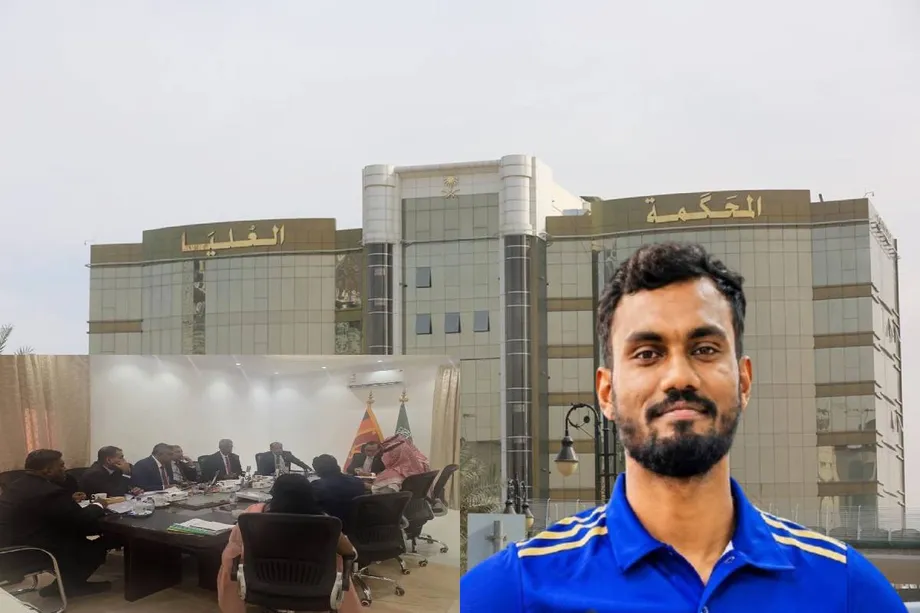
The Saudi legal team submitted the latest appeal after several rounds of discussions with a visiting Sri Lankan delegation. Sri Lanka's Embassy in Riyadh coordinated the work under Ambassador O.L. Ameer Ajwad. The filing marks a new stage in the effort to reverse the sentence, but no Supreme Court decision or hearing date has been announced in the reports.
The legal effort is running alongside requests for clemency, appeals for international intervention and concerns about Sivarasa's welfare in prison. Members of the visiting legal team were also reported stranded in Riyadh after their scheduled return flights were cancelled following attacks in the Saudi capital.
The distinction between an appeal and clemency matters. The appeal challenges the judicial outcome through the courts. The humanitarian requests seek mercy through a separate diplomatic effort. Neither the submission of an appeal nor a request for clemency establishes that the death sentence has been cancelled.
How the Facebook exchange became a capital case
Sivarasa had reportedly been in Saudi Arabia for less than a year when he was arrested on July 2. The incident began with an online argument surrounding a viral video showing a man kicking a stray dog that had accompanied Hindu pilgrims.
During the exchange, he allegedly made remarks insulting the Prophet Muhammad in response to a derogatory comment about a Hindu deity. He then deleted his Facebook post and published an apology video. Screenshots were reportedly sent to his employer and passed to Saudi authorities.
The Al-Ahsa Criminal Court initially imposed five years in prison and a fine of 3 million Saudi riyals under the country's cybercrime law. An appeal made on his behalf to reduce that sentence was rejected.
Prosecutors filed their own appeal on September 17, seeking to have him tried under Sharia law. That request was granted, leading to the death sentence. One account says the court classified the accusation as a hadd offense, a category under Islamic law associated with prescribed punishments. Without the judgment itself, the precise legal reasoning behind that classification cannot be established.
This sequence is central to the case: the dispute now before the Supreme Court concerns a punishment that became substantially more severe after the prosecution challenged the original outcome. The text of the post, the full judgments and the detailed grounds of the latest appeal have not been published in these accounts.
The sequence of legal and diplomatic action
The chronology traces the case from the arrest to the Supreme Court filing. Most accounts give the July and September dates without stating a year, while two filing reports explicitly identify October 11, 2026.
- July 2: Sivarasa was arrested following the Facebook exchange.
- Initial proceedings: The Al-Ahsa Criminal Court imposed five years in prison and a 3 million riyal fine.
- September 17: Prosecutors sought proceedings under Sharia law, after which the death sentence was imposed.
- September 21: His family met Sri Lankan President Anura Kumara Dissanayake and received assurances of government assistance.
- September 24: Six lawmakers wrote to Saudi Foreign Minister Faisal bin Farhan Al-Saud seeking clemency.
- October 10: An earlier account said relatives had been told the Supreme Court appeal was expected that day.
- October 11: Subsequent reports said the appeal had been filed, with two specifying 2026.
The October 10 account described an expected submission, rather than a completed filing. Later accounts place the actual submission on October 11. They do not explain the difference, so it should not be treated as proof that two separate appeals were lodged.
Who prepared the Supreme Court appeal?
The Sri Lankan delegation travelled to Saudi Arabia to assist local lawyers in preparing the challenge. Its senior members included President's Counsel Upul Kumarapperuma, President's Counsel Faizer Musthapha and Additional Solicitor General Asad Nawawi. President's Counsel is a senior professional designation for a lawyer in Sri Lanka.
Reports also identify a fourth lawyer, whose name appears as Hafeel Paris, Hafeel Farisz or Faris Fazal Abdul Hafeel Mohamed. Nawawi's name is variously rendered as Azad Navavi and Azard Navavi, while Musthapha also appears as Faiszer Musthapha. These spelling differences should not be read as evidence of additional delegation members.
Ambassador Ajwad coordinated consultations through the embassy in Riyadh. Accounts also identify Mohamed Riyazdeen Silmi, described as Musthapha's coordinating secretary, as a participant in the effort.
There are differences in the identification of the Jeddah consular representative. Some accounts name Judge Mohamed Lafir as consul general; another describes him as deputy consul. Other accounts give the name as Justice Mohamed Laba, Judge M.D. Mohamed or Judge M.T. Mohamed. The representative's exact name and title therefore require clarification.
The division of work is more consistent: the Sri Lankan specialists helped prepare the legal submissions, the Saudi lawyers handled the filing, and diplomatic officials coordinated the process. No account sets out the individual grounds each lawyer developed.
What the Supreme Court review can establish
Saudi Arabia's Supreme Court is described as the country's highest judicial authority, reviewing lower court decisions mainly on legal and procedural grounds. In practical terms, that places attention on whether the relevant law was applied correctly and whether the required judicial procedures were followed.
That description does not establish the arguments advanced in Sivarasa's appeal. It would be premature to say that his lawyers have challenged a particular evidentiary issue, the classification of the offense or the handling of his apology without access to their submission.
The requested result is the reversal or removal of the death sentence. Reports do not identify a scheduled hearing, a deadline for a ruling or an execution date. They also do not establish whether the filing has produced a formal suspension of any execution process.
Those unanswered points separate the procedural development from the ultimate outcome. The appeal has been submitted, but no decision granting relief has been reported.
Clemency campaign seeks help beyond the courts
Six lawmakers from minority Tamil speaking political parties wrote to Saudi Foreign Minister Faisal bin Farhan Al-Saud on September 24, asking for clemency. Their appeal said intentional disrespect toward Islam was not in Sivarasa's character.
Jeevan Thondaman, one of the lawmakers involved, acknowledged the obligation of people working abroad to respect local laws and culture. He nevertheless challenged the proportionality of the sentence:
I don't believe a person should be put to death for blasphemy.
Thondaman called for Sri Lanka to seek assistance from Saudi allies, including India and the United States. Opposition lawmaker Mano Ganesan separately urged President Dissanayake to ask Indian Prime Minister Narendra Modi to intervene with Saudi Crown Prince Mohammed bin Salman in pursuit of a humanitarian resolution.
Foreign Minister Vijitha Herath told Sri Lanka's parliament that officials were working with two legal teams in Saudi Arabia to overturn the sentence. He also said a parliamentary delegation was expected to travel to Riyadh carrying a clemency appeal from Dissanayake. The accounts do not confirm whether that visit took place.
Religious organisations have urged stronger government action, while civil society groups have launched petitions against the sentence. These efforts seek to widen diplomatic attention, but no resulting Saudi decision on clemency has been reported.
Prison contact and the family's plea
Ambassador Ajwad visited Sivarasa at Dammam Central Prison before the Supreme Court filing. An account describing an embassy statement says the ambassador discussed his needs and concerns and assured him of consular and legal support under instructions from Sri Lanka's foreign ministry.
Ajwad reportedly gave Sivarasa his personal telephone number to allow direct communication. That detail is relevant to a case in which the family had said it had received no update about him since September 28.
Herath told parliament that Sivarasa had been moved to another cell after suffering bruises during an altercation with a fellow inmate. No subsequent medical assessment is described.
His mother, Rasamanickam Yogalakshmi, appealed for mercy and his return to the family:
I plead for mercy for the wrongs committed by my son. Please forgive him and send him back to us.
After the family's September 21 meeting with Dissanayake, the government promised to pursue a pardon and offered to cover legal fees. Those assurances support the family's access to representation, but do not determine how the Saudi courts will rule.
Travel disruption and the wider stakes
The visiting Sri Lankan lawyers were reported stranded in Riyadh after scheduled return flights were cancelled following recent attacks in the Saudi capital. One account specifically described missile attacks, while others referred more generally to attacks. No revised departure date or further details about the cancellations were given.
The disruption did not prevent the reported completion of the appeal. It remains a separate issue from the judicial timetable, and the accounts do not establish that it delayed consideration by the Supreme Court.
The case also has resonance for a large migrant community. Estimates attributed to Sri Lanka's embassy put the number of Sri Lankans living and working in Saudi Arabia at more than 245,000.
One report gives Saudi execution totals of at least 356 in 2025 and 345 in 2024, an increase of 11, or approximately 3.2%. These national figures provide context for the use of capital punishment, but do not predict Sivarasa's individual outcome.
A separate online speech case shows why reversal of a death sentence must be distinguished from release. Retired Saudi teacher Mohammed Al Ghamdi received a death sentence in 2023 over social media comments. That ruling was later overturned and replaced with a 30 year prison sentence, according to accounts citing human rights groups. His case demonstrates that a sentence can change while a severe prison term remains; it does not establish a legal precedent controlling Sivarasa's appeal.
Key Points
- An appeal against Sivarasa's death sentence was reported filed on October 11, with two accounts specifying 2026.
- He initially received five years in prison and a 3 million riyal fine before prosecutors sought proceedings under Sharia law.
- Sri Lankan and Saudi lawyers prepared the appeal with coordination from Sri Lanka's embassy in Riyadh.
- Lawmakers are pursuing clemency and international assistance alongside the court challenge.
- The visiting legal team was reported stranded after return flights were cancelled following attacks in Riyadh.
- No Supreme Court ruling, hearing date or execution timetable has been reported.