
A border clash exposes a widening rupture
Pakistan's military said 12 Tehreek e Taliban Pakistan members and Afghan Taliban personnel were killed during an attempted infiltration into Kurram district on October 10, 2026. One Pakistani soldier, 40 year old Naib Subedar Hidayat Aman of Ghizer district, also died. The military alleged that Afghan Taliban border posts fired on Pakistani troops to support the attempted crossing, an accusation that could not be independently verified.
Contents
- A border clash exposes a widening rupture
- Why the TTP has divided former allies
- How the confrontation became open warfare
- A timeline of failed efforts to contain fighting
- Drone attacks extend the conflict's reach
- What the October accounts establish and dispute
- Civilians bear costs beyond the military claims
- Why neighboring countries have not endorsed Pakistan's strikes
- A security crisis becomes a domestic confrontation
- What a settlement would still have to resolve
- Key Points
The following day, Pakistan's federal cabinet approved an emergency in Khyber Pakhtunkhwa, the province at the center of the border violence and a growing confrontation between the federal government and its provincial political opponents. President Asif Ali Zardari endorsed the decision under Articles 232 and 234 of Pakistan's Constitution, according to the presidential office.
These developments show how far the relationship has deteriorated since Pakistan welcomed the Taliban's return to Kabul in August 2021. A partnership that lasted more than three decades has given way to airstrikes, drone attacks, disputed infiltration attempts and unsuccessful negotiations over the Pakistani Taliban, commonly called the TTP.
The scale of Pakistan's security crisis helps explain its pressure on Kabul. Pakistan recorded 1,232 militant attacks in the first nine months of 2026, already 169 more than during all of 2025. United Nations monitors estimate that about 6,000 TTP fighters are in Afghanistan. Kabul rejects accusations that Afghan territory is being used to threaten other countries.
The central dispute is therefore larger than who fired first in Kurram. Islamabad wants verifiable action against militants operating from Afghanistan. The Taliban authorities dispute Pakistan's allegations and reject military intervention as a way to settle them.
Why the TTP has divided former allies
The Afghan Taliban and the TTP are separate organizations. The Afghan Taliban governs Afghanistan, while the TTP conducts an insurgency against the Pakistani state. Their similar names do not mean that every TTP operation is ordered by Kabul, and Pakistan's allegations of direct Taliban assistance require evidence beyond the existence of militant groups on Afghan soil.
Nevertheless, United Nations monitors describe the TTP as enjoying greater freedom and support from Taliban authorities. Pakistan argues that this allows the group to organize attacks and move fighters across the frontier. Taliban leaders describe TTP members as Pakistani refugees and refuse to classify them as militants.
That difference in treatment has undermined Pakistan's expectation that its former ally would address its security concerns. Kabul has offered to relocate TTP fighters away from the Pakistani border. Islamabad considers relocation insufficient along a frontier with numerous routes, difficult terrain and communities connected across the boundary.
Pakistan instead demanded written guarantees that militants would not use Afghan territory to launch attacks. The Taliban rejected that demand, contributing to the failure of talks in Istanbul in November 2025. The disagreement concerns both the presence of fighters and what Kabul is willing to do about them.
How the confrontation became open warfare
The current conflict followed an earlier round of deadly border clashes in October 2025, when Pakistan closed major crossings and both sides issued sharply different casualty claims. That episode showed that the relationship was already vulnerable to escalation before the larger confrontation in 2026.
In February, militant attacks inside Pakistan intensified the pressure for a military response. An Islamic State Khorasan Province suicide bombing at a mosque in Islamabad on February 6 killed at least 31 worshippers and injured about 170 people. An attack on a security post in Bajaur on February 16 killed 11 soldiers and a child; the TTP claimed responsibility. A further suicide attack in Bannu on February 21 killed two soldiers.
Pakistan began strikes against suspected militant camps in Afghanistan on the night of February 21. Accounts also date the strikes or their announcement to February 22. Pakistan identified targets in Nangarhar, Paktika and Khost as belonging to the TTP, associated groups and Islamic State Khorasan Province. Afghan officials disputed the targeting claims and reported attacks on civilian locations.
Afghan Taliban forces retaliated against Pakistani border posts. Pakistan then announced Operation Ghazab lil Haq and expanded its attacks to Taliban military infrastructure, including targets in Kabul, Kandahar and Paktia. The February escalation into war marked a shift from strikes presented as operations against militant camps to direct fighting between Pakistan and Afghanistan's governing forces.
Pakistan's defense minister described the rupture on February 27:
Our patience has now run out. Now it is open war between us,
That declaration captured a change in the conflict's scope. Once Taliban forces and Pakistani troops were attacking each other directly, destroying TTP camps was no longer the only military objective.
A timeline of failed efforts to contain fighting
Diplomatic intervention has reduced the frequency and scale of some exchanges, but it has not resolved the dispute over militant activity. Chinese mediation and temporary ceasefires arranged through Qatar provided pauses rather than a lasting settlement.
- October 2025: Heavy border clashes prompted Pakistan to close major crossings.
- November 2025: Istanbul talks failed amid disagreement over written guarantees against attacks from Afghan territory.
- February 21 to 27, 2026: Pakistani strikes, Taliban retaliation and Operation Ghazab lil Haq expanded into direct warfare.
- April 2026: China hosted informal talks in Urumqi, which ended without agreement.
- During 2026: Ceasefires mediated by Qatar for Eid al Fitr and Eid al Adha failed to hold.
- September 18 and 26: Attacks in Khyber Pakhtunkhwa killed about 44 people and injured about 138, followed by Pakistani airstrikes.
- October 5: The eighth Moscow Format meeting ended without a joint statement.
- October 10 and 11: Pakistan reported the Kurram clash and approved an emergency in Khyber Pakhtunkhwa.
Kurram has repeatedly been a flashpoint. During July fighting in Kurram, Pakistan said it attacked Taliban posts after Afghan forces fired on its positions. Those battlefield claims were also unverified, illustrating how recurring exchanges have produced little agreement about responsibility.
Drone attacks extend the conflict's reach
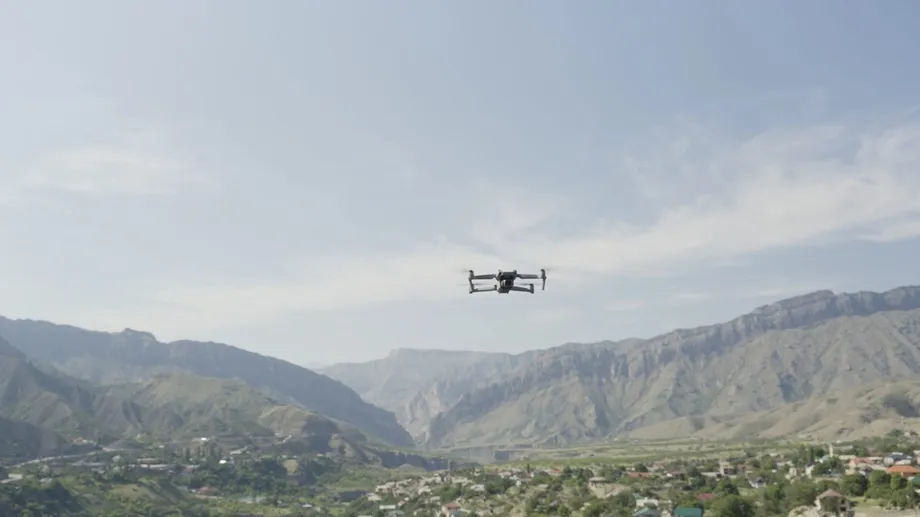
Drones have added another layer to the confrontation. Pakistan reported shooting down eight drones on September 23, four near Torkham and four near Kohat in Khyber Pakhtunkhwa. It said it responded by striking 10 locations in Afghanistan used to launch or store drones.
A separate account describes eight drones entering the Gulistan sector and subsequent Pakistani air raids in Kunar and Helmand. It does not establish that this was the same incident as the September 23 interceptions. The different locations should not be combined into one confirmed sequence.
The Afghan Taliban claimed 15 drone attacks in Khyber Pakhtunkhwa and Islamabad between February 27 and March 15. Those claims do not establish that every drone reached its target or caused damage. They do show an asserted ability to attack beyond the immediate frontier.
The Taliban's 313th Battalion, associated with the Haqqani network, is reported to use drones designed to strike a target and detonate rather than return to their operators. Reported launch locations include Kandahar, Nangarhar, Paktia and Paktika. Taliban forces have also reportedly obtained systems intended to counter drones, with deployments planned near Kandahar's 205th Corps and Spin Boldak.
Small drones can carry cameras or explosives and may be difficult to detect when flying low over mountainous terrain. Pakistan faces both direct Taliban drone attacks and the possibility that affiliated militant groups obtain similar technology. The extent of any transfer to the TTP is not established, however, and should not be treated as a confirmed explanation for every drone incident.
What the October accounts establish and dispute
Pakistan's Inter Services Public Relations, the military's media wing, dated the attempted Kurram infiltration to October 10 and released its account on October 11. It said Afghan Taliban posts opened fire to assist the crossing and that Pakistani troops killed a combined total of 12 TTP members and Afghan Taliban personnel.
Some reports describe all 12 as militants attempting to cross. Others retain the military's distinction between TTP members and Taliban personnel. No verified breakdown establishes how many belonged to each group. The death of Hidayat Aman is consistently included in Pakistan's account.
ISPR presented the incident as evidence that Kabul was failing to prevent attacks from Afghan territory. In its statement, the military said:
The Afghan Taliban regime has consistently failed to honor its international counter-terrorism obligations.
Kabul had not immediately responded directly to that statement. Separately, the Taliban's 203 Mansouri Corps reported fighting near Dand Patan district in Paktia and alleged that Pakistani forces fired first. Reports differ on whether that confrontation occurred on Friday evening, Saturday evening or was reported on October 11.
The corps also alleged that Pakistan used 14 ballistic missiles and several drones. Its spokesman, Abdul Haq Fida, said the fighting had ended without casualties among his forces. Pakistan had not publicly addressed those particular allegations at the time they were reported.
The Kurram casualty claim and the Taliban's account of Dand Patan should therefore not automatically be treated as descriptions of a single, fully documented encounter. Neither the alleged missile use nor the competing accounts of who initiated the fighting has been independently established.
Civilians bear costs beyond the military claims
The United Nations Assistance Mission in Afghanistan said Pakistani strikes in Kunar and Helmand on October 1 killed at least 10 civilians and injured nine. Pakistan said it targeted militant hideouts, while Afghan officials accused it of hitting civilian areas.
A separate account published on September 30 described strikes that day on civilian homes in the same provinces and condemnation from the Taliban administration's deputy spokesman, former officials and residents. The dates differ, so those accounts cannot establish whether they describe the same strikes or separate attacks.
Local accounts of the October border fighting also described heavy weapons fire in Aryob Zazi district of Paktia, alleged targeting of villages and residents fleeing their homes. The number of possible casualties there remained unclear.
Opposition to Pakistan's attacks has appeared away from the frontier. Religious scholars and residents in Bamiyan protested after Friday prayers at several mosques, according to a video published in early October. Those protests show that anger over the strikes extends beyond the districts where fighting is taking place, although they do not establish the scale of opinion across Afghanistan.
Why neighboring countries have not endorsed Pakistan's strikes
The Moscow Format meeting on October 5 brought together representatives dealing with Afghanistan's political, economic and security relations. It failed to produce a joint statement because Pakistani and Afghan delegates disagreed over language about terrorism. The Taliban objected to repeated references connecting terrorism with Afghanistan.
Russia's special envoy for Afghanistan, Zamir Kabulov, said Afghan delegates had accepted similar language the previous year. He suggested that the deterioration in relations with Pakistan might explain the changed position.
None of Afghanistan's neighbors has publicly endorsed Pakistan's airstrikes. China, Russia and Iran called for restraint and offered mediation, while Uzbekistan urged a diplomatic resolution. Their refusal to support military retaliation does not mean they accept attacks originating from Afghanistan.
Border geography helps explain their different assessments. Pakistan's frontier is described as about 2,640 kilometers long, compared with China's approximately 92 kilometers and Uzbekistan's 144 kilometers. On those figures, Pakistan's border is almost 29 times China's and more than 18 times Uzbekistan's. Earlier accounts give Pakistan's border as 2,611 kilometers or roughly 2,600 kilometers, reflecting variation in reported measurements.
China's frontier lies in the remote Wakhan Corridor, while Uzbekistan's runs largely along the Amu Darya, with regular movement concentrated at the guarded Termez and Hairatan crossing. Tajikistan faces a more difficult 1,374 kilometer frontier. Two attacks from Afghanistan's Badakhshan province killed five Chinese workers in Tajikistan in November 2025.
The Taliban have reportedly cooperated with investigations and arrested suspects after some attacks affecting northern neighbors. Their reported relocation of East Turkestan Islamic Movement fighters away from China's border also contrasts with Pakistan's dispute over the TTP. These differences help explain why other governments favor negotiation without adopting Islamabad's military approach.
A security crisis becomes a domestic confrontation
The emergency approved in Khyber Pakhtunkhwa on October 11 brought the external conflict into an escalating dispute within Pakistan. Prime Minister Shehbaz Sharif chaired the cabinet meeting, where officials alleged that the provincial government had deliberately withdrawn from efforts to combat terrorism.
The province is governed by Pakistan Tehreek e Insaf, and Chief Minister Sohail Afridi had been leading a protest march toward the federal capital. The federal government's accusation of inadequate action against militants is a political claim, not an independently established explanation for the deterioration in security.
The violence itself is measurable. The Pakistan Institute for Conflict and Security Studies recorded 225 militant attacks nationwide in September, compared with 199 in August. That is an increase of 26 attacks, or about 13 percent, and the third consecutive monthly rise.
The total of 1,232 attacks during January through September implies 1,063 during all of 2025, using the reported difference of 169. The first nine months of 2026 therefore exceeded the previous full year's total by about 16 percent. These national figures measure militant violence across Pakistan, not a verified count of attacks directed from Afghanistan.
Pakistan's military also reported killing seven militants during an operation in North Waziristan two days before the Kurram clash. That operation illustrates the parallel demands on its forces: confronting insurgents inside Pakistan while fighting and deterring attacks across the Afghan frontier.
What a settlement would still have to resolve
Pakistan says its operations will continue until Taliban authorities take verifiable action against militant groups on Afghan soil. Kabul rejects the accusations and says security concerns should be addressed through political negotiations rather than attacks on Afghanistan.
The gap is concrete. Islamabad wants commitments that can be checked, while Kabul has rejected written guarantees and offered relocation instead. Moving fighters away from the frontier would not by itself demonstrate that recruitment, planning or movement had stopped.
A durable agreement would need a way to examine alleged infiltrations, distinguish militant activity from direct military action and communicate during disputed incidents. Those are requirements suggested by the recurring problems, not measures that the two sides have already agreed to implement.
No new negotiating date or deadline is established. The unsuccessful Urumqi talks, failed Moscow statement and temporary holiday ceasefires leave the relationship without a demonstrated mechanism for preventing the next attack from triggering another exchange. Pakistan's former partnership with the Taliban has not disappeared from history, but it no longer provides a reliable basis for cooperation.
Key Points
- Pakistan said 12 TTP members and Afghan Taliban personnel were killed in an October 10 Kurram clash; one Pakistani soldier also died.
- The allegation that Taliban posts supported an infiltration attempt has not been independently verified.
- Pakistan approved an emergency in Khyber Pakhtunkhwa on October 11 amid security and political tensions.
- United Nations monitors estimate about 6,000 TTP fighters are in Afghanistan.
- Pakistan recorded 1,232 militant attacks in the first nine months of 2026, exceeding the full 2025 total by 169.
- Drone attacks and strikes on Taliban military infrastructure have widened the conflict beyond suspected militant camps.
- UNAMA reported at least 10 civilians killed and nine injured in October 1 strikes in Kunar and Helmand.
- Regional mediation has not secured agreement on Pakistan's demand for verifiable action against militant groups.