
Three balls turn the Abu Dhabi Test
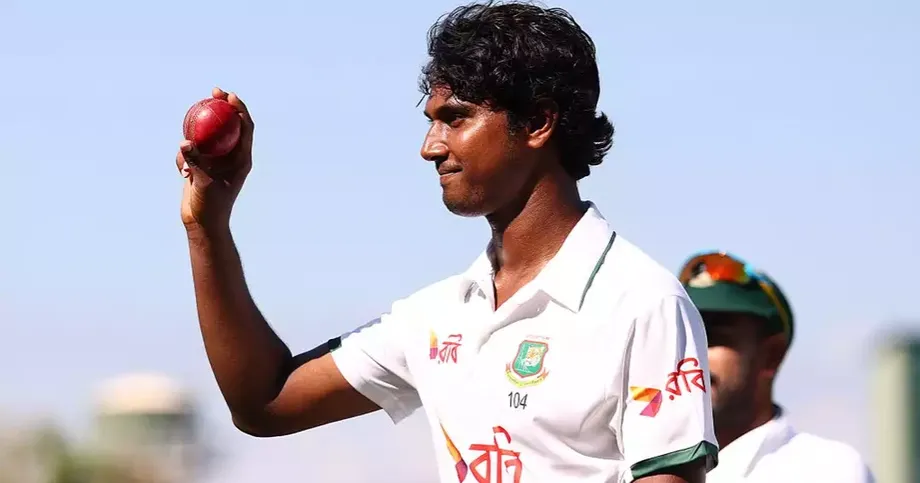
Hasan Mahmud took Bangladesh's first Test hat trick by a fast bowler, reached 50 Test wickets in a national pace record of 17 matches and helped his team establish a 329 run lead against Afghanistan on October 11, 2026. His three consecutive dismissals in the 83rd over at Sheikh Zayed Cricket Stadium transformed the third morning of the sole Test in Abu Dhabi.
Contents
- Three balls turn the Abu Dhabi Test
- How Mahmud completed the hat trick
- A third entry in Bangladesh's Test record
- Fifty wickets faster than any Bangladesh pacer
- Success across four different countries
- Ebadot and Rahmat shape the first innings finish
- Shanto and Mushfiqur rebuild after early losses
- Where the match figures differ
- Bangladesh plan more runs before the final push
- Key Points
The 26 year old removed Ismat Alam, Qais Ahmad and Zia-ur-Rehman with successive deliveries before finishing with five wickets for 55 runs in 21 overs. Afghanistan were dismissed for 240 in reply to Bangladesh's 346, conceding a first innings lead of 106. By stumps, Bangladesh had reached 223 for six in their second innings, with captain Najmul Hossain Shanto and Mushfiqur Rahim contributing 82 and 81 respectively.
Mahmud became the third Bangladesh bowler to take a Test hat trick, following leg spinner Alok Kapali in 2003 and off spinner Sohag Gazi in 2013. His achievement ended a 13 year interval since Gazi's feat and added a new milestone for a pace attack that claimed nine of Afghanistan's ten first innings wickets.
The match was not finished. Bangladesh still had four wickets available to extend their lead, while Afghanistan captain Rahmat Shah's unbeaten 105 demonstrated that determined batting remained possible. Yet the combination of Mahmud's morning burst and a 159 run partnership between Shanto and Mushfiqur gave Bangladesh control after both teams experienced periods of pressure.
How Mahmud completed the hat trick
Bangladesh took the second new ball at the start of the third morning. In Test cricket, the fielding side can request a replacement new ball after 80 overs. Its harder surface and more pronounced seam can help fast bowlers generate movement, making it an important attacking option against an established partnership.
Ebadot Hossain made the first breakthrough, bowling Ikram Alikhil for 32 and ending his 80 run fifth wicket partnership with Rahmat. Mahmud then struck in his second over of the morning, the 83rd of Afghanistan's innings.
Ismat, who had scored one from four balls, was bowled by a delivery that moved back towards him and passed beneath his bat. Qais edged the next ball behind for a duck. Wicketkeeper Litton Das, initially moving in the opposite direction, adjusted and dived low to his right to complete a catch described as being taken with one hand.
The third wicket required a review. Mahmud struck Zia on the pads, but umpire Allahuddein Palekar rejected the appeal for leg before wicket. Shanto requested the Decision Review System, or DRS, which allows teams to challenge certain decisions using video and tracking technology. UltraEdge showed no contact with the bat, while ball tracking indicated that the delivery would have struck the stumps. The decision was overturned, completing the hat trick.
Mahmud later credited his captain and wicketkeeper for their advice about the decisive review:
"Credit goes to the captain and Liton Das. They discussed it and corrected me, saying it was going to hit and that I could take the review. It feels amazing to get that kind of feedback from your teammates," he said.
A third entry in Bangladesh's Test record
Mahmud's achievement belongs alongside two earlier Bangladesh Test hat tricks, both taken by spin bowlers. Kapali recorded the first against Pakistan in Peshawar in August 2003, dismissing Shabbir Ahmed, Danish Kaneria and Umar Gul. Gazi followed against New Zealand in Chattogram in October 2013.
Some initial reports described Mahmud as Bangladesh's second bowler to achieve the feat and referred to a 23 year wait since Kapali. Those accounts omitted Gazi. With the 2013 performance included, Mahmud is the third Bangladesh bowler and the first fast bowler, with 13 years separating the two most recent hat tricks.
The key dates and stages are:
- August 2003: Alok Kapali takes Bangladesh's first Test hat trick against Pakistan in Peshawar.
- October 2013: Sohag Gazi takes the second against New Zealand in Chattogram.
- 2024: Hasan Mahmud makes his Test debut.
- October 11, 2026, morning: Mahmud takes Bangladesh's first Test hat trick by a fast bowler and reaches 50 Test wickets.
- October 11, 2026, stumps: Bangladesh reach 223 for six, leading Afghanistan by 329 runs.
Fifty wickets faster than any Bangladesh pacer
The hat trick was one part of a larger personal milestone. By dismissing Yamin Ahmadzai for a duck later in the innings, Mahmud completed his fourth Test haul of at least five wickets and reached 50 career wickets in his 17th match.
That made him the fastest Bangladesh fast bowler to reach the mark by matches played. Taskin Ahmed had needed 18 Tests, Mashrafe bin Mortaza 19 and Shahadat Hossain 21. Mahmud reached the milestone one match sooner than Taskin and four sooner than Shahadat.
The distinction is about speed to 50 wickets, rather than the highest career total. The reported totals place Mashrafe first among Bangladesh fast bowlers with 78 Test wickets, followed by Shahadat on 72 and Taskin on 59. Mahmud had reached 50 during this innings.
His fourth haul of five wickets also equalled Shahadat's reported record for the most such innings by a Bangladesh pacer. Taken together, those figures show why the morning mattered beyond the rarity of three wickets in three balls: Mahmud was also building a record of sustained success after debuting in 2024.
Success across four different countries
Mahmud's four Test hauls of five wickets have come in Rawalpindi, Chennai, Darwin and Abu Dhabi. The returns include five for 43 against Pakistan, five for 83 against India, six for 55 against Australia and now five for 55 against Afghanistan.
The geographical spread is an important part of the achievement. Rather than relying on repeated success at one ground, he has produced substantial returns in Pakistan, India, Australia and the United Arab Emirates. In Darwin in August, his six wickets in an innings formed part of a nine wicket match haul in Bangladesh's victory over Australia.
Mahmud described his Abu Dhabi approach as a matter of accuracy and making batters play, rather than chasing a particular milestone:
Obviously I didn't plan to get the hat-trick, but the focus was on my process - my line and length," he said. "I had to trust my strength. It turned out to be a good day.
Line means the direction of a delivery relative to the batter and stumps; length means where it lands on the pitch. Mahmud's sequence illustrated the value of controlling both. One delivery beat the bat and hit the stumps, another drew an outside edge, and the third brought the pads into play.
Ebadot and Rahmat shape the first innings finish
Mahmud's five wickets were supported by Ebadot's four for 56. Ebadot broke the Rahmat and Ikram partnership early in the morning and later dismissed Mohammad Saleem to end the innings. Mehidy Hasan Miraz took the remaining wicket, leaving Bangladesh's two fast bowlers with nine of the ten.
Rahmat resisted throughout the collapse. In his first Test as Afghanistan captain, he finished unbeaten on 105, with ten fours and two sixes. It was his fourth Test century in 13 matches and his second against Bangladesh. He reached the hundred with a boundary off Mahmud, but ran out of partners before he could bring Afghanistan close to parity.
His 105 represented almost 44 percent of Afghanistan's total of 240. Opener Abdul Malik contributed 62, meaning those two batters supplied 167 runs, or almost 70 percent of the innings total. The concentration of runs helps explain how Afghanistan could have a centurion yet still concede a substantial lead.
Bangladesh's own 346 had rested on a broader spread of contributions after they won the toss and chose to bat. Shadman Islam scored 67, Tanzid Hasan 83 and Litton 53. Afghanistan's pace bowlers had also found success, with Mohammad Saleem Safi taking four wickets, Yamin three and Ismat two.
Shanto and Mushfiqur rebuild after early losses
Bangladesh's first innings advantage did not prevent a difficult start to their second innings. Shadman made 13 before being caught at square leg off Saleem. Mominul Haque fell for seven, edging Yamin to slip, and Tanzid followed for 31 from 38 balls, also caught at slip off Yamin.
At 53 for three, Bangladesh led by 159 but had lost their top order. Shanto and Mushfiqur then added 159 for the fourth wicket, moving the innings to 212 before their partnership ended. Their stand accounted for more than 71 percent of Bangladesh's eventual second innings total at stumps.
Mushfiqur recovered from a first innings duck to reach his 30th Test fifty in 73 balls. He eventually scored 81 from 148 deliveries. Shanto needed 135 balls to reach fifty and finished with 82 from 191. Their different scoring rates allowed Bangladesh to recover without requiring both batters to attack at once.
The captain survived a chance behind the wicket and successfully challenged an lbw decision against Zia after missing a sweep. That review preserved a partnership that became central to Bangladesh's position, making DRS consequential in both innings on the same day.
Afghanistan nevertheless struck late. Mushfiqur edged a short ball from Zia to slip while attempting to play it over the wicketkeeper. Shanto was bowled by a turning delivery from Qais. Mahmud, sent in as a nightwatchman to protect a specialist batter near the close, was then trapped lbw by Zia.
Bangladesh finished on 223 for six, with Litton unbeaten on five and Mehidy yet to score. Yamin had taken two for 42 and Zia two for 55, giving Afghanistan some reward after the long partnership.
Where the match figures differ
The completed innings figures are consistent across the later accounts: Afghanistan 240, Mahmud five for 55, Ebadot four for 56 and Bangladesh holding a first innings lead of 106. Reports agree that Bangladesh finished the day at 223 for six, leading by 329.
Some intermediate figures differ. Afghanistan were variously listed as 220 or 221 for eight immediately after the hat trick, with Rahmat on 86 or 87. His final unbeaten score is generally given as 105, although another account of the completed innings gives 102.
The overnight score also needs care. Most reports say Afghanistan resumed on 211 for four, which means they added 29 before being dismissed for 240. Another gives 217 for four and a collapse of six wickets for 23 runs. Some accounts combine 211 with 23 runs added, figures that do not reconcile with the final total.
Tea reports similarly list Bangladesh as either 123 or 124 for three. A reported unbroken partnership of 71 after the third wicket fell at 53 supports 124, which produces a lead of 230 when added to the first innings margin of 106. One account calls the third day Monday, while the dated reports and Mahmud's reference to playing the following day place it on Sunday, October 11, with Monday, October 12 next.
Bangladesh plan more runs before the final push
Bangladesh's lead at stumps was 329, not yet a final target. If their innings had ended at that point, Afghanistan would have needed 330 to win. With four wickets remaining, Bangladesh could still increase that requirement before a declaration or being bowled out.
Mahmud said the plan was to continue batting on Monday and set Afghanistan a larger target. No declaration score or timing had been announced. Bangladesh would then need to dismiss Afghanistan again to turn their commanding position into a victory.
The bowling performance also illustrated Bangladesh's greater choice among fast bowlers. Shoriful Islam was omitted despite taking seven for 48 against Australia in Mackay in Bangladesh's previous Test. In Abu Dhabi, Mahmud and Ebadot justified their selection by sharing nine first innings wickets.
Mahmud linked his satisfaction with the hat trick to the team's chance of winning, rather than the record alone:
"I am delighted to take a hat-trick and, more than that, it's good to help the team get into a strong position from where we can force a victory," he said.
Key Points
- Hasan Mahmud became Bangladesh's first fast bowler, and third bowler, to take a Test hat trick.
- He dismissed Ismat Alam, Qais Ahmad and Zia-ur-Rehman in consecutive balls in Abu Dhabi.
- Mahmud finished with five for 55 and reached 50 Test wickets in 17 matches, faster than any other Bangladesh pacer.
- Afghanistan were dismissed for 240, with Rahmat Shah unbeaten on 105 and Ebadot Hossain taking four for 56.
- Shanto's 82 and Mushfiqur's 81 included a 159 run partnership that rebuilt Bangladesh's second innings.
- Bangladesh ended day three on 223 for six, leading by 329, with further batting planned for Monday.