
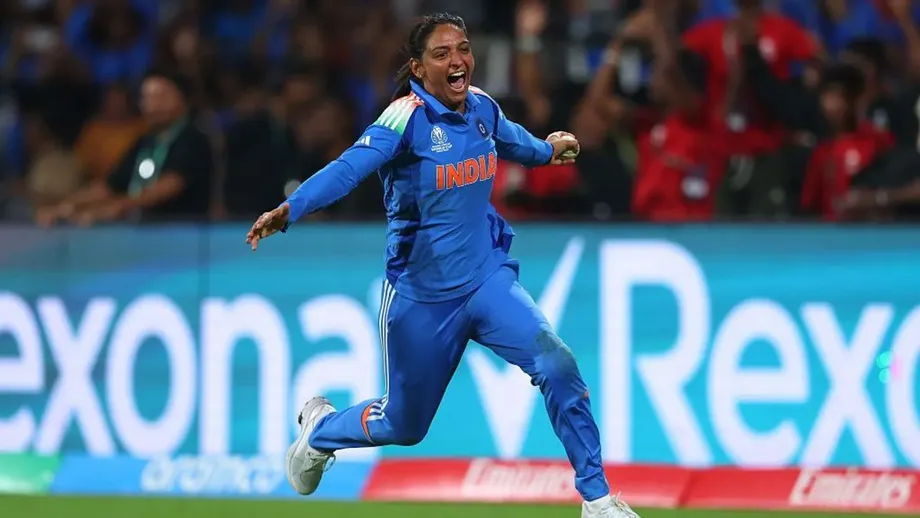
A leadership change after gold and a world title
Smriti Mandhana has been appointed captain of India's women's cricket team across all three international formats after Harmanpreet Kaur stepped down on October 6, 2026. The change follows a review meeting in Guwahati on October 5 and comes less than a year after Harmanpreet led India to their first Women's Cricket World Cup title.
Contents
- A leadership change after gold and a world title
- What happened at the Guwahati review?
- Why recent trophies did not settle the debate
- Mandhana brings experience and a strong batting record
- From Moga to the innings that changed her career
- A captaincy shaped by difficult decisions and close defeats
- The World Cup breakthrough and the final gold
- The dates that define the transition
- What changes for Harmanpreet and the next campaign?
- Key Points
Harmanpreet, 37, leaves a captaincy record spanning five Tests, 51 one day internationals (ODIs) and 155 Twenty20 internationals (T20Is). Her final assignment brought India's second successive Asian Games gold medal in Nisshin, Japan, where they defeated Sri Lanka by 147 runs in the final. India also won the 2026 Women's Asia Cup before the leadership change.
The International Cricket Council's captaincy announcement, published on October 6, confirms that Mandhana will lead India across formats. The 30 year old opener has already captained the national team in 18 T20Is and four ODIs, giving her experience beyond her longstanding role as deputy.
This is a departure from leadership, not an announcement of retirement. Harmanpreet intends to continue playing, leaving India with a transition in which the outgoing captain could remain part of the team led by her successor.
Harmanpreet explained the decision in an Instagram post, presenting it as the end of a demanding responsibility rather than the end of her cricket career.
I feel I have done my duty. I gave this team everything I had.
The appointment brings together two different realities: India have recently won major trophies, yet consecutive early exits from the T20 World Cup and Harmanpreet's declining batting returns had increased pressure for a change.
What happened at the Guwahati review?
The October 5 meeting involved Board of Control for Cricket in India secretary Devajit Saikia, head coach Amol Muzumdar, Harmanpreet and Mandhana. National selectors also took part in discussions about the team's performances since June and its preparations for upcoming tournaments. A further meeting was reported on October 6, before the board announced Mandhana's appointment that evening.
Reports differ over whether Harmanpreet could have retained part of the job. One account says she was willing to relinquish the T20 captaincy but hoped to continue leading in ODIs and Tests, before the board opted for Mandhana across formats. Another says she was offered the option of remaining ODI captain but chose to step down from every format.
Those accounts describe different routes to the same outcome. Neither establishes a single agreed version of the options offered during the discussions. The confirmed result is that Mandhana succeeds her in Tests, ODIs and T20Is.
The selection committee, chaired by Amita Sharma, was reportedly divided over the transition. Harmanpreet had also indicated a desire to lead India at the 2028 Los Angeles Olympics. Her departure therefore changes leadership plans extending well beyond the next bilateral series.
Why recent trophies did not settle the debate
India's second successive exit during the group stage of the T20 World Cup, in England in June 2026, was central to the scrutiny. The team had also failed to reach the knockout rounds at the 2024 tournament in the United Arab Emirates.
Harmanpreet's batting added to the concern. She scored 71 runs in five matches at the 2026 Asia Cup and 59 in three matches at the Asian Games. Together, that amounted to 130 runs across eight appearances. These figures describe her output across matches, not her batting average, which also depends on how often she was dismissed.
The results after the June World Cup exit were stronger. India won the sole Test against England at Lord's in July, then claimed the Asia Cup and defended their Asian Games gold medal. The contrast helps explain why the decision drew differing views: recent team success supported continuity, while T20 World Cup results and individual form supported a change.
Former India captain Diana Edulji backed the transition and called the decision "a step in the right direction". She also credited Harmanpreet with taking the team to its highest level. Former captain Anjum Chopra argued that Harmanpreet's experience remained valuable.
Mithali Raj, another former India captain, supported Mandhana's appointment, pointing to her familiarity with the players and the team environment. Her argument was for new ideas without dismissing the outgoing captain's achievements.
Mandhana brings experience and a strong batting record
Mandhana made her India debut in 2013 and has spent years in the leadership group. Her 22 previous international assignments as captain, comprising 18 T20Is and four ODIs, mean she takes over with practical experience of the role. The official announcement does not list a previous Test captaincy assignment.
Her record in the Women's Premier League (WPL), India's domestic franchise competition, provides another part of her credentials. She led Royal Challengers Bengaluru to titles in 2024 and 2026, demonstrating success as a captain outside the national setup.
The ICC states that Mandhana recently passed Mithali Raj to become the leading run scorer in women's international cricket. It also credits her with 18 international centuries across formats, the highest total in the women's game. Reported career figures at the time of her appointment put her on 11,066 runs in 308 matches, including 4,867 runs in 172 T20Is.
Mandhana, a left handed opening batter, spoke about the appointment in the statement reproduced by the ICC.
To be given the responsibility of leading India is a very special honour. Representing India has always meant a great deal to me, and to now have the opportunity to lead the team is something I will value deeply.
She also acknowledged Harmanpreet's contribution rather than presenting the change as a break with everything that came before.
I would also like to acknowledge Harmanpreet and the contribution she has made as captain over the years. She has led the team with great commitment and has been an important part of our journey.
From Moga to the innings that changed her career
Harmanpreet's rise began in Moga, Punjab, where family support helped her pursue cricket. Her move to the Railways, with assistance from Edulji, and later to Mumbai formed part of her route into the national game. She made her India debut in 2009, aged 20.
During much of her first decade, she contributed through powerful middle order batting, off spin bowling and sharp fielding. Her ability to attack bowling gave India an option that stood apart from a more cautious batting approach.
The defining early performance came in the 2017 ODI World Cup semifinal against Australia. Harmanpreet's unbeaten 171 carried India into the final and made her one of the most recognisable players in women's cricket. India subsequently lost to England at Lord's by nine runs, but the innings became a lasting reference point for the team's ability to challenge the strongest opposition.
Mithali Raj identified that power as a central part of Harmanpreet's contribution when reflecting on her international career.
When Harmanpreet made her debut, the power she brought to her batting really stood out. She had the ability to hit the ball cleanly and take on bowlers, which was a valuable quality in the Indian team.
Eight years after the 171, Harmanpreet again helped India overcome Australia in a World Cup semifinal. This time, the victory would lead to the trophy rather than another narrow disappointment.
A captaincy shaped by difficult decisions and close defeats
Harmanpreet first captained India in a T20I in 2012. Reports differ on the start of her permanent tenure: several place her appointment as regular T20 captain in 2016, while another places her full assumption of the role from Mithali Raj in 2018. Accounts also differ between 2022 and 2023 for when her leadership extended across all formats, although her ODI appointment is placed in 2022.
In 2018, she led India to the T20 World Cup semifinals in the Caribbean. Mithali's omission from the semifinal against England, despite two earlier half centuries, became a major selection controversy. India lost by eight wickets, and Harmanpreet defended the decision.
Two years later, India reached their first Women's T20 World Cup final. The match against Australia at the Melbourne Cricket Ground drew 86,174 spectators. India lost, but reaching that stage marked another advance under Harmanpreet's leadership.
The 2023 semifinal against Australia brought a particularly painful defeat. Chasing 173 in Cape Town, India slipped to 28 for three before Harmanpreet and Jemimah Rodrigues added 69 runs. Harmanpreet reached fifty from 32 balls and was run out for 52 when her bat caught in the ground as she tried to complete a second run.
India finished on 167 for eight, five runs short. That match captured both the strength and frustration of her tenure: her batting helped restore a difficult chase, but India again fell just short of a World Cup final.
The World Cup breakthrough and the final gold
The outcome changed at the 2025 ODI World Cup in India. Harmanpreet scored 89 in the semifinal against Australia, while Rodrigues made a century. Their contributions helped India reach the final against South Africa in Navi Mumbai.
India won that final by 52 runs, securing their first women's senior World Cup title. Harmanpreet became the first woman to captain India to that achievement and took the catch that completed the victory.
Her captaincy record includes three Asia Cup titles, two Asian Games gold medals and a silver medal at the 2022 Commonwealth Games. India also recorded their first Test victory over Australia during her tenure.
In ODIs, she won 30 of her 51 matches as captain, approximately 58.8 percent. Across the three international formats, her reported captaincy total was 211 matches. T20Is accounted for 155 of those, or about 73.5 percent, showing how much of her leadership career was spent in the shortest format. She also became the first cricketer to captain a team in 150 T20Is.
Her final gold came through the 147 run victory over Sri Lanka in Japan. Reports differ on its timing: two place the Asian Games triumph in September, while another places it in October before her resignation. They agree that the tournament was her final assignment as India captain.
The dates that define the transition
The change followed a sequence of contrasting tournament results, review discussions and public announcements. The main dates are:
- 2025: India won their first Women's Cricket World Cup, defeating South Africa by 52 runs in Navi Mumbai.
- June 2026: India exited the T20 World Cup during the group stage for the second consecutive edition.
- July 2026: India won the sole Test against England at Lord's.
- Before October 6, 2026: India won the Asia Cup and a second successive Asian Games gold medal.
- October 5, 2026: Team leaders met BCCI secretary Devajit Saikia in Guwahati.
- October 6, 2026: Harmanpreet announced her departure from captaincy, and Mandhana was appointed across formats.
- October 16, 2026: India's home series against Zimbabwe was scheduled to begin.
The Zimbabwe series is the first scheduled opportunity for the new leadership arrangement to take shape. The ICC lists three T20Is followed by three ODIs.
What changes for Harmanpreet and the next campaign?
Giving up captaincy does not settle Harmanpreet's place in future squads. She has said she wants to remain a player, but selection, her role in each format and the length of her international career are separate decisions.
She is also expected to continue captaining Mumbai Indians in the next WPL edition, when the franchise will pursue a third title. That expectation concerns her club role and does not reverse her decision to relinquish India's captaincy.
For Mandhana, the immediate task is to take charge of a team she already knows while establishing her own decisions on roles and combinations. Harmanpreet's continued presence could preserve experience within the batting group, but no specific arrangement for her place has been announced in the accounts of the transition.
Mithali identified a home Champions Trophy in February 2027 as Mandhana's next major tournament assignment. She also pointed to the 2028 T20 World Cup, the Los Angeles Olympics and the 2029 ODI World Cup as later planning targets. Those dates describe the longer horizon; the official captaincy announcement gives October 16 as the start of India's next series.
The immediate distinction is between a settled leadership decision and unresolved playing decisions. Mandhana is the new captain across formats. Harmanpreet's wish to keep playing is equally explicit, but her future selection will require further decisions.
Key Points
- Harmanpreet Kaur stepped down as India captain across all formats on October 6, 2026, but intends to continue playing.
- Smriti Mandhana takes over after previously captaining India in 18 T20Is and four ODIs.
- Harmanpreet led India in 211 internationals, including 51 ODIs with 30 wins.
- Her tenure included the 2025 ODI World Cup title, three Asia Cups and two Asian Games gold medals.
- Consecutive T20 World Cup group exits and declining batting returns contributed to pressure for a leadership change.
- Mandhana led Royal Challengers Bengaluru to WPL titles in 2024 and 2026.
- India's home series against Zimbabwe was scheduled to begin on October 16 with three T20Is followed by three ODIs.
- Harmanpreet's future selection and role as a player remain separate from the captaincy decision.