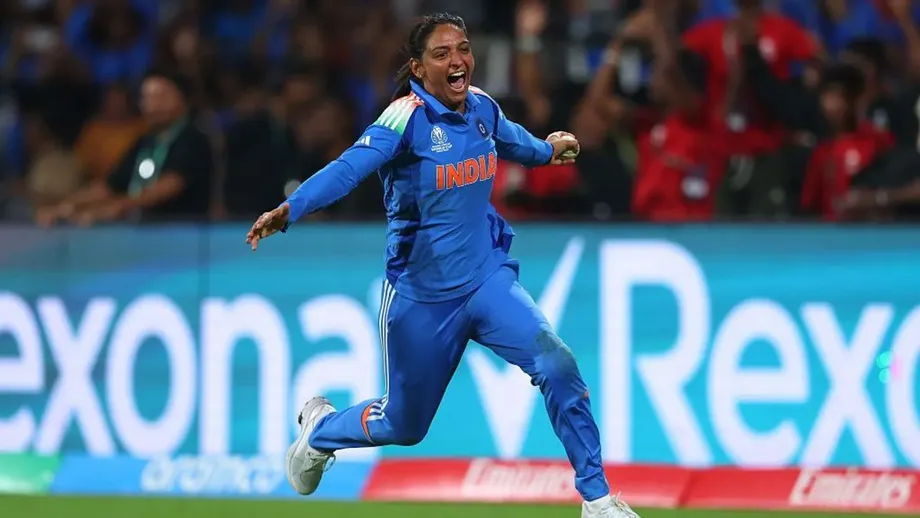

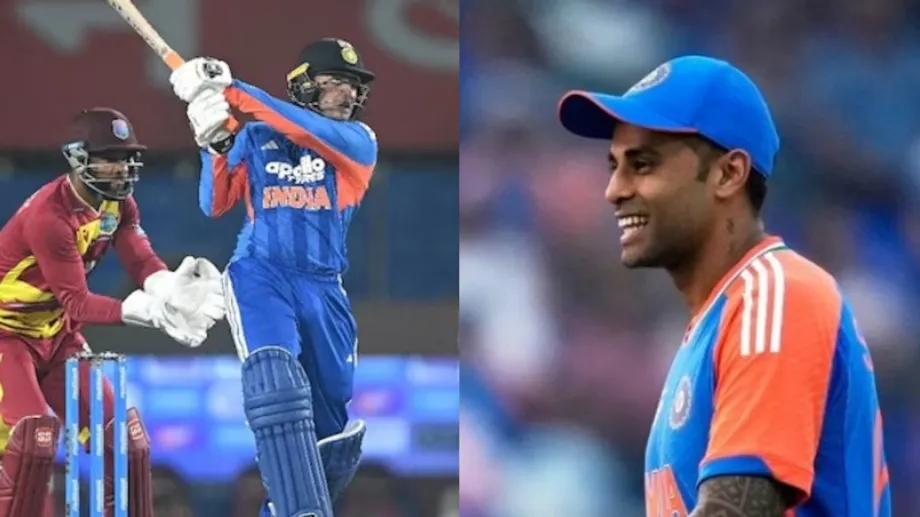
A record innings helps India take the series lead
Abhishek Sharma reached 2,000 runs in Twenty20 internationals in a reported record 1,024 balls, then completed an 18-ball half-century as India beat West Indies by 14 runs at Holkar Stadium in Indore on October 11, 2026. His 69 from 30 deliveries helped India move 2-1 ahead in the five-match series.
Contents
- A record innings helps India take the series lead
- What fastest to 2,000 actually means
- An 18-ball fifty resets the Indian mark
- Samson's early exit did not slow India
- West Indies recovered through the middle overs
- Late wickets kept India's total within reach
- Arshdeep and Naman controlled the chase
- The selection changes and earlier records
- How the milestones fit together
- Key Points
The 26-year-old opener surpassed Suryakumar Yadav's mark of 1,164 balls, set against South Africa in Gqeberha in December 2023. Abhishek needed 140 fewer deliveries, a reduction of about 12% against the previous record. The distinction is specifically about balls faced, not the number of innings played.
The Board of Control for Cricket in India's official match scorecard confirms India's total of 223, West Indies' reply of 209/7 and the 14-run winning margin. Arshdeep Singh backed up Abhishek's batting with figures of 3/44, while Naman Dhir took two wickets during the chase.
India's victory required more than a rapid opening assault. After reaching 87/1 in six overs, the hosts lost momentum through the middle of their innings. Their bowlers then held West Indies to 54/1 in the equivalent opening phase and protected the advantage despite a late burst from Shamar Springer.
What fastest to 2,000 actually means
Abhishek reached the milestone in his 64th T20I innings. Austria's Karanbir Singh holds the separate innings-based record at 45 innings, according to the statistical account accompanying Abhishek's achievement. Those figures measure different things: innings count measures how many batting appearances a player needs, while balls faced measures how many deliveries he uses.
Abhishek's record therefore reflects scoring speed rather than the fewest appearances. At the reported landmark, 2,000 runs from 1,024 balls equates to about 195.3 runs per 100 deliveries. Suryakumar's 2,000 runs from 1,164 balls equates to about 171.8. These calculations illustrate the milestone pace, rather than either player's current career strike rate.
Reports also identify Abhishek as the sixth Indian batter to reach 2,000 T20I runs. His innings brought together a career landmark and an immediate match contribution: he scored nearly 31% of India's 223 while facing only 30 of the innings' 120 legal deliveries.
The exact shot that took him to 2,000 is less certain. One account says he needed 37 runs before the match and crossed the threshold with a six during a sequence of two fours and a six against Springer. Another places the milestone when his score reached 33. Both give the same cumulative figure of 1,024 balls, but the starting run tally and precise crossing point differ.
An 18-ball fifty resets the Indian mark
Abhishek's half-century was the fastest by an Indian against West Indies in T20 internationals. His 18 deliveries improved on the 21-ball efforts of Virat Kohli in 2019 and Sanju Samson in the second match of this series. It was reported as Abhishek's 14th T20I fifty and his first of the series.
The performance did not displace the fastest fifty by any batter against West Indies. Quinton de Kock reached his half-century in 15 balls in 2023. Abhishek instead joined David Warner and Colin Munro on 18 balls, a mark described as jointly third fastest against the Caribbean side.
His acceleration was especially sharp after a measured start. One account describes him scoring at a run a ball through his first five deliveries, then reaching fifty over the next 13. That means 18 balls in total, not a 13-ball half-century.
The match-flow entry records four fours and four sixes by the time he reached fifty. Those eight boundary shots supplied 40 runs, or 80% of the half-century. Abhishek finished on 69 from 30 balls, a strike rate of 230, before Springer ended his innings in the tenth over.
Samson's early exit did not slow India
West Indies won the toss and chose to bowl with the series level at 1-1. Samson, who had made 82 in the preceding match, was dismissed for three by Shamar Joseph. India nevertheless maintained an aggressive start through Abhishek and Ishan Kishan.
The second-wicket pair added 108 runs, with Kishan contributing 37 from 18 balls. Reports place their first 50 partnership runs at either 19 or 20 deliveries. The difference is small, but it means the precise speed of that early stand is not consistently recorded.
Abhishek attacked Roston Chase with two sixes and a four in one over, creating room to hit through and over the off side. Kishan targeted Keemo Paul as India reached 87/1 at the end of the powerplay, the first six overs when fielding restrictions leave fewer defenders near the boundary.
Abhishek scored 50 of his 69 runs on the off side, the half of the field in front of a batter's chest when standing in the normal batting position. That is about 72% of his innings. The distribution explains why deliveries outside off stump did not reliably contain him: he repeatedly turned that width into scoring opportunities.
West Indies recovered through the middle overs
India reached 115/1 before Chase broke the opening momentum. He had Kishan stumped for 37 and dismissed captain Shreyas Iyer for one in the same over. Springer then removed Abhishek, leaving India 124/4 at 9.5 overs, the fifth delivery of the tenth over.
Abhishek's dismissal was a caught-and-bowled wicket, meaning Springer delivered the ball and took the catch himself. The accounts agree that a short ball prompted a mistimed pull and a top edge, although they differ on the delivery's line. The scorecard commentary places it around middle and leg; another description places it outside off stump.
The boundary count also differs. Most narrative accounts give Abhishek six fours and five sixes, while one detailed scorecard extract lists four fours and five sixes. His total of 69, the 30 balls faced, his 18-ball fifty and Springer's wicket are consistent across those accounts. The disagreement prevents a firm calculation of the full innings' boundary share.
India slipped from 115/1 to 135/5, losing four wickets for 20 runs. Naman Dhir was caught at long-off against Gudakesh Motie, and the hosts had to rebuild rather than simply extend their opening scoring rate.
Late wickets kept India's total within reach
Tilak Varma made 28 and Nitish Kumar Reddy contributed 21 as India recovered enough to pass 220. Axar Patel added 20, but dismissals and running errors stopped the hosts from fully converting their strong start.
Reddy was caught after edging a delivery down the leg side. Varma was run out after assuming a shot had reached the boundary while the ball remained in play. Axar later departed in a mix-up with Arshdeep. India finished on 223 all out, with Chase, Springer and Joseph taking two wickets each.
The phase totals show how the innings changed: India made 87/1 in the powerplay, 87/5 in the middle overs and 49 runs in the final four overs. The opening six overs produced 14.5 runs per over; the remaining 14 produced 136 runs at about 9.7 per over.
Reports differ in their assessment of the surface. One describes low bounce making big hitting difficult, while another calls the ground a batting paradise with short boundaries. Those descriptions offer different explanations for the slowdown. The scoreboard establishes the narrower point: India remained productive, but wickets prevented them from sustaining their initial pace.
Arshdeep and Naman controlled the chase
West Indies needed 224 to win, an initial requirement of 11.2 runs per over. Arshdeep dismissed captain Shai Hope for five, and India's pace attack restricted the visitors to 54/1 in the powerplay. India had scored 33 more runs at the same stage of their innings.
Shimron Hetmyer, dropped on five, threatened to erase that advantage. He made 43 from 26 balls before Naman dismissed him immediately after conceding a six. Naman also removed Kamil Pooran for 42 from 27 balls, finishing with 2/39. Axar accounted for Rovman Powell, while Reddy returned 1/19 from two overs.
Sherfane Rutherford and Quentin Sampson kept the chase alive, but West Indies needed 65 from the last four overs. That required 16.25 runs per over, considerably above the rate they had needed at the start. Arshdeep dismissed Keemo Paul and Rutherford in the 18th over; Rutherford finished with 32 from 20 balls.
Springer struck three sixes and a four in the final over and ended unbeaten on 35 from 11 balls. The burst narrowed the margin without overturning the result. West Indies finished on 209/7, 14 runs behind India's total and 15 short of the target.
The absence of dew was reported as helpful to India's defence because the ball stayed dry. Arshdeep and Prince Yadav used yorkers, deliveries aimed near the batter's feet, to limit clean hitting late in the chase. The win was described as the first successful defence of a total in six attempts during West Indies' tour.
The selection changes and earlier records
India brought in Reddy for Shivam Dube and pace bowler Prince Yadav for left-arm spinner Kuldeep Yadav. West Indies rested Romario Shepherd and Akeal Hosein, replacing them with Quentin Sampson and Keemo Paul. India's extra pace option contributed to both the restrained West Indies powerplay and the closing overs.
Abhishek's innings also took his reported calendar-year sixes tally to 68, matching Suryakumar's 2022 record among players from ICC Full Member countries. Full Members are the cricket governing bodies with Test status. The stated comparison does not cover every country playing T20 internationals.
The milestone followed two other reported achievements in 2026. In September, Abhishek made a 30-ball century against Afghanistan, beating Rohit Sharma's Indian record of 35 balls against Sri Lanka in Indore in 2017. In July, against England, he became the quickest batter to reach 100 T20I sixes by balls faced.
The account of the sixes record gives comparison figures of 789 deliveries for Evin Lewis, 871 for Finn Allen and 1,007 for Suryakumar, but does not state Abhishek's exact delivery count. His new 2,000-run mark is more precisely documented in the reports, which consistently give 1,024 balls despite differences about the scoring shot.
How the milestones fit together
Abhishek made his T20I debut in July 2024. The reported sequence since then shows records for rapid scoring across several measures, although the Indore achievement should not be confused with the separate record for reaching 2,000 runs in the fewest innings.
- December 2023: Suryakumar reached 2,000 T20I runs in 1,164 balls against South Africa in Gqeberha.
- July 2024: Abhishek made his T20I debut for India.
- July 2026: Abhishek set the reported balls-faced record for reaching 100 T20I sixes against England.
- September 2026: His 30-ball century against Afghanistan set a new Indian T20I mark.
- October 11, 2026: He reached 2,000 runs in 1,024 balls and scored 69 in India's Indore victory.
India now lead the five-match series 2-1, with two matches remaining. Dates and venues for those fixtures are not specified here. The immediate achievement is established by the result: Abhishek's opening contribution survived India's later batting losses, and the bowling attack turned 223 into a winning total.
Several statistical details still need reconciliation, chiefly whether Abhishek crossed 2,000 at 33 or after needing 37, whether the partnership reached fifty in 19 or 20 balls, and whether his innings contained four or six fours. None changes the consistently reported 69 from 30 balls, the 18-ball half-century or India's 14-run victory.
Key Points
- Abhishek reached 2,000 T20I runs in a reported record 1,024 balls, 140 fewer than Suryakumar Yadav.
- His 18-ball fifty was the fastest by an Indian against West Indies in T20 internationals.
- He scored 69 from 30 balls and shared a 108-run stand with Ishan Kishan.
- India made 223 and restricted West Indies to 209/7 in Indore on October 11, 2026.
- Arshdeep took 3/44 and Naman took 2/39 as India secured a 2-1 series lead.
- Reports differ on the exact milestone run, partnership timing and Abhishek's number of fours.