
A shorter reaction time, a bigger test
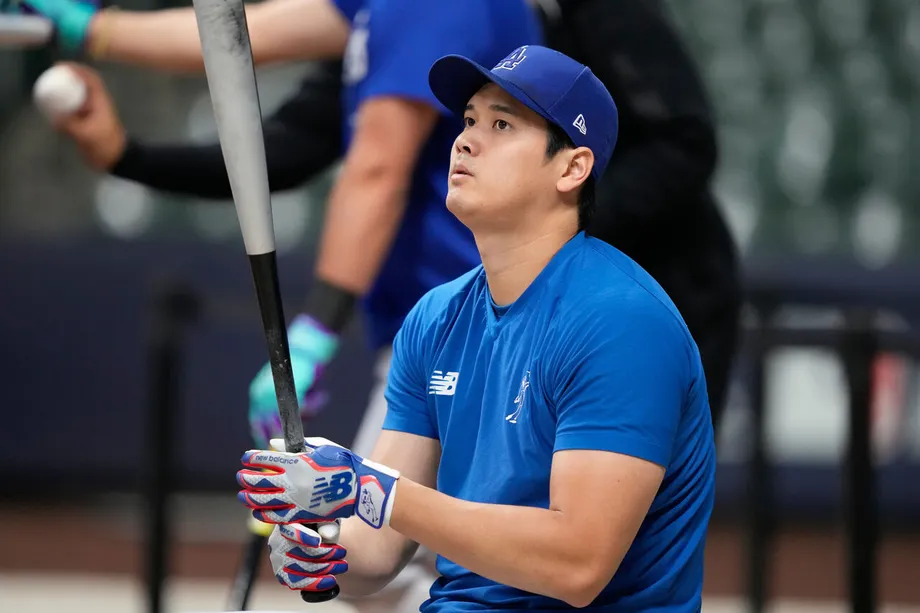
Shohei Ohtani moved closer to the pitching machine late in an extended workout at American Family Field in Milwaukee, an unusual adjustment aimed at preparing for Brewers starter Jacob Misiorowski before Game 1 of the National League Championship Series. After a Division Series in which he went 2 for 13 without an extra base hit or an RBI, the Dodgers star was working on both his timing and the shape of his swing.
Contents
- A shorter reaction time, a bigger test
- What the Dodgers are changing in his swing
- The slump extends beyond four playoff games
- Why taking pitches could matter as much as hitting them
- Misiorowski will not relax his approach
- Both players are working toward repeatability
- Health separates this attempt from last year's breakout
- The preparation timeline and schedule uncertainties
- Roster decisions remain part of the preparation
- Key Points
One account put the session at six rounds and 71 swings, with six balls clearing the fence. Another counted 33 swings and two home runs. Both described a drive estimated at 140 meters, approximately 459 feet. The differing totals cannot be reconciled, so neither should be treated as a definitive count of the entire workout.
The more revealing detail was Ohtani's position near the machine. Reducing the distance gives a hitter less time to recognize a pitch and respond, a practical way to rehearse against exceptional velocity. It does not reproduce a pitcher's delivery or the movement of his pitches, but it can sharpen the timing demands of the exercise.
Misiorowski presents exactly that challenge. The Milwaukee right hander has reportedly reached 105.5 mph this season, while Ohtani enters the matchup with a .154 batting average, a .267 on base percentage and a .154 slugging percentage from four Division Series games against Atlanta. Dodgers manager Dave Roberts wants better decisions and productive plate appearances, rather than an attempt to force an immediate home run.
What the Dodgers are changing in his swing
Dodgers hitting coach Aaron Bates described the work as an effort to keep Ohtani from turning the barrel too early and rolling his top hand over before the swing is complete. In accessible terms, the goal is to keep the bat moving through the hitting area without prematurely pulling it away from the ball.
Bates said Ohtani was also concentrating on holding his finish. That gives him a repeatable endpoint from which to assess the movement that came before it. The coach's explanation connected mechanics with effort: a more controlled swing could help Ohtani track pitches longer and make better choices.
Bates explained the intended adjustment:
Once the effort level comes back down, then you'll see the ball deeper, see the ball longer, swing at better pitches, that kind of thing.
Ohtani rarely takes batting practice on the field, having done so only a handful of times this season. Bates said this session was Ohtani's idea after several days of hitting discussions with Mookie Betts. Working in the stadium also allowed him to adjust to a different backdrop before the series began.
Betts, Miguel Rojas and Andy Pages were identified as members of Ohtani's practice group. An account of the shorter session described 11 swings in the first round and 10 in the second, with neither round producing a home run. Those swings were focused on timing, contact position and the bat's path, rather than maximum power on every pitch.
The slump extends beyond four playoff games
Ohtani's Division Series numbers were modest even by ordinary standards, and especially so for a hitter opponents continue to treat as a major threat. His two hits were singles in the opening two games. He struck out four times and finished with a .421 OPS, the sum of his on base and slugging percentages.
He nevertheless reached base once in each game, adding walks in the final two contests. That distinction matters: his power was absent, but he was not completely shut out of the Dodgers' offense.
The concern reaches further back. Reports put his last home run on August 18 and credit him with only one RBI since then. Another account says he had just one extra base hit in his most recent 16 games. The Dodgers moved him to fifth in the batting order for Division Series Game 3 and fourth for Game 4.
Practice power has not yet translated into game production. On October 3, in Taiwan time, Ohtani reportedly hit 11 home runs in 23 practice swings, including a drive estimated at 135 meters. That was followed by a Division Series without a home run. The comparison is a useful restraint on interpreting the latest 140 meter shot: it demonstrates power in a controlled setting, not proof that the slump has ended.
Why taking pitches could matter as much as hitting them
The postseason pitch data describe a difficult balance. Through the Saturday before the opener, only 37.5% of pitches Ohtani had seen were in the strike zone. That was the second lowest rate among hitters who had faced at least 50 pitches in the cited sample.
Put another way, 62.5% were outside the zone. Opponents were giving him relatively few pitches that should invite a swing, even while his results were poor.
Ohtani swung at 33.3% of pitches outside the zone. That chase rate was 2.6 percentage points above the 30.7% average for postseason hitters who had seen at least 25 such pitches, and 3.3 points above his own 30% regular season rate. The sample is limited, but it supports the coaches' focus on selecting better pitches.
Roberts said Milwaukee's pitchers would continue to respect Ohtani's ability, regardless of the recent slump. The practical consequence is that an aggressive attempt to recover his power could work against him if it means swinging at pitches the Brewers do not need to throw for strikes.
Division Series Game 4 offered a different route to a contribution. Facing Tyler Mahle, Ohtani drew a walk on five pitches without swinging, stole second, advanced on a throwing error and scored after another Atlanta fielding error. He helped produce a run without recording a hit.
Misiorowski will not relax his approach
Misiorowski has made clear that Ohtani's recent statistics will not change how seriously he treats the matchup. The Brewers starter said the postseason demands respect for a hitter who can still change a game.
Misiorowski described his approach:
You've got to still pitch like he's the best in the world and trust your stuff and go beat him at his game, and do your job.
The reported regular season figures explain why Milwaukee can pair that respect with confidence: a 1.80 ERA, 252 strikeouts and a 0.802 WHIP across 174 and two thirds innings. ERA measures earned runs allowed per nine innings; WHIP measures walks and hits allowed per inning.
Those totals work out to approximately 13 strikeouts per nine innings. Yet his most recent Division Series start against San Diego was less dominant, with two earned runs allowed over four innings. His season record presents a formidable challenge, not a guarantee of another dominant outing.
The 24 year old, listed at 6 feet 7 inches, also reportedly threw a complete game shutout against Philadelphia with one hit allowed and 15 strikeouts. His 105.5 mph pitch came against the Cubs. No exact setting for Ohtani's practice machine was given, so the workout cannot be described as a measured recreation of that velocity.
Both players are working toward repeatability
For all the attention on his speed, Misiorowski has described reliability rather than maximum effort as the foundation of his progress. That makes his preparation an interesting counterpart to Bates' advice that Ohtani reduce the effort in his swing.
In an interview, Misiorowski explained what he would tell young pitchers:
Don't strive for max effort, strive for reliability. The biggest thing is trying to repeat whatever you're trying to do. That's the name of this game. It sounds simple, but it's so hard.
Brewers manager Pat Murphy said Misiorowski was still learning how to pitch despite his exceptional ability. Murphy also described him as worn out after a September start, a reminder that the demands of the season apply to the pitcher as well as the hitter.
The connection is specific rather than predictive. Ohtani is trying to produce a more controlled, repeatable swing; Misiorowski is trying to repeat a delivery that generates extraordinary speed. Neither player's comments suggest that simply trying harder is the solution.
Health separates this attempt from last year's breakout
Ohtani has been managing problems with his right biceps and left knee since at least June, according to reports of his comments before the Division Series. He spent 15 days on the injured list in September and had further rest during the break before the playoffs.
The Dodgers believe that rest left him in better physical condition than he had been for some time. It does not establish that the injuries have disappeared. There is no precise public measure here of how much they are affecting his swing, and the mechanical adjustments should not be treated as a medical assessment.
The team's confidence also rests on the previous NLCS against Milwaukee. Ohtani reportedly ended that series in Game 4 with three home runs while striking out 10 over six scoreless innings, helping complete a Dodgers sweep. He was named the series MVP. He is not expected to pitch in the current postseason, according to the matchup reporting.
Dodgers president of baseball operations Andrew Friedman expressed confidence after the team advanced past Atlanta:
In my opinion, he's the best player in the world. And at some point, it's going to click for him, and the other team's going to be in big trouble when that happens.
That is a statement of belief, not evidence that another breakout is imminent. The earlier performance explains why Milwaukee remains cautious, while the current health concerns explain why repeating it cannot be assumed.
The preparation timeline and schedule uncertainties
The buildup spans several months of physical concerns and several separate attempts to recover Ohtani's hitting form. The main reported markers are:
- June onward: Right biceps and left knee problems began affecting Ohtani.
- August 18: His last reported home run before the NLCS.
- September: A 15 day stay on the injured list provided additional rest.
- October 3, Taiwan time: A practice session reportedly produced 11 home runs in 23 swings.
- Division Series against Atlanta: Ohtani went 2 for 13 in four games.
- Before NLCS Game 1: He took extended practice at American Family Field and moved closer to the machine late in the workout.
The schedule descriptions do not align completely. Reports identifying the series as the 2026 NLCS place Game 1 on Sunday at approximately 8 p.m. Eastern, or 7 p.m. Central in Milwaukee. A separate account gives October 12 in Taiwan time. Those details should not be combined into a single confirmed calendar date without a consistent schedule.
Tarik Skubal is identified as the Dodgers' planned Game 1 starter opposite Misiorowski. Reports credit Skubal with six innings, one run allowed and seven strikeouts against Atlanta, but differ on whether that performance came in Division Series Game 1 or Game 4. The discrepancy also prevents a firm conclusion about his exact rest interval.
Roster decisions remain part of the preparation
Roberts expected Rojas to make the NLCS roster despite a back injury sustained in Division Series Game 3. His participation in Ohtani's practice group is separate from a final roster decision and does not, by itself, establish that he is fully healthy.
The Dodgers planned to carry 13 pitchers and 13 position players, adding a pitcher and removing a position player. Right hander Emmet Sheehan and left hander Justin Wrobleski were mentioned as candidates to supply multiple innings.
Roberts said the priority was someone who could cover two or three innings if needed, rather than choosing primarily by which hand the pitcher throws with. That would give the club more protection if a starter exits early or another game requires extended bullpen work.
For Ohtani, the next meaningful test is a competitive plate appearance against Misiorowski. The long practice drives show that he can still generate power. Better pitch selection, controlled mechanics and the ability to reach base against an opponent who remains cautious will provide stronger evidence of progress than the workout's disputed home run count.
Key Points
- Ohtani moved closer to a pitching machine while preparing for Misiorowski at American Family Field.
- Reports differ on the workout totals: 71 swings and six home runs, or 33 swings and two home runs.
- He went 2 for 13 with four strikeouts and no extra base hits in the Division Series.
- Bates wants a later barrel turn, less early top hand rollover and a more controlled swing.
- Only 37.5% of pitches Ohtani saw in the cited postseason sample were strikes.
- Misiorowski says he will continue treating Ohtani as an elite threat.
- Ohtani continues to manage right biceps and left knee concerns.
- The Dodgers planned a roster of 13 pitchers and 13 position players, with final choices still pending.