
Orr and Camargo decide the final at Kai Tak
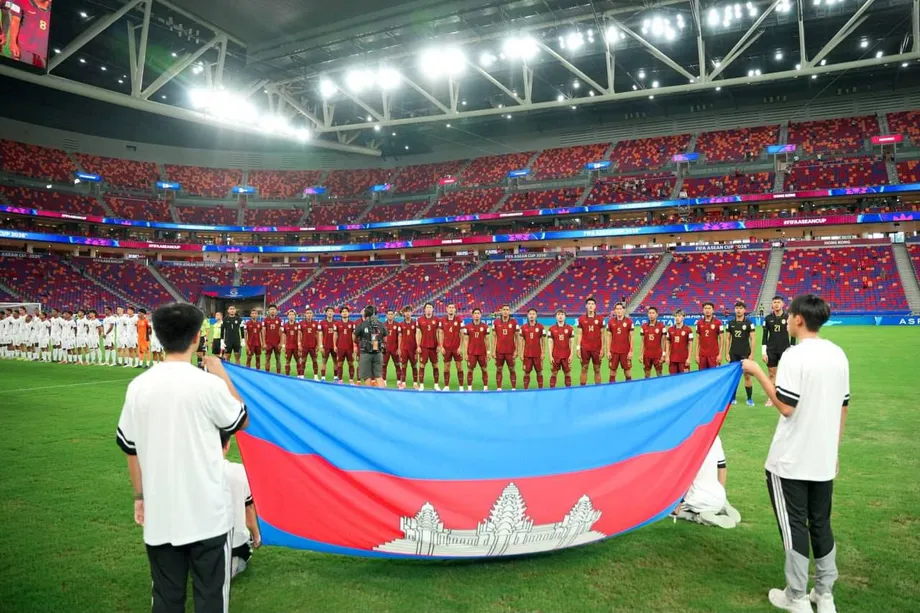
Cambodia finished second in the FIFA ASEAN Cup 2026 Division 2 after Hong Kong won the final 2-0 at Kai Tak Stadium in Kowloon on Saturday, October 3. Matthew Orr scored in the 41st minute and Everton Camargo converted a penalty in the second half, securing the hosts the inaugural title before a crowd reported at more than 30,000.
Contents
- Orr and Camargo decide the final at Kai Tak
- How Hong Kong took control
- Cambodia's late chances came without a breakthrough
- Four points took the Kouprey to the deciding match
- Nieto welcomed the pressure of a large crowd
- Gyotoku explains his limited changes
- A silver medal and a chance to assemble a full squad
- Hong Kong leave with a trophy and a perfect record
- What is settled and what still needs confirmation
- Key Points
The defeat ended Cambodia's attempt to turn their first appearance in this competition's final into a championship. The team, known as the Kouprey, reached the deciding match with four points from two group games, but could not find a goal against opponents who finished the tournament with three victories and no goals conceded.
Hong Kong's success was built on a decisive contribution from Sun Ming Him, who supplied Orr's opening goal, and a penalty awarded after a video review of a challenge by Cambodia's Meng Chheng on Philip Chan. Reports place Camargo's conversion in either the 58th or 59th minute, but agree on the incident and the final score.
Cambodia continued to create chances after falling two goals behind. Soknet Hav narrowly missed with a header, while Ty Sa also sent an effort just wide. Those opportunities kept the contest alive without changing its outcome.
The result also reversed the score from the teams' previous meeting. Cambodia had beaten Hong Kong 2-0 in a friendly at Phnom Penh's National Olympic Stadium in early June. At Kai Tak, with a trophy at stake and the home crowd behind Hong Kong, the same margin went the other way.
How Hong Kong took control
Hong Kong applied pressure early. Philip Chan attempted a shot in the fourth minute, and Cambodian goalkeeper Soksela Keo was called into an important save in the 14th. Cambodia resisted until four minutes before the end of normal time in the first half.
Sun Ming Him then delivered the ball to Orr, identified in different accounts as Matt or Matthew Orr. The forward found space without close marking and finished past Keo to put Hong Kong ahead. The hosts carried that 1-0 advantage into halftime.
Cambodia were reported to have managed three shots during the opening half. They sought to respond after the interval, with Andres Nieto threatening in the 48th minute, but the next decisive moment came inside their own penalty area.
A review in the 54th minute examined Meng Chheng stepping on Chan's foot. VAR, the video assistant referee system, allows officials to check footage of incidents such as possible penalties before confirming or changing a decision. The referee awarded Hong Kong a penalty, which Camargo converted.
Two reports place the goal in the 58th minute, while the initial match account records the 59th. There is also a smaller timing difference for Hav's later header, listed in the 64th minute in one account and the 65th in another. These differences do not change the central sequence: Hong Kong scored before halftime, doubled their lead after the review and held it until the final whistle.
Cambodia's late chances came without a breakthrough
Hav's header was among Cambodia's clearest opportunities to reduce the deficit. He won an aerial contest at a corner, but the ball passed just outside the right post. Ty Sa's chance followed in the 71st minute, when pressure from a Hong Kong player helped force his shot narrowly wide.
Hong Kong also continued to threaten through Sun Ming Him and Tan Chun Lok. Neither side scored again, leaving Cambodia without a goal in the final despite their attempts to push forward.
The contrast with the June friendly is useful but limited. Cambodia's earlier victory demonstrated that they could beat Hong Kong. It did not establish that they would repeat the result away from home in a final. The two matches ended 2-0 to the respective home teams, under different competitive circumstances.
Four points took the Kouprey to the deciding match
The Division 2 competition contained six teams split into two groups of three. Cambodia joined Myanmar and Timor-Leste in Group B. Hong Kong hosted Group A, which also included Laos and Brunei. Only the team finishing first in each group advanced to the final, so there was no semifinal stage.
Cambodia began their route to the final by beating Myanmar 1-0. Their subsequent 2-2 draw with Timor-Leste on September 30 secured four points and first place in Group B, although the final group match required them to recover from an early setback.
João Pedro put Timor-Leste ahead in the 17th minute with a free kick. Nieto equalized in the 28th minute and converted a penalty in the 38th to give Cambodia a 2-1 lead. Bakhito restored parity in the 58th minute, but the draw was enough for Cambodia to progress.
Hong Kong reached the final with six points after defeating Laos 4-0 and Brunei 2-0. Their stronger group record continued into the final: across three matches, they scored eight goals and conceded none. Cambodia finished with three goals scored and four conceded, recording one victory, one draw and one defeat.
The main steps in the campaign were:
- Early June: Cambodia beat Hong Kong 2-0 in a friendly in Phnom Penh.
- Group stage: Cambodia defeated Myanmar 1-0, while Hong Kong beat Laos 4-0 and Brunei 2-0.
- September 30: Cambodia drew 2-2 with Timor-Leste to finish first in Group B.
- October 3: Hong Kong defeated Cambodia 2-0 in the Division 2 final at Kai Tak Stadium.
- October 5: Indonesia and Thailand were scheduled to contest the separate main competition final in Jakarta.
Nieto welcomed the pressure of a large crowd
Nieto, the Cambodian Colombian forward who scored both goals against Timor-Leste, had presented the final as a difficult but achievable challenge. Before the match, he said Hong Kong's capable players demanded concentration and hard work from Cambodia.
Matches against Hong Kong are always tense because they have many capable players, but it is 11 against 11. Of course, we are confident, but we also have to work hard and play well. It is a final, and every final is difficult,
The Cambodia No. 10 also said a large crowd supporting the opposition would motivate him rather than discourage him. His reference to 50,000 spectators was hypothetical, not a statement of the final's attendance.
It doesn’t matter if the stadium is full of Hong Kong fans because I like playing under pressure. Who doesn’t like playing when the stadium is full of fans? If there are 50,000 people, even if most of them support Hong Kong, it gives me extra motivation to perform at my best in the match,
The reported attendance of more than 30,000 gave Cambodia the demanding away atmosphere Nieto had anticipated. Their defeat does not establish that the crowd caused the result. The identifiable turning points were Orr's finish, the penalty incident and Cambodia's missed chances.
Gyotoku explains his limited changes
Cambodia head coach Koji Gyotoku had set winning the tournament as his team's target. After the final, attention also turned to his decision to keep much of the same lineup through all three matches rather than rotate extensively.
The Japanese coach explained that he would have made more changes in a friendly, but considered this an official competition in which his responsibility was to pursue the best result. He accepted responsibility for that approach and expressed regret over the defeat, while praising the atmosphere at the stadium.
Hong Kong coach Roberto Losada took a different route in the final group match, making nine changes against Brunei to prepare for Cambodia. Gyotoku used nearly all his key players against Timor-Leste, when Cambodia still needed a result to secure their place in the final.
The contrast shows how the teams managed their squads, but does not prove that rotation determined the winner. No detailed player workload or physical performance figures were reported. Hong Kong's changes and Cambodia's continuity should therefore be treated as part of their preparation, not as a demonstrated explanation for the 2-0 result.
A silver medal and a chance to assemble a full squad
Khiev Sameth, president of the ASEAN Football Federation and vice president of the Football Federation of Cambodia, attended the final alongside FIFA president Gianni Infantino. Both were present through the medal and trophy presentation.
The Cambodian finish was described as the country's first international silver medal. Reports also presented the final appearance as a first in more than 70 years of national team history. Those broad historical claims require care: the firmly established achievement here is Cambodia's second place in the inaugural Division 2 tournament. No historical competition register was cited to substantiate the wider claims.
For Khiev Sameth, a practical benefit was the tournament's place on the FIFA international calendar. He said that timing allowed clubs to release their players and enabled Cambodia to assemble a full national squad.
He also argued that playing stronger opponents in better stadium conditions could encourage Cambodian players to improve. His hope was for further FIFA support and more events in the region. That was an expression of ambition, rather than an announcement of a confirmed new competition.
Hong Kong leave with a trophy and a perfect record
Hong Kong's title was supported by a complete tournament record: three wins from three matches, eight goals scored and none conceded. Their group victories accounted for six of those goals, with Orr and Camargo adding the final two against Cambodia.
Camargo, Hong Kong's scorer from the penalty spot, described the victory as a rare trophy success and a moment of shared achievement for the players and supporters.
This is an amazing moment for Hong Kong. We had support from the fans, every player played their part, and now we are holding the trophy. I think this is one of the few trophies we have ever won. So, tonight we are writing new history for Hong Kong,
He hoped the success would help the team build toward its campaign in the 2030 World Cup qualifiers. That ambition extends beyond the Division 2 title, which does not itself secure World Cup qualification.
The champion's prize was reported as USD 300,000, with only the winning team eligible for prize money. No official prize regulation was quoted, so the amount and the exclusion of other teams remain reported details rather than independently confirmed terms. Cambodia received silver medals, but no payment to the team was identified.
What is settled and what still needs confirmation
The result settles the Division 2 competition: Hong Kong are champions and Cambodia finished second. Reports use both FIFA ASEAN Cup Division 2 and FIFA ASEAN Challenge Cup for the event. Without an official tournament document establishing the naming, those labels should not be treated as evidence of two separate competitions.
A preview also described the tournament as an opportunity to reach Division 1 in the following season. No formal promotion rule or confirmed decision was given. It would therefore be premature to state that Hong Kong's victory guarantees promotion, or to assign Cambodia a confirmed place in the next edition.
The separate main competition was scheduled to end with Indonesia facing Thailand at Gelora Bung Karno Main Stadium in Jakarta on Monday, October 5, at 8 p.m. local time. Indonesia advanced after finishing level with Malaysia on seven points and a goal difference of plus nine, progressing because they scored more goals.
Thailand won their group after victories over Pakistan and Vietnam, despite losing their final group match 2-1 to the Philippines. That final was a distinct title contest, not a further stage for Cambodia or Hong Kong. No date for Cambodia's next fixture was identified.
Key Points
- Hong Kong beat Cambodia 2-0 at Kai Tak Stadium on October 3 to win the inaugural Division 2 title.
- Matthew Orr scored in the 41st minute. Everton Camargo added a penalty, recorded in reports as either the 58th or 59th minute.
- Cambodia reached the final with a 1-0 win over Myanmar and a 2-2 draw with Timor-Leste.
- Hong Kong won all three matches, scoring eight goals without conceding.
- Gyotoku defended limited squad rotation as part of his effort to secure the best competitive result.
- The reported champion's prize was USD 300,000. Promotion arrangements were not confirmed.
- Indonesia and Thailand were scheduled to play the separate main competition final in Jakarta on October 5.