
Three nights, an 11 year wait and a public thank you
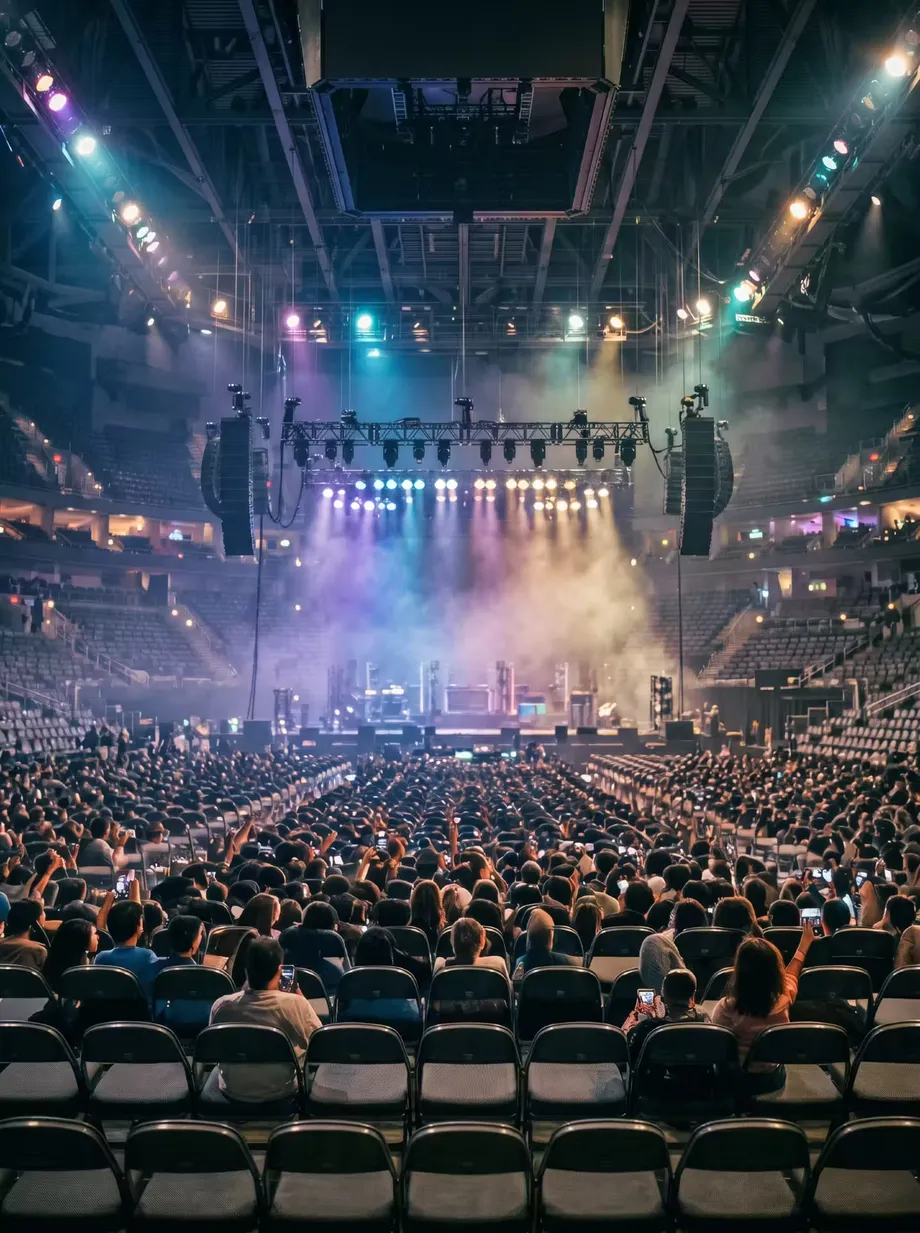
Andy Hui completed three concerts at Hong Kong Coliseum on October 10, closing an emotional return to the venue after 11 years with guest appearances by Eason Chan, Hacken Lee and Jacky Cheung. The shows, billed as Andy Hui On Stage Live in Concert 2026, also marked 40 years in the singer's career and 30 years since his first solo concerts at the Coliseum in 1996.
Contents
- Three nights, an 11 year wait and a public thank you
- Hacken Lee changes his flight and revisits an awards breakthrough
- Jacky Cheung brings songs, encouragement and a ticket joke
- Thirty years after his first Coliseum concerts
- Why Sammi Cheng stayed off the stage
- A tribute to Anita Mui on October 10
- A familiar lyric finds a new audience online
- A possible second run, but no confirmed dates
- Key Points
The second night, October 9, brought one of the most personal exchanges. After Lee changed his travel plans to join Hui onstage, the two revisited their breakthroughs at Hong Kong's Most Popular Male Singer awards. Later, fans called out the name of Hui's wife, singer Sammi Cheng. Hui initially joked that he was thanking the production department and that Cheng was a singer, before adding a brief thank you to Sammi as the lighting changed.
Cheng attended all three nights but chose not to perform, according to Hui, because she wanted the attention to remain on him. Her support extended beyond the audience: she prayed backstage before the concerts and accompanied him in exercise and training.
The final night combined a duet appearance by Cheung, a tribute to Hui's late mentor Anita Mui and three rounds of encores. Afterwards, Cheng described her relief that the run had finished successfully and thanked the people whose encouragement had carried her husband through it.
Hacken Lee changes his flight and revisits an awards breakthrough
Lee's appearance on October 9 began with a story about making time for an old friend. Hui recalled asking whether Lee could be his guest, only to learn that he would be outside Hong Kong. Lee then offered to change his flight and return. Onstage, he joked about whether their friendship was important enough to justify the change.
Their conversation moved to two consecutive years in their careers: Hui first won the Most Popular Male Singer award in 2001, and Lee followed in 2002. Lee recalled previously believing that the prize was effectively reserved for the Four Heavenly Kings, the collective name associated with Jacky Cheung, Andy Lau, Aaron Kwok and Leon Lai.
For Lee, Hui's win changed that perception. His recollection gave the concert reunion a meaning beyond the guest slot: the two singers were remembering the moment when recognition at the top of their profession appeared possible for performers outside that dominant group.
Lee selected Hui's song 從你祝福中離開, composed by Anthony Lun with lyrics by Lin Xi, for their duet. They then performed Lee's 深深深, with the audience joining in. Lee also promised to return as a guest when Hui next staged a concert and urged him not to leave such a long interval.
Jacky Cheung brings songs, encouragement and a ticket joke
Cheung was the guest for the October 10 finale, joining Hui for 一家一減你 and 我應該. His entrance also brought a joke about ticket demand: he said he had been unable to buy tickets himself, but becoming a guest had secured him four.
The singer then challenged Hui over the decision to stage only three shows. He joked that matching the three concerts of Hui's first Coliseum run was not a necessary reason to limit the current series. That exchange echoed Cheng's later account that some younger family members had been unable to attend because tickets were in short supply. Neither account establishes a total attendance figure or a formal sellout announcement.
Hui said he had missed Cheung and his voice, and wanted to stand beside him and hear him sing in person. He recalled listening to Cheung while growing up, later getting to know him and working together on a radio concert, followed by a long gap without a collaboration.
That connection continued away from the stage. Hui said Cheung had sent encouragement through colleagues and had contacted record company boss Duncan Wong to ask when Hui would be making music after signing with a new label. Cheung accepted the concert invitation immediately, Hui said.
Eason Chan had appeared on the opening night, completing a different guest pairing for each of the three shows. After the finale, Hui thanked Chan, Lee and Cheung and said the song combinations had been chosen carefully to give audiences a surprise.
Thirty years after his first Coliseum concerts
Hui's return followed his 2015 Come On concerts at the same venue. The 11 year interval was separate from another milestone he repeatedly recalled: his first solo Coliseum engagement in 1996, which also comprised three performances on a stage arranged for audiences on three sides.
After singing 戀愛片段, the lead song from his first album, Hui looked back on visiting a record shop to buy his own release. The shopkeeper did not know who he was. He joked about his appearance on the record sleeve before turning to how much another concert at the Coliseum meant to him.
Hui, speaking about returning to the venue for his own show, described the experience in words translated from Chinese:
For me, this is a miracle, because I did not know when I would be able to stand on the Coliseum stage again and hold a concert of my own.
He used running to explain the uncertainty behind that feeling. During a difficult period, he had taken to running alone and looking at hills, wondering what the view on the other side might be. At the concert, he identified that view with the fans who had continued to support him.
The audience became part of the performance through singalongs to 其實你心裡有沒有我, 二人行一日後 and 喜歡妳是妳. On the second night, Hui added 情人甲 during the encore. Familiar songs gave listeners a direct role in the return he was describing.
Why Sammi Cheng stayed off the stage
Cheng's absence from the guest lineup was a deliberate choice, not an absence from the concerts. Hui said she felt that, after such a long wait for his own show, she should not take attention away from him. She attended all three nights and prayed for him backstage.
That decision explains the brief exchange when fans called her name during the second concert. Hui acknowledged her after his joke about the production department, and later said thanking her was something he ought to do. He also credited their shared exercise and her encouragement with giving him emotional support.
After the final performance, Hui emerged into a backstage passage wearing a pink concert T shirt. Staff and friends applauded as he thanked them and greeted people along the route. When he reached Cheng, they embraced, and she raised both thumbs to congratulate him.
On October 11, Cheng wrote that she could finally relax. Her sister, brother in law and nieces were among the relatives at the closing show, although some younger members of the family had been unable to obtain tickets.
Cheng's mother, whose mobility difficulties prevented her from attending, had sent messages every day to encourage Hui and pray for him. Cheng's reflection connected that private support with the response inside the venue and on social platforms.
Cheng, writing as Hui's wife about perseverance and a second opportunity, expressed her gratitude in a passage translated from Chinese:
Cherish life's second chance. Sincerely, sincerely, sincerely, thank you to every one of you. Looking back, it feels as though each step was a lifetime. Love and support bring a person to life again.
A tribute to Anita Mui on October 10
The finale coincided with what would have been Anita Mui's 63rd birthday. Hui dedicated 親密愛人 to the late singer, whom he described as his mentor, bringing a remembrance of her into a night focused largely on his own return.
After the concert, Hui was also asked about reports that Mui's ashes had been stolen. He said he had learned of the news only after finishing the show and had not yet understood the details. Asked whether he was angry, he answered that he was.
His response should be distinguished from confirmation of the reported theft. Hui did not give details of what had happened. His remarks were a reaction to news he had just heard.
Police said on October 11 that they had received a report on July 18 about items suspected to be missing from a temple in Ngong Ping on Lantau Island. Following investigation, they classified the case as a request for police assistance and assigned it to the Lantau District Regional Crime Unit for follow-up. No one had been arrested, and police said they would continue to contact the person who made the report and others involved and take appropriate follow-up action.
The performance itself ended on an emotional note. Hui became tearful while singing 一千次日落, and the final concert concluded after three rounds of encores.
A familiar lyric finds a new audience online
The concerts also intersected with a lighter wave of attention around 讓愛. Its English refrain, "Don't lie, don't lie, don't cry", had been turned into a Cantonese soundalike joke resembling the phrase for cold spicy crab.
Clips and images built around the joke circulated on social platforms, bringing renewed attention to the older song. Hui said he had watched the clip, laughed and immediately shared it with friends. He was relieved that the altered words had not become fixed in his mind before performing.
He joked that another couple of shows might have led him to sing the Chinese version accidentally. Asked to try it, he declined because he worried that it could come out sounding like profanity. The response was playful rather than a complaint about the joke.
Cheng also shared performance excerpts through Instagram Stories, including 讓愛, 徹夜纏綿 and 半天假. The songs circulated both as concert memories and, in the case of 讓愛, as material for online humour.
Support at the finale included actress Charmaine Sheh, William So with his family, Edmond Leung with his wife, Cally Kwong, Alex Fong and Stephanie Cheng. Congratulatory flower arrangements came from performers including Cheung, Andy Lau, Aaron Kwok, Alan Tam, Joey Yung and members of MIRROR.
A possible second run, but no confirmed dates
Hui said he had secured the Coliseum booking about a year before the concerts. His initial happiness lasted less than two months before nervousness took over: he worried about whether audiences would enjoy the performance and what they would take away from it.
That concern shaped his explanation of the show's purpose. He wanted listeners to put aside daily pressures for a few hours and enjoy the present, rather than dwell on the past or anticipate the future.
His reflections about no longer needing to climb a high mountain did not amount to a retirement announcement. Asked afterwards, Hui said the Coliseum remained his favourite place to sing because it made him feel close to the audience and was a venue closely associated with Hong Kong.
He expressed hope for another concert without another 11 year wait. A possible Part 2 would depend on suitable venue dates and his company's approval. No further engagement or ticket sale date was announced.
The sequence of the return and its main milestones was:
- 1996: Hui held his first solo Hong Kong Coliseum concerts, staging three shows.
- 2001 and 2002: Hui and Lee respectively won the Most Popular Male Singer award, a shared memory they revisited onstage.
- 2015: Hui staged his Come On concerts at the Coliseum.
- Opening night of the 2026 run: Eason Chan appeared as a guest.
- October 9: Hacken Lee joined the second performance.
- October 10: Jacky Cheung appeared at the finale, and Hui paid tribute to Anita Mui.
- October 11: Sammi Cheng published her reflections and thanks after the run ended.
Key Points
- Andy Hui completed three Hong Kong Coliseum concerts on October 10 after an 11 year gap at the venue.
- Eason Chan, Hacken Lee and Jacky Cheung appeared as guests across the three nights.
- Lee changed his travel plans to attend and promised to join Hui's next concert.
- Sammi Cheng attended every night but declined a stage appearance to keep the focus on Hui.
- The finale included a tribute to Anita Mui on what would have been her 63rd birthday.
- Police received a report on July 18 about suspected missing items at a Ngong Ping temple and classified the case as a request for police assistance, with the Lantau District Regional Crime Unit following up and no arrests reported.
- Hui hopes to perform again, but a second run has no confirmed dates.