
One release date, five Indian languages and two US runtimes
Ramayana: Part One will open worldwide on November 5, 2026, with advance bookings beginning on Dussehra, October 20. The announcement brings India and international markets onto the same release date after earlier plans pointed to a November 6 overseas opening and a broader Diwali window at home.
Contents
- One release date, five Indian languages and two US runtimes
- What changed in the release calendar?
- Why the English version deserves attention
- A poster brings the central cast together
- Kapoor and Tiwari describe a responsibility
- Sony and Dharma divide distribution duties
- Music, action and the scale of production
- Premium formats and scrutiny of the visuals
- Objections remain unresolved before release
- Key Points
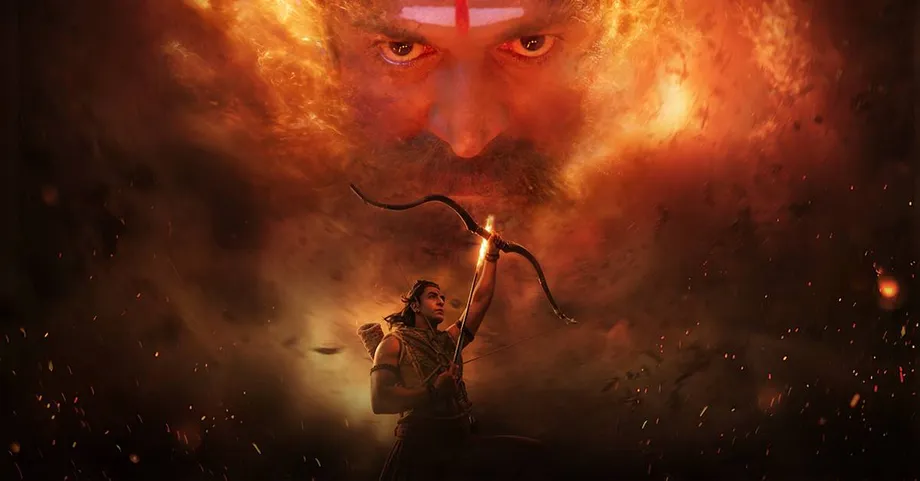
The ensemble poster places Ranbir Kapoor as Lord Rama, Sai Pallavi as Sita and Ravie Dubey as Lakshman in the foreground, with Yash as Ravana towering behind them. Directed by Nitesh Tiwari, the adaptation of Valmiki's epic is planned in two parts, with the second scheduled for Diwali 2027.
The Indian release will span Hindi, Tamil, Telugu, Kannada and Malayalam, including IMAX and other premium formats. A separate English version is also planned for international audiences. Reported AMC cinema listings in the United States give the Hindi version a duration of three hours and 15 minutes and the English version, titled Ramayana: Rise of a Legend, two hours and 45 minutes.
Those listings introduce a distinction beyond language: audiences may encounter different presentations of the same first installment. The reported explanation is that the Hindi version includes songs and an interval while the English version does not. The filmmakers have not confirmed whether other editing or story differences account for any of the 30 minute gap.
What changed in the release calendar?
The makers announced the November 5 opening on October 11, the first day of Navratri. Their statement specified a worldwide release across all premium formats and advance bookings on Dussehra. November 5 falls three days before Diwali on November 8.
Earlier information was less uniform. Sony Pictures' international trailer had indicated November 6, while producer Namit Malhotra had discussed a Diwali release in India without fixing a domestic date. Some reports subsequently suggested November 8 for India; others pointed to November 5, preceded by paid previews on November 4. The latest announcement settles the official opening date, but does not confirm those proposed previews.
The key dates now form a more concrete schedule:
- July 24, 2026: Reports described Sony Pictures' appointment as distributor outside India and plans for a special English version.
- July 30, 2026: Prime Focus Studios published its official trailer announcement.
- October 11, 2026: The ensemble poster confirmed the November 5 worldwide opening.
- October 20, 2026: Advance bookings are scheduled to open on Dussehra.
- November 4, 2026: Paid previews have been reported as a proposal, not confirmed in the latest announcement.
- November 5, 2026: Part One is scheduled to reach cinemas worldwide.
- Diwali 2027: Part Two is scheduled to follow, without an exact date announced.
Why the English version deserves attention
The reported AMC listings put both US versions on November 5. Converted into minutes, the Hindi listing runs 195 minutes and the English listing 165 minutes. That makes the English presentation approximately 15.4% shorter than the listed Hindi duration.
The difference should not automatically be read as 30 minutes of deleted story. If the Hindi listing includes an interval, part of the gap could reflect a break rather than footage. Songs could account for another portion. No confirmed breakdown establishes how much time belongs to either element.
A separate English version was described when the international distribution arrangement was reported in July, so its appearance in US listings is consistent with the project's stated plans. What remains unconfirmed is whether it uses different dialogue recording, changes scene order or removes material beyond the musical sequences.
For prospective viewers, the practical distinction is between language, presentation and running time. The listings suggest two separate releases rather than a single film simply offered with different subtitles. They do not establish the duration of the Tamil, Telugu, Kannada or Malayalam versions, or whether the English presentation will be available in every overseas territory.
A poster brings the central cast together
The new image gathers the four central characters after a campaign that had introduced members of Rama's family and court through individual posters. Earlier images featured Arun Govil as King Dasharath, Lara Dutta as Queen Kaikeyi and Sheeba Chadha as Manthara. Another poster focused on the relationship between Dasharath and Rama.
The wider cast includes Sunny Deol as Hanuman, Indira Krishna as Queen Kaushalya and Sonal Jha as Queen Sumitra. Rakul Preet Singh plays Surpanakha, while Vivek Oberoi is named as Vidyutjihva. These roles extend the adaptation beyond the Rama and Ravana confrontation highlighted by the ensemble poster.
Yash has two roles in the project: he portrays Ravana and participates in production through Monster Mind Creations. Prime Focus Studios, led by Malhotra, is producing the film in collaboration with that company and DNEG.
The poster displays costumes, sets and the relative placement of the principal characters, but it does not establish where the first film ends. The makers have confirmed a two part structure without announcing the precise division of Valmiki's narrative between the installments.
Kapoor and Tiwari describe a responsibility
Kapoor has spoken about playing Rama as a responsibility rather than simply an attractive acting role. His explanation focuses on the character's capacity for forgiveness, placing an emotional quality ahead of the weapon most closely associated with him.
Ranbir Kapoor, who plays Lord Rama, said:
Lord Rama's biggest strength is not his bow, it is his Kshama (forgiving nature) - his ability to forgive.
Kshama means forgiveness or forbearance. Kapoor's description offers a specific clue to the qualities he considers central to the performance, although it does not reveal how individual scenes will express them.
In its official trailer announcement, dated July 30, Prime Focus Studios set out a similar aim. Director Nitesh Tiwari described the epic's values as personal despite the scale of its story, and framed authenticity and respect as guiding principles.
Tiwari, the film's director, said:
My responsibility has been to approach it with complete honesty, authenticity and reverence.
These statements define the filmmakers' intentions. Whether the finished adaptation meets those intentions will depend on its treatment of the story, performances and visual choices, rather than the promotional scale alone.
Sony and Dharma divide distribution duties
Sony Pictures will distribute Ramayana outside India. Dharma Productions will handle distribution across North India's Hindi speaking markets, a division confirmed in the Prime Focus Studios trailer announcement. That wording is narrower than assigning Dharma responsibility for every Indian language release.
The five Indian languages and separate English version serve different audiences within the same worldwide launch. A common opening date also replaces earlier expectations that Indian and overseas viewers might receive the film on different days.
Distribution means arranging a film's release in cinemas and particular territories. It is separate from production, the work of financing and making the film. Sony's international role therefore sits alongside the production partnership between Prime Focus Studios, DNEG and Monster Mind Creations.
Malhotra, the producer and DNEG's CEO and founder, described the international ambition in the studio's July statement:
India has always lived this story. It is now our privilege to share it on a global stage.
The announced arrangements establish who will handle key markets, but do not provide a complete country list, cinema count or screen allocation. Those details will determine how widely each language version and premium format is actually available.
Music, action and the scale of production
Hans Zimmer and A.R. Rahman have composed the music, with T-Series presenting the soundtrack. Prime Focus Studios confirms the collaboration in its official announcement. Both composers are Academy Award winners, and their joint involvement is one of the production's most prominent creative partnerships.
Reported production credits also name Terry Notary and Guy Norris for action, and Ramsay Avery and Ravi Bansal for production design. Those departments shape physical movement, fight sequences and the environments in which the story unfolds, alongside the cast and digital effects teams.
DNEG is handling visual effects. Reports also describe the use of artificial intelligence elements, but do not identify the tools, their purpose or the extent of their use. That limited description does not establish whether AI has been applied to imagery, production processes or another part of the work.
The film's promotional description places its fantasy narrative 5,000 years in the past and follows Ravana's rise before Rama confronts him. That is a description of the adaptation's setting, not an independently established historical date for the events of the epic.
The reported budget is approximately Rs 4,000 crore, equivalent to Rs 40 billion. No detailed financial statement confirms that estimate or separates expenditure between Part One, Part Two, production and promotion. It should therefore not be treated as a verified budget for the first installment alone.
Premium formats and scrutiny of the visuals
The makers have confirmed IMAX and other premium formats, while reports have described the production as being filmed for IMAX. Premium formats can involve larger screens, different projection systems or sound specifications. The release announcement does not identify every format available in every market.
Visual effects have already drawn criticism following the trailer. Kapoor reportedly responded that some viewers were judging the imagery on smartphones and through poor internet connections. The team also urged audiences to see the film in IMAX 3D.
A cinema presentation can differ from a compressed video viewed on a small screen, but that does not settle whether the effects themselves are convincing. The distinction matters because a proposed viewing format and the quality of the finished imagery are separate issues.
The poster offers a further look at costumes and elaborate settings, while the trailer introduces movement and effects. Neither establishes the final theatrical result. The November release will provide the full context for judging how the practical sets, performances and digital imagery work together.
Objections remain unresolved before release
The promotional campaign has faced objections as well as enthusiasm. Some viewers criticised the release of a Ravana poster on Janmashtami. Others questioned casting choices, costumes and Surpanakha's appearance. Those reactions express audience views rather than establishing that the film contains inaccurate or offensive scenes.
A more specific challenge came from Shri Ramlila Mahasangh. Its president, Arjun Kumar, requested that a delegation be shown the film before release and warned of protests outside cinemas if scenes the organisation considers objectionable are not removed.
The organisation cited concerns about material it believed might offend Hindu sentiments and referred to the controversy surrounding the 2023 adaptation Adipurush. Its demand concerns a film it wants to inspect; it should not be presented as proof that disputed scenes are in the finished version. No confirmed outcome of the request, agreed screening or resulting changes has been announced.
A separate promotional event at Prime Focus's studio in Mumbai's Film City reportedly saw a delay of about four and a half hours before the media interaction began. The delay was attributed to MrBeast arriving late, and some attendees reportedly left. That episode concerns the campaign's organisation, not the film's content.
The next scheduled public milestone is the October 20 opening of advance bookings, followed by the November 5 release. Questions still awaiting confirmation include paid previews, the precise differences between the US versions, final cinema availability and the exact release date for Part Two.
Key Points
- Ramayana: Part One is scheduled to open worldwide on November 5, 2026, with bookings beginning October 20.
- Ranbir Kapoor plays Rama, Sai Pallavi plays Sita, Ravie Dubey plays Lakshman and Yash plays Ravana.
- The Indian release covers five languages, with IMAX and other premium formats announced.
- Reported US listings give the Hindi version 195 minutes and the English version 165 minutes; the filmmakers have not explained the full difference.
- Sony Pictures handles distribution outside India, while Dharma Productions handles North India's Hindi speaking markets.
- Hans Zimmer and A.R. Rahman composed the music, and DNEG is handling visual effects.
- Paid previews on November 4 remain unconfirmed. Part Two is scheduled for Diwali 2027.