
A new national centre, with changes beyond its name
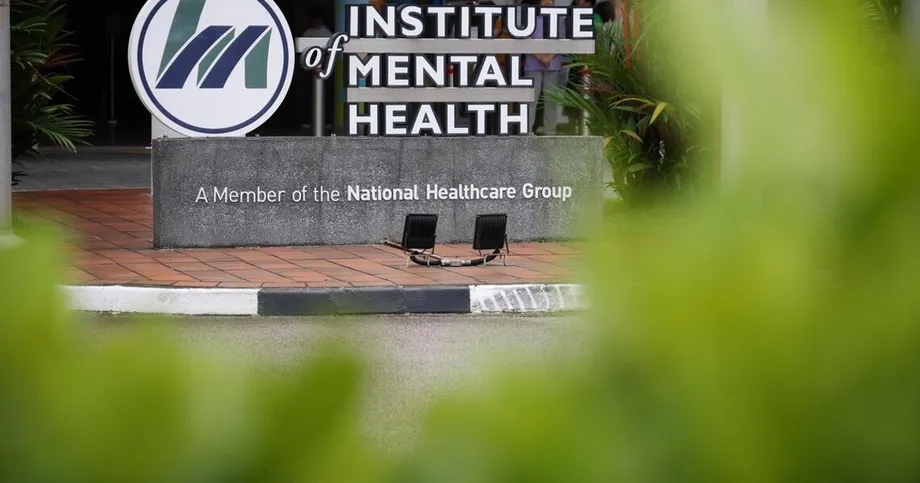
Singapore will rename the Institute of Mental Health (IMH) the National Centre for Mental Health Singapore in 2027 and redevelop and expand its existing Buangkok site by 2040, Health Minister Ong Ye Kung announced on 10 October 2026. Planning has already begun, with the institution set to lead research, coordinate psychiatric care across hospitals and build capabilities throughout the mental health sector.
Contents
- A new national centre, with changes beyond its name
- What the national centre will do
- More psychiatric beds across public hospitals
- Why location and rising demand matter
- Earlier help is part of the capacity plan
- Parental consent rules differ by setting
- What is known about the consent barrier
- Guidelines, staffing and disclosure remain unfinished work
- The milestones from consultation to redevelopment
- Key Points
The announcement pairs a major hospital project with a more immediate question: how young people can seek help without parental consent becoming a barrier. The Ministry of Health (MOH) is preparing guidelines for service providers, while the Singapore Medical Council is revising ethical guidance for doctors. Public views will be sought in the coming weeks.
In his World Mental Health Day message, Ong, who is also Coordinating Minister for Social Policies, said community services were attending to more than twice as many young people, while national mindline 1771 was receiving around 9,000 calls for help each month. The message did not specify the comparison period or starting number for the increase in youth support.
Changi General Hospital, Woodlands Hospital and Alexandra Hospital are also strengthening their psychiatric capabilities. Together, these changes point to a wider distribution of care, rather than relying mainly on Singapore's sole specialist psychiatric hospital.
The minister set out two linked priorities: more specialist capacity for people who need intensive treatment, and prevention and earlier support before problems become more serious. He also called for practical action against fears that seeking help could affect education, scholarships, employment or insurance.
What the national centre will do
The redesignation will give IMH a role comparable to Singapore's national specialty centres for cancer, heart and eye care. Its responsibilities will extend beyond treating patients at its own site to organising psychiatric care across hospitals and strengthening research and professional capabilities.
Ong explained why other hospitals must take a larger role alongside IMH:
The Institute of Mental Health has long been the bedrock of specialist psychiatric care in Singapore. But looking ahead, IMH will need stronger support from other hospitals.
The 2027 name change and the redevelopment by 2040 are separate milestones. The institution is due to take on its new national identity well before the larger and more modern hospital is completed.
The announcement does not specify the redevelopment budget, the future bed count at the Buangkok site or the construction schedule. It also does not set out how research and coordination responsibilities will be divided between the national centre and regional hospitals. Those details will matter in assessing how the new role translates into services for patients.
More psychiatric beds across public hospitals
A separate capacity plan calls for 500 additional acute psychiatric beds by 2040 across Singapore's three healthcare clusters. Acute psychiatric beds provide inpatient care during a serious episode of mental illness, when a person needs close supervision and intensive treatment, such as for severe psychosis or suicidal thoughts.
As of February 2024, public hospitals had almost 1,000 acute psychiatric beds, including more than 800 at IMH. That places roughly four fifths or more of the capacity at one institution, although the rounded figures do not support an exact percentage. About 1,070 beds are planned by 2030, including about 70 at the redeveloped Alexandra Hospital.
Inpatient psychiatric care was available at six of 11 public hospitals: IMH, Tan Tock Seng Hospital, National University Hospital, Changi General Hospital, Singapore General Hospital and Sengkang Hospital. Specialist outpatient mental health services were available across all acute hospitals.
Senior Minister of State for Health Koh Poh Koon said IMH would continue managing the most serious cases, particularly those requiring longer institutional care. Other hospitals would take more patients who need admission during acute distress. The national plan for 500 additional beds should not be read as a promise of 500 new beds at IMH alone.
Why location and rising demand matter
Psychiatrist Dr Jared Ng of Connections MindHealth, the former founding chief of IMH's Department of Emergency and Crisis Care, said psychiatric wards within general hospitals can improve care for patients with both physical and mental health needs. Examples include people with delirium, dementia or injuries from self harm who also need medical monitoring.
Such wards can reduce transfers between facilities and bring treatment closer to families. Ng also described their value in reducing stigma:
It sends a message that mental health is part of health, and that people who seek psychiatric care deserve the same access and dignity as any other patient.
The pressure on services spans different age groups. An IMH study released in 2024 found that around one in three people aged 15 to 35 in Singapore reported severe or extremely severe symptoms of depression, anxiety and/or stress. These reported symptoms should not be treated as equivalent to a clinical diagnosis for every respondent.
A separate study released in 2024 put the number of older adults with dementia at 73,918 in 2023, compared with 51,934 in 2013. That is an increase of 21,984 people, or about 42 per cent. The increase was attributed to growth in the adult population, so the figures alone do not establish a rise in the proportion affected.
Earlier help is part of the capacity plan
The hospital changes build on the national mental health strategy, published by MOH and the Ministry of Social and Family Development on 5 October 2023. The taskforce chaired by Dr Janil Puthucheary developed it after a public consultation from May to August 2022 that received more than 950 responses.
The strategy introduced four levels of support, ranging from mental health promotion, personal coping resources and peer support at Tier 1 to hospital and specialist clinic care at Tier 4. The aim is to match support to a person's needs without treating every experience of distress as a medical disorder.
At the 2023 launch, 17 of 24 polyclinics provided mental health services, and more than 400 general practitioners had been trained under the Mental Health General Practitioner Partnership programme. MOH planned to extend mental health services to all new polyclinics by 2030 and bring more GPs into the programme. These are historical starting figures, not a current count.
The strategy also planned two new psychiatric nursing homes and a psychiatric rehabilitation home by 2030. A National Mental Health Office was to be established by 2025 to oversee implementation. The October 2026 message does not provide a progress update on every earlier commitment.
Parental consent rules differ by setting
For young people, the route into care can depend on where they first seek support. Ong said callers to national mindline 1771 can remain anonymous. Community providers generally do not require parental consent before offering counselling and support.
Schools are more likely to require consent before formal counselling begins because their approach places weight on a close partnership with families. That difference can affect a young person who wants to speak privately before discussing their distress at home.
Ong said some young people fear disappointing their parents, while others have not yet understood what they are experiencing. A few confidential conversations with a mental health professional may help them reach the point where they can involve their family.
He described the intended balance between access and family participation:
We need a balanced approach. The right system is one that lets a young person enter through a safe door, and then involve the family appropriately as the care journey progresses.
This is not an announcement that parental involvement will end, or that all services will follow one identical rule. The stated objective is to let young people obtain appropriate support while protecting their welfare and privacy, then involve parents in ways that support recovery.
What is known about the consent barrier
The difficulty was acknowledged before the October announcement. In a parliamentary written answer dated 8 April 2026, MOH said it did not actively track the requested numbers of minors who cited parental consent as a barrier to mental health services.
He Ting Ru, MP for Sengkang GRC, had asked for data covering 2024 and 2025, including comparisons involving minors from households with lower incomes, those living outside their family home and those from households where family violence had occurred. The question was listed as Question No. 1370 in Notice Paper No. 734.
MOH nevertheless acknowledged that consent requirements may hinder access, particularly where a parent is one of the causes of a minor's mental distress. It said the concern likely cuts across households at all income levels. Without the requested figures, the scale of the barrier and differences between those groups cannot be quantified.
The 2023 strategy had already stated that the common law age of consent was 21 and committed the Government to studying overseas practices. The 2026 work on guidance therefore follows an issue identified several years earlier, rather than a newly raised concern.
Guidelines, staffing and disclosure remain unfinished work
The Singapore Medical Council is revising its ethical guidelines to give doctors clearer direction on parental consent, allowing treatment to proceed when it is in the patient's best interests. MOH is separately developing guidance for different service providers. Ethical guidance directs professional decisions; it should not be confused with an announced change to the legal age of consent.
The October message does not specify age thresholds, circumstances requiring parental notification or when the revised guidance will take effect. Public views are expected in the coming weeks, but no exact consultation opening date, closing date or final publication date is given.
More beds will also require more trained staff. MOH aims to increase the number of psychiatrists by 30 per cent and the number of healthcare workers training in psychology by 40 per cent by 2030. The training plans include a Master of Psychology (Clinical) programme at the Singapore University of Social Sciences, whose first intake was scheduled for January 2026. These two workforce targets measure different groups and should not be combined into one staffing growth figure.
Outside clinical services, Ong identified fear of disclosure as another obstacle. He said people may worry that a record of seeking support will disadvantage them in education, scholarship or job applications, or when buying insurance.
Ong stated the principle government agencies should work towards:
Seeking mental health support should not, by itself, become a mark against a person. Where disclosure is genuinely necessary, it should be limited to relevant circumstances and handled fairly.
The message does not announce specific new disclosure rules or insurance requirements. It assigns further work to government agencies, distinguishing a policy objective from protections that have already been put into effect.
The milestones from consultation to redevelopment
The programme combines immediate access issues with hospital and workforce plans extending to 2040. Its main dates show how the latest announcement fits into an existing reform effort:
- May to August 2022: Public consultation on the mental health taskforce's interim recommendations received more than 950 responses.
- 5 October 2023: MOH and the Ministry of Social and Family Development published the national mental health strategy.
- February 2024: Public hospitals had almost 1,000 acute psychiatric beds, including more than 800 at IMH.
- 8 April 2026: MOH acknowledged the parental consent barrier in a parliamentary written answer and said guidelines were being developed.
- 10 October 2026: Ong announced the IMH redesignation, redevelopment planning and forthcoming consultation on consent.
- 2027: IMH is to become the National Centre for Mental Health Singapore.
- 2030: Plans include about 1,070 acute psychiatric beds and increases in the psychiatric and psychology workforce.
- 2040: IMH is to be expanded and redeveloped, alongside a national plan for 500 additional acute psychiatric beds.
The closest next step is public consultation on consent. The longer hospital timetable does not settle how quickly young people will gain access under clearer rules, or how agencies will address concerns about disclosure.
Key Points
- IMH will be renamed the National Centre for Mental Health Singapore in 2027 and expanded at Buangkok by 2040.
- The centre will lead research, coordinate psychiatric care and build capabilities across the sector.
- Singapore plans 500 additional acute psychiatric beds across its three healthcare clusters by 2040.
- National mindline 1771 receives around 9,000 calls monthly, and callers can remain anonymous.
- MOH and the Singapore Medical Council are developing clearer parental consent guidance.
- MOH does not actively track how many minors cite consent requirements as a barrier.
- Public consultation is expected in the weeks following the 10 October 2026 announcement.