
Flu cases rise 58 percent in one week
Japan's weekly influenza average reached 11.35 cases per monitored medical institution between September 28 and October 4, crossing the national advisory benchmark of 10 as 937 schools and childcare facilities took measures including class closures and temporary shutdowns. The Ministry of Health, Labour and Welfare figures show a sharp acceleration from 7.17 cases per institution the previous week.
Contents
- Flu cases rise 58 percent in one week
- What the surveillance figures measure
- An unusually early season takes shape
- School disruption grows much faster than the case average
- Tokyo's early advisory needs a careful reading
- Okinawa's falling average masks continued pressure
- Kumamoto faces added risks in evacuation centers
- Vaccination demand and infection precautions
- Okinawa asks residents to protect emergency capacity
- Key Points
The increase amounts to 58.3 percent in seven days. Sixteen prefectures exceeded the advisory threshold, while Okinawa remained above the more serious warning benchmark of 30, recording 37.07 cases per institution. Around Tokyo, Saitama reported 19.66, Chiba 18.72, Kanagawa 18.51 and Tokyo 15.87.
The national advisory benchmark signals the possibility of a large outbreak within four weeks. Its crossing came about a month earlier than last year, bringing disruption to classrooms and pressure on vaccination services before the usual winter peak.
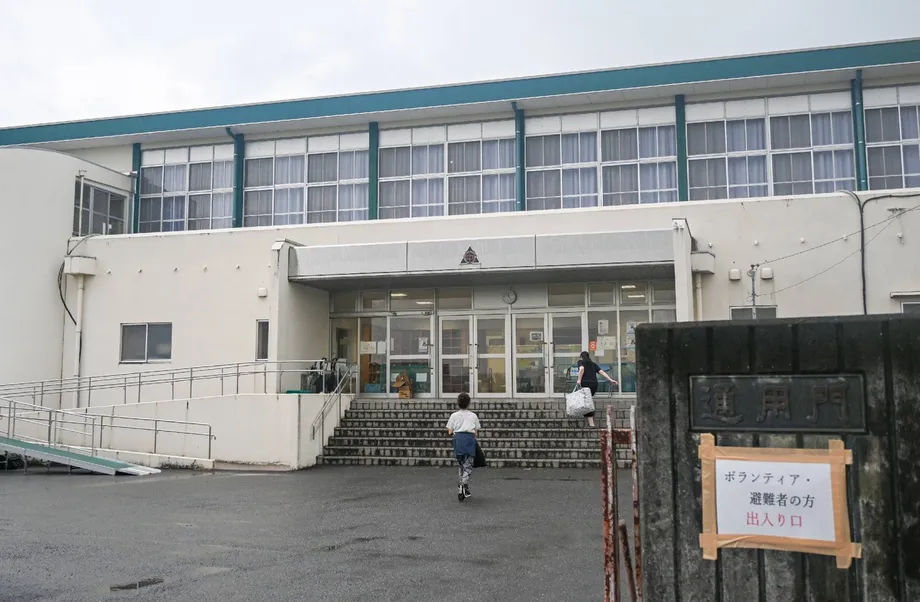
The pattern is not uniform. Okinawa's reported rate fell from the previous week, even as its hospital admissions increased. Kumamoto, where about 1,360 people were still living in evacuation centers after a July earthquake, saw its average rise from 3.86 to 10.20 in one week.
What the surveillance figures measure
The weekly figures come from designated medical institutions, often called sentinel sites, that report influenza patients to health authorities. About 3,000 institutions contributed to the September 21 to 27 national report. The average is a measure of activity at those institutions, not a count of every infection in Japan or the percentage of the population infected.
Three benchmarks help explain the progression: one reported case per institution marks the start of an outbreak; 10 is the advisory threshold; and 30 is the warning threshold. The latest national average has crossed the second benchmark, while Okinawa has crossed the third.
During September 21 to 27, every prefecture was already above the outbreak benchmark of one. Four prefectures other than Okinawa exceeded 10: Ibaraki at 12.50, Saitama at 14.17, Gifu at 10.18 and Aichi at 12.33. Okinawa, at 42.50, was already above the warning level.
By the following week, 16 prefectures exceeded 10. That broader spread matters alongside the national increase: the rise was accompanied by more prefectures recording substantial activity, rather than being confined to one area with an unusually high rate.
An unusually early season takes shape
The national average first passed one case per institution in the week ending August 23. The ministry declared the start of the nationwide flu season on August 28. The timing was described as the second earliest since records began in 1999, excluding 2023, when influenza circulated throughout the year.
The main dates show how the outbreak developed from an early national start into local advisories and widespread school disruption:
- Week ending August 23: the national average passed the outbreak benchmark of one case per institution.
- August 28: the ministry declared the nationwide flu season underway.
- Week ending September 6: Kumamoto passed the outbreak benchmark.
- September 17: Tokyo announced an unusually early influenza advisory.
- October 2: the ministry reported a national average of 7.17 for September 21 to 27; Okinawa issued a warning.
- September 28 to October 4: the national average reached 11.35, with 937 educational and childcare facilities taking closure measures.
- October 8: Hiroshima issued a prefecturewide advisory after the Fukuyama area exceeded 10 cases per institution.
- October 13: free influenza vaccinations were scheduled to become available to eligible Kumamoto evacuees.
The comparison with the corresponding period a year earlier is also striking. Reports give an earlier average of 1.56, making the latest 11.35 approximately 7.3 times as high. One account identifies that comparison period as 2025, while another describes it simply as the previous year. The reporting does not consistently establish the calendar year of the current outbreak, so the surveillance weeks provide the clearest basis for following its progression.
School disruption grows much faster than the case average
The 937 affected institutions included kindergartens, nursery schools, elementary schools, junior high schools and high schools. Measures ranged from closing individual classes or grades to temporarily closing an entire institution. The total should therefore not be read as 937 complete school shutdowns.
The number was about six times the previous week's figure, compared with a 58.3 percent increase in cases per monitored medical institution. These measure different things, but together they show how quickly rising infections translated into disruption for children, families and staff.
Children feature prominently in the local figures. In Tokyo's September 7 to 13 reporting week, those aged nine and younger accounted for 50.49 percent of reported cases. In Okinawa's latest week, cases among children under 10 increased even though the prefecture's total average declined.
The national reports do not give the number of pupils affected, the duration of the closures or the split between complete shutdowns and class closures. Those gaps limit any estimate of how much teaching time was lost.
Tokyo's early advisory needs a careful reading
Tokyo's September 17 announcement described the advisory as six weeks earlier than the previous year's, when the threshold was reached during October 20 to 26. It also described the timing as matching 2023 for the earliest occurrence since records began in 1999.
There is a numerical inconsistency in the account of that announcement. It gives Tokyo's average for September 7 to 13 as 9.53 cases per designated institution while saying the advisory threshold had been exceeded. That citywide figure is below the benchmark of 10 used in the national reporting.
The same account says 14 of Tokyo's 31 public health center jurisdictions had reached advisory levels. Machida recorded 17.31, Arakawa Ward 13.71, Kita Ward 13.45 and Koto Ward 13.43. Those local figures establish substantial transmission, but the precise administrative basis for the September advisory is not explained.
By September 28 to October 4, Tokyo's reported average had reached 15.87, unambiguously above 10. Neighboring Saitama, Chiba and Kanagawa were higher still. Tokyo health officials urged frequent handwashing, disinfection and mask use, particularly in crowded places.
Okinawa's falling average masks continued pressure
Okinawa reported 1,631 patients across 44 sentinel medical institutions during September 28 to October 4, producing its average of 37.07. That was a decline of about 12.8 percent from 42.50 the preceding week, but it remained above the warning threshold. The prefecture kept the warning issued on October 2 in place.
Local rates varied considerably. Yaeyama had the highest average at 43.67, followed by the southern area at 43.17, the central area at 38.77 and Naha at 32.67. The northern area recorded 27.80 and Miyako 22.50, both below 30 but above the advisory benchmark.
People aged 60 and older accounted for 443 reported patients, or 27.2 percent, the largest listed age group. Children aged five to nine accounted for 240 cases, or 14.7 percent, and those aged one to four for 237, or 14.5 percent. Those two childhood groups together represented 477 patients, about 29.2 percent of the total.
Influenza admissions at seven core sentinel hospitals totaled 90 and were increasing. These were designated hospitals with at least 300 beds and both internal medicine and pediatric departments. The figure covers those reporting hospitals, not necessarily every influenza admission across Okinawa.
Influenza A accounted for 87.5 percent of the reported type breakdown, with no influenza B recorded and 12.5 percent unspecified. Between October 5 and 9, class or grade closures affected 22 schools in the northern, central, southern and Yaeyama areas. The continued rise in admissions and infections among young children shows why a falling prefectural average did not yet mean the pressure had eased.
Kumamoto faces added risks in evacuation centers
Kumamoto's weekly average climbed from 3.86 for the week ending September 27 to 10.20 for September 28 to October 4. That is roughly 2.6 times the earlier figure, taking the prefecture above the advisory benchmark while residents were still displaced after the July 28 earthquake.
About 1,360 people were staying in evacuation centers across eight municipalities, including Yatsushiro. The earthquake is described differently in the accounts: one calls it magnitude 7, while the more detailed report says it registered the maximum seven on Japan's seismic intensity scale. Magnitude measures an earthquake's size; seismic intensity measures shaking at a particular location. The two should not be treated as interchangeable.
Koichi Izumikawa, a professor at Nagasaki University Hospital specializing in infectious disease control, explained why shared accommodation creates additional infection risks:
People tend to be in close proximity to each other at evacuation centers, and the more contact people have with one another, the more likely infectious diseases are to spread,
Izumikawa advised residents to report symptoms promptly, wear a mask when coughing or having a runny nose, wash their hands and ventilate rooms. He also urged early vaccination because protection does not develop immediately after a shot.
The Kumamoto Prefectural Government began asking evacuees whether they wanted vaccination and was issuing vouchers for people aged six months and older. The vouchers would allow free shots at local medical institutions from October 13. The number of evacuees who had requested or received vaccination was not reported.
Vaccination demand and infection precautions
Bookings for influenza shots were reported to have surged as residents responded to the early outbreak. The health ministry recommended vaccination for older adults and people with underlying conditions, alongside handwashing, ventilation and cough etiquette.
No numerical total for the increase in bookings was given. There were also no figures establishing vaccination coverage or whether local providers had enough appointments to meet demand. Kumamoto's voucher program is a concrete response for displaced residents, but its reach will depend on uptake and access to participating institutions.
Transmission can begin before someone realizes they are ill. The reported infectious period starts about one day before symptoms and can continue for three to seven days afterward, with the greatest viral shedding during the first one to three days. Viral shedding means an infected person releases virus that may infect others.
Authorities urged people with symptoms to avoid going out and to wear a mask if coughing or sneezing continued. These precautions are especially relevant where the reports identify close contact, including classrooms and evacuation centers, but they do not replace assessment when symptoms are severe.
Okinawa asks residents to protect emergency capacity
Okinawa's authorities paired prevention advice with guidance on choosing appropriate medical care. They warned that patients concentrating at emergency hospitals could delay treatment for people with urgent, severe conditions.
For mild symptoms, the prefecture advised contacting a regular doctor during daytime hours and arranging an appointment before attending. It encouraged avoiding nighttime emergency visits where possible when symptoms could safely wait for consultation the following day.
That advice was accompanied by examples of symptoms requiring urgent attention: being unable to drink fluids and becoming very weak, difficulty breathing, or clouded consciousness. The prefecture recommended emergency assessment when an illness felt distinctly different from an ordinary cold.
People unsure whether or where to seek care were directed to the #7119 telephone consultation service, which has no age restriction, and #8000 for children aged 15 and younger. A pediatric online consultation service was also described as available at night and on holidays.
No date was given for when the outbreak might peak or when advisories would end. The next reported figures will help show whether the rapid national increase continues, whether school disruption eases and whether Okinawa's declining case average is followed by fewer admissions.
Key Points
- Japan averaged 11.35 influenza cases per monitored institution during September 28 to October 4, up 58.3 percent from 7.17.
- Sixteen prefectures exceeded the advisory benchmark of 10 cases per institution.
- Closure measures affected 937 schools and childcare facilities, about six times the previous week's total.
- Okinawa's average fell to 37.07 but stayed above the warning benchmark; admissions at seven sentinel hospitals reached 90.
- Kumamoto's average rose to 10.20, with about 1,360 residents still in evacuation centers.
- Free vaccinations for eligible Kumamoto evacuees were scheduled to begin October 13.
- The reporting leaves uncertainty over the outbreak's calendar year and the numerical basis for Tokyo's September advisory.