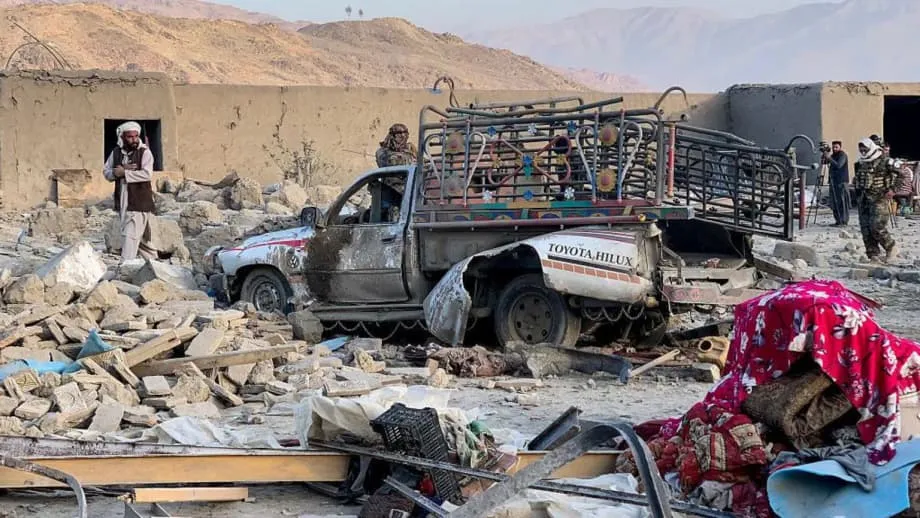
Airstrikes Bring the Conflict to Kabul
Pakistan has declared "open war" on Afghanistan after airstrikes hit Kabul, Kandahar and Paktia, bringing an escalating border conflict into the Afghan capital. By March 1, 2026, the fighting had drawn claims of hundreds of military deaths, Afghan drone attacks deep inside Pakistan and fresh international efforts to prevent further escalation.
Contents
- Airstrikes Bring the Conflict to Kabul
- How the Fighting Escalated
- Why Each Government Says It Is Responding
- The Militant Group Dividing Former Allies
- Pakistan's Air Power Meets Taliban Drones
- A Ceasefire Gives Way to Renewed Mediation
- India Ties Add a Regional Rivalry
- Civilians Face Closed Borders and Renewed Bombardment
- What to Know
Kabul's District 6 was shaken by explosions late on Thursday, February 26. Residents fled homes as windows shattered, jets roared overhead and flames rose from a military weapons depot on the western outskirts of the city. Ammunition continued exploding for hours, lighting the sky until dawn.
Pakistan's military confirmed strikes on what it described as Taliban military infrastructure in Kabul and the provinces of Kandahar and Paktia. The bombardment marked the most serious phase of hostilities between the two countries since the Taliban returned to power in Afghanistan in 2021.
The Taliban government said it responded with drone strikes against military installations near Abbottabad and Nowshehra, hundreds of kilometers from the border. Pakistan said its systems destroyed the drones. Those competing accounts placed locations previously considered secure within the dispute over how far the fighting had spread.
Pakistani Defence Minister Khawaja Muhammad Asif announced the escalation on Friday, February 27. He accused the Taliban government of supporting terrorism and acting for India, Pakistan's principal regional rival.
Our cup of patience has overflowed. Now it is open war between us and you. The Taliban became a proxy for India and began exporting terrorism.
The immediate crisis followed Pakistani strikes on February 22 and Afghan attacks on Pakistani border positions four days later. Behind that sequence lies a deeper dispute: Pakistan says the Afghan Taliban shelters militants who attack Pakistan, while Kabul rejects the accusation and describes Islamabad's airstrikes as violations of Afghan sovereignty.
How the Fighting Escalated
Pakistan began this latest sequence with overnight airstrikes on Sunday, February 22, in Afghanistan's eastern Nangarhar and Paktika provinces. Islamabad said the attacks killed at least 70 members of Tehreek-i-Taliban Pakistan (TTP), also known as the Pakistani Taliban or Fitna al Khawarij.
The United Nations reported credible evidence that 13 Afghan civilians, including women and children, died in those strikes. The Taliban government called the attacks unprovoked violations of sovereignty, meaning Pakistan had used force inside territory governed by Afghanistan without its consent.
Afghan forces launched what they called retaliatory operations on Thursday night against Pakistani military positions along the Durand Line, the border stretching 2,611 kilometers between the countries. Afghan officials said their forces captured multiple Pakistani posts and inflicted heavy casualties. Pakistan answered within hours with airstrikes on Kabul and other locations.
- February 22: Pakistan struck targets in Nangarhar and Paktika, claiming at least 70 TTP deaths. The United Nations reported credible evidence of 13 civilian deaths.
- February 26: Afghan forces attacked Pakistani positions along the Durand Line, describing the operation as retaliation for the earlier strikes.
- Overnight February 26 into February 27: Pakistan struck Kabul, Kandahar and Paktia.
- February 27: Asif declared open war, both sides issued casualty claims, and the Taliban said it had attacked locations inside Pakistan with drones.
Pakistan's military said by Friday morning that it had killed 274 Afghan Taliban fighters and destroyed 83 posts, while acknowledging 12 Pakistani soldiers killed. The Taliban government said it had killed 55 Pakistani soldiers, captured others alive and destroyed 19 Pakistani posts, while losing eight of its own fighters.
Independent verification of those casualty and battlefield claims remained impossible because both countries restrict access to conflict zones and tightly control information. Pakistan's figure for its own dead and the Taliban's claim of Pakistani losses therefore remained sharply different, as did their accounts of Afghan losses.
Why Each Government Says It Is Responding
Pakistan describes its military action as self-defense against attacks launched by militants operating across the border. Islamabad accuses the Afghan Taliban of giving sanctuary to the TTP and says it has "conclusive evidence" that the group's leaders operate from Afghan territory with the government's knowledge and support.
Pakistani officials blame the TTP for a wave of deadly attacks, including a suicide bombing at a Shia mosque in Islamabad that killed more than 30 people in February and an assault in Bajaur that killed 11 soldiers. Those attacks form part of Islamabad's explanation for striking inside Afghanistan.
The Taliban government rejects Pakistan's accusations and insists Afghan territory is not used to threaten any neighboring country. Taliban spokesman Zabihullah Mujahid described the Pakistani strikes as aggression against civilians and religious sites.
Afghan authorities pointed to the bombing of a farmer's home in Jalalabad, which reportedly killed most of his family, and an attack on a religious school in Paktika. They presented those incidents as evidence that Pakistan was targeting people outside the fighting.
Kabul describes its Thursday offensive as legitimate retaliation for earlier Pakistani incursions and civilian deaths. Pakistan instead places responsibility on the Taliban government's relationship with the TTP. Each government therefore starts its account of the conflict with an earlier act by the other side.
The central disagreement reaches beyond the latest exchange of fire. Islamabad argues that security threats originating in Afghanistan require action, including strikes across the border. Kabul argues that Pakistan is attacking its territory and that Afghan forces are entitled to respond. Those positions have helped turn individual attacks into a widening confrontation.
The Militant Group Dividing Former Allies
The TTP was founded in 2007 as an umbrella organization for militant groups operating in Pakistan's northwestern tribal regions. It is distinct from the Afghan Taliban, although the two share ideological bonds, Pashtun ethnic identity and years of battlefield cooperation against Western forces and the former Afghan government.
TTP fighters provided manpower and tactical support to the Afghan Taliban during the war in Afghanistan that lasted two decades. Their contribution acted as a force multiplier, allowing the Afghan Taliban to draw on additional fighters and experience.
Pakistani leaders initially welcomed the Taliban's return to power in Kabul in August 2021. They expected their longtime allies to cooperate against militants attacking Pakistan. Instead, the Afghan government adopted a position that left its relationship with the TTP intact.
The Taliban has occasionally moved TTP members away from the border as a symbolic gesture toward Islamabad. It has nevertheless refused to sever ties with the group or take decisive action against its leadership. Pakistan consequently faces a security dilemma involving a former strategic partner in Afghanistan and a militant organization it regards as its most lethal domestic threat.
Islamabad's response has combined limited military strikes with economic pressure and diplomatic isolation, an approach described as "hybrid coercion." In simple terms, it uses several kinds of pressure at once to try to change Kabul's behavior without undertaking a full invasion.
Pakistan has closed major border crossings, imposed tariffs on Afghan transit goods and expelled hundreds of thousands of Afghan refugees. Those measures aim to make continued shelter for TTP elements more costly for the Taliban, while avoiding the expense and risk of a much larger military campaign.
The approach depends on the Taliban placing economic interests above its ideological solidarity with the TTP. Kabul's refusal to break with the group has made that expectation questionable and has left the central security dispute unresolved.
Pakistan's Air Power Meets Taliban Drones
Pakistan has one of Asia's largest militaries, with hundreds of tanks, F-16 fighter jets and advanced precision munitions. The Afghan Taliban relies mainly on equipment abandoned by Western forces in 2021 and purchases through the black market. It has no known ability to deploy aircraft carrying pilots or conduct conventional military operations deep inside Pakistan.
The Taliban also has experience from two decades of guerrilla warfare against some of the world's most advanced armed forces. Guerrilla warfare relies on smaller, mobile forces and irregular attacks rather than matching an opponent's army in a conventional battle.
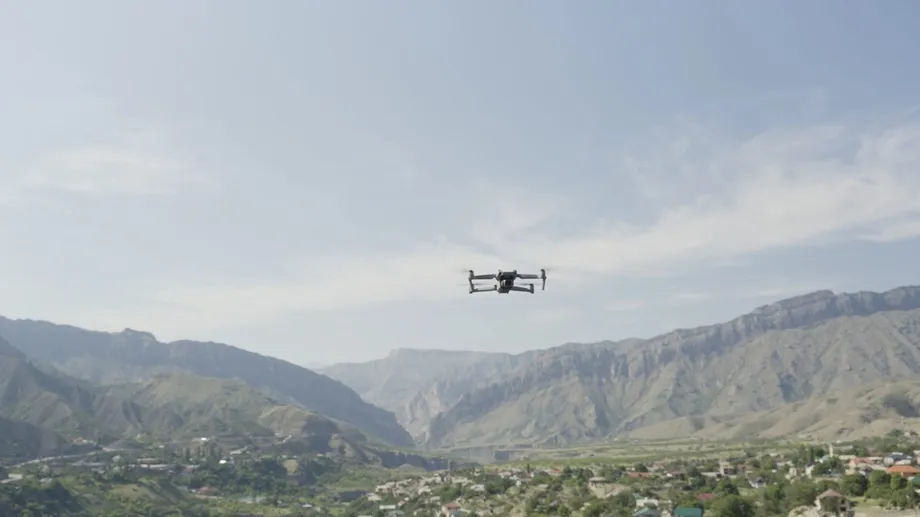
Friday's claimed drone operations added another dimension. Taliban forces used commercially available drones carrying improvised explosives to target three locations inside Pakistan, including areas near the Pakistan Military Academy in Abbottabad and an artillery school in Nowshehra.
Pakistani officials said systems designed to counter drones destroyed the aircraft. The Taliban claimed to have hit military installations. The reported attempts extended the confrontation hundreds of kilometers beyond the border, even as the two governments gave different accounts of the results.
Cheap and accessible drone technology allows armed groups and militaries with limited equipment to attempt attacks far beyond the reach of their conventional forces. Pakistan retains overwhelming superiority in traditional military equipment, but drones create another risk for installations away from the immediate fighting.
The prospect of attacks on military facilities, or even civilian targets in major cities, adds to Pakistan's security concerns. The current dispute now involves both Pakistan's ability to strike Afghan cities from the air and the Taliban's attempts to reach locations inside Pakistan with much smaller aircraft.
A Ceasefire Gives Way to Renewed Mediation
Qatar and Turkey brokered a fragile ceasefire in October 2025 after days of fighting across the border killed more than 70 people. Negotiators established arrangements for managing the border and protocols for checking compliance with the agreement.
The truce held for several months but failed to settle the dispute over TTP sanctuaries. The latest airstrikes and border attacks have brought that diplomatic effort to collapse, leaving governments in the region seeking another way to contain the conflict.
Iran, which borders both Afghanistan and Pakistan, offered to mediate. Iranian Foreign Minister Abbas Araqchi drew attention to the fighting taking place during Ramadan. China, which maintains friendly relations with both governments and has substantial economic interests in the region, called for immediate restraint and a return to dialogue.
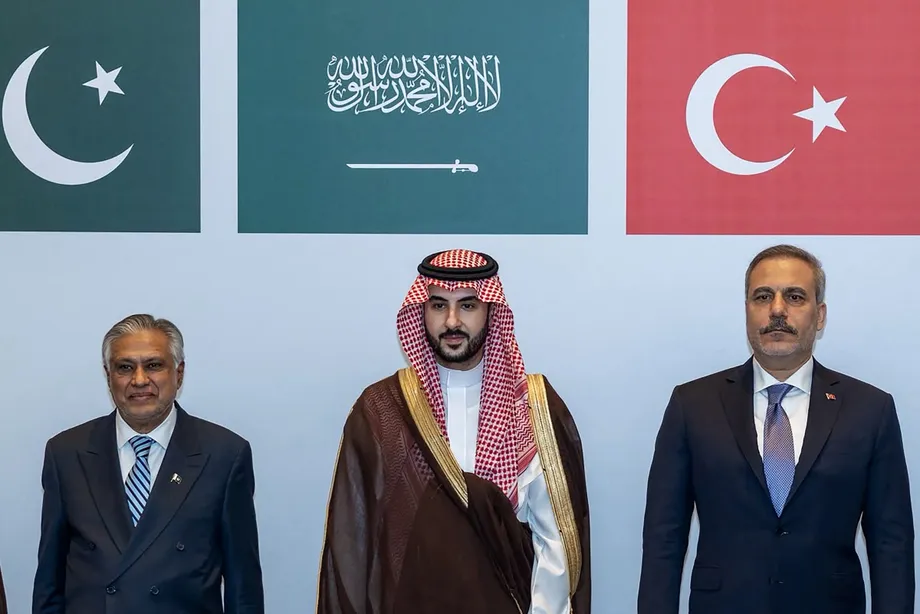
United Nations Secretary-General António Guterres urged both sides to protect civilians and resolve their differences through diplomacy. Turkey, Iran, China and Saudi Arabia were among the countries offering mediation as the violence escalated, following the earlier ceasefire effort involving Qatar.
Zalmay Khalilzad, a former United States ambassador to Afghanistan, called for an end to the reciprocal attacks. He described the exchange in these words:
terrible dynamic that must stop
Khalilzad proposed that a trusted third party, such as Turkey, monitor a new agreement under which neither country would allow its territory to be used for attacks against the other. Such monitoring would give the governments a way to check whether commitments were being kept.
Previous initiatives have struggled with the Taliban's refusal to accept limits on its relationship with the TTP and Pakistan's insistence that Afghan sovereignty does not rule out strikes against threats across the border. Any renewed negotiations would return to those same opposing demands.
India Ties Add a Regional Rivalry
Taliban Foreign Minister Amir Khan Muttaqi made an unprecedented visit to India in October 2025. During the trip, India announced that it would upgrade its diplomatic mission in Kabul to a full embassy, signaling a willingness to engage with the Taliban government despite their historical opposition.
Asif's accusation that the Taliban had become a proxy for India reflected Islamabad's concern about that relationship. He also accused the Afghan government of becoming a "colony of India." Pakistan increasingly views Kabul as a potential strategic adversary, rather than simply a neighboring government failing to address its security demands.
Pakistan has long sought what it calls "strategic depth" in Afghanistan. The concept rests on having a friendly and compliant government in Kabul that could provide security in the event of conflict with India.
The Taliban government now asserts its independence, develops ties with India and shelters militants who attack Pakistani forces. That combination challenges Pakistan's longstanding approach. Islamabad supported the Taliban for decades partly to prevent Indian influence in Afghanistan, yet that influence has grown since the Taliban returned to power.
The United States and other Western governments also face difficult choices over counterterrorism. Washington must weigh the risks of engaging with the Taliban against the danger of allowing the TTP to operate from Afghan territory without being stopped.
Outside intervention could reinforce the Taliban's alignment with regional powers such as Russia and China, or deepen Pakistan's security crisis without resolving the militant threat. The confrontation therefore connects a dispute along the Afghan border with wider relationships involving India, the United States and other regional powers.
Civilians Face Closed Borders and Renewed Bombardment
Trade between Afghanistan and Pakistan has remained closed since October 2025, the longest disruption in decades. Afghan small businesses have been affected, while shortages of vital medicines and supplies add to hardship in a country already facing severe hunger and poverty after the collapse of international aid following 2021.
Pakistan has also carried out mass deportations of Afghan refugees, expelling hundreds of thousands of people, including many who had lived in the country for decades. The conflict and border restrictions affect communities on both sides and millions of Afghan refugees in Pakistan.
Civilians have been evacuated from border areas in both countries, and refugee camps near the Torkham crossing have come under fire. Economic pressure, displacement and military attacks are combining for families already struggling to secure shelter and basic supplies.
Kabul residents have described despair at the loss of the relative security they experienced after the Taliban takeover. Tamim, a taxi driver living near the weapons depot hit in the capital, described the panic when the bombardment began shortly after midnight.
Everyone ran down from the second floor of the house," he said. "The ammunition inside the depot kept exploding on its own.
For Afghans who have lived through four decades of war, airstrikes returning to the capital reverse one modest improvement since 2021: the absence of bombs falling from the sky. The explosions at the depot continued long after the initial attack, leaving nearby residents exposed to hours of fear.
By March 1, the fighting had joined several pressures into a single crisis: airstrikes on Afghan cities, attacks along the border, attempted drone strikes inside Pakistan, closed trade routes and the displacement of Afghan families. Mediation efforts were again focused on stopping the immediate violence while confronting the unresolved dispute over the TTP.
What to Know
- Pakistan struck Kabul, Kandahar and Paktia after Afghan attacks on Pakistani border positions. Defence Minister Khawaja Muhammad Asif declared "open war" on February 27.
- The latest escalation began with Pakistani strikes on February 22. Islamabad claimed at least 70 TTP deaths; the United Nations reported credible evidence of 13 Afghan civilian deaths.
- Pakistan claimed 274 Afghan Taliban fighters killed and acknowledged 12 Pakistani military deaths. The Taliban claimed 55 Pakistani soldiers killed and eight deaths among its own forces.
- Pakistan accuses the Afghan Taliban of sheltering the TTP. Kabul rejects the accusation and describes its military operations as retaliation for Pakistani attacks.
- The Taliban claimed drone attacks near Abbottabad and Nowshehra. Pakistan said its defensive systems destroyed the drones.
- The ceasefire brokered by Qatar and Turkey in October 2025 has collapsed. Iran, China, Turkey and Saudi Arabia have offered mediation.
- Closer Taliban ties with India have added to Pakistan's concerns about security and regional influence.
- Trade has remained closed since October 2025, while deportations, evacuations and renewed bombardment have increased hardship for civilians.