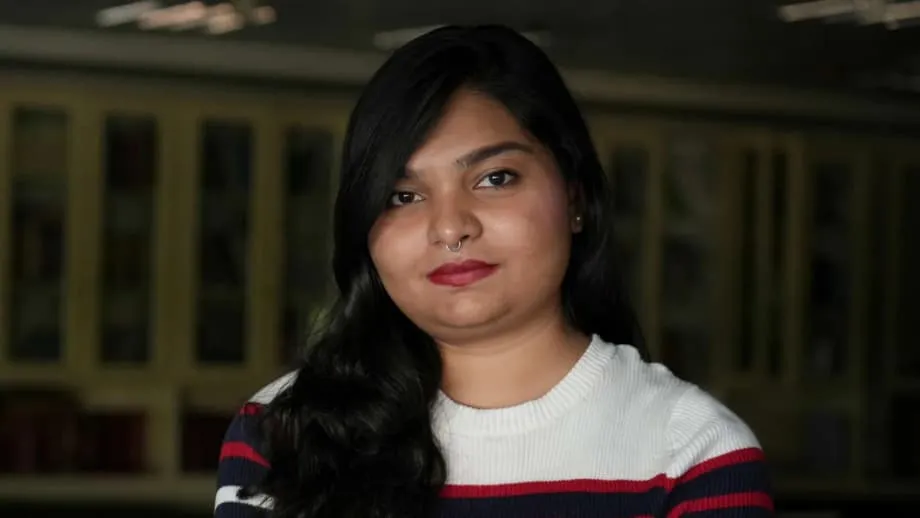
Twenty-eight people trapped above a burning newsroom
At 1:00am on December 19, 2025, investigative journalist Zyma Islam posted a plea on Facebook from The Daily Star's headquarters in Dhaka. The 28-year-old reporter was among 28 journalists and staff members trapped on the roof after a mob broke into the building and set it ablaze.
Contents
- Twenty-eight people trapped above a burning newsroom
- Hadi's death and the anger directed at newspapers
- From filing a story to barricading the roof
- Two offices attacked through the night
- The escape and what the newspapers lost
- Facebook posts directed crowds from target to target
- Calls for protection and a delayed response
- Pressure extends beyond the burned buildings
- Publishing again while the damage remains
- Key Points
I can't breathe any more. There's too much smoke. I'm inside. You are killing me.
Islam had been writing the lead story about the death of Sharif Osman Hadi, a youth leader who helped oust former prime minister Sheikh Hasina during the August 2024 uprising. Hadi died in a Singapore hospital on December 18, six days after masked gunmen shot him outside a Dhaka mosque.
The violence that followed struck Bangladesh's largest English newspaper, The Daily Star, and its sister publication, Prothom Alo, the leading Bengali daily. Attackers destroyed equipment, stole computers, burned archives and prevented firefighters from reaching the buildings. Army personnel reached the trapped Daily Star staff at about 4:30am. All 28 survived, although some were injured during their escape.
By March 1, 2026, nearly three months after the attacks, The Daily Star's headquarters still bore extensive damage. Only 37 arrests had been made, and the organizers behind the coordinated violence remained at large.
The attack brought together several threats facing Bangladesh's press: public accusations that newspapers served India, Facebook posts directing crowds toward named buildings, and a delayed security response despite repeated calls for help. Both newspapers missed their Friday editions for the first time in their histories. Journalists nevertheless returned to work within 15 hours, and The Daily Star's December 20 edition carried the headline "Unbowed."
Hadi's death and the anger directed at newspapers
Sharif Osman Hadi, 32, was a spokesperson for Inqilab Mancha, an anti-government platform that grew out of the 2024 student uprising. He was an outspoken critic of India and Hasina's Awami League, which he accused of authoritarianism and subservience to New Delhi.
Hadi was campaigning as an independent candidate for Dhaka-8 in the February 2026 parliamentary elections when unidentified gunmen shot him in the head on December 12. His death was announced at 9:40pm on December 18. Within hours, crowds marched toward Shahbagh, Dhaka's protest hub, chanting "India killed Hadi" and carrying banners accusing the interim government of negligence.
Protesters soon directed their anger at The Daily Star and Prothom Alo. They called the newspapers "Delhi's lapdog" and "Sheikh Hasina's enabler." Social media posts had already branded them "Indian agents," accused them of downplaying Hadi's assassination and claimed they had "set the ground" for his killing. Those allegations lacked evidence, and the newspapers vigorously denied them.
Hasina's flight to India in August 2024 formed part of the political setting for these accusations. Many Bangladeshis viewed New Delhi as having enabled her 15-year autocratic rule. The two newspapers, which maintained independent editorial lines, had already endured harassment under her government.
Zaheer Ahmad, a political analyst in Dhaka, described Hadi's death as a focus for grievances extending beyond the shooting.
This wasn't just about justice for one man. Hadi's death became a vessel for accumulated anger, against the state, against elites, and against India.
From filing a story to barricading the roof
Islam was finishing her report shortly after midnight when warnings reached the newsroom. Crowds were moving along Kazi Nazrul Islam Avenue, the capital's media row, while another mob was converging on Prothom Alo in Karwan Bazar.
The journalists had stayed at their desks despite days of threats. Islam later explained why the newsroom continued preparing its edition.
We don't stop the press. Not for nothing. If we stopped every time there was a threat, we wouldn't go to print on many days.
At five minutes past midnight, Islam submitted her story and headed downstairs. Bricks then began smashing the building's glass. She recalled the intensity of the attack.
It wasn't sporadic. It was furious. You could tell there were a lot of people outside.
Some colleagues escaped, but Islam and 27 other staff members climbed nine floors in darkness to the roof. They dragged heavy planters against the iron door and listened to the destruction below. The attackers had forced their way through steel gates and glass doors.
Smoke soon surrounded the people on the roof. They soaked shirts and handkerchiefs in water, pressed them over their mouths and lay flat in search of cleaner air. Islam described how little she could see.
If I held my hand in front of my face, I couldn't see it. It wasn't grey. It was black.
Some staff members called their parents to say farewell. One colleague collapsed from smoke inhalation. Another prepared to jump to a neighboring building two floors below before others restrained them.
Colleagues who had escaped relayed warnings that some attackers carried firearms and crude bombs and were "planning an assassination." The people on the roof were waiting for rescue while the mob below obstructed access to the building.
Two offices attacked through the night
Prothom Alo's headquarters, about 600 meters from The Daily Star, came under attack first. Around 11:15pm on December 18, a group of 30 to 35 people walked from Shahbagh to the newspaper's four-story building. Police initially blocked them, but the crowd grew as calls spread through Facebook groups with hundreds of thousands of members.
By 11:45pm, attackers had shattered the glass facade, broken through the main gate and entered the building. They threw furniture from upper floors, piled it up and set it on fire. More than 150 computers and laptops were looted. CCTV cameras and fire safety equipment were destroyed, and cash lockers were broken open.
The ground-floor Prothoma Prokashon bookstore was ransacked, with books and merchandise stolen. Food was taken from the office canteen. Attackers chanted slogans and celebrated as the fires grew. By 1:00am, flames threatened neighboring buildings and electrical connections.
The sequence stretched across two calendar dates:
- December 12: Hadi was shot in the head outside a Dhaka mosque.
- December 18, 9:40pm: His death in Singapore was announced.
- December 18, around 11:15pm: A group reached Prothom Alo; by 11:45pm, attackers had entered.
- December 19, around midnight: The siege at The Daily Star began.
- December 19, 1:45am: A Fire Service unit approaching Prothom Alo was attacked and forced back.
- December 19, 2:30am: Firefighters began operations after joint forces secured the area.
- December 19, about 4:30am: Army personnel reached The Daily Star's roof.
- December 20: The Daily Star published its edition headlined "Unbowed."
Mobs blocked fire service vehicles and forced them to retreat. Only after part of the crowd moved from Prothom Alo toward The Daily Star did the perimeter thin enough for joint forces to secure access. Firefighting began nearly three hours after the blazes started.
The escape and what the newspapers lost
Army personnel formed a cordon to hold back the crowd while the trapped Daily Star staff descended nine floors through smoke. They used wet shirts as makeshift masks. At the bottom, a ladder against the rear wall led to a broken rickshaw van that the army had positioned to break their fall.
Islam described the final stage of the escape.
We climbed up and jumped onto the rickshaw.
The Daily Star's ground-floor auditorium was gutted, its cafeteria looted and its archives torched. Cameras and hard drives were stolen from the photo department, which lost 35 years of visual history. Administrative offices were stripped bare. The newspaper estimated its losses at $2 million.
Prothom Alo's building was completely burned out, with nothing remaining on its first three floors. Its accounts department was reduced to ashes, and the OTT platform Chorki sustained extensive damage. An OTT platform delivers video entertainment over the internet.
Prothom Alo had operated for 27 years and The Daily Star for 34 years without missing an edition. Together, those figures represent 61 years of publishing histories interrupted by the same night of violence. Both failed to produce their Friday morning newspapers.
Within 15 hours, journalists who had struggled to breathe on the rooftop were working remotely and filing stories for the next day's paper. The return to publication was rapid, even as their workplaces remained badly damaged.
Facebook posts directed crowds from target to target
An investigation by The Daily Star and the fact-checking organization Dismislab examined 3,064 Facebook posts published between December 13 and 19. It found that the attacks were orchestrated through online incitement over several days and through instructions issued while the violence was happening.
The first widely shared call for violence appeared on December 15 in the public Facebook group Bharot Birodhi Churanto Andolon, meaning Ultimate Anti-India Movement. The group had 68,000 members. A post marked the Prothom Alo building with a red cross and stated:
These are India's powerhouses in Bangladesh. This country will not be safe until all Indian agents, including Prothom Alo and Daily Star, are Joy Bangla-ed.
"Joy Bangla" means "Victory to Bengal" and originated as a liberation slogan. On social media, it had been repurposed as code for destruction or elimination.
Between 10:00pm and 11:00pm on December 18, at least nine Facebook posts directly called for violence. Another 34 explicitly called for attacks between 11:00pm and 11:45pm, while crowds were gathering at Prothom Alo.
Elias Hossain, a Bangladeshi influencer based in the United States, posted instructions at midnight directing people to Prothom Alo.
Come to Prothom Alo, everyone. Half the job is done.
Five minutes later, Hossain posted another demand.
Not a single brick of Prothom Alo must be left.
At 12:20am, he directed people toward The Daily Star.
Prothom Alo done, now come to Daily Star everyone.
Within four minutes of that post, Daily Star staff were rushing upstairs to the roof. Social media posts subsequently named Chhayanaut, a cultural institution established in 1961, and Udichi Shilpigosthi. Both were attacked and burned in the following hours.
The investigation identified 88 posts inciting violence across eight public Facebook groups with approximately 1 million combined members. None was removed in real time by Meta, despite violating its Community Standards on violence and incitement.
Calls for protection and a delayed response
Threats had circulated openly on Facebook for more than 20 hours. Trapped journalists made frantic calls to government officials, yet security forces largely stood by as spectators while the violence continued.
Shafiqul Alam, then press secretary to Chief Adviser Muhammad Yunus, later posted a public apology on Facebook describing his attempts to summon help.
I made scores of calls to the right people, trying to mobilise help, but it did not arrive in time. I wish I could dig up a great piece of earth and bury myself in shame.
Dhaka Metropolitan Police additional commissioner SN Nazrul Islam suggested that intervention could have escalated into live fire and risked officer casualties before the upcoming elections. Commissioner Sheikh Md. Sazzat Ali gave a different explanation, saying traffic congestion prevented a timely arrival, although the attacks lasted nearly five hours.
Journalists described officers who reached the scene as "silent spectators." Some officers said off the record that they had received no orders to intervene.
The interim government led by Yunus, a Nobel laureate who took office after Hasina's ouster, faced mounting criticism over its failure to restore order. Asif Shahan, a political analyst and professor at the University of Dhaka, described the attacks in terms of a government unable to contain rule by violent crowds.
A reflection of the interim government's failure to control the rise of mobocracy.
Nazmul Ahsan, executive editor of Netra News, described a change in the dangers journalists faced under the Yunus administration, from predictable state repression to unpredictable violence by mobs.
What we are seeing now is a shift from institutional repression to popular violence. That makes the risks harder to calculate and much harder to protect against.
Pressure extends beyond the burned buildings
At least 1,073 journalists had faced physical assaults, lawsuits, killings, threats, imprisonment or property seizures since the August 2024 transition, according to Transparency International. At least 140 journalists faced murder charges connected to their coverage of the 2024 protests, a tactic rarely seen under the previous government.
More than 300 journalists had been banned from leaving Bangladesh, and 167 had their press cards cancelled. Bangladesh ranked 149 out of 180 countries in the World Press Freedom Index.
Tanjila Tasnim, a Daily Star reporter, described how fear had changed the way journalists identified themselves in public.
Today, we don't even use our press cards in public. If people find out we are journalists, especially from The Daily Star, there is a fear they might attack us.
Reporters described checking every fact with greater rigor, avoiding certain subjects and hesitating to disclose their profession in public places. Such self-censorship means journalists restrict their own reporting because they fear the consequences.
Violence also targeted minority communities. At least 15 members of the Hindu minority were murdered between December 2025 and January 2026, including journalist Rana Pratap Bairagi.
International organizations defending press freedom condemned the attacks. Irene Khan, the United Nations Special Rapporteur on freedom of opinion and expression, linked the violence to failures to protect media and artistic freedom.
Did not emerge in a vacuum but are the consequences of the interim government's failure to address impunity and uphold media and artistic freedom.
Impunity means people escape punishment for wrongdoing. The 37 arrests and the continuing freedom of the organizers left accountability for the coordinated attacks unfinished as of March 1.
Publishing again while the damage remains
Nearly three months after the attacks, insurers were sifting through debris near piles of shattered glass at The Daily Star's entrance. Its auditorium remained a burned shell. The newspaper continued publishing despite the destruction.
Kamal Ahmed, The Daily Star's managing editor, described how quickly staff returned to their work after fearing for their lives.
Those people who were trapped there and were afraid for their lives started working after just 15 hours. This resilience, we are not going to give up.
Islam said the attack had changed her sense of safety without changing her commitment to reporting.
Doing journalism in Bangladesh has never been about being safe. We are used to death threats. When we get them, we just take precautions.
Asked whether that night was the most significant of her life, Islam shook her head. She described the protections she believed journalists should have, and the experience of surviving the siege.
Bangladesh isn't a conflict zone. But it doesn't give the same rights and protections to its journalists the way democracies are supposed to. We got through one night. We can get through another.
After a pause, Islam added:
Let them come at us.
The February 2026 parliamentary elections, with 127 million registered voters, were framed as a critical test of Bangladesh's ability to restore civilian rule after months of interim governance. Hadi had been campaigning in that contest when he was shot. For the journalists who survived the attacks, the struggle also concerned whether they could report safely when their workplace itself became a target.
Key Points
- Twenty-eight Daily Star journalists and staff survived more than four hours trapped on their Dhaka newsroom's roof on December 19, 2025.
- The attacks followed the death of Sharif Osman Hadi, 32, who was shot on December 12 and died in Singapore on December 18.
- Mobs burned and looted The Daily Star and Prothom Alo, forcing both to miss their Friday editions for the first time in their respective 34-year and 27-year histories.
- Attackers stole more than 150 computers and laptops from Prothom Alo. The Daily Star lost 35 years of photo history and estimated damage at $2 million.
- An investigation examined 3,064 Facebook posts and found instructions directing crowds between targets. Eight groups with approximately 1 million combined members carried 88 posts inciting violence.
- Mobs blocked firefighters. Army personnel reached the trapped Daily Star staff at about 4:30am.
- Journalists returned to work within 15 hours, and The Daily Star's December 20 edition was headlined "Unbowed."
- As of March 1, 2026, only 37 arrests had been made, and the organizers remained at large.
- Transparency International counted at least 1,073 journalists facing attacks, legal action or other threats since August 2024. Bangladesh ranked 149 out of 180 countries in the World Press Freedom Index.